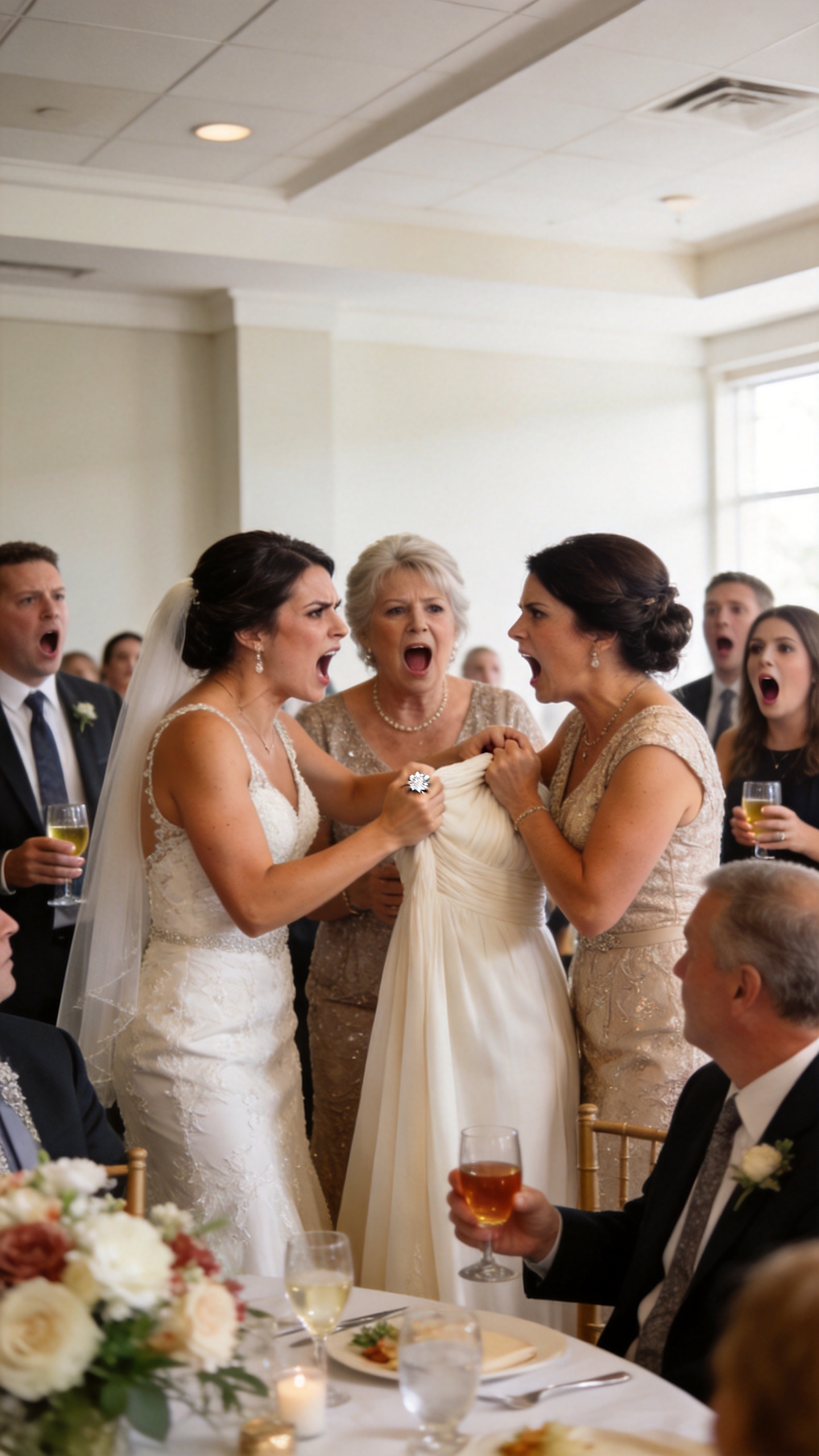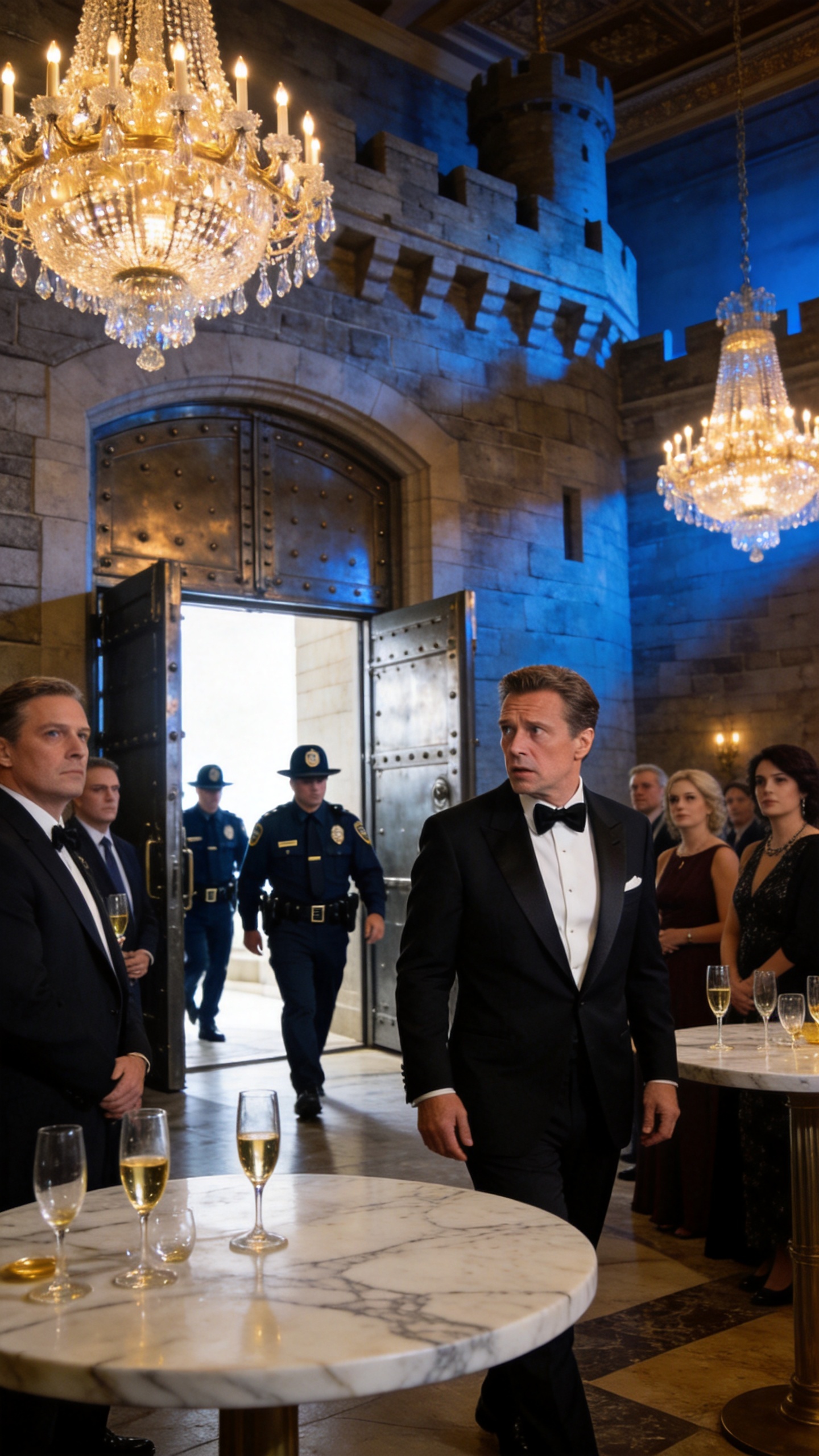
The bride humiliated her stepmother with red wine in the wedding ballroom, until one phone call exposed who truly controlled the family legacy.
John looked sick.
“Nora-”
Nora stopped beside Helen.
“The court injunction was granted this afternoon.”
Bianca looked at John.
“Court-”
Nora opened the folder.
“All Ward Family Trust distributions to John Ward have been temporarily frozen pending review of attempted unauthorized asset transfer, fiduciary breach, and suspected coercive restructuring.”
Bianca whispered, “No.”
Nora looked at her.
“Yes.”
Then she turned to Helen.
“Also, Marlowe Bridge Capital is already under federal investigation.”
That was the deeper cut.
Bianca’s father had not only tried to marry into Ward money.
He had done this before.
Widows.
Heirs.
Family trusts.
Young men with old money and wounded pride.
Marlowe Bridge found weak points and called them opportunities.
Helen had spent the week gathering proof.
Emails.
Draft contracts.
Recorded calls.
A note from one terrified analyst at Marlowe who wrote:
They need the wedding signed before Mrs. Ward can intervene.
Helen looked at Bianca.
“You were in such a hurry to remove me from the family photos because the family registry mattered legally.”
Bianca’s face went pale.
John turned to his bride.
“Is that true-”
For the first time all night, Bianca looked afraid.
“John, don’t listen to her.”
“She froze everything,” John said.
His voice cracked.
“You said Helen was bluffing.”
Helen’s expression barely changed.
That was the saddest part.
He had not asked if Bianca betrayed him.
He was still frightened first about the money.
Helen stepped closer to him.
The wine on her dress had begun to dry in dark patches.
“John.”
He looked up.
“You are my son because I chose you when it would have been easier to leave.”
His eyes filled.
“But you are not a child anymore.”
A pause.
“And I will not let you destroy what your mother asked me to protect.”
The room shifted again at the word mother.
Bianca’s eyes sharpened.
“His mother-”
Helen reached for the thin silver necklace at her throat.
She opened the small pendant.
Inside was a folded sliver of paper, tiny and old.
John recognized it immediately.
He had seen Helen touch that necklace every year on his mother’s birthday.
Helen looked at him.
“Laura wrote you a letter.”
John went still.
“What-”
“She asked me not to give it to you until you were old enough to understand love without inheritance attached.”
John’s voice was barely audible.
“You kept a letter from my mother-”
Helen nodded.
“Yes.”
The truth hurt.
It was supposed to.
Nora handed her another envelope from the folder.
Helen held it out.
John took it with trembling hands.
The handwriting on the front was soft and familiar from old birthday cards.
For John, when he forgets who he is.
His knees almost gave out.
He opened it.
The ballroom waited.
John read silently.
His face changed line by line.
Laura’s letter did not praise him.
It did not excuse him.
It told him Helen was the woman who stayed when grief made everyone else useful instead of kind.
It told him money was a test, not a reward.
It told him that if Helen ever stood between him and the trust, he should ask what version of himself she was trying to save him from.
By the time John finished, tears had fallen onto the page.
Bianca reached toward him.
“John…”
He stepped back.
Not dramatically.
Just enough.
Her hand stopped in the air.
Helen watched him.
For once, she did not rescue him from the discomfort.
He needed it.
He looked at Bianca.
“Did you know about Marlowe-”
She hesitated too long.
That was answer enough.
John closed his eyes.
The room seemed to exhale.
Bianca turned desperate.
“John, she’s manipulating you. She has controlled you your whole life.”
Helen said nothing.
John opened his eyes.
“No,” he said.
His voice shook.
“She protected me from becoming what you wanted.”
Bianca’s face collapsed.
Not into grief.
Into fury.
“You would choose her over me-”
John looked at Helen’s stained dress.
Then at the napkin in her hand.
Then at the letter from his mother.
“No.”
He swallowed.
“I’m choosing what I should have chosen before you threw the wine.”
He turned toward the guests.
“This wedding is over.”
A roar of whispers filled the ballroom.
Bianca grabbed his sleeve.
“John, don’t you dare.”
He gently removed her hand.
“You humiliated the woman who raised me.”
His voice broke.
“And I stood there.”
He turned to Helen.
“I’m sorry.”
Helen looked at him for a long time.
Then said, “Good.”
He flinched.
She continued, “An apology is a door, not a destination.”
That sounded exactly like something Laura would have said.
Maybe because Helen had been carrying Laura’s words for years.
Bianca’s father tried to leave quietly.
The two men in dark suits stopped him near the exit.
Nora walked over with calm professionalism.
“Mr. Vale, federal agents would like to speak with you downstairs.”
The ballroom erupted.
Phones rose higher.
Guests turned.
The beautiful wedding became what it had always secretly been.
A courtroom with flowers.
Bianca stood in the middle of it, pale in her satin gown, no longer a bride but a witness to her own ambition collapsing.
Helen did not smile.
She did not enjoy it.
The dark red wine on her dress still felt cold.
The humiliation still burned.
But justice did not need her to look pleased.
Only steady.
Three months later, Marlowe Bridge Capital was indicted for trust fraud, elder exploitation, and conspiracy to strip family assets through marriage-linked investment structures.
Bianca testified only after her father turned on her in court.
John entered financial supervision under the trust terms.
Not punishment.
Protection.
He gave up his board seat temporarily and spent one year working inside the Ward Foundation’s housing program.
Not as a donor.
Not as a speaker.
As an administrator.
He met families whose rent stability depended on assets he had almost signed away.
He learned what money looked like when it was not abstract.
He learned slowly.
Imperfectly.
But honestly.
Helen did not forgive him quickly.
She loved him too much for that.
Fast forgiveness often teaches the wrong lesson.
Instead, she let him rebuild trust the same way Laura had once asked her to build a family.
Day by day.
Choice by choice.
A year later, John hosted a small memorial dinner for Laura Ward.
No ballroom.
No chandeliers.
No elite guest list.
Just family, foundation staff, and the people who had truly known her.
Helen wore the ash-gray dress again.
Repaired.
The dark red wine stain had been removed, but a faint shadow remained near the neckline.
The cleaner had offered to dye the fabric darker.
Helen refused.
John noticed.
“You kept it.”
Helen touched the fabric.
“Yes.”
“Why-”
She looked across the room at the foundation children laughing near the dessert table.
“Because shame only belongs to the person who throws the glass.”
John lowered his eyes.
Then he handed her a small box.
Inside was a new silver necklace.
Simple.
Round.
Engraved with two names:
Laura & Helen
Underneath, in smaller letters:
The women who kept the door open.
Helen’s eyes filled.
For a moment, she looked older.
Then younger.
Then simply tired from years of being strong in rooms that never thanked her for it.
John said softly, “I read her letter every month.”
Helen nodded.
“Good.”
“I still hear your voice when I read it.”
She smiled faintly.
“Your mother and I agreed on more than you think.”
He laughed through tears.
Then became serious.
“I don’t want control when I turn thirty unless you believe I’m ready.”
Helen studied him.
“That is the first thing you’ve said that makes me think you might be.”
He smiled.
Not proudly.
Gratefully.
Across town, Bianca was no longer welcome in the circles that had once adored her.
Her wedding dress became a headline photo for three weeks.
Then a warning.
She eventually settled civil claims and vanished from public life.
Helen did not follow her story.
Some people are not chapters.
They are lessons.
Two years later, the Ward Foundation opened the Laura Ward Family Housing Center in Chicago.
John stood beside Helen at the ribbon cutting.
This time, he did not speak first.
He introduced her.
“My stepmother,” he said into the microphone, voice steady, “is the reason this family still has anything worth inheriting.”
Helen looked at him sharply.
He smiled.
Then corrected himself.
“My mother, Helen Ward.”
The applause began quietly.
Then grew.
Helen stood in the sunlight, wearing a simple gray dress and the silver necklace John had given her.
No chandeliers.
No wine.
No ballroom.
Only people waiting to enter a building that would keep them safe.
John handed her the scissors for the ribbon.
She looked at him.
Then at the doors.
Then at the crowd.
For years, people had asked what Helen Ward belonged to.
A dead man’s fortune.
A broken family.
A role that was never fully respected.
Now the answer was standing in front of her.
She belonged to the promises she kept.
She cut the ribbon.