"You're Not His Wife," The Guard Said As I Walked Into My Own Company In Full Uniform, But When I Saw Another Woman Wearing My Mother's Pearls Beside My Husband, I Knew The Lie Was Bigger Than Marriage
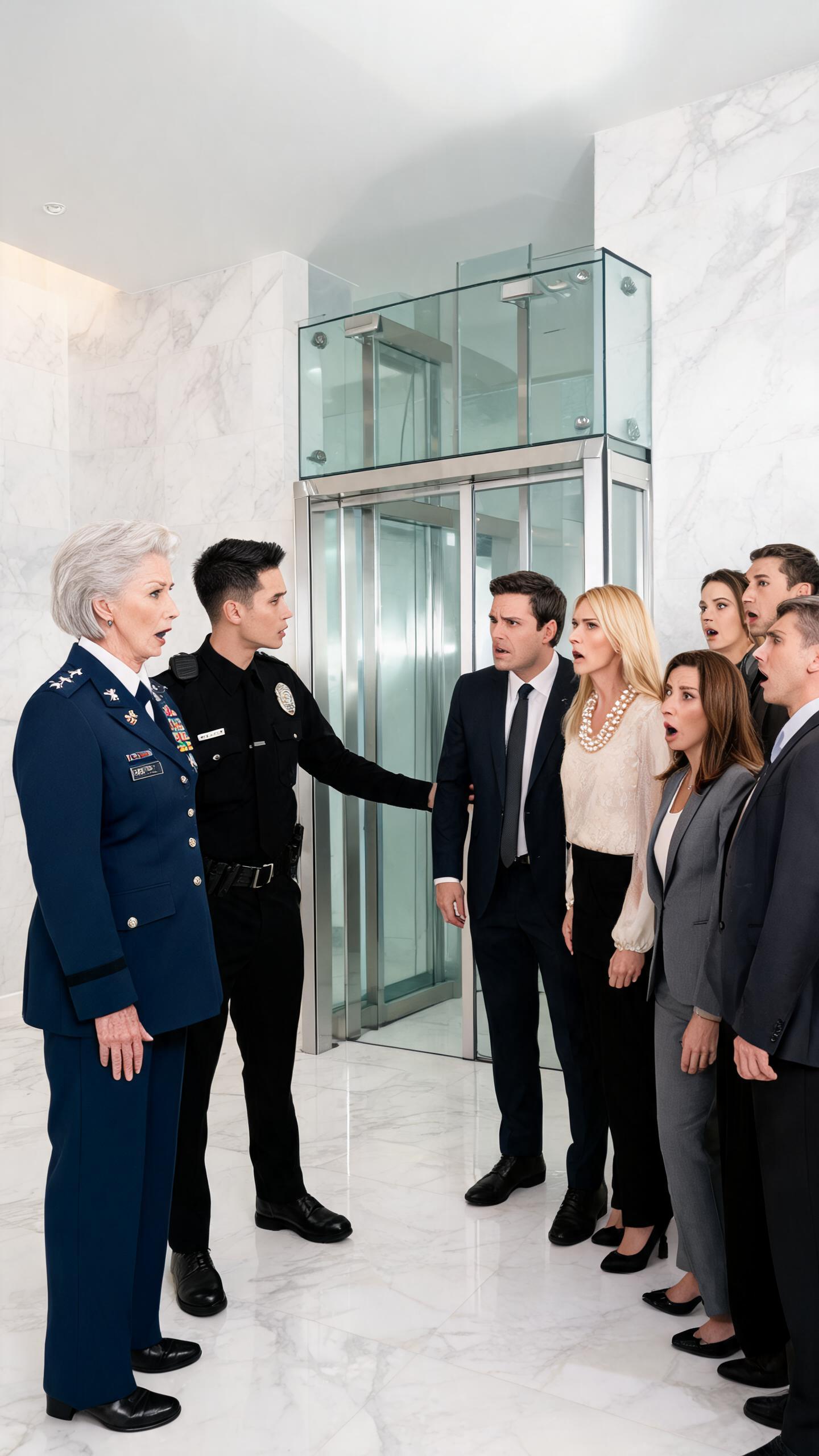
"You're not his wife," the security guard said, putting one hand flat against my chest before I could reach the executive elevators.
For one second, the marble lobby of the company I had built went completely quiet.
I looked down at his hand.
Then at the polished bronze letters above the reception wall.
Hale Dominion Logistics.
My name.
My mother's maiden name.
My twenty-nine years of service stitched into the dark blue dress uniform I was still wearing from the retirement ceremony I had left at dawn.
"Move your hand," I said.
The guard smirked.
He was young enough to think arrogance was the same thing as authority.
"Ma'am, Mr. Hale's wife is already upstairs."
The words struck harder than his palm.
Behind the glass turnstiles, employees froze with coffee cups in their hands. A receptionist looked down too quickly. Someone near the waiting area whispered.
Then the elevator doors opened.
My husband stepped out laughing with a woman in a cream suit.
Her hand rested on his arm.
Around her throat was my mother's pearl necklace.
The Lobby Became A Stage Before I Knew The Script
I had driven four hours from Fort Liberty in a uniform that still carried the weight of goodbye.
That morning, an auditorium full of soldiers had stood while I ended thirty-one years of active service. Brigadier General Mara Linwood, United States Army. Logistics command. Theater operations. Disaster response. Three wars, two humanitarian evacuations, and more nights under fluorescent planning maps than I could count.
My husband, Patrick Hale, was supposed to be there.
He sent flowers.
White roses.
No note.
That should have told me enough.
Instead, I told myself what wives tell themselves when betrayal has not yet become visible. He was busy. The company needed him. The board meeting ran long. He hated ceremonies.
So after I shook hands, returned salutes, and packed the last framed commendation into the back seat of my car, I decided to surprise him.
Hale Dominion Logistics had started with one leased warehouse, three veterans looking for work, and the insurance settlement from my mother's house after a flood destroyed the kitchen. Patrick had charm. I had systems. He could sell confidence to a room. I could make the room function after everyone went home.
The company grew because I built the routes, negotiated military-adjacent contracts, and trained managers to treat crisis logistics like lives depended on it.
Often, they did.
But over the years, Patrick became the public face because I was deployed, then redeployed, then pulled into commands nobody in the business press understood. He gave interviews. He cut ribbons. He learned to say "my company" with the ease of a man who had repeated the lie until people applauded it.
I let him.
At first, it felt practical.
Then it became convenient.
Then it became dangerous.
The guard at the front desk did not recognize me because someone had made sure he would not.
"Call Mr. Hale," I said.
"No need." He tapped the badge clipped to his jacket. "We have strict instructions."
"From whom?"
His smile widened.
"Mrs. Hale."
The employees behind him shifted.
Not one corrected him.
That was the second wound.
The first was the sentence.
The second was the room agreeing to survive it.
Then the elevator opened and Patrick came out with the woman in my mother's pearls.
She was younger than me by at least twenty years, polished in the expensive way that tries to look effortless. Her blonde hair was pinned low. Her cream suit fit perfectly. My mother's necklace rested against her throat like it had been waiting there.
Patrick saw me.
His smile collapsed.
Only for a second.
Then he recovered, because recovery had always been his true gift.
"Rebecca," he said.
Not General.
Not Mara.
Not my wife.
Rebecca.
The woman's fingers tightened on his sleeve.
"Patrick," she whispered, "who is this?"
I looked at the pearls.
"I was about to ask you the same thing."
The guard glanced between us.
His confidence began to leak out of him.
Patrick moved quickly, stepping between me and the woman.
"This is not the place."
"This is my lobby."
His jaw tightened.
"You have been away a long time."
"Not dead."
Someone behind reception made a small sound.
The woman in the pearls lifted her chin.
"Patrick told me his first wife preferred privacy."
First wife.
There are phrases that do not merely hurt.
They rearrange the air.
I looked at Patrick.
"Did you tell her I was dead, divorced, or inconvenient?"
His face darkened.
"Lower your voice."
The guard, trying to recover his role, reached for my arm.
This time, I caught his wrist before he touched me.
Not hard enough to injure.
Hard enough to educate.
He gasped.
I released him.
"Do not put hands on a general officer in her own building."
The lobby went still.
Patrick's eyes flashed.
"You retired this morning."
"Then do not put hands on the co-founder either."
The Pearls Were Not Jewelry. They Were Evidence
My mother's pearls had disappeared six months earlier.
Patrick told me I must have misplaced them during the last move between base housing and the townhouse. He said grief made people attach meaning to objects. He said we would buy something nicer.
Nicer.
My mother wore those pearls to my commissioning ceremony. She wore them when Patrick and I signed the first warehouse lease because she said every new beginning needed something old and stubborn watching over it. When she died, I put them in the safe at our Virginia house.
Only Patrick and I knew the code.
Now they were around another woman's neck in my company's lobby.
"Take them off," I said.
She stepped back.
Patrick's voice sharpened.
"Rebecca."
"Now."
The woman touched the necklace.
For the first time, I saw doubt move across her face.
"Patrick gave them to me."
"Patrick stole them."
He laughed.
Too loudly.
"This is absurd."
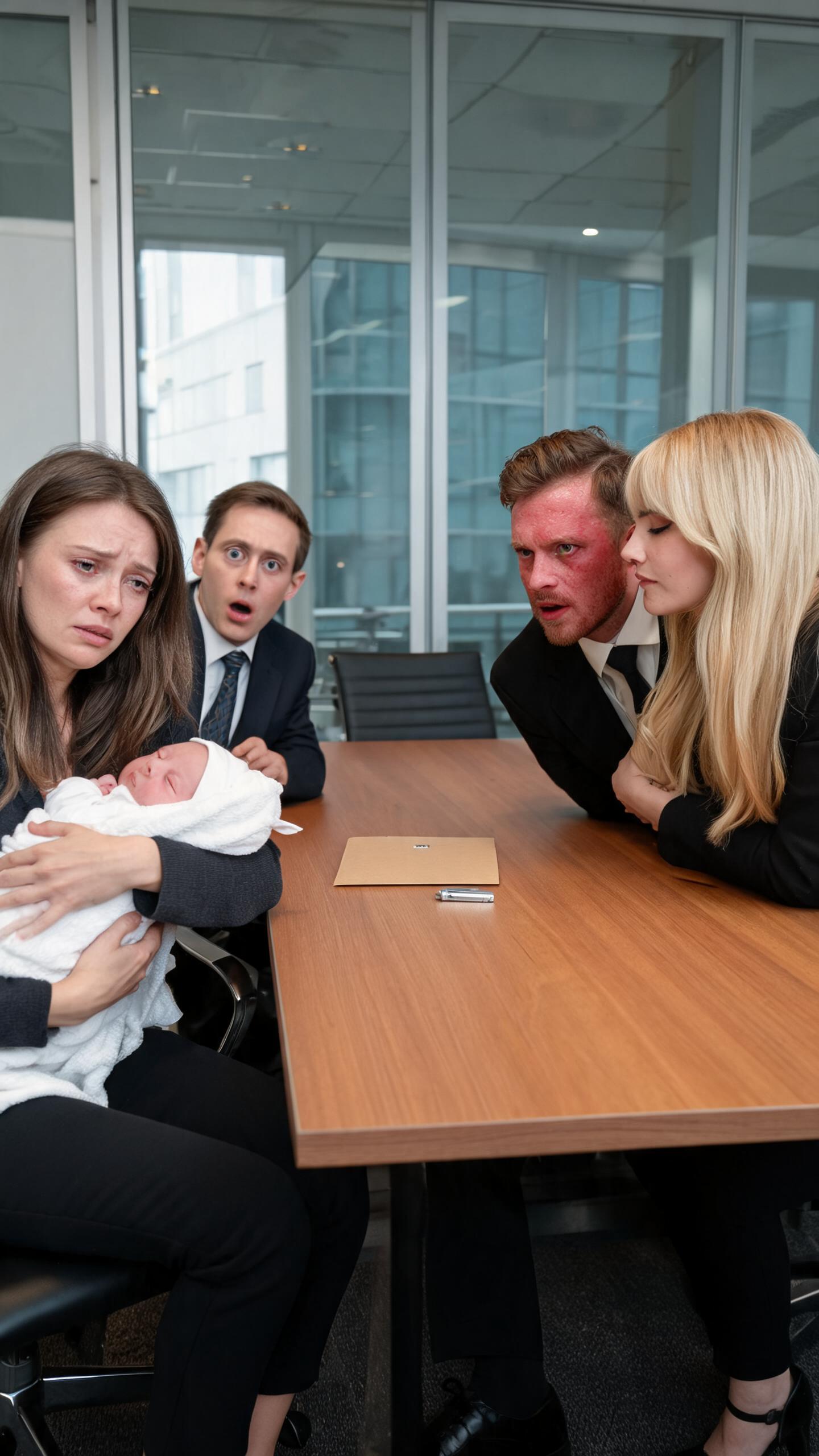
The elevator behind him opened again. Two board members stepped out, then Patrick's chief counsel, Owen Drake, who stopped so abruptly that the man behind him nearly walked into his back.
Owen knew me.
More importantly, he knew the founding documents.
"General Linwood," he said, very carefully.
The woman's face changed.
Patrick turned on him.
"Owen."
One word.
A warning.
Owen did not move.
I looked at him. "Who is she?"
No one answered.
So the woman did.
"I am Elise Warren," she said, recovering enough pride to make the words crisp. "Chief brand officer."
Brand officer.
Wearing my mother's pearls.
Standing beside my husband.
Recognized by the guard as Mrs. Hale.
I almost laughed, but there was nothing funny in the room.
"And who told security you were his wife?"
Her eyes flicked toward Patrick.
He said, "This conversation is over."
I reached into the breast pocket of my uniform and removed my access card.
The old one.
Steel-black, embossed, never deactivated because it belonged to the founder class of credentials written into the first security architecture.
The guard swallowed.
"Ma'am, I was told—"
"I know what you were told."
I tapped the card against the reader.
The turnstiles opened.
Not just the one in front of me.
All four.
Every security panel in the lobby flashed blue.
The bronze letters on the wall reflected the light.
Hale Dominion Logistics.
Dominion had been my mother's name.
Patrick had wanted to drop it during the rebrand.
I had refused.
Now the name looked back at him like a witness.
I walked through.
No one stopped me.
Patrick grabbed my elbow.
Not hard.
But publicly.
That was his mistake.
I turned.
"Remove your hand."
He did, but not before three people saw it.
Not before the lobby cameras saw it.
Not before Owen Drake closed his eyes with the expression of a lawyer watching a preventable disaster become documented.
"Conference room," Patrick said.
"Boardroom."
"Rebecca."
"Boardroom," I repeated.
Elise touched the pearls again.
"Should I come?"
I looked at her.
"You are wearing evidence. Yes."
The Company Remembered My Name Faster Than My Husband Did
The boardroom sat on the forty-second floor, behind glass walls overlooking the river.