My Own Son Told The Officers I Was Responsible For His Father's Death Because Of The Estate - But His Father's Phone Was In My Purse
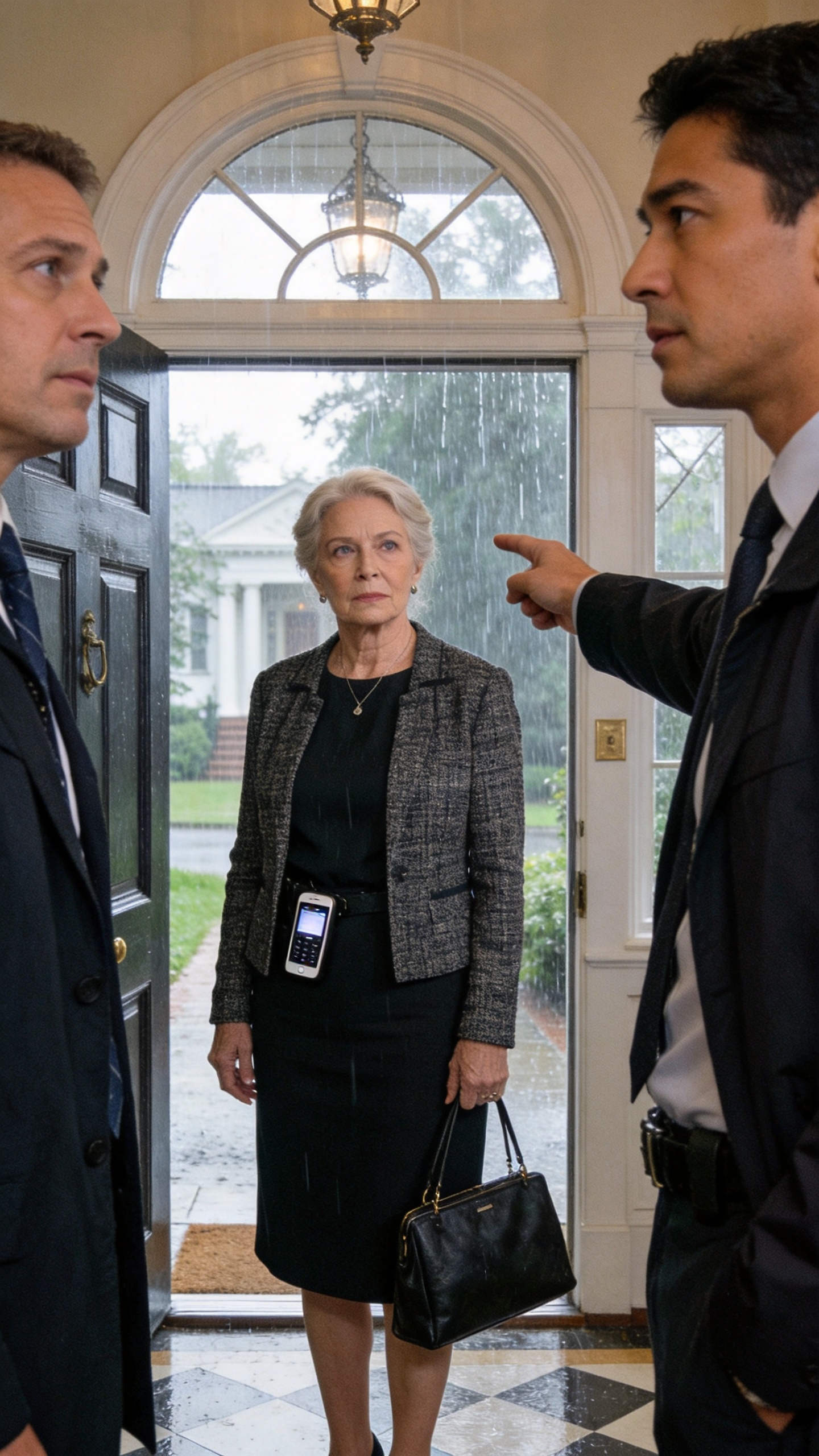
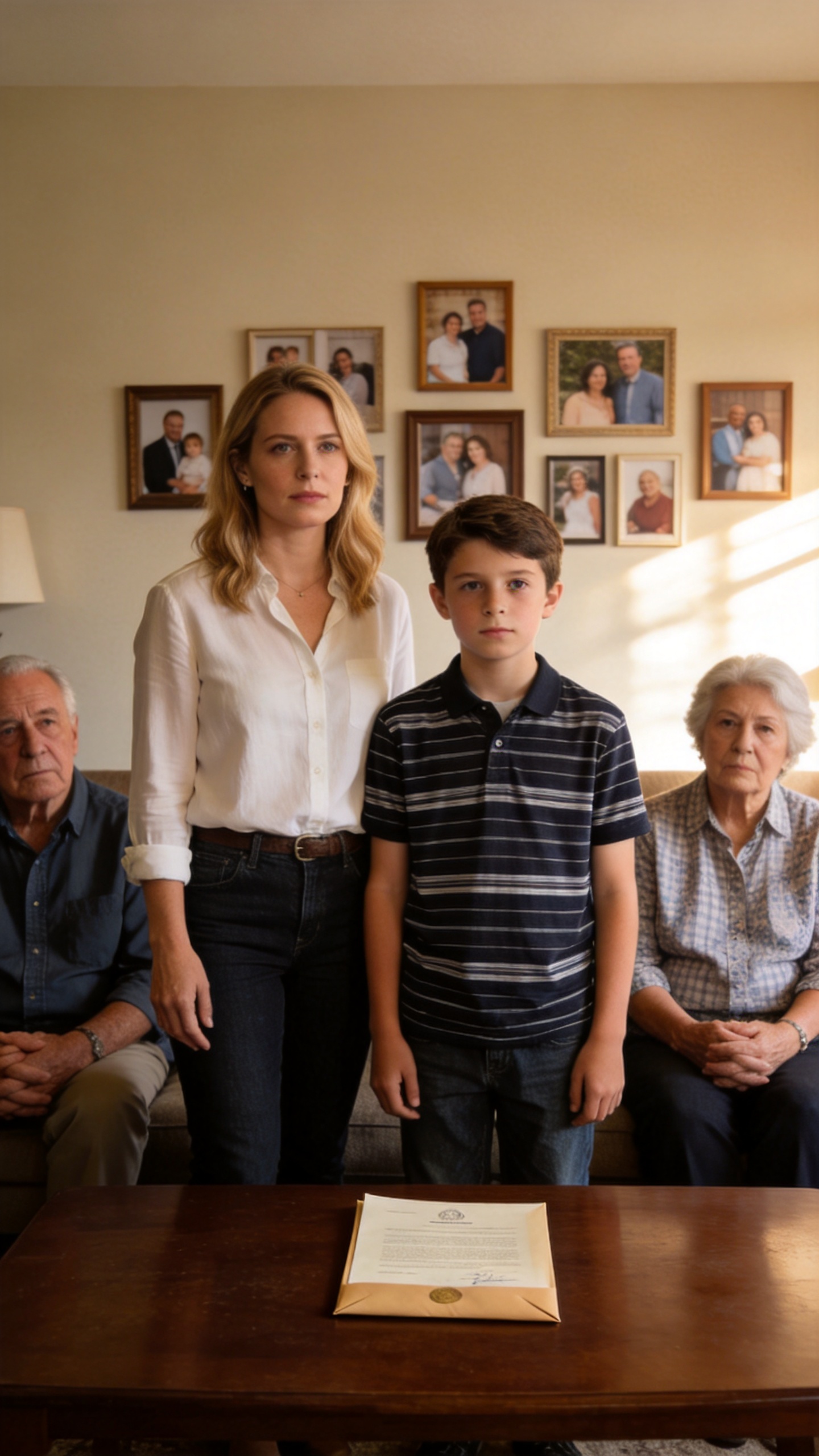
My son, Ethan Reed, grasped my arm tightly, as if I were on the verge of collapsing. Then, he looked at the detectives standing in my foyer and said in a calm voice, "My mother killed my father for the inheritance." I dropped my eyes and let him have his moment in the spotlight. Detective Ava Grant stood near the entrance of Reed House.
Rainwater dripped from her coat onto the marble floor that my husband had selected nearly thirty years ago. Two officers stood behind her, eyeing me warily, the way people usually look at wealthy widows. They knew there were secrets to be found. Ethan was eager to share some. "My mother hasn't been well for years," he said in a soft, pained tone. "My father planned to change his will before the accident.
She found out. Then the lake house burned down with him inside." Detective Grant studied him. "Your father died thirty years ago." Ethan swallowed at just the right time. "Some crimes take decades to come to light." I finally glanced at him. He was forty - two now, with a touch of gray at his temples.
Yet, he still wore that same wounded expression he had mastered as a child whenever he broke something and blamed the servants. He had his father's green eyes, but none of his compassion. Detective Grant turned to me. "Mrs. Reed, did your husband ever tell you he intended to change his will?" "Yes," I said. Ethan blinked. He had expected me to deny it. "He told me many things before he died," I added.
The detective's eyes narrowed. "What kind of things?" I reached into my purse. Ethan's hand tightened around my arm. This time, it wasn't support; it was a warning. From my purse, I took out an old black phone sealed in a plastic evidence sleeve. The screen was cracked, and the edges were darkened by fire.
For thirty years, it had been locked away in a safe - deposit box, along with a cassette tape, several photos, and a letter I had written to myself on the night my husband died. Ethan stared at it. For the first time that morning, he looked scared. "This was my husband's phone," I said. "It was retrieved near the boathouse before the fire reached the main cabin." "That's impossible," Ethan whispered.
Detective Grant took it carefully. "You kept this for thirty years?" "I was waiting." "For what?" I looked at my son. "For the day he accused me." Ethan forced a laugh, but it sounded hollow. "This is absurd. She could have put anything on that phone." "No," I said. "Your father did." The detective connected the phone to a portable forensic battery. The screen flickered once, then again.
A voicemail notification appeared. Ethan took a step back. Detective Grant pressed play. My husband's voice filled the foyer, rough with smoke and panic. "Amelia, if you hear this, don't trust Ethan. He locked me in. He said no one would believe a nine - year - old could plan it. He was wrong." The whole house went quiet. Ethan didn't move.
His face still wore that wounded mask he had shown the police, but his jaw started to tremble. "That's not my father," he said. Detective Grant replayed the message. Again, David's voice came through the static. One officer looked at Ethan. The other looked at me. I had dreamed of this moment for thirty years. In my dreams, the truth was clear and powerful. Real life was much messier.
It came through an old burned phone, a rain - soaked foyer, and a detective with tired eyes. Ethan finally spoke. "She made him record that before she killed him." "He says your name," Detective Grant said. "He was confused." "You just said it wasn't his voice." Ethan snapped, "I said she faked it." "No," I said quietly. "You said it was impossible." He turned to me, and hatred flashed across his face.
"You should have kept quiet," he said. "I did," I replied. "For thirty years." Detective Grant looked at me. "Why didn't you bring this to the police when it happened?" "Because Ethan was nine." "That doesn't explain hiding evidence." "It explains a mother making the worst mistake of her life." Ethan gave a bitter laugh. "There. She admits it."
The Revealed Past
"I admit I loved you," I said. "That was my mistake." His expression changed for a brief second. The boy inside him emerged—not innocent, never innocent, but angry that I had mentioned love in front of strangers. I continued, "Your father called me that night before the line went dead. He told me you had taken the key. He told me you were outside the lake house, watching him through the window.
I drove there as fast as I could. By the time I arrived, the boathouse was already burning." "You left him there," Ethan said. "No," I answered. "You did." Detective Grant stopped writing. Ethan moved towards me. One officer immediately stepped closer. I opened my purse again and took out a brittle cream envelope with my name written across the front in David's handwriting.
"This is what your father wanted to discuss that weekend," I said. "He had realized you were not just lying, stealing, or misbehaving. You were hurting people and enjoying it. He had spoken to a child psychiatrist. He wanted to get you help." Ethan's eyes hardened. He wanted to get rid of me. "He wanted to save you." "He loved you more." There it was. Not grief. Not justice. Not inheritance.
A child's jealousy had survived inside a grown man for three decades, fueled by money, silence, and resentment. Detective Grant took the envelope. "This needs to be entered into evidence." Ethan straightened his jacket, forcing his mask back into place. "You have an old phone, an old letter, and the story of an aging woman. That's all." "No," I said. "There is one more thing." He froze.
From the side pocket of my purse, I took out a small silver recorder. "You accused me in my sitting room before the police arrived," I said. "You explained exactly how you planned to destroy me. How you found an investigator to reopen the fire. How you spread rumors with the estate board. How you intended to have me declared incompetent once I was arrested." Detective Grant looked at the recorder.
"Is it recording now?" "It has been recording since breakfast." Ethan lunged. The officers caught him before his hands reached me. The first sound he made was not a shout. It was a laugh. Small at first. Then louder. It echoed through the foyer and seemed to shake every hidden secret Reed House had held for thirty years.
Detective Grant stepped back, on high alert, the way experienced detectives do when a mask is about to be torn off. I was shaken. "You were quick," I said. His mouth closed. Grant nodded to one of the officers. "Read him his rights." As the officer began, Ethan stared only at me. "You think this ends with me in handcuffs?" he asked. "No," I said. "I think this began when you watched your father die."
For the first time, something like pain crossed his face. Not remorse. Only pain at being seen. They took him into the library while Detective Grant stayed with me in the foyer. Outside, the rain grew heavier. Through the closed doors, I could hear Ethan speaking again, his voice calm and polished. He was already creating a new version of the truth. Detective Grant watched me carefully. "This won't be easy."
"I haven't had an easy day since 1996." "Why now?" "Because he came for me." "You could have gone to the police years ago." "I tried." Her expression changed. I looked towards the staircase, where family portraits lined the wall. David Reed stared down from the largest frame, wearing a navy suit and a hopeful smile. The artist had made him look softer than he was. David had been kind, but he was not weak.
He built homes, donated to hospitals, remembered birthdays, and refused to believe evil could sit at his own breakfast table eating pancakes. After David died, I said, "I told the county sheriff about the call. I told him David said Ethan had locked him in." "What happened?" "He asked if I had been drinking. Then he asked if I understood what shock could do to a grieving woman.
Then he told me no jury would believe a nine - year - old boy carried gasoline from the toolshed, jammed a chair under a door handle, and stood outside while his father died." Grant looked down at the phone. "But the voicemail—" "The phone disappeared before investigators finished searching the scene. I found it two days later in an old rain barrel behind the boathouse.
Ethan must have thrown it there when he panicked." "And you hid it." "Why?" I could have lied. I had spent most of my life lying through silence. But once truth enters a room, it doesn't like being asked to wait outside. "Because when I found the phone, I also found Ethan sitting inside David's closet, wearing his father's watch. He looked up at me and said, 'Now you only have me.' " Detective Grant said nothing.
"I wasn't brave," I continued. "I was terrified. I had already lost my husband. I thought if I gave them the phone, I would lose my child too. Maybe not to prison, because he was only nine, but to doctors, courts, headlines, institutions. I thought I could manage him. Watch him. Love him into becoming human." The detective's face softened briefly, but she didn't let sympathy replace duty. "Did he hurt anyone else?"
she asked. I closed my eyes. Memories flooded back: a stable boy thrown from a horse after a saddle strap was cut; a classmate whose scholarship letter vanished; a college girlfriend who once called me in fear, then denied everything the next morning; Ethan's business partner, Lucas Gray, who drowned after accusing him of moving money through shell companies. "Not always in ways I could prove," I said.
Grant understood. "We will need names." "You will have them." From the library, Ethan's voice rose. "This is elder abuse. My mother is confused. Ask her doctors. Ask her lawyer. She has been paranoid for years." Detective Grant opened the library door. Ethan sat at the long walnut table where David used to review blueprints. His hands were cuffed in front of him now.