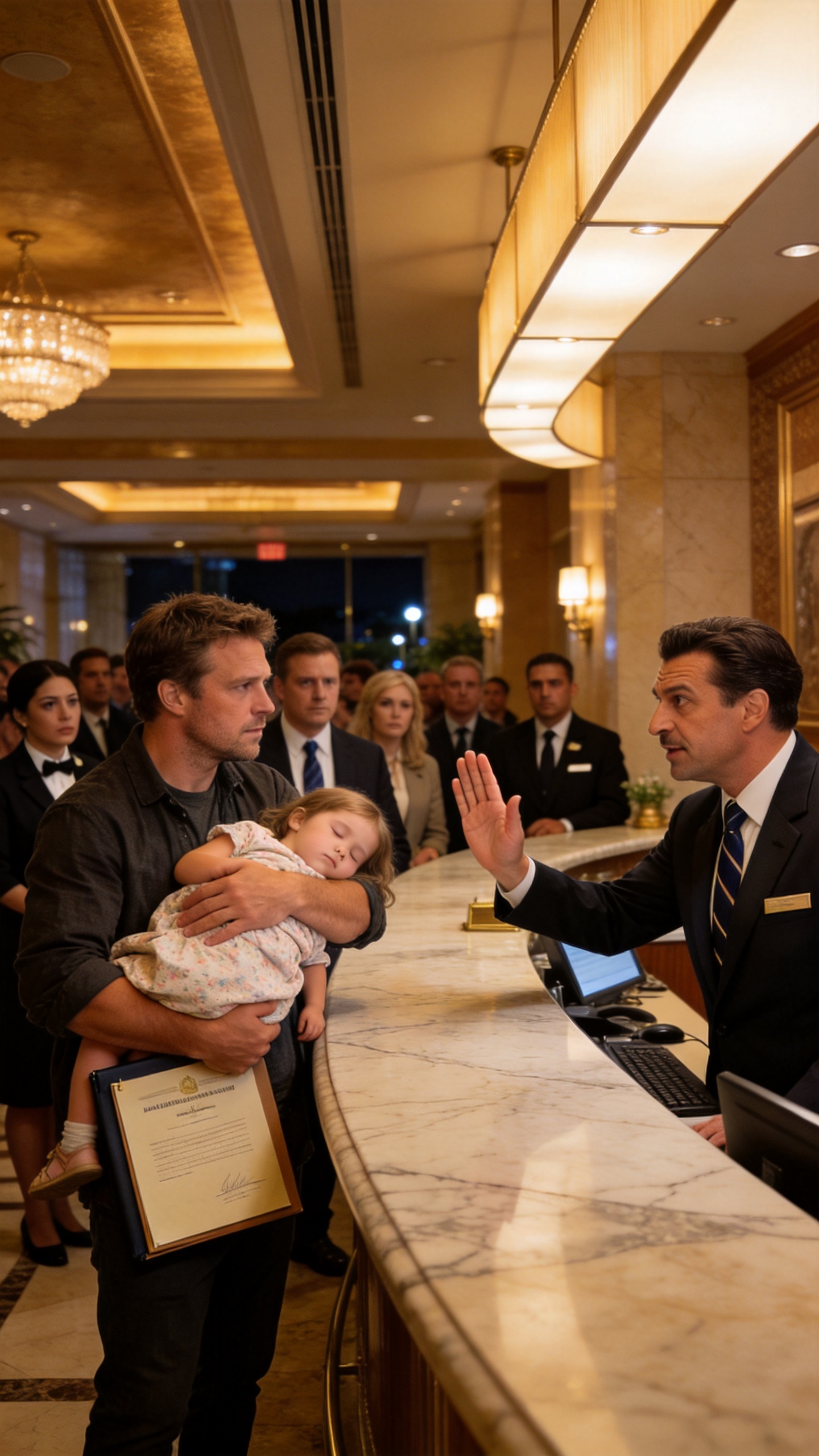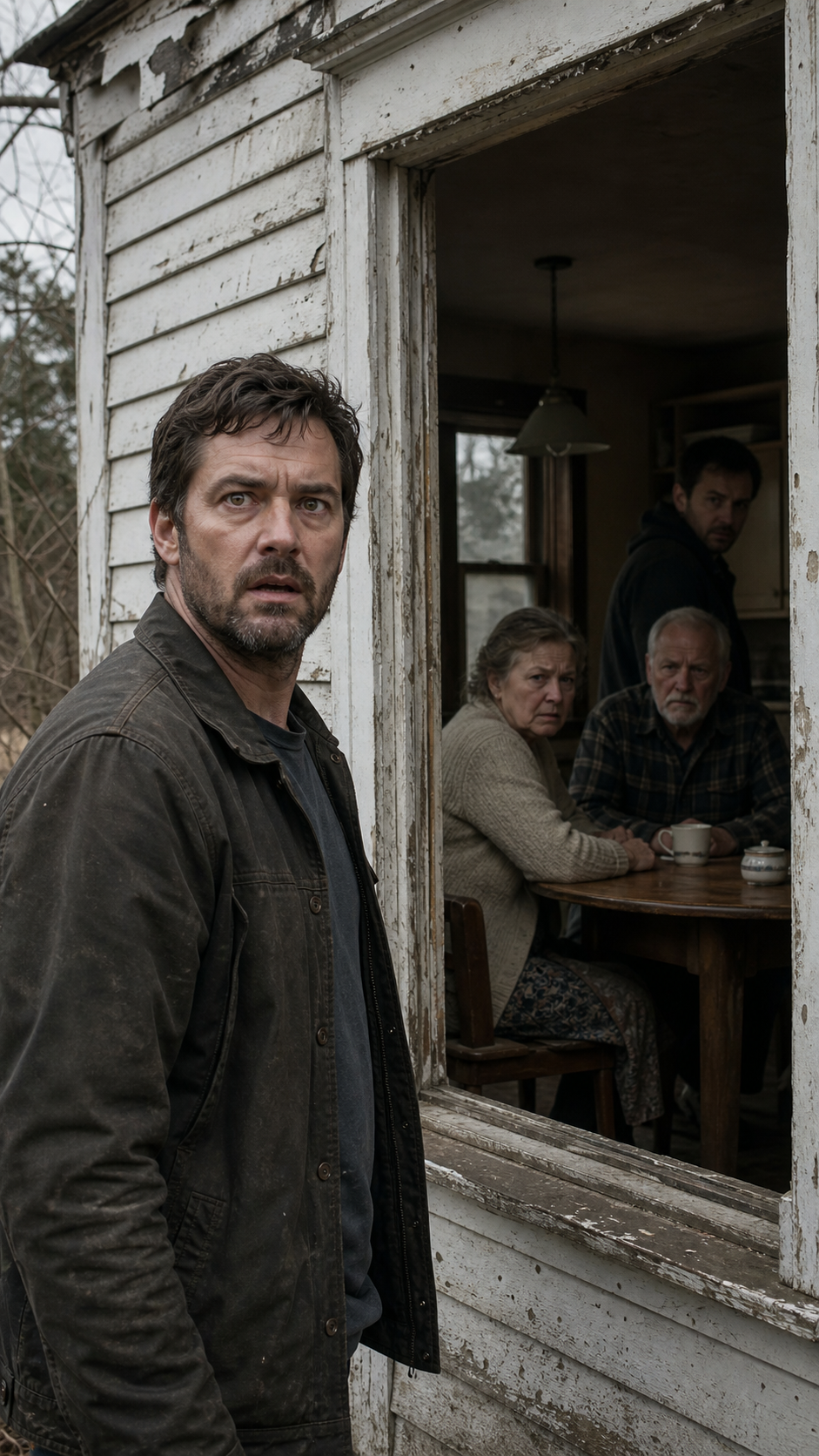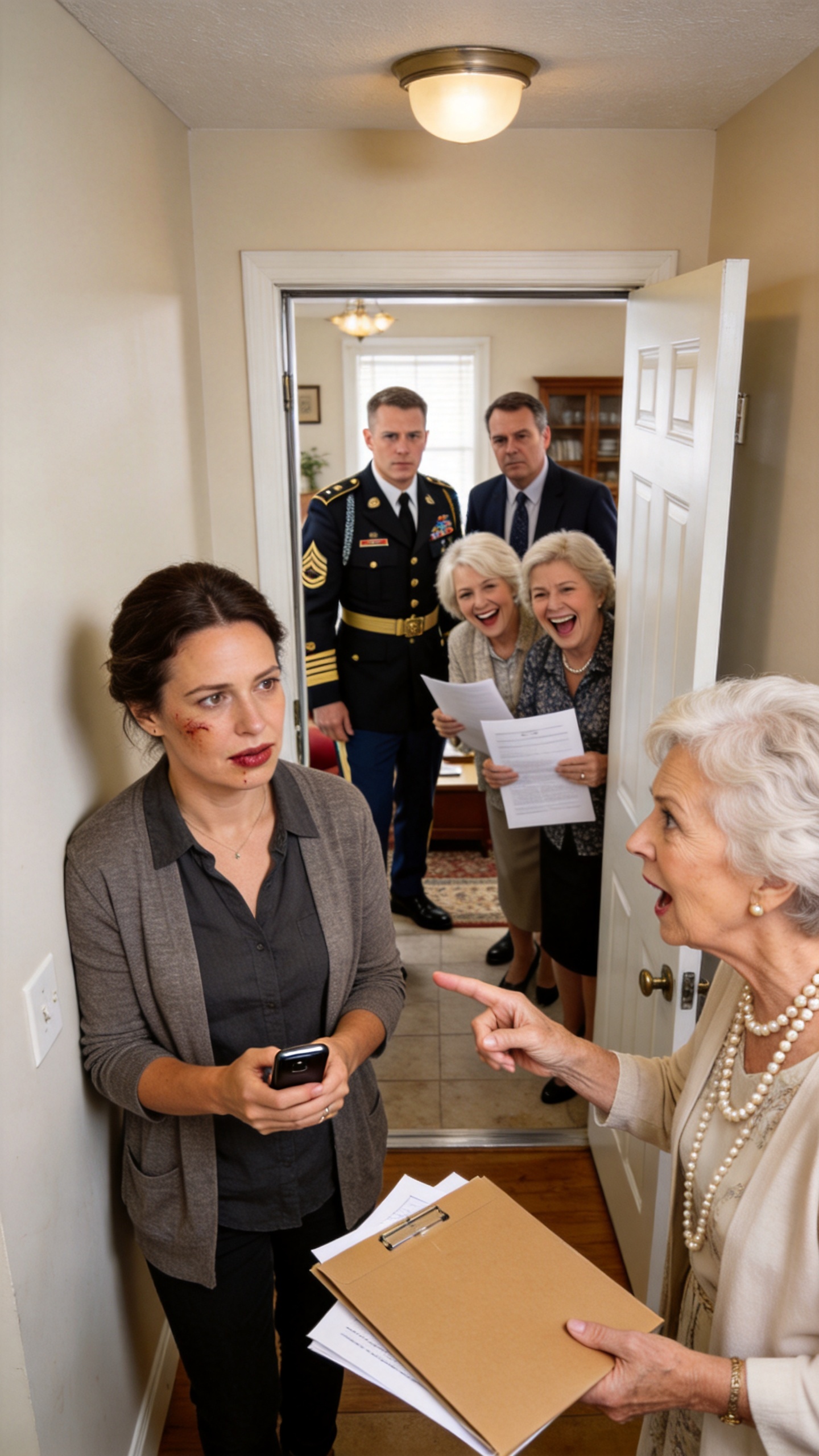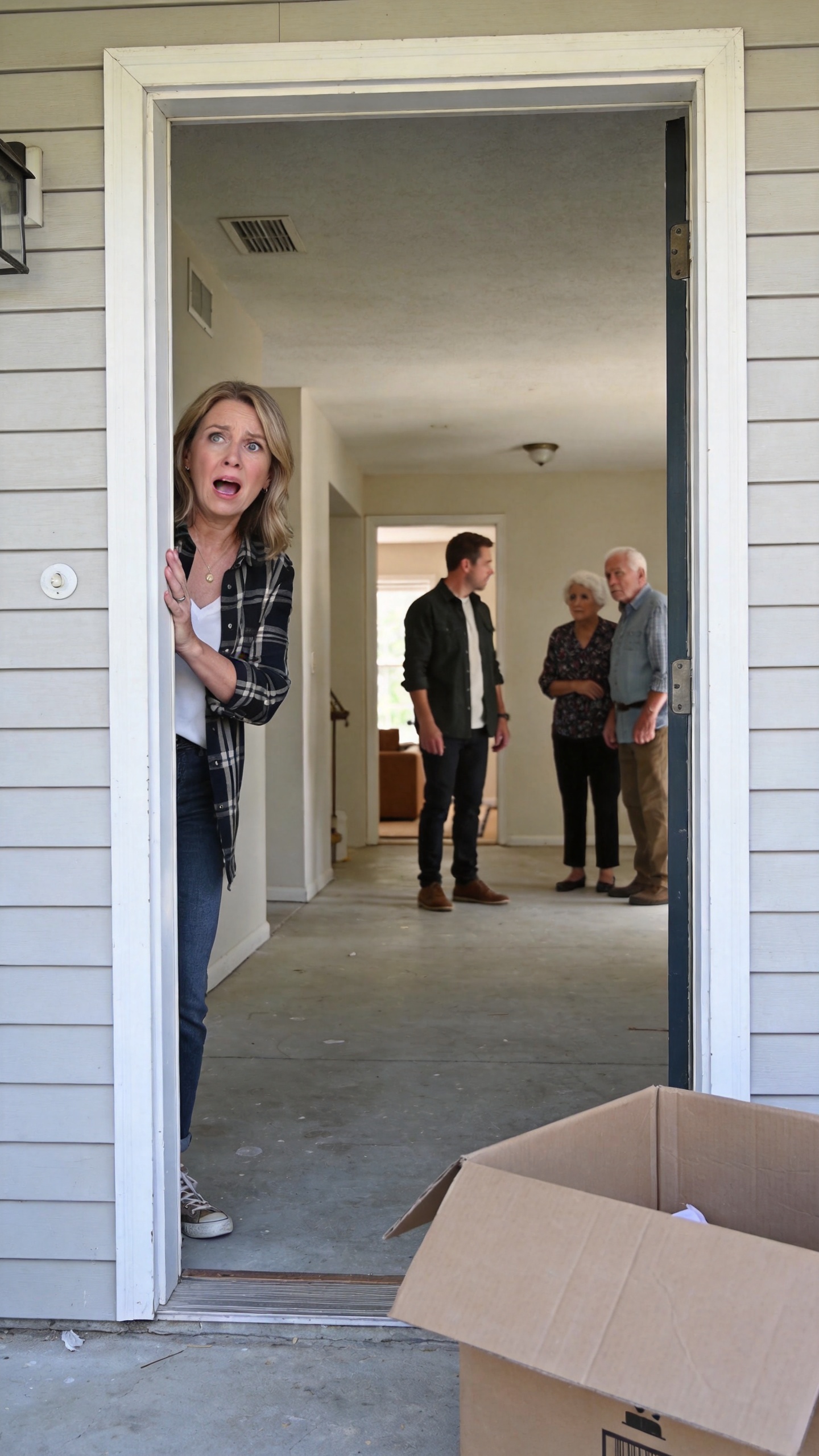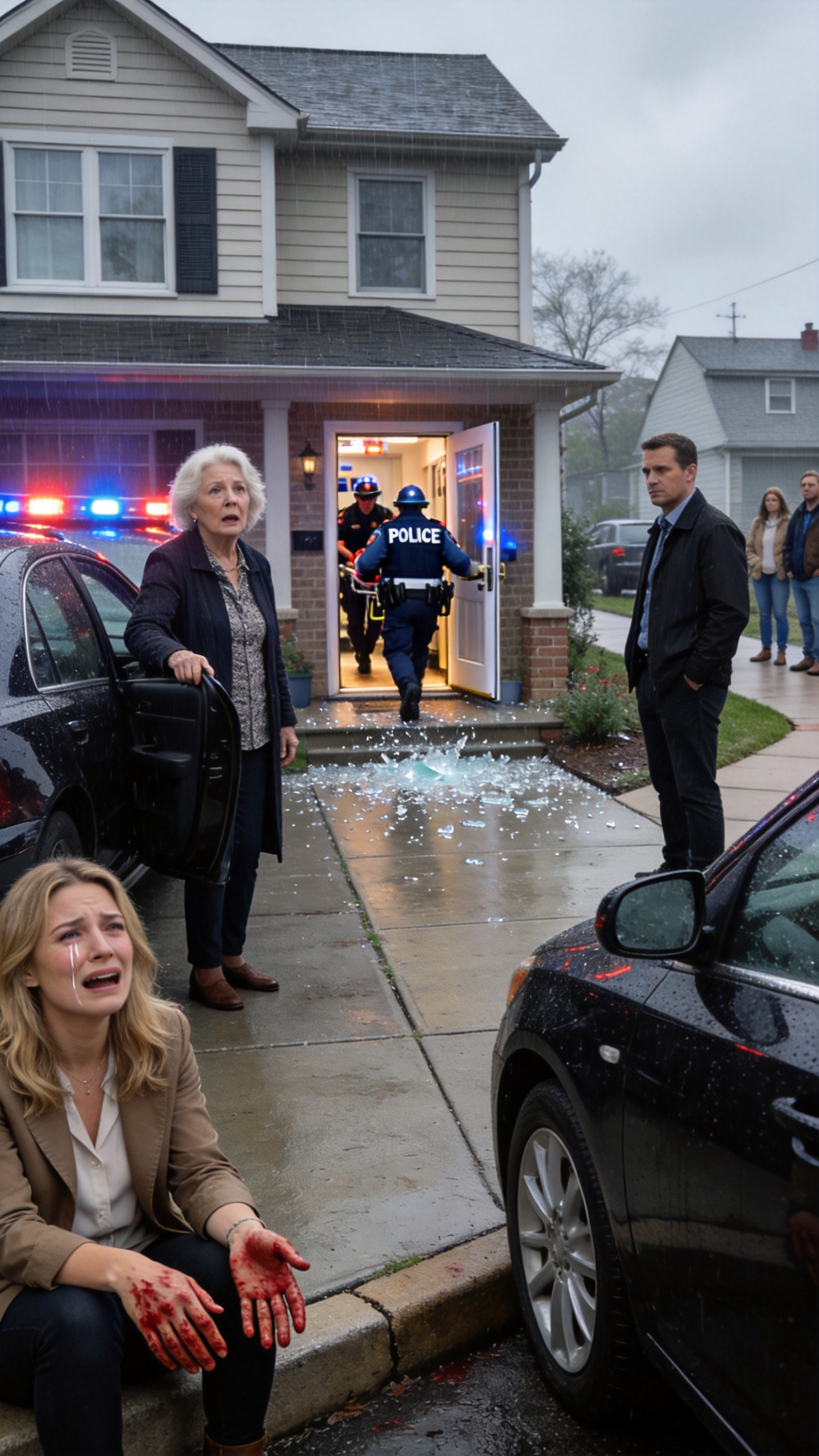
I returned from my military deployment early to surprise my family for Christmas, only to find my little girl sitting on the freezing porch, clutching her teddy bear. 'Daddy said we don’t belong here anymore,' she whimpered. Looking through the window, I saw him helping his mistress decorate our family Christmas tree. I didn't bother knocking. I just scooped up my daughter and said, 'Come with Mom.' They had absolutely no idea they had just made the biggest mistake of their lives.
“I didn’t open this.” Captain Torres printed the statement. “Then we document that.” That became the rhythm. Find something. Print it. Save it. Document it. No shouting. No threats. Just paper.
By late afternoon, I had a civilian attorney referral: Rachel Sloan, a family-law attorney in Colorado Springs who handled military divorces.
Before I left, Captain Torres looked across her desk. “Do not confront him alone. Do not sign anything. Communicate in writing when possible. Keep all messages. And Captain Grant?”
“People who believe they have control usually keep making mistakes when they think nobody is watching.” That evening, Ryan texted: You need to stop embarrassing me. My mom says you’re unstable. Bring Lily home.
I stared at it for a long time. Then typed one sentence. Lily is safe with me. Further communication should be in writing. His reply came seconds later. You’ll regret this.
I took a screenshot. For the first time since Christmas Eve, I almost smiled. Not because I was happy. Because Ryan had just given me exactly what Captain Torres said he would. Another mistake.
The Hearing
For two weeks, I stayed quiet. Not weak quiet. Strategic quiet. I moved into a short-term rental near base. I bought Lily a coat, mittens, boots, toothbrush, pajamas, and a moon-shaped night-light. I enrolled her in counseling. I changed passwords.
I opened a separate bank account. I redirected my pay. I gathered documents until the folders made my arms ache.
Ryan filled the silence with arrogance. First angry messages. Then sweet ones. Then angry again. Natalie, let’s not destroy each other. You’re keeping my daughter from me. My mother says you’re poisoning Lily.
Vanessa thinks you’re doing this because you’re jealous. Just sign the papers and we can all move on.
That was the first time I knew he had already prepared divorce papers. Three weeks after Christmas, they arrived by certified mail. I sat in Rachel Sloan’s office while she read them.
“He wants the house,” she said. I nodded. “He wants primary decision-making authority.” I stared at her. “He wants one vehicle, most of the furniture, and spousal maintenance.”
I laughed once, without humor. “He wants me to pay him support?” “He claims he sacrificed his career to support your military service.”
Ryan had sacrificed jobs the way some people sacrifice gym memberships: loudly, repeatedly, and always with an excuse. Rachel kept reading. “He also claims you abandoned the marital home on Christmas Eve.”
My hands went still. “He put our daughter outside.” “Yes,” Rachel said. “And we’re going to make sure the court knows that.”
We filed a response. Then discovery began. Discovery is a polite legal word for opening every closet in a marriage and seeing what falls out.
Bank records. Credit cards. Receipts. Tax returns. Business filings. Texts. Photos. Insurance documents. Ryan fought every request, which only made Rachel more interested. “He’s hiding something,” she said.
She was right. His first sworn financial affidavit claimed almost nothing: low income, minimal assets, ordinary debts, no major spending, no valuable property. Rachel placed that affidavit beside the records we had collected.
The lie was almost insulting. Hotel stays. Jewelry. Wire transfers. A storage unit. Equipment bought under a business name with no matching revenue. Cash withdrawals that lined up with weekends he claimed to be watching Lily at home.
Then Rachel found the signatures. A loan document. A credit application. A card authorization. My name was at the bottom of each one. But it was not my handwriting. “I didn’t sign these.”
Rachel did not look surprised. “I believe you.” Those words felt like a door opening.
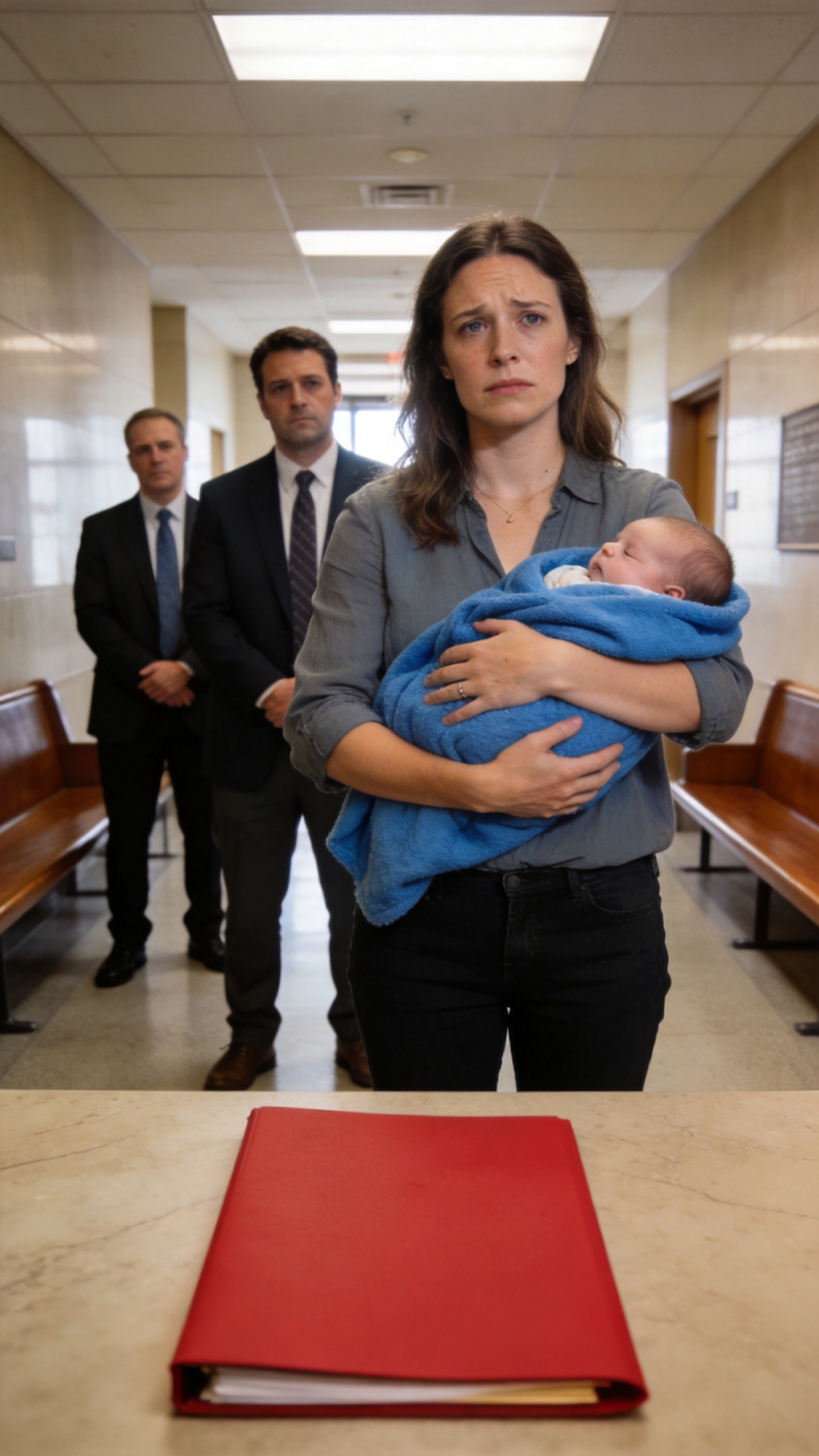
At the temporary orders hearing, Ryan wore a navy suit I had paid for and sat beside his attorney with the wounded expression of a man who had practiced in the mirror. Marjorie sat behind him. Vanessa sat two rows back, scrolling on her phone.
I sat with Rachel, my uniform pressed, my hands folded, Lily’s tiny mitten tucked inside my purse because she had left it in the car and I could not put it down.
Ryan testified that I was cold, career-obsessed, unpredictable. He said he was lonely. He said he only asked Lily to wait on the porch “for a minute” because emotions were high. He said I took everything out of context.
Then Rachel stood. She did not raise her voice. She showed the timestamps from Vanessa’s photos. The weather report. My phone records. Ryan’s messages, where he never asked whether Lily was safe. The financial affidavit. The bank statements.
The documents with signatures I denied making.
I watched Ryan’s face change slowly, like a house realizing the foundation had cracked. When Rachel finished, the courtroom was very quiet.
The judge looked at Ryan over her glasses. “Mr. Mercer, you and your counsel should be prepared to address these discrepancies fully.”
Marjorie’s hand flew to her mouth. Vanessa stopped scrolling. Ryan turned toward me with anger in his eyes, but beneath it was something new. Fear.
For the first time since I found Lily on that porch, I knew the truth no longer depended on my pain. It had documents. It had dates. It had proof.
A Smaller House, A Safer Home
The divorce was finalized six months later. I did not get everything. Nobody does.
But I got what mattered: primary custody of Lily, decision-making authority for her education and medical care, a structured visitation schedule, my retirement protected, and hidden debts assigned where the court believed they belonged.
The house was sold. I thought the sale would destroy me. That house held Lily’s pale yellow nursery, her height marks on the pantry door, and the life I once thought Ryan and I would grow old inside. But when I handed over the keys, I felt relief.
A house can hold memories. It can also hold ghosts.
With my share after the mortgage and legal costs, I bought a smaller three-bedroom home outside Colorado Springs. It had squeaky floors, a narrow kitchen, and a backyard that turned muddy after snow melted. Lily loved it immediately.
“Can my room be purple?” “Any purple you want.” “Can Teddy live here forever?” “Can I?” I knelt in front of her, paint samples spread between us. “Lily, this is your home. Forever.”
For months, she asked some version of that question every night. “Are we allowed to stay?” “Will someone make us leave?” “Can Daddy take my bed?”
Each time, I answered the same way. “You are safe. This is your home. Nobody is putting you outside again.” Eventually, she stopped asking. That was when I knew healing had begun.
My Army life changed too. A few months after the divorce, I was selected for promotion to major. The ceremony was simple: a small auditorium, metal chairs, a flag in the corner, soldiers who had seen me tired, muddy, angry, and determined.
Major Daniel Price pinned the oak leaf onto my uniform. “You earned this,” he said quietly. “Thank you, sir.” He smiled. “Now you outrank half the people who underestimated you.”
For the first time in months, I laughed without forcing it.
Ryan’s life did not unfold as smoothly. His remodeling business collapsed under bad reviews, unpaid bills, and court findings he could not explain away. Vanessa left before summer and moved to Arizona with a man who owned a boat dealership.
I felt nothing when I heard. Not satisfaction. Not sadness. Nothing. That surprised me most.
Nearly a year after the night on the porch, Ryan came to my front door on a cold December afternoon. He looked thinner, older, humbled in a way I had never seen. He held a small snowflake gift bag.
“I brought something for Lily.” “She’s at a birthday party.” “I can wait.” “No. You can leave it.” His eyes dropped to the porch boards. “I deserved that.” I said nothing. “Natalie, I’ve been wanting to apologize.”
The old me had imagined this moment many times. I thought I would want to yell. But standing there, I realized I did not need him to bleed for me to be healed. “I was wrong,” he said. “About everything.”
The words came slowly. “I told myself you made me feel small. But that wasn’t you. That was me. You were working, serving, paying bills, keeping us afloat, and I hated you for being stronger than I was.”
Wind moved through the bare branches. “I hurt Lily,” he whispered. That was the first thing he said that mattered. “Yes,” I said. His eyes filled. “I don’t know how to fix that.”
“You don’t fix it with one apology. You fix it by becoming safe again and again, for years if you have to.” He nodded. “What about us?” There it was. The question I once feared. Now I knew how to answer.
“There is no us, Ryan.” He swallowed. “I still love you.” “I hope someday you learn how to love without needing someone else to become smaller.” He closed his eyes. I softened my voice, but not my boundary.
“I forgive enough not to live angry. I do not forgive enough to go backward.” For once, he did not argue.
Slow Repair
Marjorie called three days after New Year’s. I almost let it go to voicemail. For years, Ryan’s mother had spoken to me like my uniform was a personal failure.
She blamed every crack in my marriage on my service, my schedule, my independence, my refusal to become smaller for her son.
But I answered. “Hello.” Silence. Then, “Natalie, it’s Marjorie.” “I know.” Her voice shook. “May I speak with you for a moment?” “A moment.” She took a rattling breath. “I owe you an apology.”
I looked across the kitchen. Lily sat at the table covering a cookie with so much frosting it looked like a pink mountain. “What changed?” I asked.
“I went to the courthouse,” she said. “I wanted to see the records myself. Ryan told me the judge was biased. He said you manipulated everything. He said you were punishing him because of Vanessa.”
Of course he had. “I believed him,” Marjorie whispered. “I wanted to believe him.” “I read the findings. The bank records. The messages. The documents. I read what happened on Christmas Eve.”
My grip tightened around the phone. “I didn’t know Lily had been outside like that. Not really. He told me she was on the porch for a minute while people calmed down.” “She was freezing.”
The Last Lie Broke
The Door Finally Opened
The Room Went Quiet
The Evidence Came Back
The Truth Moved First
of 3
A Family That Learned to Heal
One November, Lily’s school held a Veterans Day celebration. Each child had to interview someone who served. Lily chose me and introduced me to her class with confidence that made my eyes burn.
“This is my mom,” she said into the microphone. “Major Natalie Grant. She helps soldiers get what they need, and she always comes home.” Always. After my talk, the children asked questions.
“Were you scared?” “What did you do?” “I did my job scared.” That answer satisfied them more than any heroic speech could. Afterward, Ryan found me near the folding chairs. “I never heard you talk like that before.”
“I didn’t talk about work much at home.” He looked ashamed. “You probably didn’t feel like you could.” He nodded. “I should have been proud of you.”
I looked across the room at Lily showing Marjorie a drawing of me in uniform beside a Christmas tree. “Yes,” I said. “You should have.” There was no anger in it anymore. Just fact.
That December, Lily asked for something unexpected. “Can Daddy and Grandma Marjorie come for Christmas dinner?” I paused with a grocery bag in my hand. “Why do you want that?”
She shrugged. “Because they’re part of my family. Not like they live with us. Just… part.” Children can carry truths adults make too complicated. So I said yes.
Christmas morning came bright and cold. Snow covered the yard. The house smelled of cinnamon rolls, turkey, pine, and the vanilla candle Lily insisted made everything “fancier.” At noon, Ryan arrived with a pecan pie from the bakery Lily loved.
Marjorie came behind him with homemade cookies.
Nobody pretended the past had not happened. That was why the day worked. “Merry Christmas,” Ryan said. “Merry Christmas.”
Lily ran down the hall and threw herself into his arms. Then Marjorie’s. Then she grabbed both their hands and pulled them inside. “Dinner is almost ready, and Mommy says nobody is allowed to argue near the rolls.”
Ryan looked at me. I lifted an eyebrow. “She’s quoting accurately.”
Dinner was simple: turkey, mashed potatoes, green bean casserole, rolls, cranberry sauce, pie. The table did not look like a magazine. One candle leaned sideways. Lily’s napkins looked nothing like trees, despite her insistence.
Halfway through dinner, Ryan set down his fork. “I’d like to say something.” The room went still. He looked at Lily first.
“When you were little, I made choices that hurt you. I can’t undo them. But I want you to know I remember, and I’m sorry. I will spend the rest of my life trying to be the kind of father who makes you feel safe.”
Lily looked at him for a long moment. Then she reached across the table and squeezed his hand. “I know, Daddy.” Marjorie wiped her eyes. “I’m sorry too, sweetheart.” Lily gave her a small smile. “You can keep being better.”
That was Lily. Kind, but not foolish.
After dinner, she dragged everyone outside to see the snowman she had built that morning. It had one stick arm, a crooked carrot nose, and my old patrol cap on its head. Ryan stood beside me on the porch.
“I still think about that night,” he said. “So do I.” “I wish I could erase it.” I watched Lily laughing in the snow, cheeks pink, coat zipped, boots warm and dry. He turned to me.
“If that night had never happened, I might have kept teaching Lily that love means enduring anything quietly. Instead, she learned that love protects. Love acts. Love does not leave children in the cold.”
Ryan lowered his head. “You’re right.” He gave a sad little laugh. “You always did.” “No,” I said. “I learned.”
Later, after Ryan and Marjorie went home, Lily and I stood beside our Christmas tree. The lights reflected in the window, but this time I did not see a lie staring back. I saw our living room. Our stockings. Our home.
Lily leaned against my side. “Are we a happy family?” I wrapped my arm around her shoulders. “We’re a family that learned how to heal.” She thought about that. Then she smiled. “I like that better.”
So did I.
The greatest victory was never Ryan losing money, Vanessa leaving, or the court proving me right. The greatest victory was this: my daughter standing in a warm house on Christmas night, safe and loved, never again wondering whether she belonged.
Some people hurt you and expect their betrayal to become the center of your life.
But sometimes, if you are brave enough to walk away with shaking hands and a broken heart, you build a future so peaceful that their betrayal becomes only the first chapter of your freedom.
THE END
The Room Went Quiet
The Evidence Came Back
The Truth Moved First
I stayed long enough to watch the silence settle around them.