For 8 Years I Mowed My Elderly Neighbor's Lawn for Free - After Her Funeral, Her Lawyer Gave Me a Sealed Envelope and Said, "She Wanted You to Have This"
The Morning I Crossed the Driveway
The first Saturday after Marian died, I rolled my mower to the edge of my driveway and stopped with both hands locked around the handle.
Her grass was still growing.
Her porch swing was still moving a little in the morning breeze.
But the kitchen window stayed shut, and no voice called across the drive to tell me I was too skinny to work before breakfast.
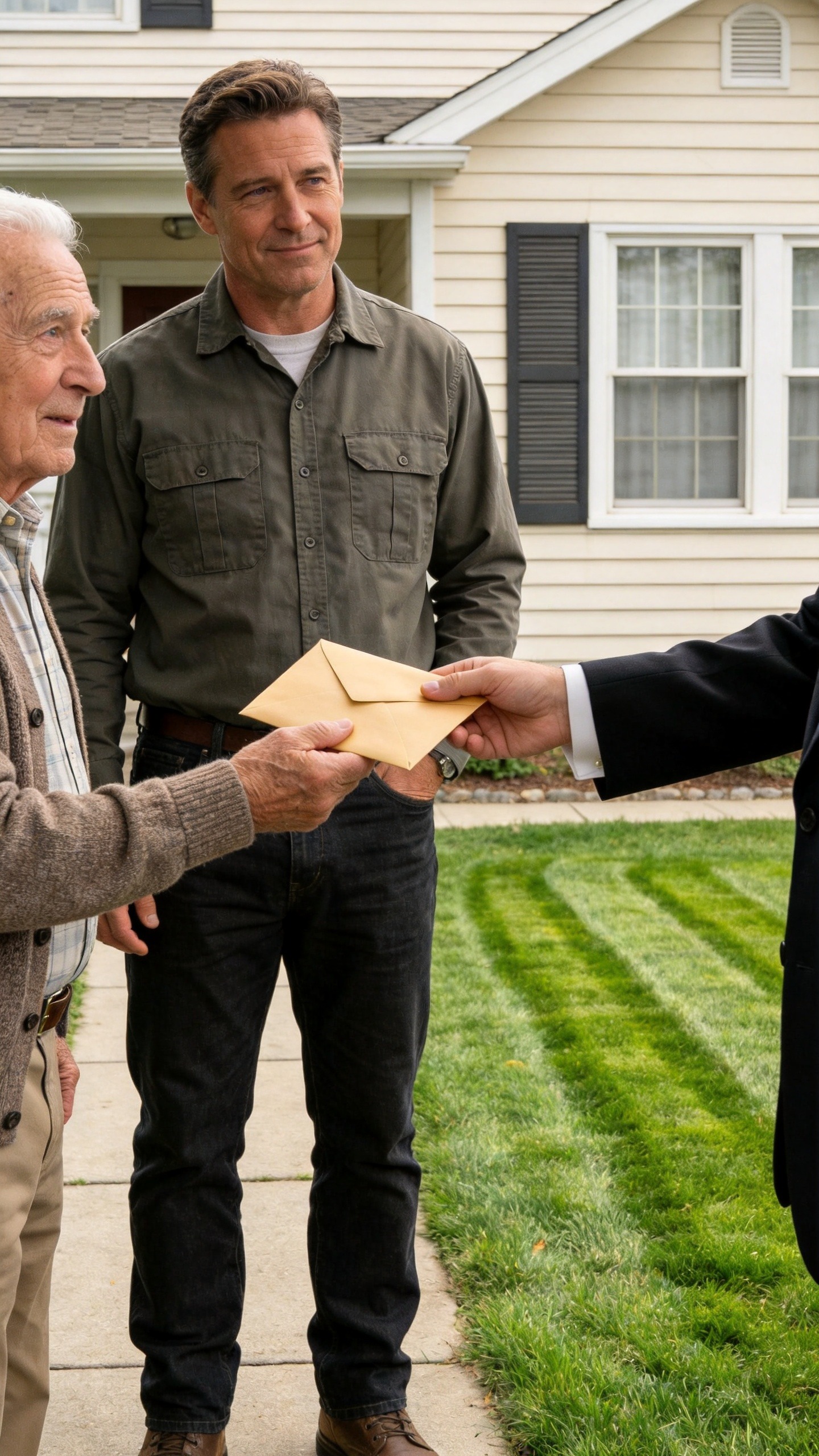
Then a lawyer walked up after her funeral with a cream-colored envelope in his hand.
"She wanted you to have this," he said.
Something small and hard slid inside the envelope when he placed it in my palm, and for the first time in eight years, I was afraid of what a Saturday might ask from me.
Marian moved into the little blue house next door when she was seventy-four.
She arrived with three cartons, one green suitcase, and a framed photograph of her late husband, Arthur, wrapped in a towel like it was made of glass.
At first, she was only the polite widow next door.
She planted sunflowers along the back fence. She wore yellow gardening gloves. She asked questions that sounded ordinary until I realized she was using them to make every conversation last longer.
"How is your wife, Nora?"
"Did Lily like the tomatoes?"
"Is Caleb still searching for clues in the hedges?"
She remembered everything because there was no one waiting inside her house to hear it from her later.
One May morning, I heard her mower coughing in the yard.
It was not the ordinary sound of a stubborn engine.
It was a start, a choke, a scrape, and then a silence long enough to make me step away from the sink and look through the blinds.
Marian stood in the middle of the lawn with both palms pressed to the handle, her shoulders rising as if she had been arguing with the machine and losing.
Marian was pushing it through grass that had climbed above her ankles. Every few feet the machine bucked, died, and made her lean over the handle to catch her breath.
I crossed the driveway before I had time to make the decision.
"Let me finish that," I said.
She straightened and wiped her forehead with the back of one gloved hand.
"I am perfectly capable, young man."
The mower coughed once more and went silent.
Marian stared at it, then sighed.
"I am also capable of recognizing betrayal by machinery."
I laughed, took the handle, and cut the rest of the lawn.
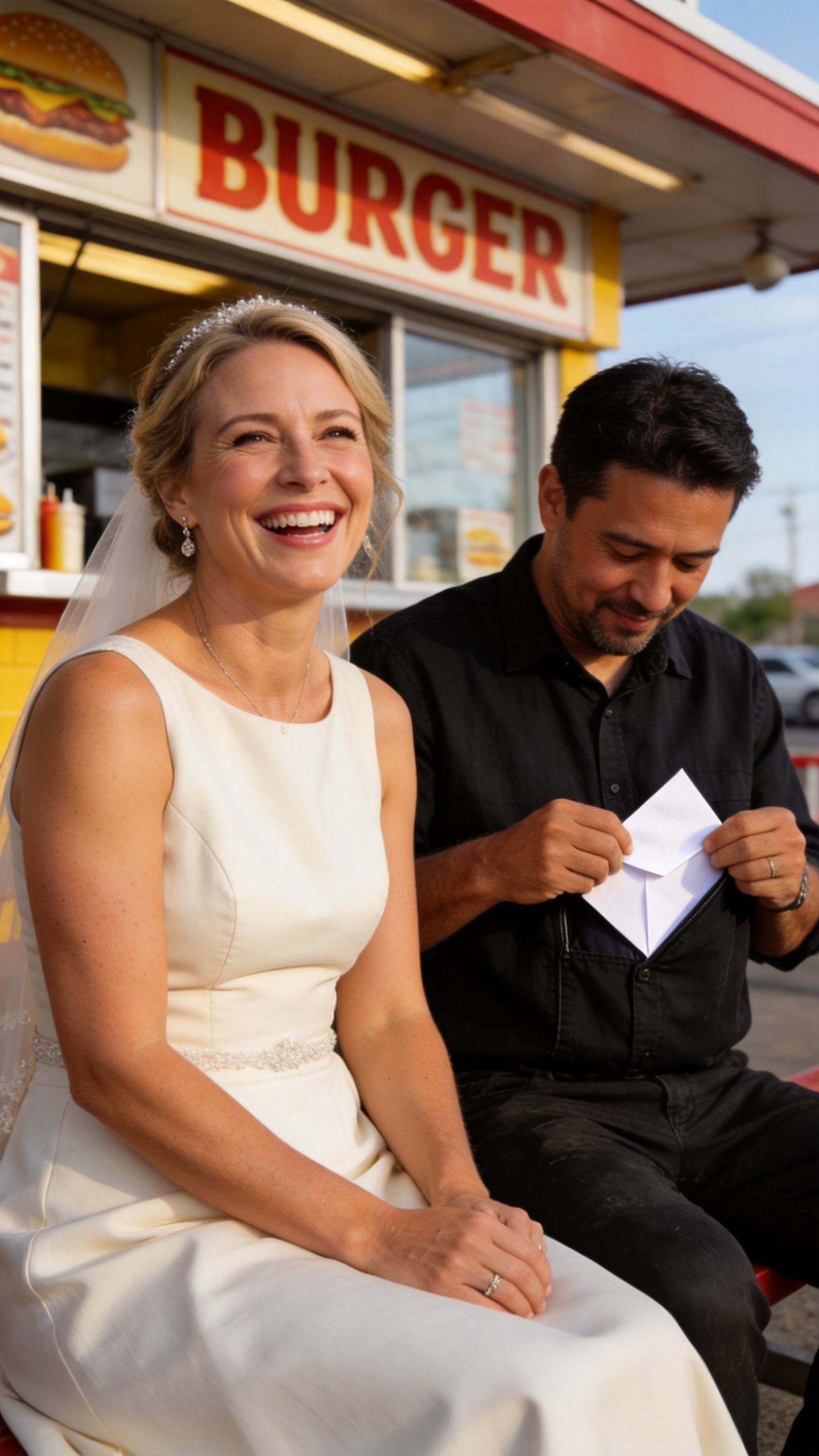
When I finished, she came out with folded bills tucked between her fingers.
I shook my head.
"Keep it. I live ten steps away."
"Evan," she said, using my name as if that should settle the matter, "you worked nearly an hour."
"Then pay me in tea."
Her face changed. It was quick, but I saw it. Relief came over her like sunlight through a curtain.
"Tea," she said, "requires pie."
That was how I ended up on Marian's porch with a sweating glass of sweet tea, a slice of apple pie too large for any reasonable plate, and two hours of stories about Arthur.
A Job That Became a Saturday
The next week, the grass barely needed trimming.
I mowed it anyway.
Marian had the kettle ready before I reached the first row.
She did not come out with money that time.
She came out with two glasses already sweating in her hands and a look that said she had been waiting near the window but did not want to be caught doing it.
"The lawn is barely awake," she said.
"Then I will be gentle."
She tried not to smile, failed, and sat in the porch chair Arthur had once used.
By the third Saturday, we had a routine neither of us admitted out loud.
I pushed the mower across the driveway. She opened the kitchen window. Nora sent the kids over after breakfast, and Marian pretended she had not already cut four pieces of pie.
Lily learned to water the flower beds without drowning them.
Caleb, who believed every adult was hiding evidence, spent each visit looking for Marian's reading glasses.
They were always in the same apron pocket.
"Found them!" he would shout.
Marian would press a hand to her chest.
"Remarkable. The police will be calling any day now."
Caleb never realized she was teasing him, and maybe that was why she never moved the glasses.
Years passed that way.
Marian came to school concerts and backyard birthdays. She brought Nora flowers on our anniversary because, as she said, husbands required "administrative supervision."
Every spring, she planted one sunflower for Arthur.
The year Lily turned six, Marian pressed a second seed into the ground and said, very quietly, "This one is so he has company."
By late summer, the two flowers leaned toward each other over the fence.
There were signs I noticed and ignored.
Some weeks, half the lawn was already cut when I arrived.
Other Saturdays, the grass looked fine, but Marian waited on the porch with tea ready and said, "It seems wild to me."
Once, rain made mowing impossible. I knocked anyway.
She opened the door before my hand came down from the wood.
"I suppose you came to inspect the mud," she said.
"I heard it was exceptional."
We sat in the kitchen and listened to water tap against the gutters.
She showed me Arthur's old coffee mug that day, chipped along the rim from a fall he had insisted was "gravity being dramatic."
Then she asked about Nora's new job, Lily's spelling test, and whether Caleb still believed the hedge beside her porch contained buried treasure.
Nobody had asked me that many questions about my own house in months.
That morning, I understood the truth without needing either of us to say it.
I had stopped coming because of the lawn.
Marian had stopped asking because of the grass.
The Porch Went Quiet
Three weeks ago, Nora walked next door early to borrow Marian's chicken pot pie recipe.
She called me from Marian's kitchen five minutes later, and her voice told me everything before her words did.
Marian was in her favorite chair.
She had passed away in the night, peacefully, with the porch light off and Arthur's photograph on the table beside her.
The next Saturday, I stood in my driveway with the mower handle in my hands and nowhere to go.
Caleb came out carrying a plastic cup.
"Miss Marian's flowers need water, Dad."
So we crossed the driveway together.
Lily watered the sunflowers. Nora stood on the porch with a pie she had baked from habit. None of us knew where to put it.
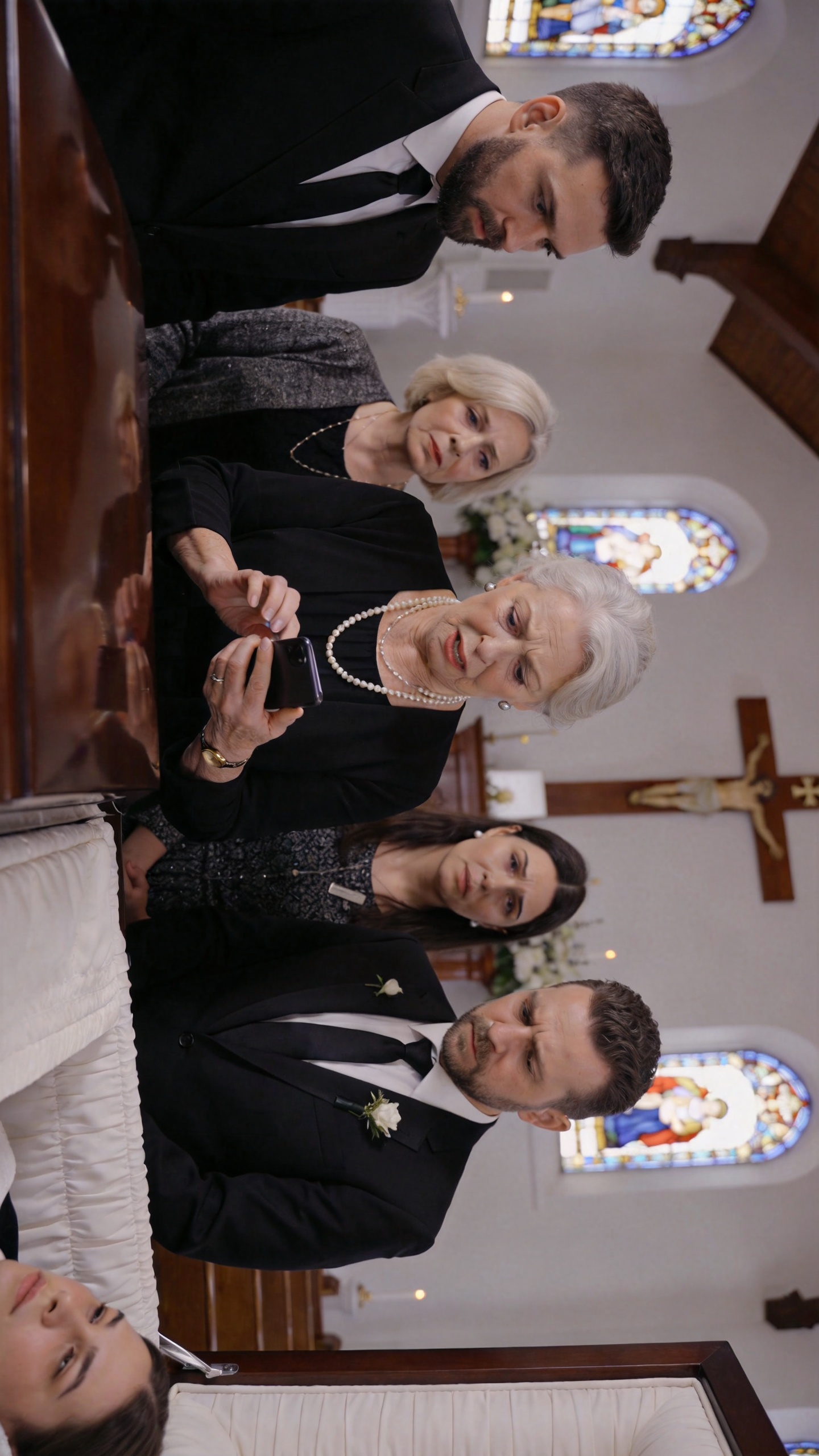
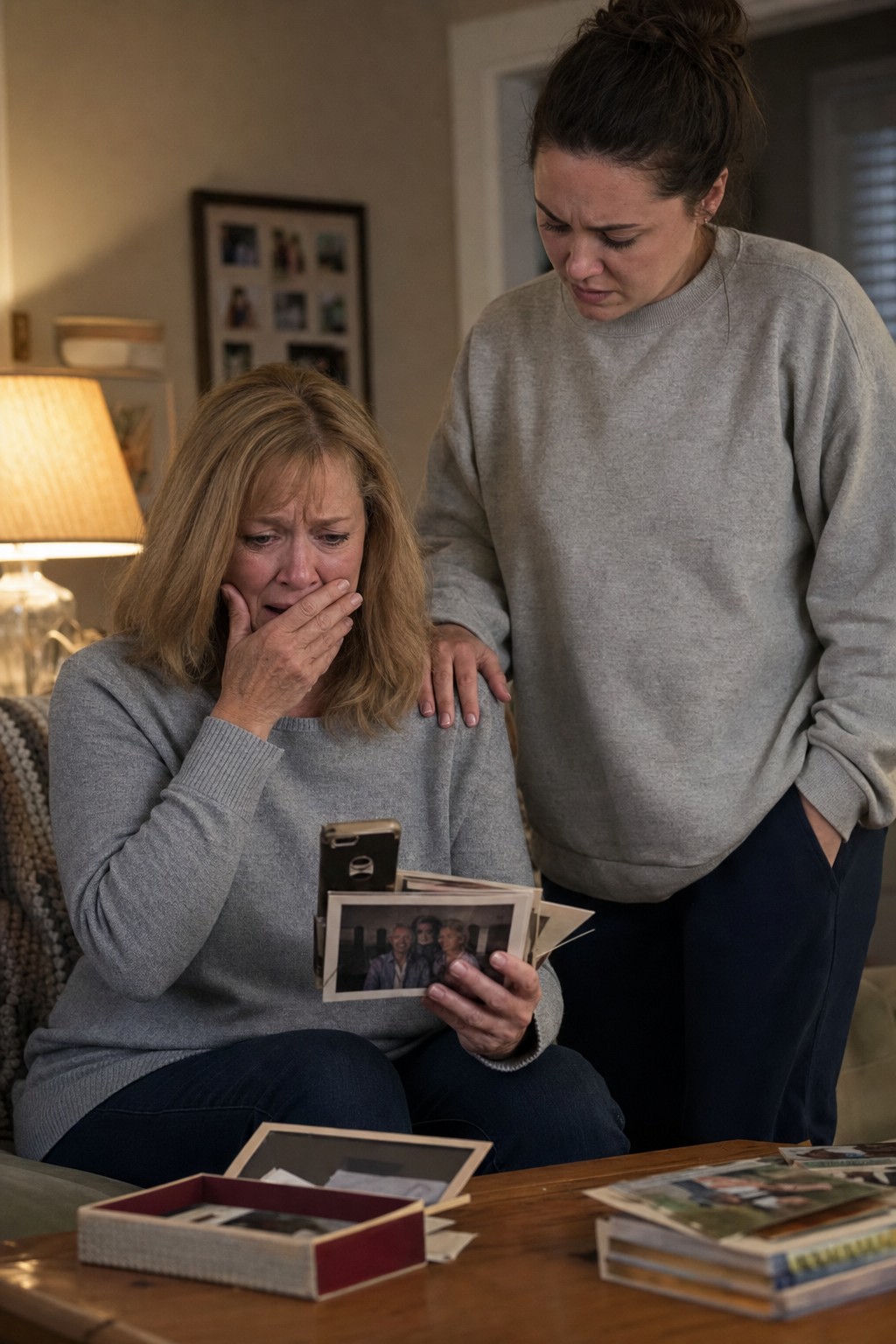
At the funeral, Marian's relatives filled the front rows.
They were polite people. They knew the town where she was born and the year she married Arthur.
But when the minister mentioned her laugh, they looked down at their programs.
One cousin dabbed her eyes when the minister said Marian had loved flowers, but she whispered to another woman that she had not known which flowers.
I wanted to tell them about the sunflowers leaning together over the fence.
I wanted to tell them she planted one for grief and one for stubborn hope.
Instead, I stood with my hands folded and felt the strange ache of knowing someone in small ways that did not fit inside an obituary.
I knew that laugh.
I knew she read the last page of every mystery novel first.
I knew she saved pie crust for the final bite.
I knew she only put cinnamon in coffee because Arthur had liked it.
Legally, I was just the neighbor.
After the burial, a man in a dark suit found me beside Marian's grave.
"Evan?"
"Yes."
"I'm Mr. Bell. I handled Marian's affairs."
He handed me a sealed envelope. My name was written across the front in Marian's careful handwriting.
Something small and solid shifted inside.
"What is it?" I asked.
Mr. Bell looked toward the road, where her little blue house sat behind the trees.