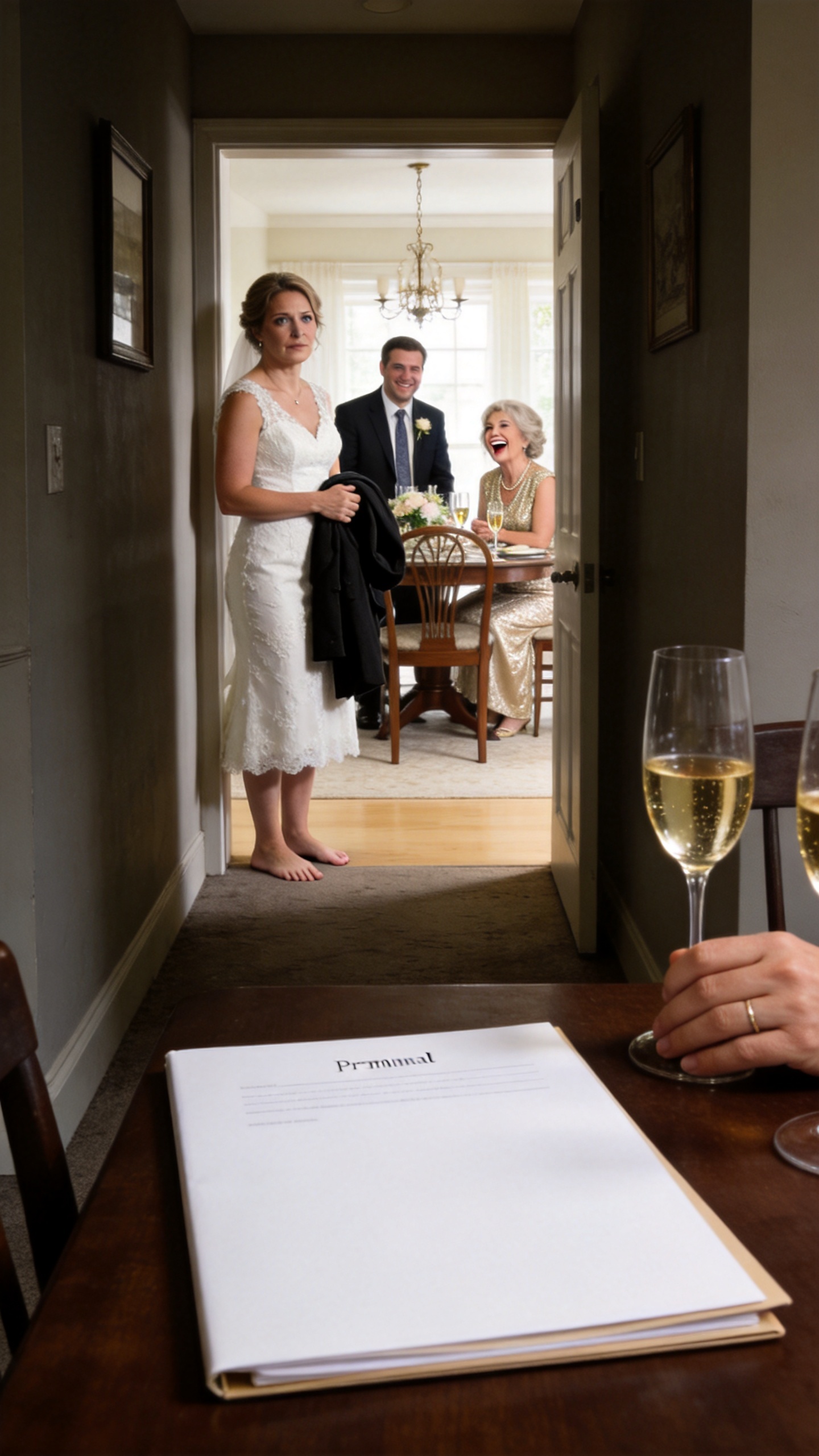
I came home to find my son’s bedroom completely gone, replaced by my mother-in-law’s dressing room. Her only explanation was, “Your husband agreed.” I stayed silent, gathered my son, and left.
Two photographs.
A model airplane.
"I found them in the trash," Daniel said.
I took the box.
I did not invite him inside.
After he left, Noah picked through the items one by one.
Then he asked the question neither of us could avoid.
"Why didn't Dad stop her before?"
I could have softened it.
I could have said grown-ups make mistakes and left it there.
But softening the truth was what had kept this entire marriage standing long after it should have ended.
"He should have," I said. "And he didn't."
Noah nodded once, like he was putting something painful into the correct place inside his mind.
Then he went upstairs with the glove tucked under his arm.
The Day The Court Saw It Clearly
The temporary custody hearing took place three weeks later.
Daniel's attorney tried to paint me as impulsive.
A tired wife.
A resentful daughter-in-law.
A woman destroying her marriage over a minor domestic dispute.
Lauren let them tell that story first.
Then she dismantled it piece by piece.
She submitted photographs of Noah's converted room.
Bank statements showing the transfer of twenty-eight thousand dollars.
Patricia's messages.
My recordings with Daniel.
And finally, the moving-company receipt Patricia had scheduled six days before I left for Chicago.
It listed removing children's furniture, disposing of personal property, and installing three custom wardrobes.
The judge asked Daniel if he had known.
This time there was no place for him to hide.
He admitted he had.
The courtroom did not explode.
There was no dramatic gasp.
The truth simply settled into the room and stayed there.
Daniel had known in advance.
He had lied to me.
He had lied to Lauren.
He had lied in his own legal statement.
The judge granted me temporary primary custody.
Daniel received structured visitation.
The marital accounts were frozen.
Outside the courtroom, Daniel tried a final version of the same excuse.
"I was going to fix everything before you got home."
"By doing what?" I asked.
"Move Noah into the smaller guest room. Buy new furniture."
"So your plan was to surprise our son by giving his bedroom to your mother?"
His face tightened.
"She said the light was better in there."
I laughed once.
Not because it was funny.
Because it was impossible to hear that sentence and still pretend I had misjudged anything.
Over the next four months, the financial review exposed the rest.
Daniel had transferred nearly ninety-six thousand dollars to Patricia over seven years.
Credit cards.
Vacations.
Property taxes.
Cosmetic procedures.
Legal fees.
He had even refinanced our home and approved one document using my electronic signature without my knowledge.
The condominium became the ugliest part of the fight.
Daniel called the money a loan.
Patricia called it a gift.
Neither of them had kept written records because neither of them believed I would ever look closely enough to matter.
Faced with a civil case, Patricia sold the condo.
The proceeds restored most of Noah's college fund and reduced the debt against our house.
Daniel agreed to testify that Patricia had knowingly accepted marital money without my consent.
The moment he stopped being useful to her, she cut him off completely.
He lost his wife and son trying to keep his mother satisfied.
Then he lost his mother the moment he finally inconvenienced her.
The Room He Chose Afterward
The divorce became final eleven months after I opened Noah's door and found mirrored wardrobes where his life had been.
I received primary custody.
Repayment of the missing college funds.
Part of Daniel's retirement.
A fair share of the equity in the house.
Daniel received structured visitation and court-recommended counseling.
Noah did not forgive him quickly.
During the early visits, he sat with a book while Daniel offered gifts, outings, and jokes that landed nowhere.
A therapist eventually told Daniel to stop performing remorse and start telling the truth.
One afternoon, Daniel finally did.
"I knew Grandma wanted your room," he told Noah. "I let it happen because I was afraid to tell her no. I failed you."
Noah looked at him for a long time.
"You should have chosen me," he said.
It was the first honest bridge between them.
Not a repaired one.
Just the first plank.
A year after the divorce, Noah and I moved into a modest townhouse outside Baltimore.
He chose the bedroom facing a maple tree.
We painted the walls navy again.
Rachel found a carpenter who used the surviving pieces of my father's broken desk to build a smaller writing table.
The scratches stayed visible.
Noah asked for that.
"They're part of its story now," he said.
He placed the repaired photograph of my father on the desk.
Then his books.
Then the red glove.
There were no vanity lights.
No mirrored wardrobes.
No adult telling him children needed to adjust while grown people took whatever they wanted.
Patricia tried to contact him twice.
The second time, she appeared uninvited at one of his baseball games.
When she approached the bleachers, Noah stood up.
"Leave," he said.
She looked at Daniel as if expecting him to restore the old order.
"I came to see my grandson."
Daniel did something small and enormous at the same time.
He stayed beside Noah.
"He doesn't want you here," he said.
Patricia accused me of poisoning Noah against her.
Daniel shook his head.
"No. You did that yourself."
She left before the first pitch.
Later that afternoon, Noah hit a double.
I cheered from one end of the bleachers.
Daniel cheered from the other.
We were not a reunited family.
We were something more truthful than that.
Two separated parents learning, finally, that love was not proven by claims or titles.
It was proven in the moment a child needed to know who would stand between him and harm.
That evening, I stood outside Noah's open bedroom door while sunlight settled over the navy walls, the rebuilt desk, and the things that had been returned to their rightful place.
For years, I had confused silence with peace.
In reality, my silence had only created room for other people to make decisions about my child, my marriage, and my life.
Patricia thought she had taken control when she erased Noah's room.
What she really did was expose the truth holding my marriage together.
I did not leave because of paint or wardrobes.
I left because a child should never have to wonder whether his father will protect him.
And a wife should never have to beg her husband to defend the life they built together.
By the time Daniel understood what he had lost, Noah and I were no longer waiting to be chosen.
We had chosen ourselves.