Two Nights Before My Wedding, My Father Stood Over My Shredded Bridal Gowns And Said "No Dress Means No Wedding," But The Next Morning I Walked Into The Church Wearing The One Thing He Never Had The Power To Cut
The Dresses Were On The Floor Before I Understood The Betrayal
The sound that woke me was small.
A zipper.
Then fabric tearing.
At first, half asleep in my childhood bedroom, I thought it was part of a dream.
Then I heard my brother laugh.
I reached for the lamp.
Light filled the room.
And the air left my lungs.
My closet doors were open.
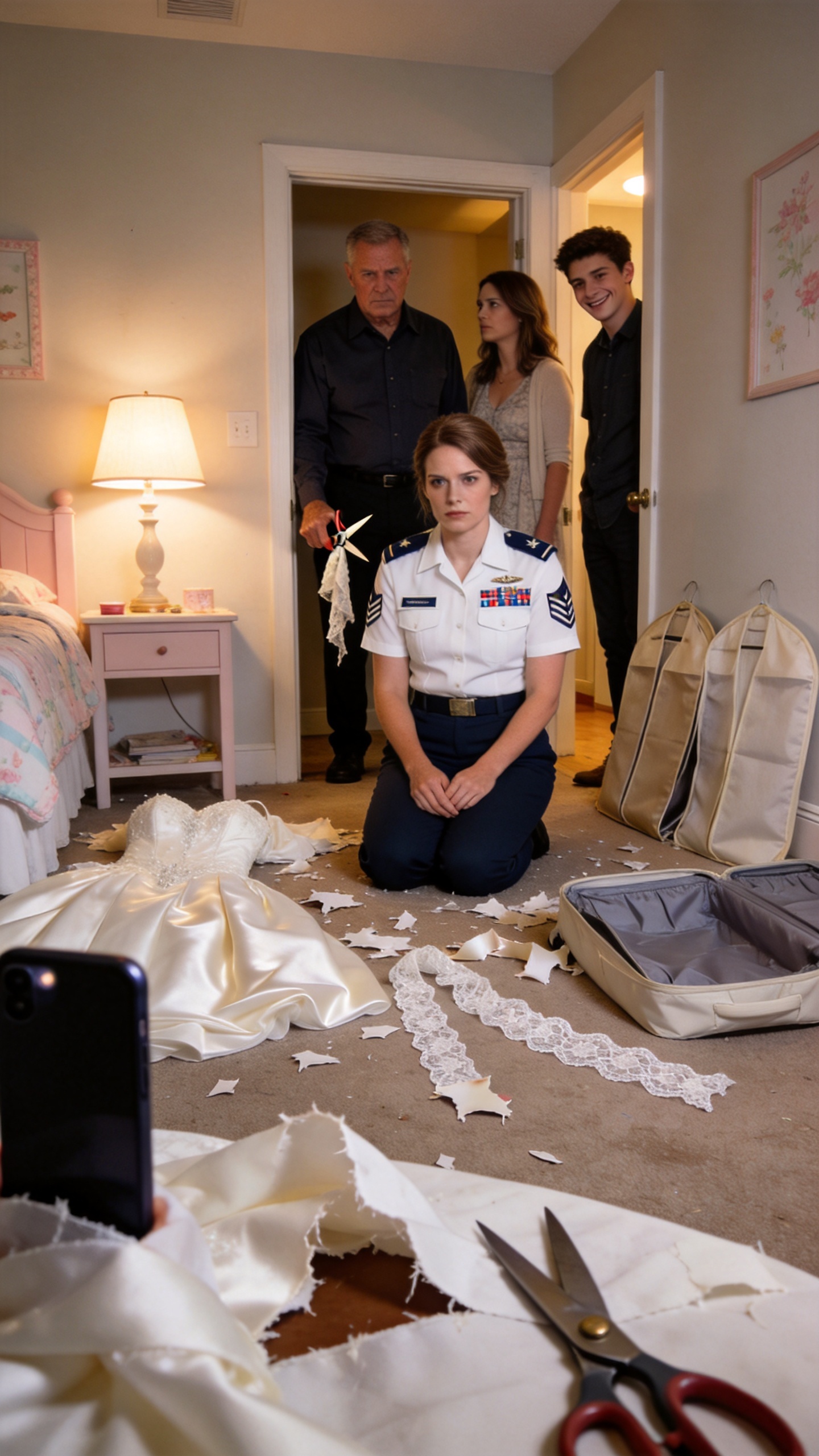
Four garment bags lay across the carpet like bodies.
The satin gown had been sliced down the front.
The lace one hung in ribbons.
The silk reception dress was shredded so badly I could not tell where the bodice ended.
My father stood in the middle of it all with fabric scissors in his right hand.
My mother stood behind him, arms folded, face blank.
My younger brother, Mason, leaned against the doorframe, smiling like this was the funniest thing he had seen all year.
"What did you do?" I whispered.
My father dropped the scissors onto my dresser.
"No dress means no wedding."
He said it calmly.
Almost proudly.
Like he had solved a family problem instead of destroying something I had chosen with my own money, my own heart, my own future.
Two nights before my wedding, my father decided humiliation was easier than acceptance.
The worst sound came after that.
Not the tearing fabric.
Not Mason's laugh.
My mother's breath.
Small.
Steady.
Unsurprised.
That told me she had known before I woke.
Maybe she had not held the scissors.
Maybe she had not chosen which gown to cut first.
But she had stood there long enough to let it happen.
When I looked at her, she tightened the belt of her robe and said, "Your father is under a lot of stress."
That was my family's language.
His cruelty was stress.
Mason's laziness was confusion.
My pain was attitude.
They Hated The Uniform More Than They Hated The Wedding
I was thirty-two years old.
A captain in the United States Air Force.
I had flown through storms, handled emergencies, and earned the respect of people who cared more about discipline than last names.
But inside my parents' house, none of that mattered.
To my father, I was still the daughter who had embarrassed him by leaving home, choosing service, and refusing to make my brother the center of every room.
Mason had failed out of two colleges.
He had crashed my mother's car.
He had lived at home for six years while calling my career "playing pilot."
Still, he was the son.
The forgiven one.
The one my father called misunderstood.
When I got engaged to Daniel, my family smiled in public and punished me in private.
My mother said military women made difficult wives.
Mason joked that Daniel would be bored by "a woman who salutes for fun."
My father said nothing for weeks.
That should have warned me.
I brought the dresses home because I wanted one quiet night before the wedding.
One last night in the room where I had once dreamed of leaving.
Instead, I sat on the floor at two in the morning, holding torn lace in my hands while my family watched me break.
"Call it off," my father said. "Save everyone the embarrassment."
I looked at my mother.
She looked away.
That hurt more than the scissors.
I remembered buying the lace dress with my own hands shaking.
The saleswoman had asked if my mother wanted to see it.
I had lied and said she was busy.
The truth was that I had stopped inviting my mother into beautiful moments because she always brought my father with her, even when he was not in the room.
Still, some stupid hopeful part of me had brought the dresses home.
I had wanted them to see me as a bride.
Instead, they saw one more chance to make me a daughter who obeyed.
The Church Doors Opened Before They Could Enjoy My Absence
At first, I almost called Daniel.
I almost told him the wedding was over.
Not because I did not want to marry him.
Because I was tired.
Tired of fighting for joy.
Tired of proving I deserved soft things.