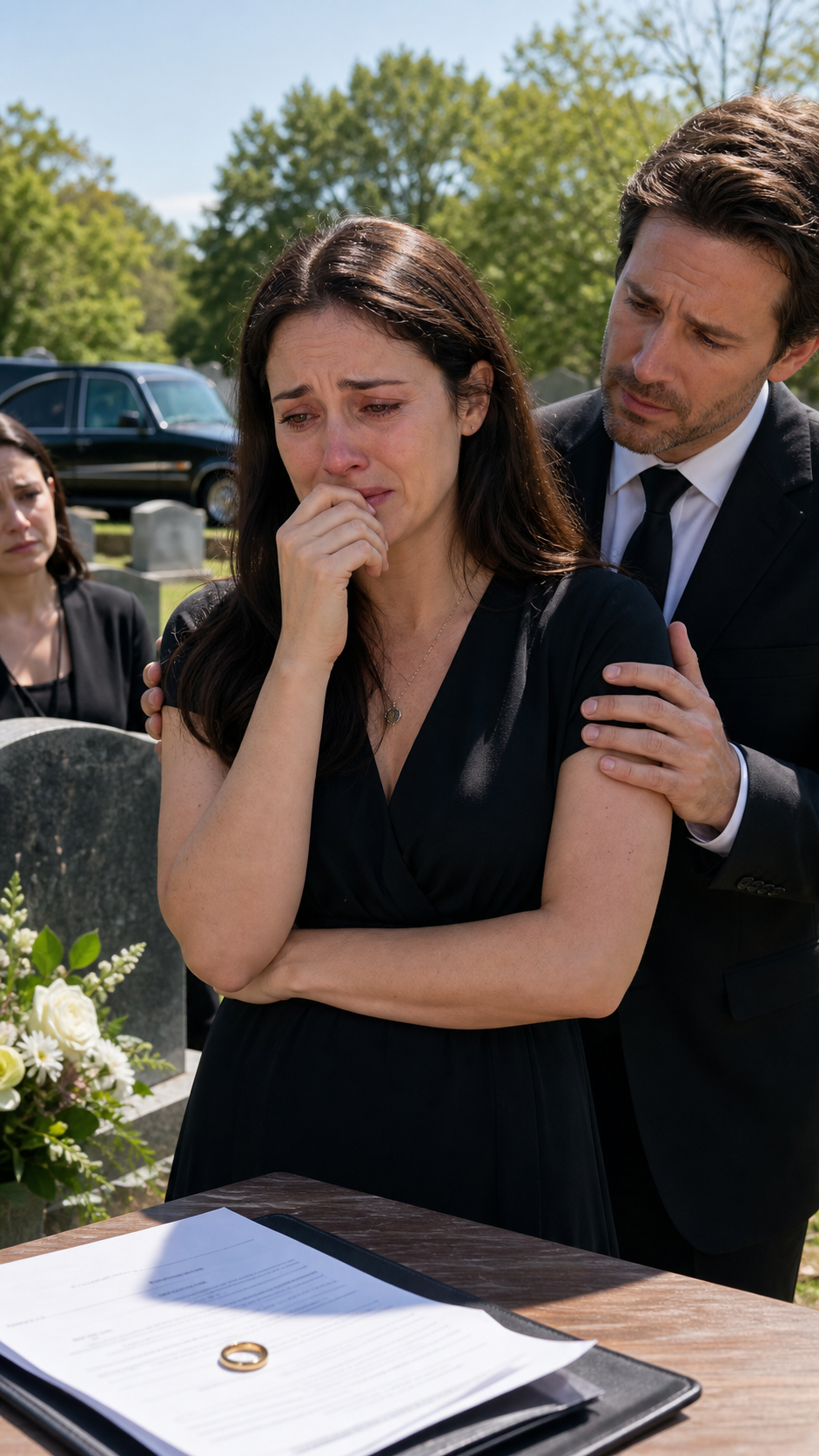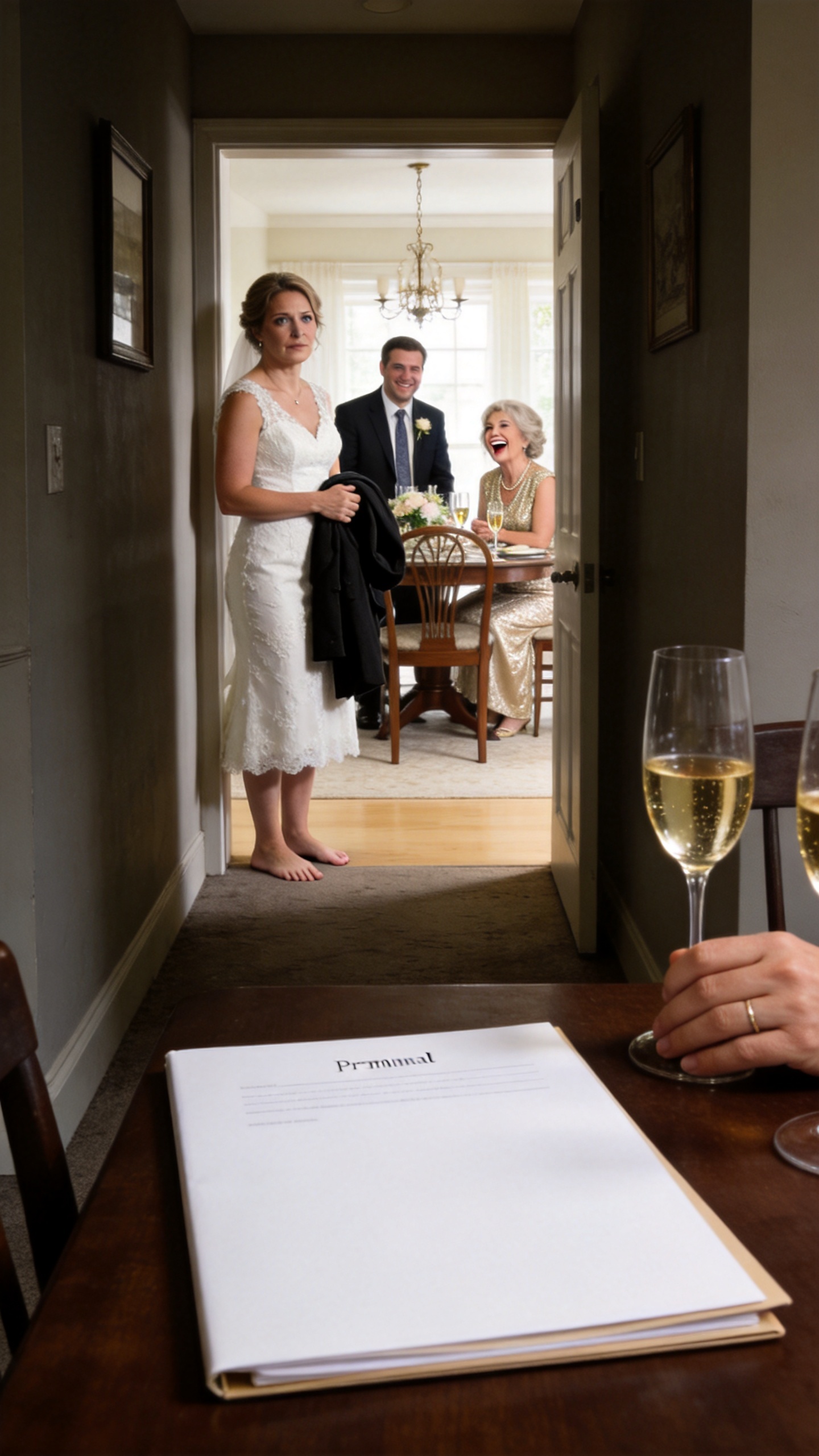
My sister looked me in the eye and said, “please put your apartment in my name. I cannot work right now.” I smiled, turned on the living room screen, and showed the weekend photos she thought no one had seen.

The Moment They Thought I Would Stay Quiet
Eleanor sat at her dining table.
Across from her, Mark locked eyes with her.
Mark asked Eleanor to put her apartment in his name, saying he was “too sick to work.
” For a second, Eleanor thought she misheard.
The apartment still held the warmth from the lasagna she'd taken out of the oven twenty minutes ago.
Diane and Eleanor's dad sat on her second-hand sofa.
She'd bought it from an old teacher for eighty bucks and lugged it up three flights of stairs by herself.
Mark sat at the table, wrapped in a blanket, even though it was May and the room was cozy.
He'd made himself look sickly.
No makeup, messy hair, a soft voice.
If Eleanor hadn't seen the photos from last weekend, she might have bought it.
Eleanor's dad stared at the floor.
Mark, who hadn't paid rent, had a stable job, or bought his own food in years, pointed a shaky finger at the walls Eleanor had paid for over ten years.
“You don't get it,” he said.
“This place could help me get better.
The apartment was simple.
One bedroom, a small kitchen, old brick walls, and a tiny balcony.
When Eleanor bought it, the building always stank of old carpet and cigarettes, no matter how often they cleaned the hall.
The elevator broke down twice a month.
In the laundry room, one machine gobbled up quarters and the other sounded like it had rocks inside.
The block had a pawn shop, a liquor store behind metal bars, and a corner people avoided at night.
The thought of all her hard work weighed on Eleanor.
Ten years of overtime.
Ten years of eating rice, beans, and cheap chicken, and skipping out on work trips because she couldn't afford them.
Ten years of breathing construction dust, starting warehouse shifts before dawn, and working electrical jobs in winter until her fingers froze.
And now Mark wanted it like it was a free gift.
Diane cleared her throat.
“Eleanor, honey, we know you worked hard.
” That was the first sign.
In the family, praise usually preceded a big ask.
“But Mark's situation is different,” she went on.
“He needs peace and independence.
Your dad and I can't support him forever.
Eleanor turned to her dad.
“And you think I can?
” He finally looked up.
He seemed older than at the last family dinner, but not old enough to say what he was about to.
“You're healthy,” he said.
“You have a job.
You can rent somewhere else.
“You want me to rent somewhere else so Mark can live here for free,” Eleanor said.
Mark flinched like she'd attacked him, just because she'd put their idea into plain words.
“It's not free,” he said.
── 863 in + 588 out = 1451 tokens ── [exit:0 | 19324ms]
Eleanor Hayes was eighteen when her parents sat her down.
They said they had enough savings to send just one child to college.
Mark, her older brother, was the obvious pick.
They claimed he had “more academic promise.
Later, when Eleanor started her first job in construction, her boots were still stiff and she was still a bit soft with youth.
Diane, her mother, cried and said she wished things were different.
Mark switched majors twice in college.
He needed help paying rent and came back home after graduation.
He thought every job was too stressful, too tiring, too bad, or just beneath him.
Eleanor studied the blanket on Mark's shoulders, his soft gray socks up to his calves, and the untouched water by his plate.
Then she grabbed the remote from the coffee table.
“Something I should've done before dessert,” she said.
Blue light filled the screen and shone on her parents' faces.
Her father frowned.
Her mother sat up straight.
Mark clenched his napkin tighter.
Eleanor opened a folder on her phone where she'd gathered everything.
“Before I decide whether to give up the only thing I own,” she said, “we should talk about your illness.
That reaction told her she'd been right to prepare.
Eleanor didn't grow up poor enough for pity or rich enough to be saved.
Her family was working-class, living outside Pittsburgh in a split-level house.
The grass was uneven, there was a basketball hoop in the driveway, and important talks always happened at the kitchen table under harsh fluorescent lights.
Mark was five years older than Eleanor.
He had an easy charm that made adults forgive him before he finished talking.
Teachers said he was smart but unfocused.
Her parents only heard the “smart” part.
When Mark wanted dance classes, they found the money.
When college needed a laptop, they got the pricier one.
Whenever he dropped a course, changed his path, or came home for another semester, there was always an excuse and a soft place to land.
It wasn't that Eleanor was unloved.
That would've been easier.
She was loved in a practical way, like a reliable tool.
She was dependable, competent, and quiet.
If the car needed cleaning, Eleanor did it.
If her dad needed someone to carry drywall, she was there.
If her mom worked late and groceries had to be picked up, Eleanor went.
By seventeen, she'd learned people liked her more when she asked for less.
The college talk happened in March of her senior year of high school.
Rain trickled down the kitchen window, and the smell of cooling meatloaf filled the air.
Her father sat at the table with banking papers in front of him.
Her mother held a mug of tea but didn't drink.
“We need to be realistic,” her father said.
The Proof They Never Saw Coming
Eleanor stood by the counter since no one asked her to sit.
“We saved what we could,” he went on.
“But Mark is halfway through his degree.
Interrupting that would waste our investment.
Eleanor looked at the papers.
“I got into community college.
“We know,” her mother said quickly.
“And we're proud of you.
Her father put a hand on his forehead.
“You're good with your hands.
A trade might be better for you.
It was almost amazing how easily people could turn a closed door into helpful advice.
── 944 in + 710 out = 1654 tokens ── [exit:0 | 22213ms]
Eleanor was upstairs when they told her.
She came down only after the table was cleared and the papers put away.
She opened the fridge, gave Eleanor a look, and said, “I hope you're not mad.
I didn't make them pick me.
No, she hadn't forced them to choose.
She'd just been the one they went for.
Eleanor started working the week after graduation.
First, it was construction.
The summer heat was brutal, winter mornings were freezing, and the guys called her “kid” until she showed she could carry more than they thought.
She learned to wake up before dawn and push through days when her whole body ached by noon.
After that, she got warehouse work.
The pay was a bit better, but the shifts were worse.
The supervisors saw exhaustion as a hassle in the schedule.
When she was 21, a friend of one of her dad's coworkers helped her get into an electrical apprenticeship.
The trade was tough.
It meant squeezing through tight spaces, balancing on ladders till her calves shook, studying codes and load calculations, and respecting wiring that could kill a careless person silently.
But it paid okay.
Not fast or lavishly, but enough for a future.
A coworker sent Eleanor the foreclosure listing for an apartment during lunch.
One bedroom, third-floor, rough neighborhood, old building.
It cost $127,000.
“Needs work,” he said, laughing.
“But so do you.
She went to see it on a Wednesday evening after a ten-hour shift.
The realtor seemed shocked when she showed up in dusty work boots, jeans with marks at the knees, and a jacket with electrical tape in the pocket.
The bathroom tile was cracked, there were water stains near the window, and the kitchen cabinet doors hung a bit.
But the structure was solid.
The exposed brick gave the living room character.
The balcony faced west.
Leaning over the railing, she could see the city skyline between two buildings.
The bank said she could handle the payments if she was careful.
So she got so careful that her twenties felt small.
Her friends bought new trucks.
She kept driving her 2008 Civic with the cracked bumper and the whistling passenger window on the highway.
Coworkers went to Vegas, Nashville, and the beach.
She took overtime.
People she knew got married and posted honeymoon pictures by the blue water.
She learned to fix drywall, install light fixtures, refinish cabinets, and make meals that lasted four days.
She dated sometimes, but not often.
It was hard to be charming when her idea of a fun Friday was figuring out how much extra principal she could pay by skipping takeout for another month.
Back then, she didn't resent the work.
Work was simple.
It didn't promise fairness, but if you stuck with it, you got something tangible.
Each mortgage statement was like a ruler showing her shrinking debt.
$118,000 left.
She taped one statement inside her closet door and crossed out the balance after every payment.
During the first five years, Kara visited the apartment twice.
The first time, she wrinkled her nose in the hallway.
“Do you feel safe here?
On her second visit, she brought a friend and called the brick wall “urban.
” By then, a coffee shop had replaced the pawn shop, and the liquor store was a Pilates studio with frosted glass and a fern by the door.
Her once-neglected neighborhood was starting to draw people who'd once lock their doors driving through.
── 1000 in + 760 out = 1760 tokens ── [exit:0 | 27192ms]
Eleanor Hayes had been so wrapped up in work that she didn't notice she'd bought her apartment at the perfect time.
Her sister, Diane, graduated with a communications degree.
Their parents always boasted about it during holiday dinners.
After graduation, Diane took a retail management job.
But eight months later, she quit.
She said the manager was a negative person who thrived on it.
She then worked as a receptionist for almost a year.
But the atmosphere drained her energy, so she left.
Diane tried many jobs after that.
She was a barista, a social media assistant, a boutique employee, and a nonprofit coordinator.
There was another job with “creative” in the title.
Eleanor never really understood what it was.
And that job only lasted three months.
Diane said the supervisor was impossible, her coworkers formed cliques, the commute was tiring, and the job didn't respect her talents.
The office lighting gave her headaches, and the customers were too demanding emotionally.
When Diane turned thirty, she said she had a chronic illness.
Eleanor knew invisible illnesses were real.
She'd seen men who seemed healthy at work until their backs gave out.
She'd known women who smiled through the pain because they were tired of explaining themselves.
Autoimmune disease, chronic fatigue, nerve disorders, and long-term pain were real conditions, and those with them deserved understanding.
When The Room Finally Understood
So, Eleanor initially believed Diane, or at least tried to.
When Diane moved back to their parents' house and stopped working completely, Eleanor told herself it wasn't her business.
When Diane said doctors were still trying to figure out her condition, Eleanor accepted that medical answers could take time.
When Diane canceled family gatherings due to symptoms but posted brunch photos that weekend, Eleanor didn't judge.
She thought people had good days and sometimes pushed themselves and suffered later.
But eventually, the inconsistencies were too clear.
Diane couldn't handle four hours of remote work, but she could shop at the mall for eight.
She couldn't stand long enough to answer phones, yet she could wear platform boots and stand through an entire concert.
She wouldn't agree to a part-time schedule, but she could hike to a summit and post a smiling photo from the top.
Diane talked about tests, specialists, episodes, flares, and recovery seasons.
But she never named a specific doctor.
Maybe their parents asked once and accepted the unclear answers to avoid conflict.
They supported Diane for six years.
She had a free bedroom, and they paid her phone bill, car insurance, and gave her spending money “until she felt better.
” Their mother made special meals for her, and their father lowered his voice when Diane entered the room, as if normal sound could hurt her.
Meanwhile, Eleanor kept paying her mortgage and going to work before sunrise.
Three months ago, she made the final payment.
She remembered the sound of the confirmation email notification.
It was a Tuesday evening.
She'd just come back from a commercial renovation project, with sore shoulders and dust in her hair.
At the kitchen counter, she opened her laptop, transferred the remaining amount, and watched the page load.
When the “loan paid in full” message appeared, she just stared.
There was no music, no celebration.
She stood alone in her small kitchen, surrounded by old cabinets and uneven floors.
For the first time in ten years, the apartment wasn't a debt.
She shared the news at the next family dinner.
── 928 in + 703 out = 1631 tokens ── [exit:0 | 20519ms]
Eleanor Hayes sat at the dinner table.
Her mother had made a delicious roasted chicken.
Her father was deep in a discussion about property taxes.
Diane sat at one end of the table, curled up in an over-sized sweater, scrolling through her phone.
Eleanor waited until the plates were cleared.
She wanted this announcement to have its moment.
“I paid off the apartment,” she said.
I just made the last payment.
For a split-second, a look of pride flashed across Mark's face.
It was brief, but Eleanor noticed.
Her stomach tightened as she waited for a response.
Her mother put down her napkin.
“Actually, we wanted to talk to you about the apartment.
” There were no congratulations, no hugs.