Grandma Opened Her Six-Year-Old Granddaughter's Coffin and Heard, "Don't Let Dad Take Me Back"
A whisper beside the lilies
Rosalind Vale stayed in the living room after everyone else went upstairs.
The house in Maplewood had finally gone quiet, though nothing about it felt peaceful. White lilies crowded the tables. Candles flickered around the small coffin in the center of the room.
Tomorrow morning, neighbors would arrive to mourn six-year-old Savannah, the child Rosalind had loved like the last bright thing in her life.
Her son Gavin had told everyone Savannah died after a sudden respiratory infection. His wife Priscilla had cried into handkerchiefs all afternoon. They said the hospital released the body quickly because the family wanted a private service.
Rosalind had listened, nodded, and felt something cold settle under her ribs.
Savannah had been laughing three days earlier. She had run into Rosalind's arms with a purple ribbon in her hair and a scrape on one knee. Children did not vanish into a coffin that quickly without leaving questions behind.
Near midnight, Rosalind heard a sound.
It was not the settling of wood or the hiss of a candle. It was a small, broken breath from inside the coffin.
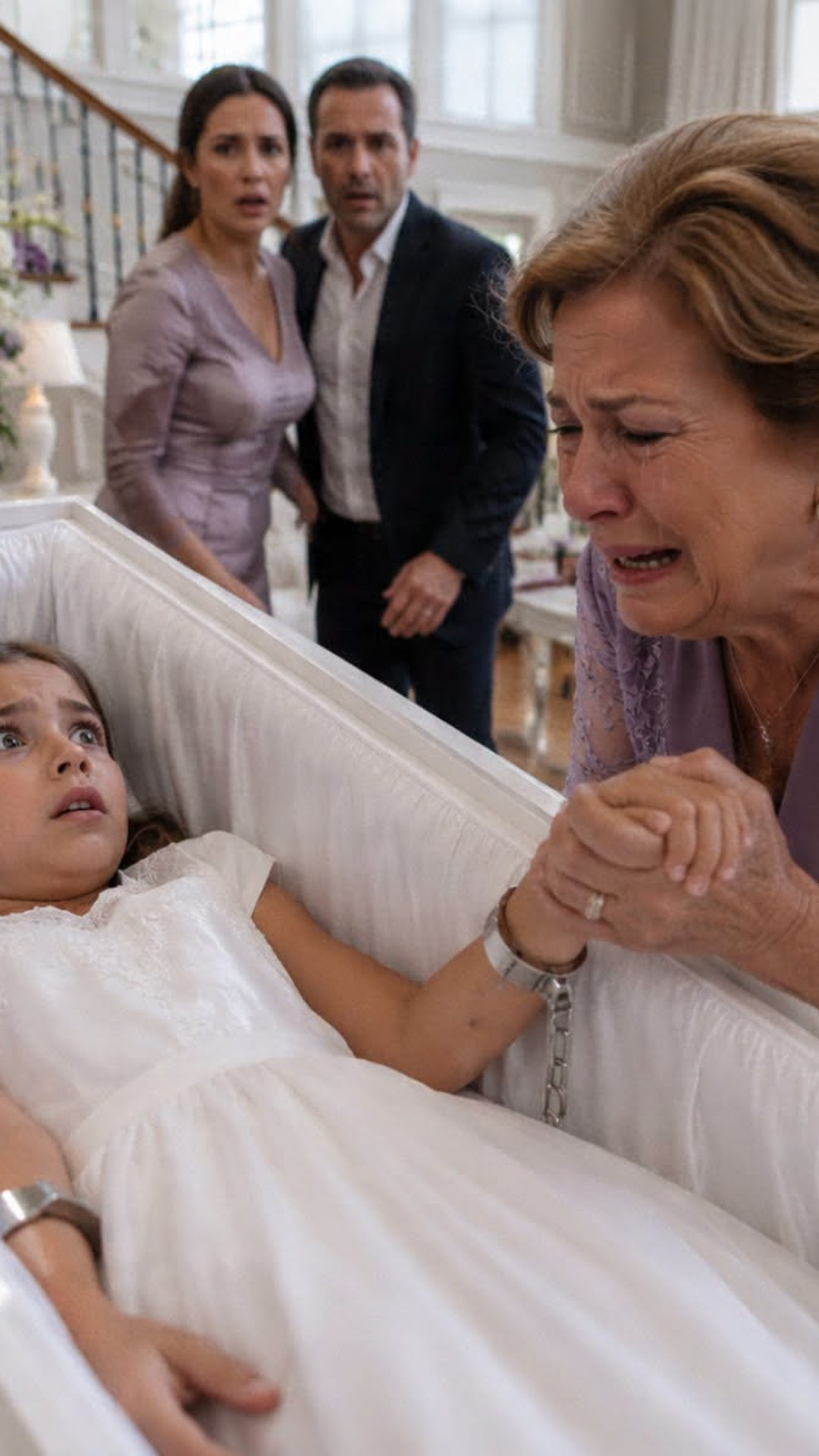
She moved toward it with both hands trembling. When she lifted the lid, Savannah's eyelids fluttered. The little girl was pale, burning with fever, and still breathing.
"Grandma," Savannah whispered, barely louder than the candles. "Don't let Dad take me back."
Rosalind did not scream. She did not call upstairs. She took out her phone with hands that suddenly felt steady and dialed emergency services.
For several minutes, Rosalind could not stop seeing the ordinary details around the impossible one. Savannah's patent shoes had been placed neatly at the coffin's foot. A silver brush lay on the table beside the guest book.
Someone had tucked a folded program under the ribbon of a wreath, though the service had not even happened yet.
Those details mattered because they proved planning. This was not the chaos of a sudden medical emergency. This was arrangement, staging, control.
Someone had selected the dress, ordered the flowers, typed the program, and expected the whole town to pass through the room without asking why a child who had been alive on Tuesday was sealed away by Friday night.
Rosalind thought of the phone call Gavin had made that morning. He had spoken quickly, as if reading from notes. Savannah had taken a turn. Savannah was gone. He was too broken to discuss details. He needed his mother to support him and not create drama.
Drama. That was the word he used whenever Rosalind saw too much.
She remembered Priscilla at the afternoon viewing, guiding visitors away from the coffin with a trembling smile. "Gavin cannot bear anyone touching it," she kept saying. "Please understand."
But Gavin had not looked unable to bear it. He had looked watchful. Each time the lid shifted in a draft or a visitor leaned too close, his shoulders tightened.
Once, when Rosalind asked if she could place Savannah's purple ribbon inside, Gavin had taken the ribbon from her hand and said he would do it later.
Now Rosalind saw why. Savannah could not be allowed to receive even one private goodbye from someone who loved her enough to notice warmth, breath, or fear.
The child in her arms trembled under the blanket. Rosalind could smell funeral flowers on Savannah's hair, mixed with sweat and medicine. She wanted to rage at the room, at her son, at every adult who had trusted papers over a child's body.
Instead, she listened to the dispatcher and counted Savannah's breaths. One. Two. A pause that lasted too long. Three. She bent close each time the rhythm faltered, whispering, "Stay with me, baby. Stay with Grandma."
Savannah's fingers curled weakly in Rosalind's sleeve. That small grip became the only answer Rosalind needed.
The funeral that stopped before morning
"My granddaughter is alive," Rosalind told the dispatcher. "She is in a coffin in my son's living room. Send police and an ambulance now."
The dispatcher asked if she was sure.
Rosalind looked at the child trying to move beneath the white burial dress. Thin red marks circled Savannah's wrists. A strip of medical tape clung to the skin near her elbow. Her lips were dry, and her breathing came in shallow pulls.
"I am sure," Rosalind said.
She wrapped Savannah in a blanket from the sofa and lifted her carefully out of the coffin. The child weighed almost nothing. As Rosalind held her, Savannah flinched at every sound from upstairs.
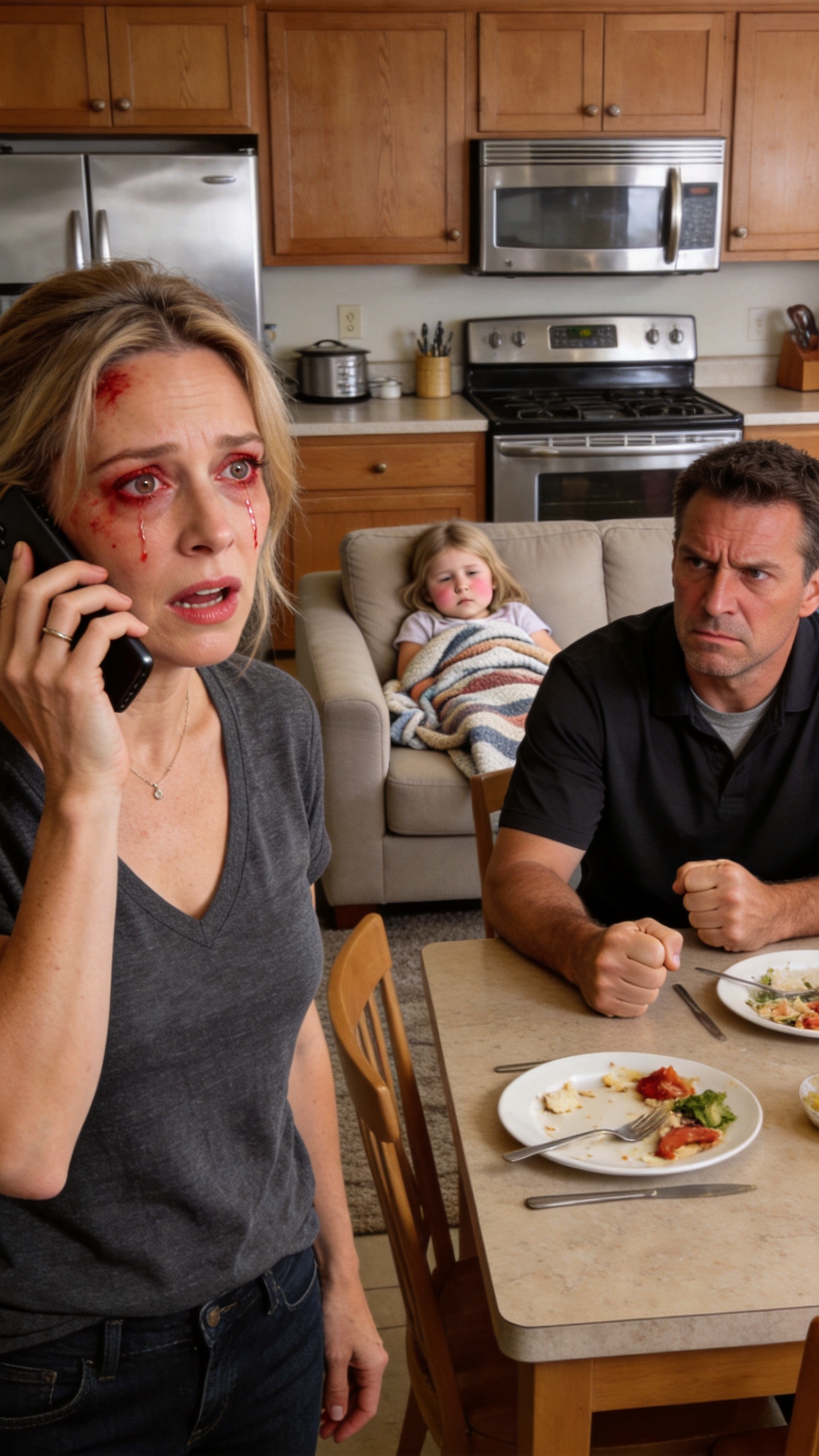
Gavin appeared on the staircase before the sirens arrived.
"Mom?" he said, his voice sharp. "What are you doing?"
Rosalind stepped back, keeping Savannah against her chest. "Calling help."
Priscilla came behind him in a robe, her face drained of color. For one second, neither of them looked like grieving parents. They looked like people whose locked door had been opened.
Then Gavin started down the stairs.
"She's gone," he said. "You are confused. Put her back before you hurt yourself."
Savannah buried her face against Rosalind's shoulder and whispered, "No."
That one word turned Rosalind's grief into fury.
She moved behind the coffin, using it as a barrier. "Take one more step and the police will hear you threaten me while your daughter breathes in my arms."
Gavin stopped.
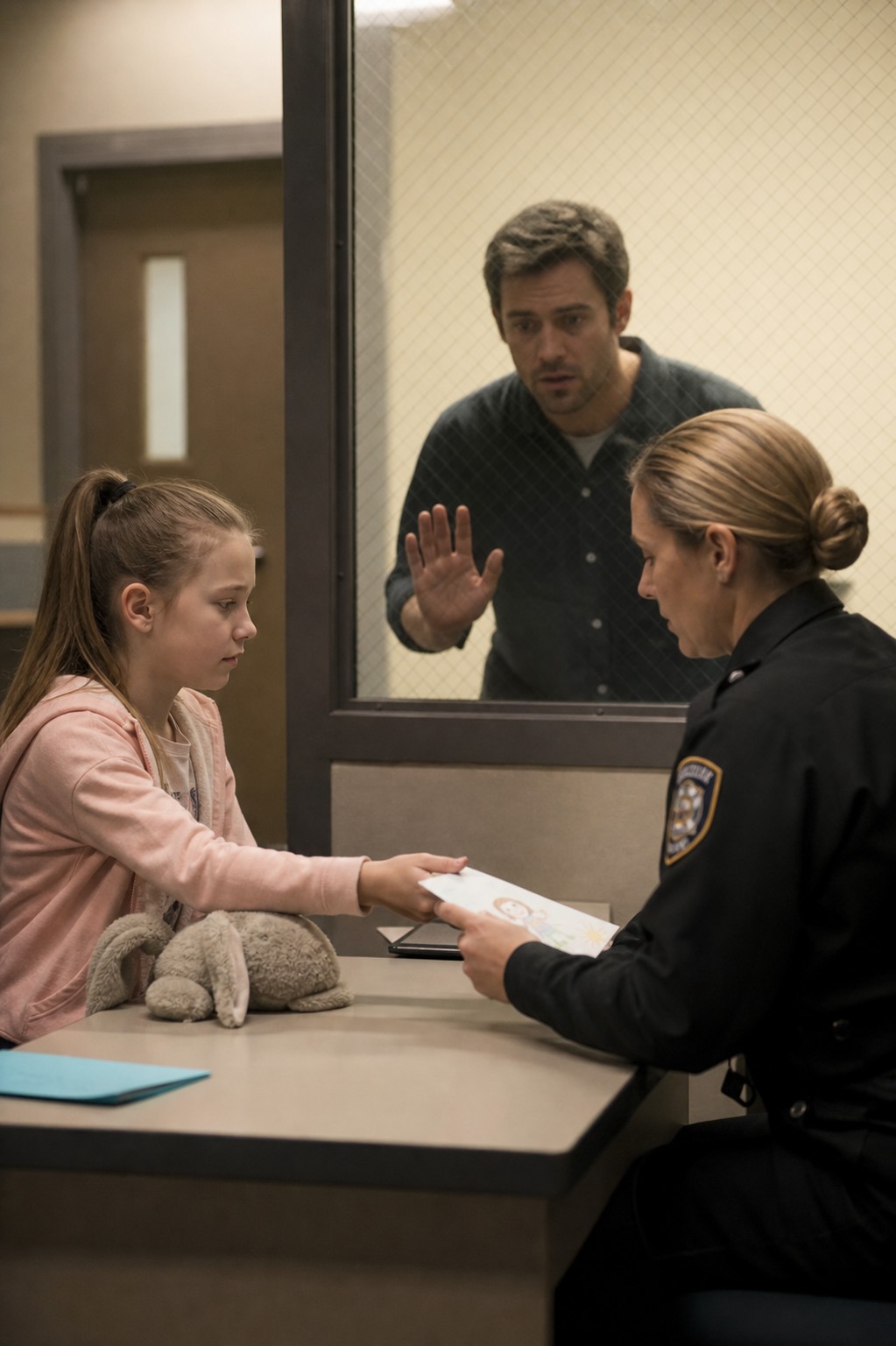
The first officer through the door saw a room prepared for mourning and a grandmother holding a breathing child in a burial dress. For one second even he seemed unable to connect the two facts. Then his training took over.
He moved Gavin back, called for another unit, and told Priscilla to sit on the stairs where he could see her hands.
Gavin objected with the fury of a man used to being believed. He said Rosalind had always been unstable about Savannah. He said Mara's death had made his mother possessive. He said the child had no pulse when the doctor came and that any movement now must be a medical spasm.
The paramedic did not look up from Savannah. "Spasms do not ask not to go home," he said.
Priscilla began to sob harder.
Rosalind watched Gavin hear that sentence and change tactics. He softened his face, lowered his voice, and tried to step around the officer as if fatherhood were a pass that opened every door. "Savannah, sweetheart," he called. "Daddy is here. Tell them Grandma scared you."
The child gave a thin, animal sound and tried to disappear inside Rosalind's coat.
That reaction ended whatever patience remained in the hallway.
The officer told Gavin to stand against the wall. Gavin refused once, then saw the second officer at the door and obeyed. Even then he kept talking. He talked about grief, confusion, paperwork, the family's privacy, the cruelty of strangers invading a funeral.
No one answered him. The room had shifted its loyalty to the child on the floor.
Rosalind knelt beside Savannah while the paramedics worked. She could not hold her anymore, so she held the edge of the blanket and kept her face where Savannah could see it. Every time the child's eyes drifted, Rosalind said her name.
"Savannah Vale. Purple ribbon. Butter cookies. Grandma's porch. Stay here."
The list sounded foolish and holy at the same time. It was proof that the child was not a problem, a trust account, or a body to be hidden before sunrise. She was a girl with favorite cookies, scraped knees, and a grandmother who knew the map of her small joys.
When the stretcher came in, Gavin made one final attempt. He told the officers he would ride to the hospital. He said he was the legal parent and Rosalind had no rights.
The lead officer looked at Savannah's wrists, then at the open coffin. "Your rights can wait for detectives," he said.
Rosalind heard the ambulance doors close behind her and realized she was leaving her son in a house full of lies. The grief she had felt for Savannah changed shape.
It became grief for the man Gavin had chosen to become, and then even that was swallowed by the urgent beep of the monitor beside her granddaughter's head.
The evidence on a little girl's skin
Paramedics reached the house first. They took Savannah from Rosalind and began working on her in the doorway under the porch light.
One medic called out that the child had a pulse. Another asked why a living girl had ligature marks on both wrists.
Gavin shouted that everyone was overreacting. He said Savannah had been declared dead by a private doctor. He said Rosalind had damaged the body while "panicking."
No one believed him for long.
Savannah was rushed to the hospital, and police separated the adults inside the house. Rosalind sat at the kitchen table with an officer while the candles burned out in the next room.
She told him about the whisper, the marks, and the way Savannah begged not to go back to her father.
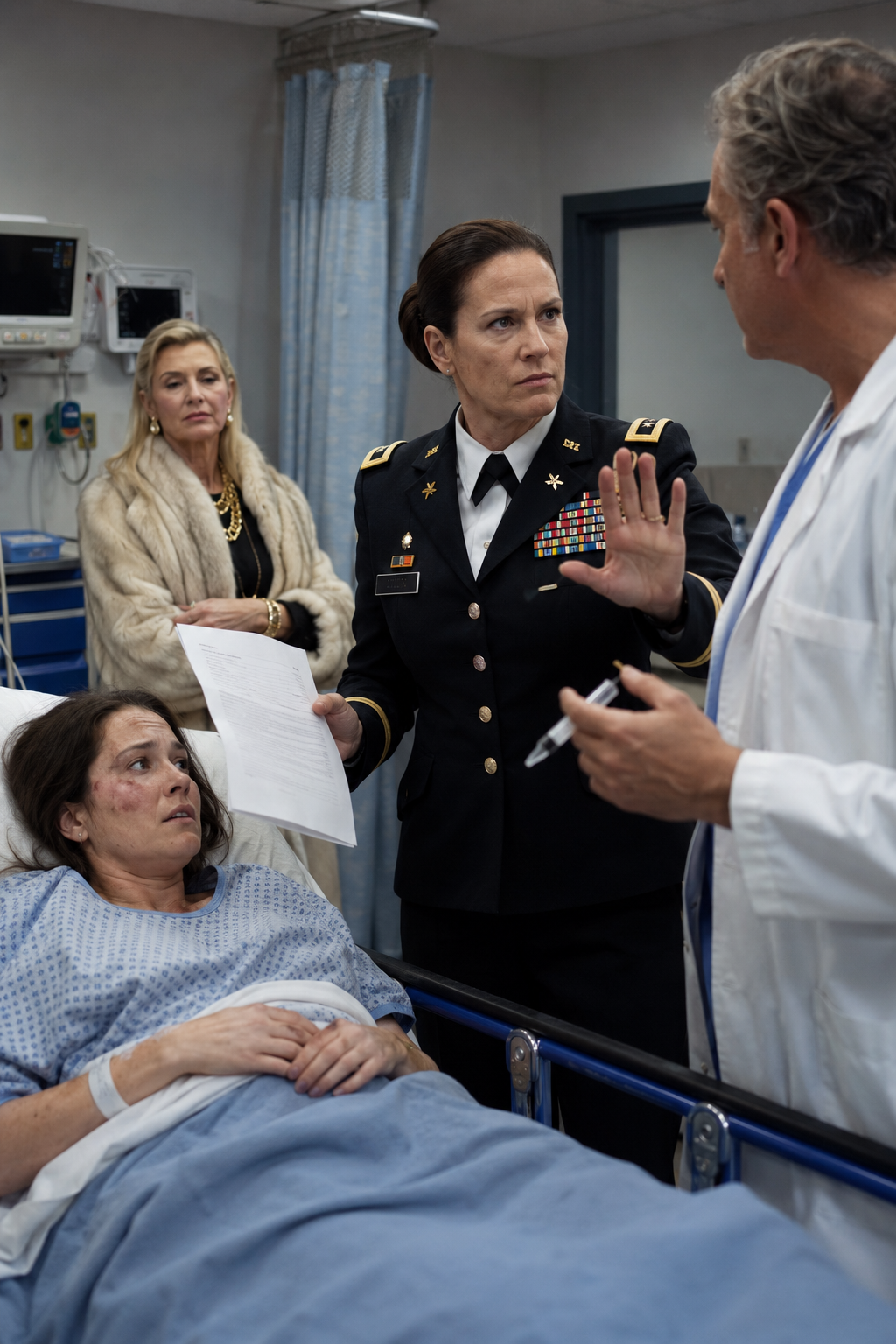
At the hospital, doctors found strong sedatives in Savannah's system. The dose was enough to slow her breathing until an untrained person might think she was dead. There was dehydration, bruising beneath her sleeves, and adhesive residue where an IV line had been removed.
The death certificate Gavin produced did not survive the first hour of questioning.
It carried the name of a retired physician who had not examined Savannah. The signature was copied from an old insurance form. The funeral home had accepted the papers because Gavin had insisted on speed and paid in cash.
Rosalind thought of the small coffin, the lilies, and the neighbors invited to say goodbye to a child who had been silenced but not killed.
She felt sick, then steadier than she had felt in years.
At the hospital, the evidence did not arrive as one dramatic revelation. It arrived in layers, each one making Gavin's version less possible.
A nurse cut away the burial dress and placed it in a paper bag. The dress had been pinned at the shoulders because it was too large.
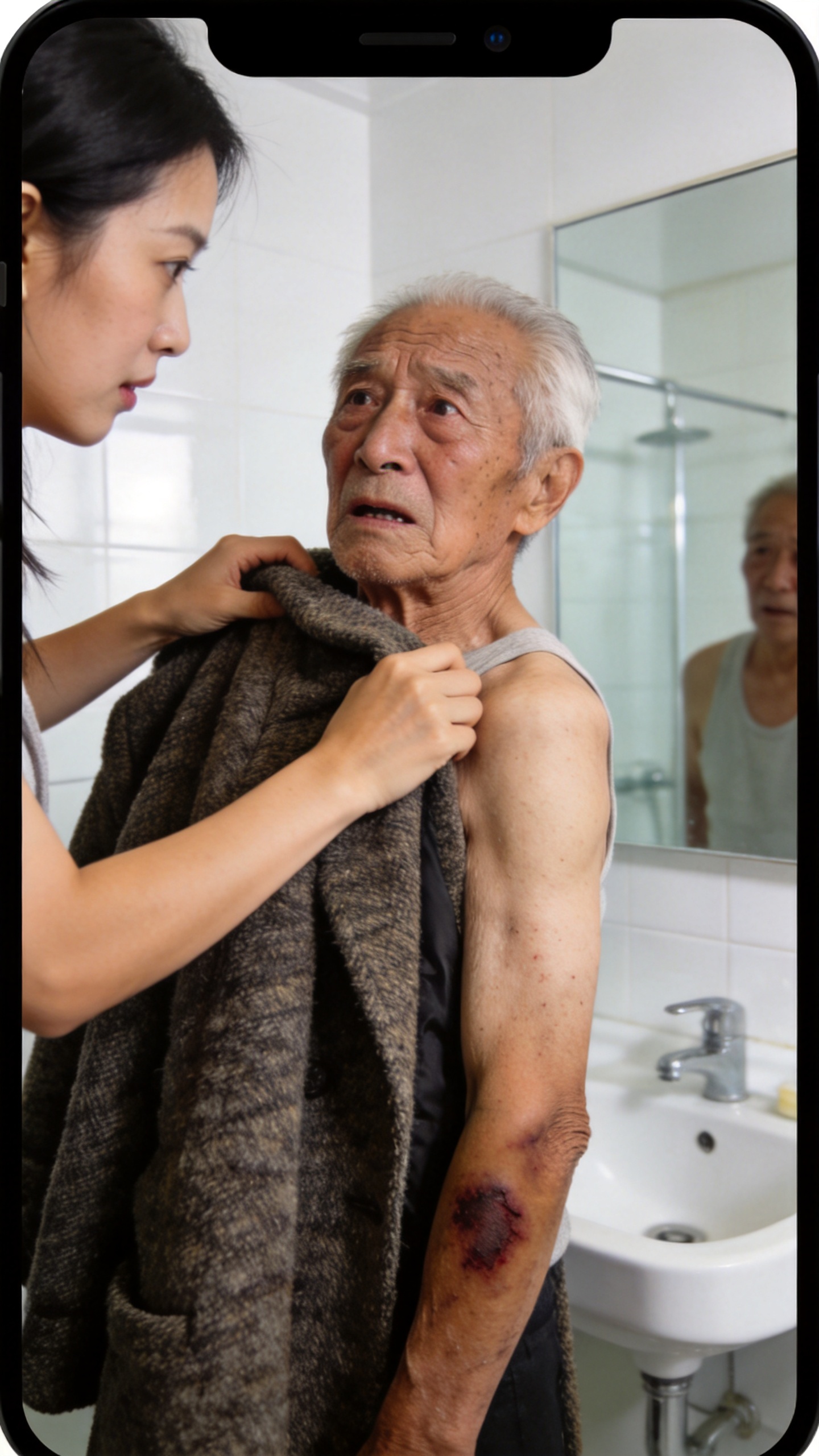
Under the lace, Savannah's skin told the story adults had tried to cover: bruises at the upper arms, pressure marks at the wrists, a healing scrape near her knee from the porch visit, and fresh adhesive residue near the vein in her elbow.
The emergency physician asked Rosalind when she had last seen Savannah healthy. Rosalind answered with exactness because exactness was all she had to give. Tuesday afternoon. Purple ribbon. Cookies. Running. Laughing. No cough. No wheezing. No fever.
A social worker sat with Rosalind afterward and asked questions that felt like knives. Had Savannah ever seemed afraid to go home? Had she mentioned punishment? Had Gavin prevented visits? Had Priscilla explained injuries?
Rosalind wanted to say no because no would mean she had not missed anything. Instead, she told the truth. Savannah had become quieter since Mara died. Gavin often stayed in the room during calls.
Once Savannah had whispered that Daddy got mad when she asked for Mama's bear, then immediately said she was joking.
The social worker wrote each answer down without judgment. That mercy almost made Rosalind cry.
Meanwhile, officers worked backward through the funeral story. The funeral home had received Savannah late in the evening, already dressed, with instructions that the family wanted no embalming and no viewing beyond immediate relatives.
Gavin had insisted the coffin stay closed because the child had supposedly suffered near the end.
But there was no hospital record of Savannah's death. No ambulance call. No pediatric emergency visit. No physician who could say he had examined her.
The forged certificate was a thin wall, and ordinary verification knocked it over.
When detectives told Gavin the doctor denied signing it, Gavin blamed the funeral home. When they asked why there was no hospital record, he said Savannah died at home.
When they asked why he had not called emergency services, he said she was clearly gone and he wanted to protect Priscilla from more trauma.
Every answer tried to move pity away from Savannah and toward himself.
Then the lab called with the sedative result.
The detective interviewing Gavin left the room for two minutes. When he returned, he asked one question: "How did a dead child metabolize medicine given shortly before the funeral?"
Gavin asked for a lawyer.
Rosalind did not hear that exchange until later, but when she did, she sat very still. She had spent years watching Gavin escape consequences by speaking first and longest. For once, his words had run into something they could not bend.
Savannah's body had testified before any adult finished lying.
Why Gavin wanted the child gone
By dawn, detectives had a motive.
Savannah's mother, Mara, had died two years earlier in a car crash. Her will left a protected trust for Savannah, with Rosalind named as secondary guardian if the child was ever found unsafe in Gavin's home.
Gavin had been trying to access the money for months.
Bank records showed denied requests, angry emails, and a meeting with a lawyer who told him he could not touch the trust while Savannah lived under court protection.
A week before the funeral, Gavin searched for private burial rules, delayed death reporting, and medications that mimic coma symptoms.
Priscilla admitted more after detectives showed her the search history.
She said Gavin planned to make Savannah "disappear legally." He believed a fast funeral and a closed coffin would prevent questions. Once the death was accepted, he expected to claim expenses from the trust and challenge the remaining restrictions.
Priscilla said she went along because Gavin promised it would be "quiet" and because she was afraid of losing the house.
Rosalind listened to this from a hospital corridor while Savannah slept behind glass.
There were tubes in the child's arms now, but they were saving her. Her small chest rose and fell with the calm rhythm Rosalind had almost lost forever.
The money did not explain all of Gavin's cruelty, but it explained the schedule.
He was behind on the mortgage. Priscilla had signed a contract for renovations after he promised the trust would reimburse them as improvements to Savannah's home. A credit card company had filed notice. A lender had refused another extension.
Every door Gavin tried to open led back to the same locked fact: Savannah had to be alive, safe, and accounted for before anyone released money meant for her.
Mara's will had anticipated pressure with a clarity that now felt like a final act of motherhood. It required medical oversight. It required school attendance records. It gave Rosalind standing to request review if Gavin blocked contact or if Savannah showed signs of neglect.
Gavin had called those protections insults. Mara had called them safeguards.
Detectives found an email Mara had sent to her attorney six months before the crash. In it she wrote that Gavin loved winning more than he loved caring, and that if something happened to her, Savannah would need adults who could say no to him.