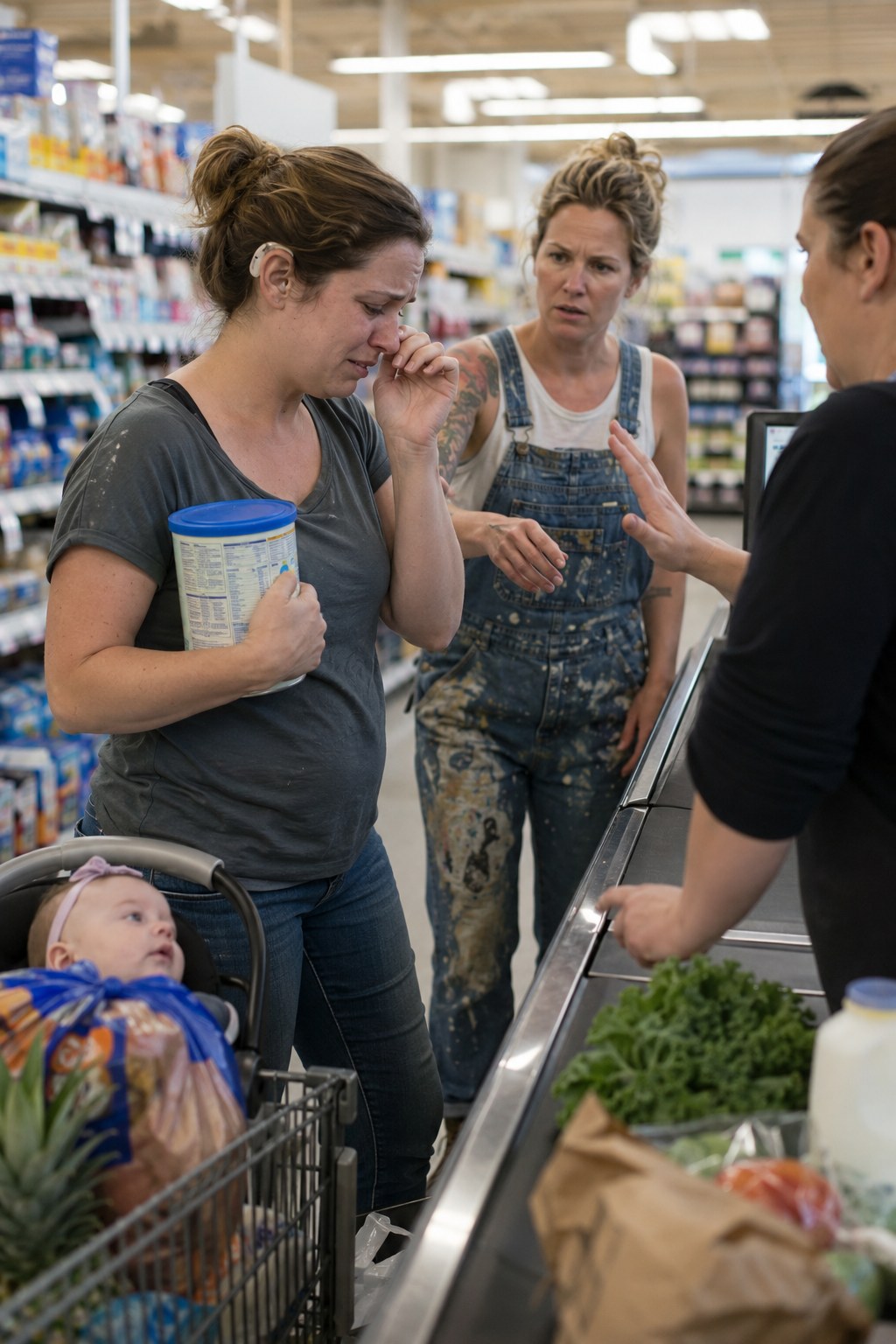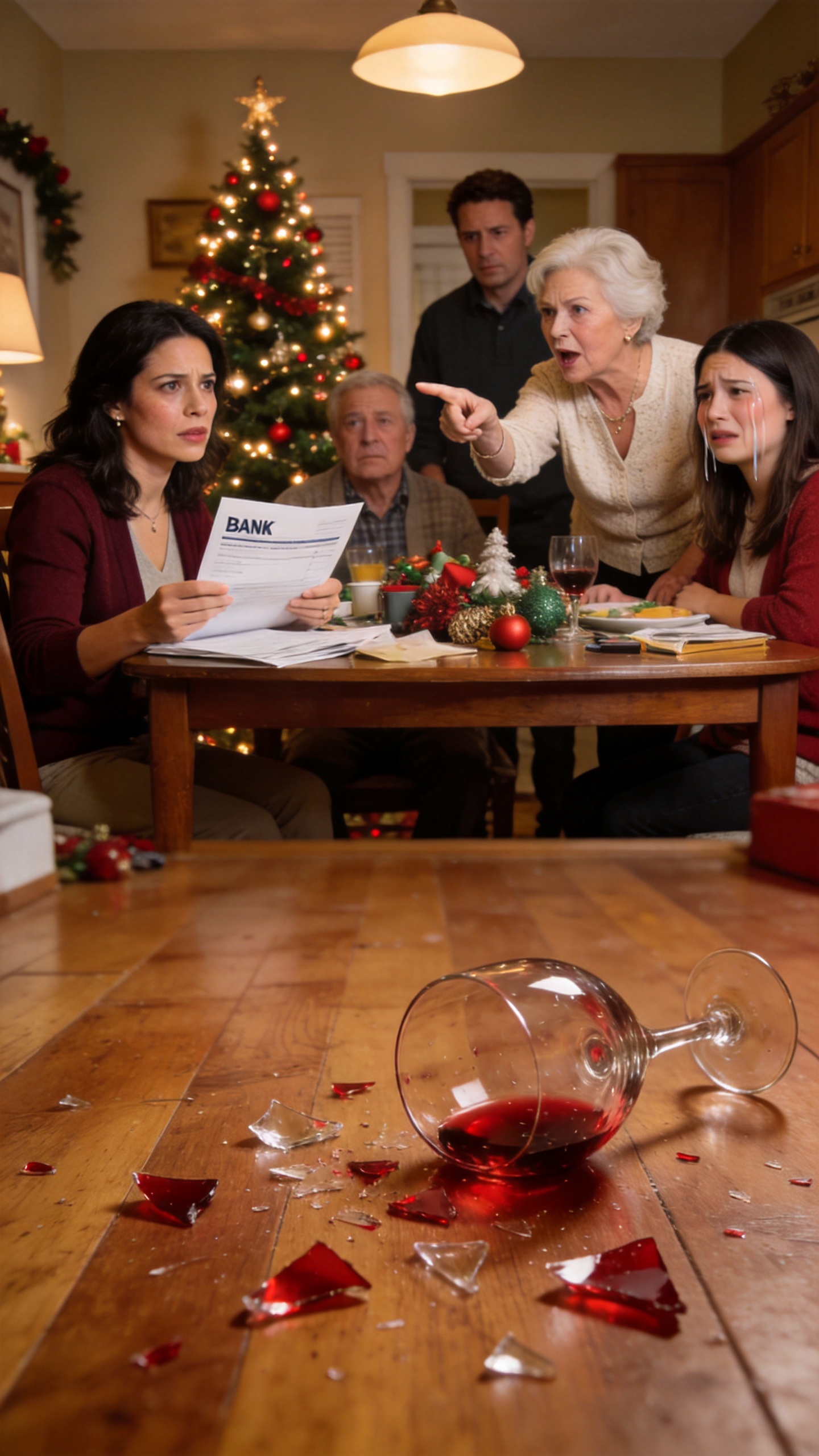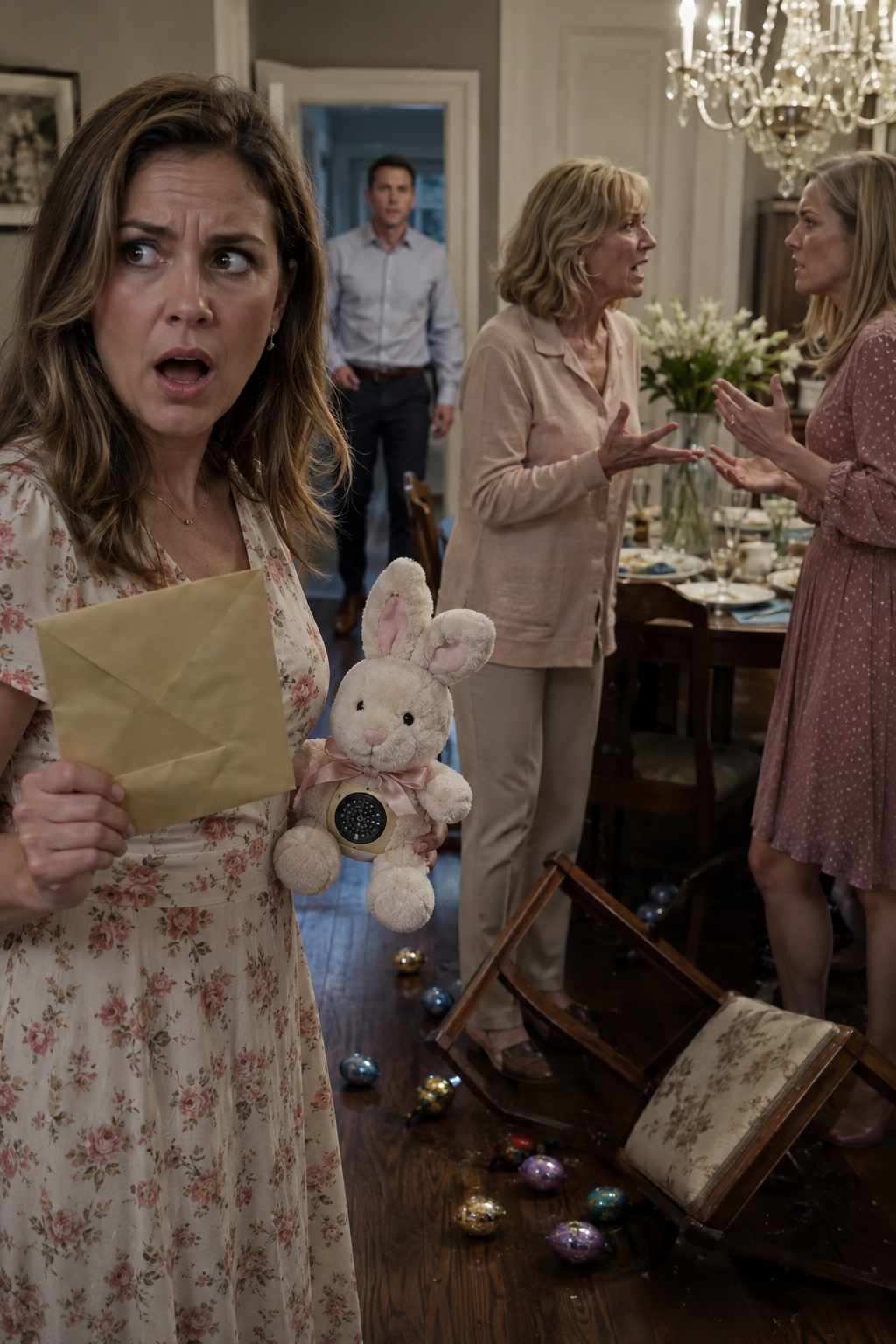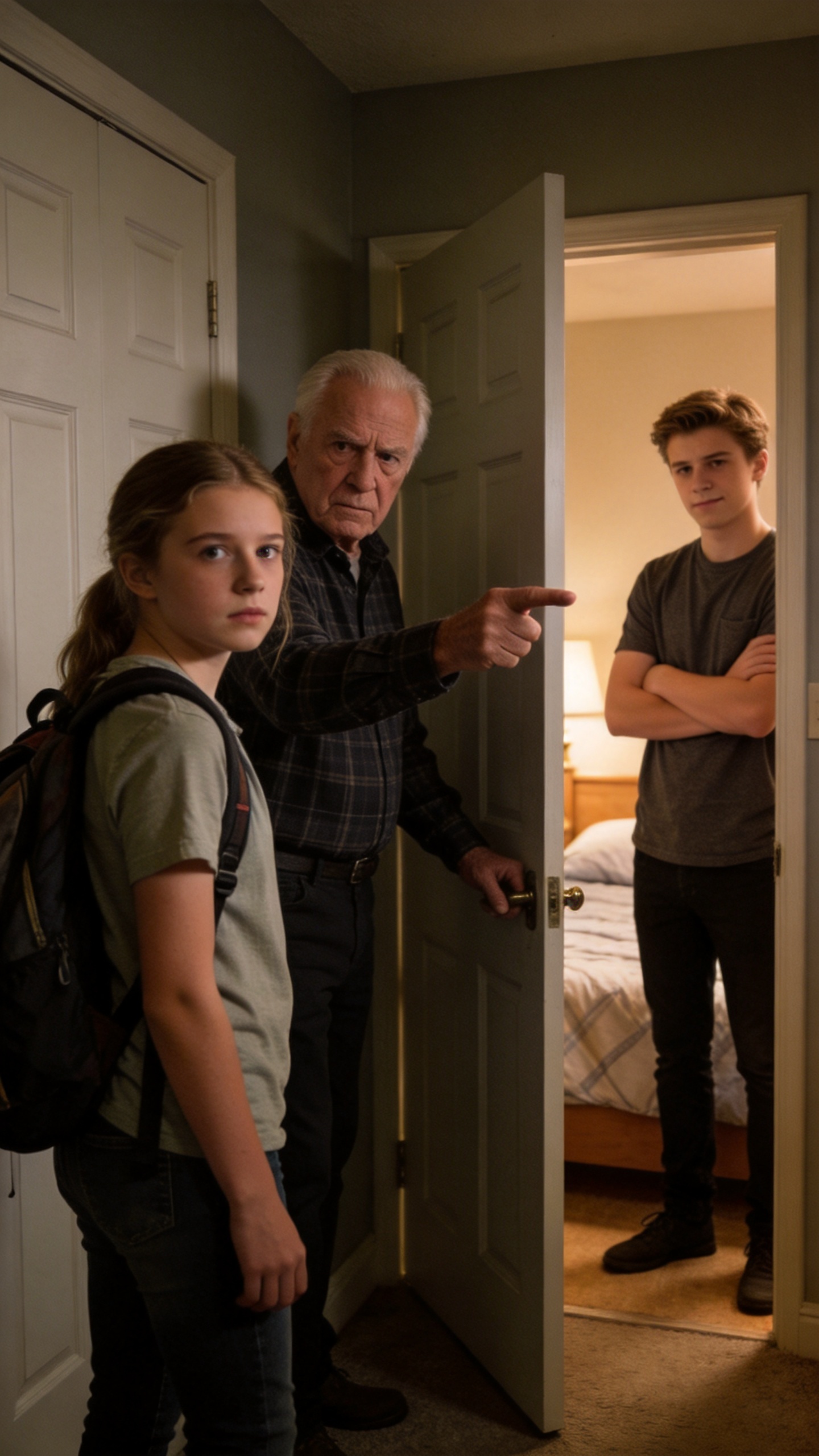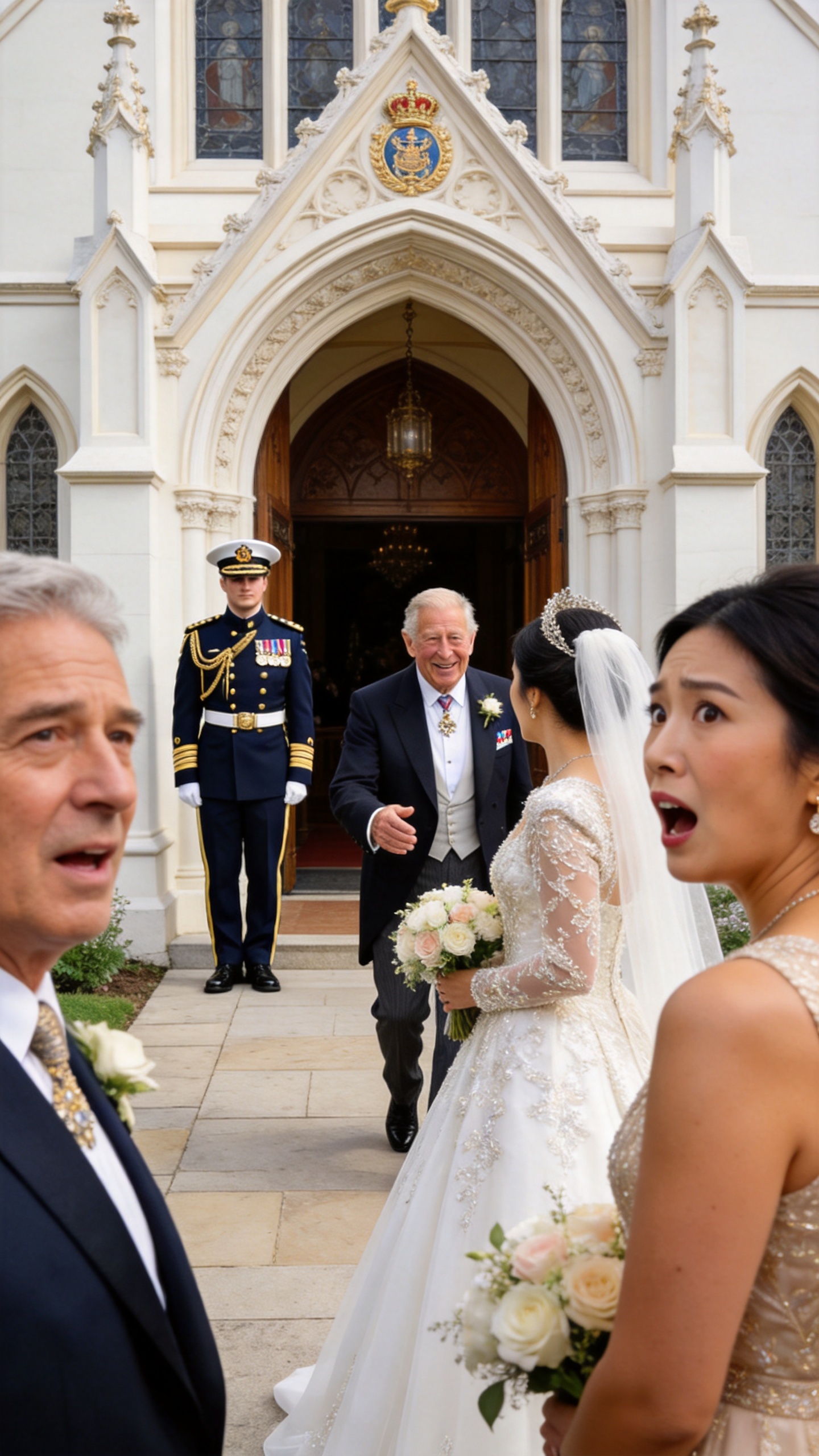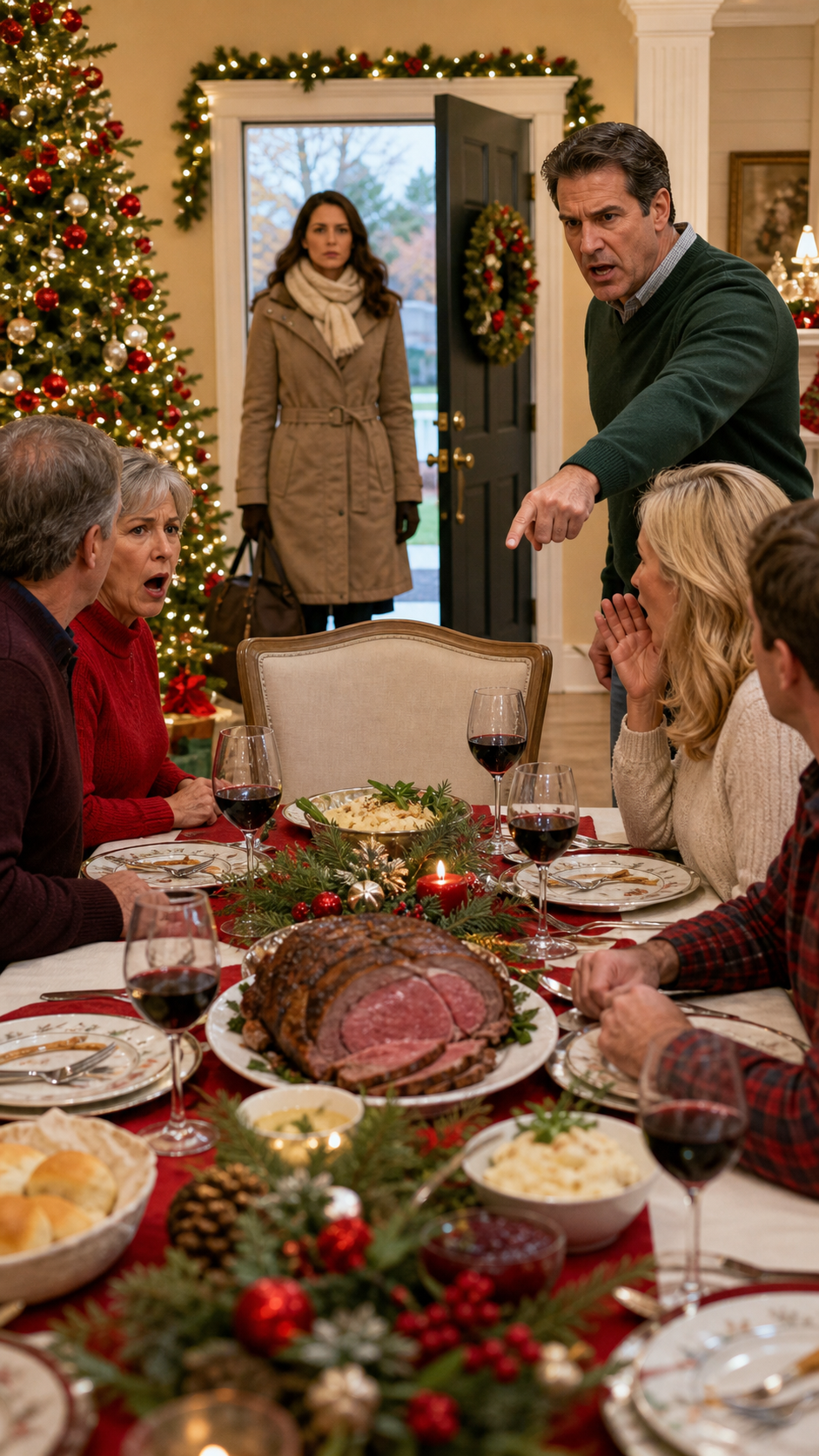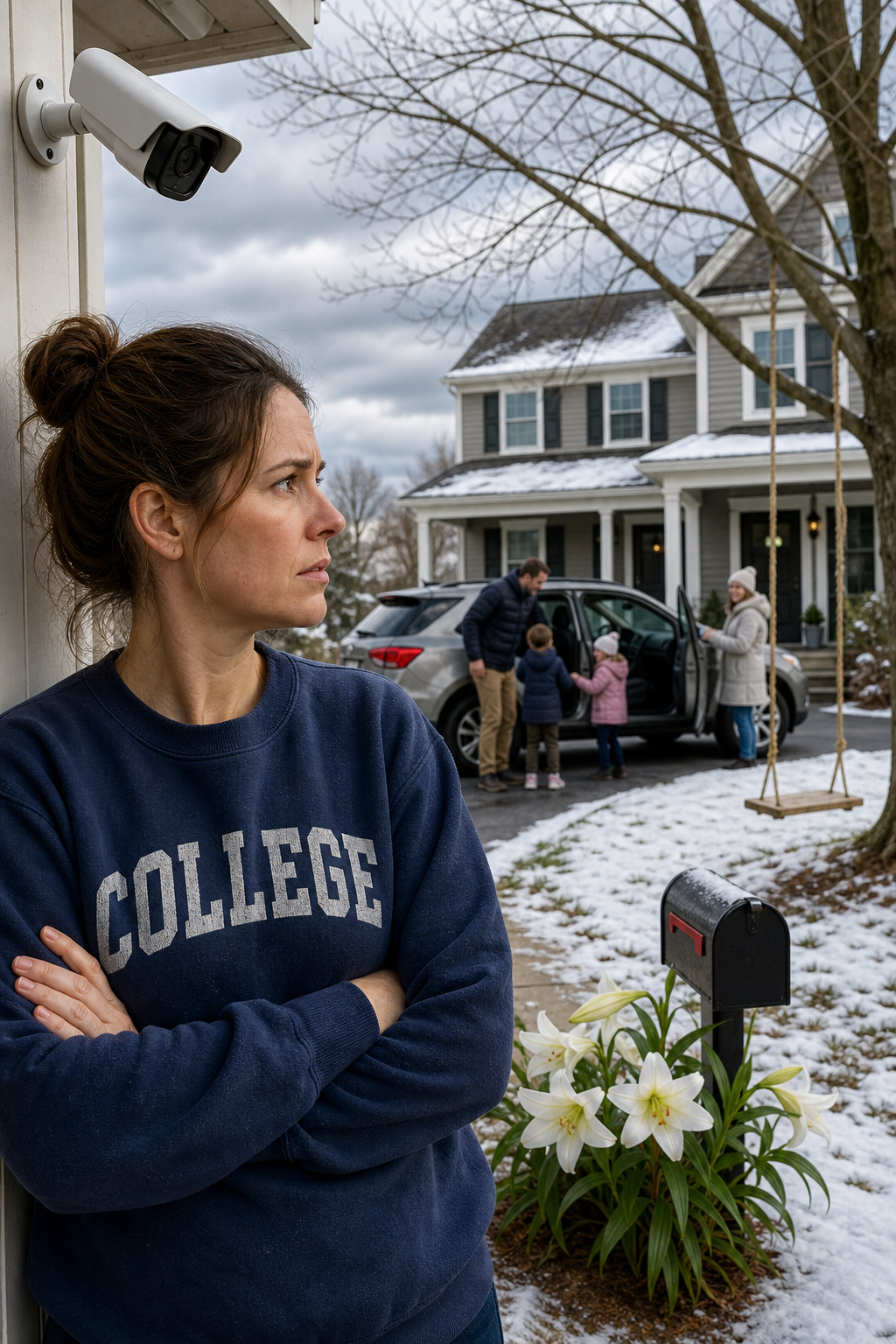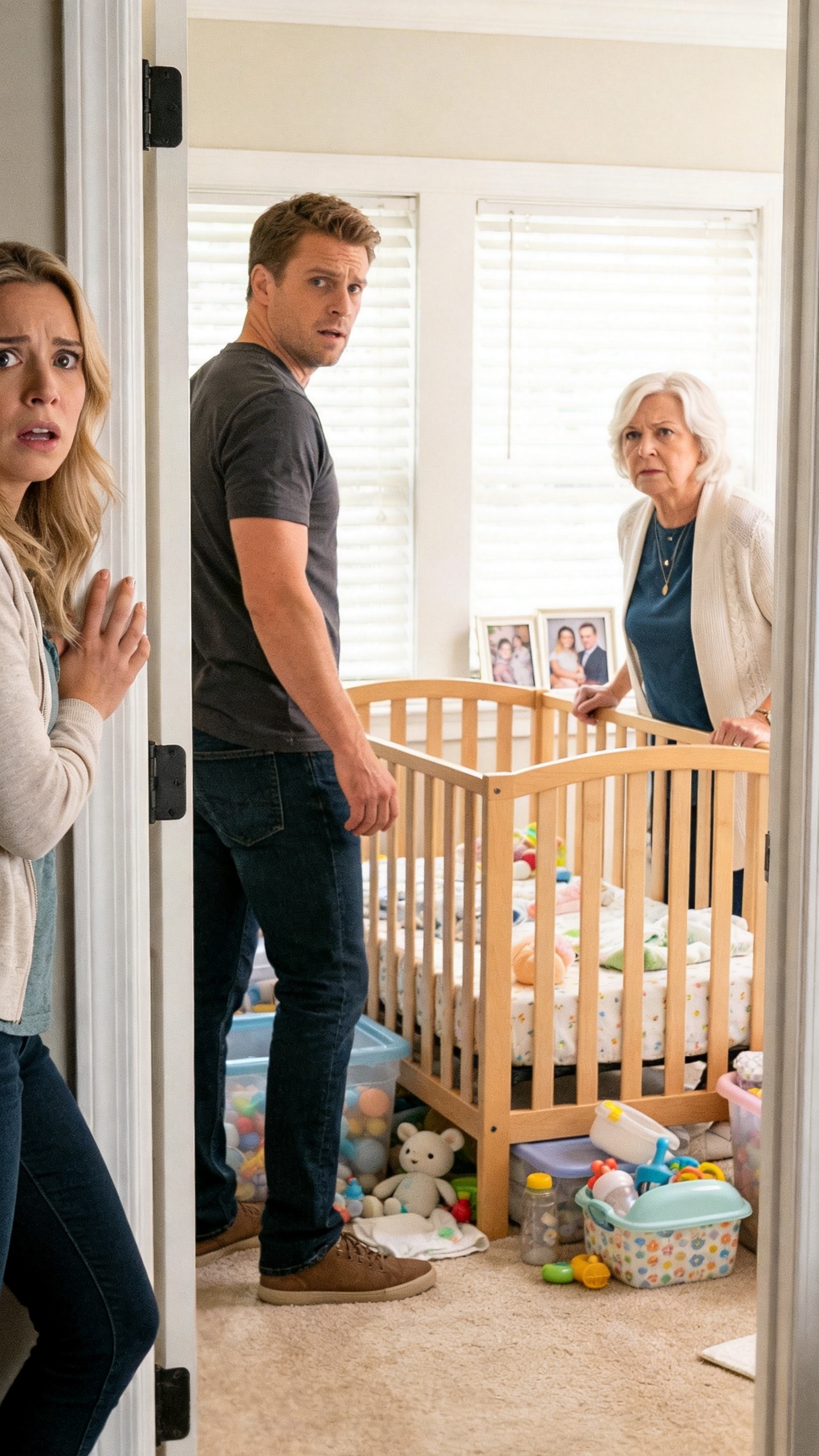
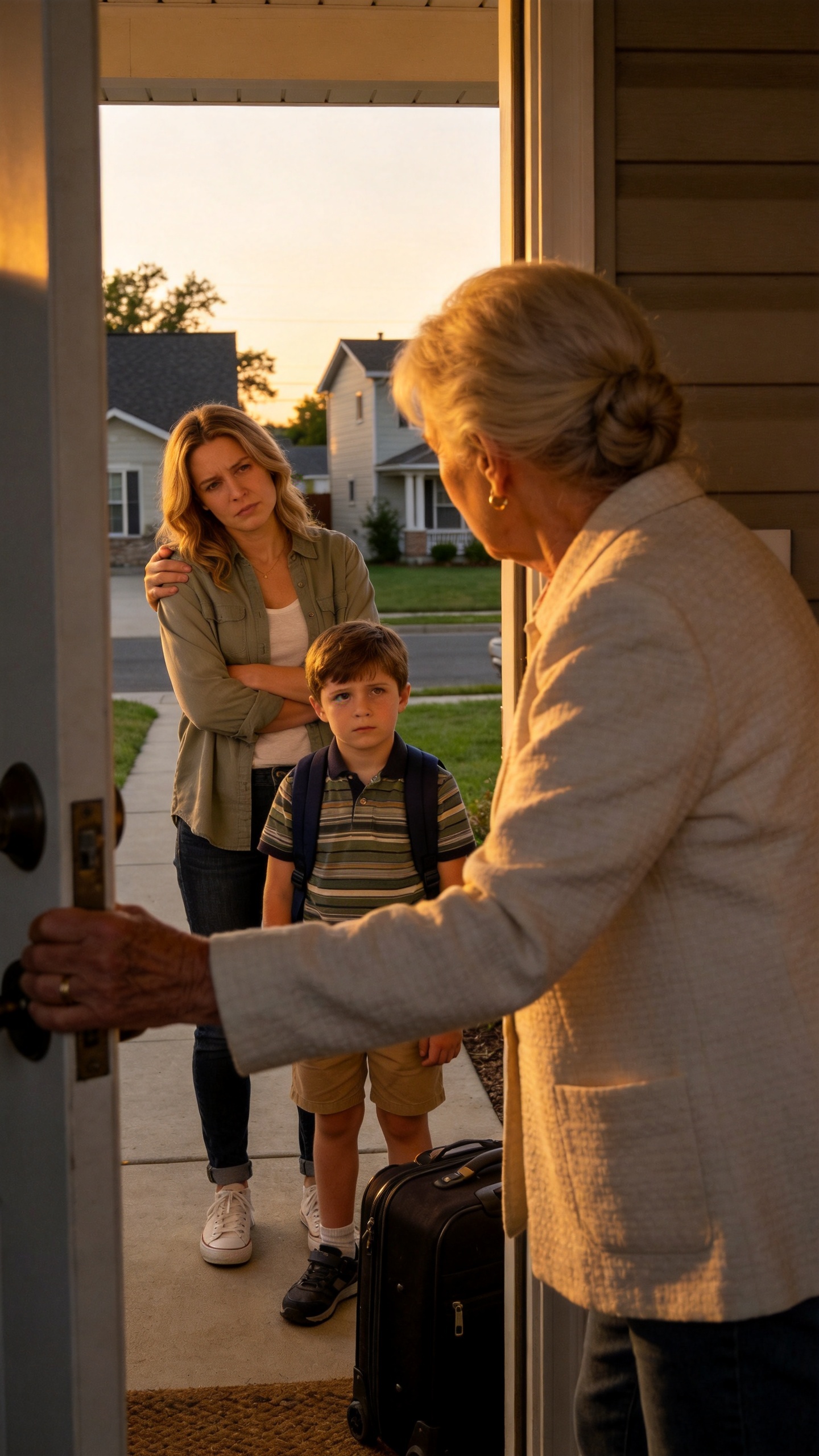
My mom leaned close and whispered, “there is not enough room for any of you.” then she stepped back inside and left my little boy standing on the porch, holding his backpack with both hands.
The Moment They Thought I Would Stay Quiet
Eleanor Hayes stood on the porch, her voice calm as she said, “You don’t get to make my kids stand on the porch of a house I helped you keep.
” For a brief, strange moment, no one moved.
Mark's mother was halfway inside the open front door.
One hand held the brass doorknob.
Her church dress was neatly smoothed, and her smile was that careful one she used when neighbors might be watching.
Through the small space between her shoulder and the doorframe, Eleanor could see the dining-room table set.
There were white plates, folded napkins, and crystal glasses they only brought out for guests.
Diane's father sat at the head of the table.
Diane was close to him, and her three kids were already in their seats.
Eleanor's two children stood behind her on the porch.
They had a chocolate cheesecake, a handmade card, and the hopeful look of kids who still thought grandparents were safe.
Tyler, nine years old, was tall and lanky.
He'd held the bakery box on his knees during the whole drive, like it was something precious.
Emma, seven, had covered a construction-paper card with foam hearts, crooked stars, and a purple-marker message that said, “I love you Grandma,” with the G backward.
She'd shown it to Eleanor at breakfast like it was a treasure.
Now the card hung at her side.
Mark's mother looked at the card and then away.
She leaned in close, her perfume cutting through the spring air, and whispered, “Jack, there just isn’t enough room.
Some words don't seem loud when spoken, but they stay with you for years.
That was one of those words.
Not enough room.
Not for her children.
Not at the table where she'd had Thanksgiving turkey, birthday cake, and pot roast as a child.
Not in the house whose mortgage she'd helped pay for almost ten years.
Eleanor looked past Mark's mother at her father.
Richard Thompson had always known how to take charge without standing up.
At sixty-seven, he was grayer and heavier around the waist, but he still had that old foreman posture, arms folded, chin up.
His fork hovered over his plate.
Diane glanced at Eleanor, rolled her eyes, and then turned back to her youngest.
That single word made something change inside Eleanor.
For thirty-eight years, she'd been taught to explain, fix things, help others, apologize, pay, and act like it was all her responsibility.
She knew how to hide her discomfort and be called easygoing.
She knew how to laugh off hurtful remarks.
She knew how to send money while typing, “No problem, Mom.
” But she couldn't look at her son's confused face and call this family.
She shifted a bit, putting herself between her children and the doorway.
“We’re leaving.
” Mark's mother blinked.
“Don’t be ridiculous.
“No,” Eleanor said.
“It’s a pattern.
” Her mother's eyes narrowed.
She always hated when Eleanor used calm words she couldn't easily ignore.
Emma slipped her hand into Eleanor's.
Tyler held the bakery box tighter.
Behind Mark's mother, Diane gave a little laugh, the same one she'd used since high school to make everyone think Eleanor was too sensitive.
── 957 in + 683 out = 1640 tokens ── [exit:0 | 23692ms]
Eleanor Hayes stood in the dining room, looking at the table.
Her kids' plates were empty, while Melissa's children had full plates waiting.
” Melissa called from the corner.
Eleanor glanced at her, then back at the table.
Her father pushed his chair back.
The legs screeched on the hardwood floor.
Once, that sound would have made her shoulders go tense.
An old instinct welled up in her.
It told her to lower her voice and smooth things over before his anger filled the room.
But her son was watching.
Her daughter held a card no one wanted.
For the first time, Eleanor realized that if she softened this moment, she'd teach her kids to do the same in the future.
Her father stepped into the hall.
“What did you just say to your mother?
Eleanor looked at him.
A strange calmness washed over her.
“I said we're leaving,” she replied.
“And starting today, I'm not sending another mortgage payment.
It didn't happen all at once.
It changed in steps.
Her mother's hand dropped from the doorknob.
Melissa's laugh died before it could fully start.
Her father's face tightened.
It wasn't pain, but the quick thinking of a man who just heard the numbers go against him.
Her parents' house was on a quiet suburban street.
Every lawn looked like it was trimmed by someone afraid of being judged.
Their split-level had beige siding, dark green shutters, and rose bushes her father treated like family treasures.
When Eleanor was twelve, she hit a baseball into those roses.
She spent the rest of the afternoon listening to her father talk about carelessness as if it was a part of her character.
Years later, Melissa backed into the mailbox after borrowing the truck without permission.
Her mother said accidents happened.
Melissa was three years younger, and still the one everyone protected.
Eleanor was the oldest.
The responsible one.
The one who could handle things.
When Dad lost his steady job, she gave money from her mall food-court job at sixteen because Mom said property taxes didn't wait for pride.
When Melissa needed help after changing colleges again, Eleanor put off saving for her own apartment.
Family had to step up.
When Mom wanted dental work she said insurance wouldn't cover, Eleanor emptied the account she'd started for her wedding.
She and her husband, Mark, postponed buying their first house by three years.
Her parents called it a rough season.
That rough season lasted twenty-two years.
Eleanor built a career in pharmaceutical sales.
It wasn't exciting, not the kind of work that impressed her father's friends at backyard cookouts.
But it was steady and hard.
She drove across three states, memorized hospital parking lots, ate gas-station sandwiches between client calls.
She worked harder than expected and climbed to the top in her region.
Her parents told relatives she got lucky.
They said her college roommate's father opened doors for her.
It wasn't true, but it let them take her money without admitting her hard work.
The money disappeared bit by bit.
A utility bill here.
A roof repair there.
A mortgage shortfall.
A car problem.
The Proof They Never Saw Coming
A medical bill.
A family emergency with a number, a deadline, and a tone that made her seem cruel if she asked questions.
Diane, Eleanor's friend, saw it long before she did.
── 897 in + 705 out = 1602 tokens ── [exit:0 | 21910ms]
Eleanor had stopped going to her parents’ dinners months before that Sunday.
At first, she made up reasons.
Too much work.
A pounding headache.
The kids needed to go to bed early.
Then one night, after her mother said that Lily seemed “too clingy” and her father spent twenty minutes correcting Ben’s baseball swing at the dinner table, Eleanor sat on their bed folding clothes and said, “Mark, I can’t keep watching them make our kids feel like strangers.
But Mark went back the next month anyway.
That’s the thing about family pressure.
You don’t understand it until you’ve been in it.
It doesn’t always feel like being scared.
Sometimes it feels like a duty to speak up.
It says a good son doesn’t keep track of wrongs.
It says your parents did the best they could.
It says your sister needs more help because she’s always had a hard time.
It says it’s easier to give money than to deal with conflict.
By the time they drove into her parents’ driveway that Sunday, Eleanor had made up her mind.
“I’ll stay here,” she said from the passenger seat, looking tiredly at the house.
“If things get strange, we leave.
” The kids were too excited to hear her.
Lily wondered if Grandma would put her drawing on the fridge.
Ben asked if Grandpa would want the first slice of cheesecake.
Mark saw the sadness flash across Eleanor’s face when Ben said that.
“Remember the signal,” Mark told the kids before they got out.
Ben nodded and gently touched his earlobe.
Lily did the same.
They had come up with the signal after the last visit.
Ben had stared out the window on the way home because Grandpa had compared him to Diane’s oldest son in front of everyone.
Ben hadn’t cried until bedtime.
Somehow, that was worse.
He had kept his feelings inside because he thought being hurt would disappoint Mark.
Mark had convinced himself the next time would be better.
Mark’s mother’s whisper made his children outsiders in less than five seconds.
Suddenly, all the excuses he had made over the years seemed embarrassing in the bright afternoon sun.
He saw the fancy plates inside.
He saw Diane’s new car at the curb, the one his mother had said she couldn’t help pay for.
He saw the cheesecake box shaking a little in Ben’s hands.
Then Mark mentioned the mortgage, and everyone finally listened.
His mother lowered her voice.
“You don’t mean that.
” “Mark,” his father said flatly.
“You need to think this through.
” “I’ve been thinking about it for years,” Mark replied.
Diane stood up, gripping the back of her chair.
Her hair was perfect, her nails were manicured, and her face showed disbelief.
She had always thought Mark’s patience meant she was smarter.
“So you’re going to punish Mom and Dad because your kids can’t sit where you want?
Mark looked at the table again.
There were seven plates.
He took Ben’s hand.
Lily leaned against his side.
His mother glanced at the street, probably worried a neighbor might see the scene on the porch.
That was Diane’s real concern: how things looked.
Fancy dresses for family dinner.
A spotless front hall.
Sympathy cards neatly arranged for guests.
A smile for the room, a sharp tone in the hallway.
“Come on,” Mark told his children.
“Let’s go get burgers.
” Lily looked at her drawing.
“Should I leave this?
” Mark watched his mother’s face, waiting for a sign of kindness, a moment of grandmotherly warmth, a second when she would say, “No, sweetheart, I’m sorry, come inside.
── 978 in + 766 out = 1744 tokens ── [exit:0 | 28919ms]
Eleanor Hayes carried the cheesecake back to the SUV.
Diane saw their faces before they reached the vehicle.
She got out right away and met them halfway down the driveway.
Her eyes shifted from Mark in the doorway to the card and Eleanor's tight hold on the bakery box.
She didn't need the whole story.
She put an arm around Emma and opened the back door.
As Eleanor buckled her daughter in, Emma looked up at her with a face that haunted her on sleepless nights.
“Mommy,” she asked, “why doesn't Grandma like us?
Some questions split a life into before and after.
Before that question, Eleanor was still trying to be fair as a daughter.
After it, she was a mother who finally grasped what fairness had cost.
She took a breath and pushed Emma's hair back from her forehead.
“It's not because of you, sweetheart.
Some grown-ups have problems they never learned to fix.
Tyler looked at Eleanor from the other side of the back seat.
He didn't ask a thing.
He just held the cheesecake between his hands, as if getting it home safely was crucial.
Diane reached across the console and placed her hand over Eleanor's.
That was all.
No “I told you so.
” Just a silent okay.
Eleanor was learning that real support was often like this.
Not a lecture.
Just a steady hand.
They ate at Five Guys in the parking lot because the kids wanted it, and greasy paper bags felt better than crying in the driveway.
Emma gave her grandmother's card to Diane, who taped it to their fridge when they got home.
Tyler insisted they cut the cheesecake that night.
They ate it from paper plates in the living room while a movie played that no one really watched.
The kids calmed down gradually, like little animals realizing the storm had passed.
Mark's texts came one after another while Eleanor sat in a clinic lobby between appointments.
The first was dramatic but controlled.
Mom is heartbroken.
The second was harsher.
You shamed everyone.
The third brought up old arguments.
After everything they did for you?
When The Room Finally Understood
By the fifth text, Mark had blamed Diane.
By the seventh, Mark had completely rewritten Sunday.
The kids were rude, Eleanor was unstable, and her parents were elderly victims of her selfishness.
Diane had told Eleanor for years to keep records.
Not because they planned to use them, but because families like hers had a way of changing history quickly.
Eleanor made a folder on her phone called Sunday Dinner.
She put Mark's messages, a photo of Emma's card on the fridge, and a screenshot of the bank transfer she'd scheduled for her parents' mortgage into it.
Her thumb hovered over the confirmation button for almost a minute.
The words were so small for what they meant.
Twenty-two years of habit.
Ten years of mortgage help.
All the times she'd chosen silence over conflict.
Nothing blew up.
The phone didn't shake.
The walls didn't break.
The world just let her stop.
── 893 in + 632 out = 1525 tokens ── [exit:0 | 21061ms]
The next week went by in a hush so profound it seemed almost fishy.
Eleanor Hayes' mom didn't call.
Her dad didn't either.
After Eleanor blocked Melissa's number, Melissa switched to emailing but stopped when Eleanor didn't reply.
Eleanor and Laura had dinner with the kids at their own table every night.
They made sure everyone had a seat by counting first before inviting anyone.
On Friday, Tyler brought home a school drawing.
It depicted their family sitting at a long table with pasta in the middle and their dog snoozing underneath.
He'd drawn Uncle Mark in one corner, even though Mark hadn't eaten with them in months.
Tyler just shrugged.
“He looks sad at Grandma’s house.
Mark was Eleanor's younger brother, 32.
No one fought over him because no one had put in enough to claim him.
He'd moved back into their parents’ basement after a tough divorce, meant to be just for a few months.
Two years later, he was still there, doing remote web-development work while their parents called his job “computer stuff” and interrupted him for errands.
He answered on the fourth ring.
” It was such a straightforward question, so different from how the rest of the family usually started a conversation that Eleanor almost laughed.
This was the beginning of their first honest talk.
It wasn't that they'd disliked each other before; it was just that their parents had set them up like separate accounts.
Melissa needed help.
Eleanor gave it.
Mark stayed in the shadows.
They were siblings by blood but rivals by their parents’ design, each taught a different kind of lack.
Mark told Eleanor that their mom had spent the week saying she'd abandoned the family.
Their dad had been pacing around the house, mad that she'd “make a financial decision emotionally.
” It was quite an accusation from a man who'd taken her money for years without ever calling it an emotional act.
Melissa had come over twice, both times crying in the kitchen and leaving with envelopes.
Eleanor stood in their bedroom, phone to her ear, watching Laura read to Emma down the hall.
The house smelled like lavender shampoo and laundry detergent.
It felt worlds apart from the split-level basement where Mark was probably speaking softly so no one upstairs could hear.
He let out a slow breath.
Sometimes cashier’s checks.
Mom thinks I don’t notice, but I do.
“I don’t know all the details.