My Sister Called Me The Army Desk Girl At Dinner, But When A Decorated Officer Stood And Saluted Me, Her Perfect Table Forgot How To Laugh
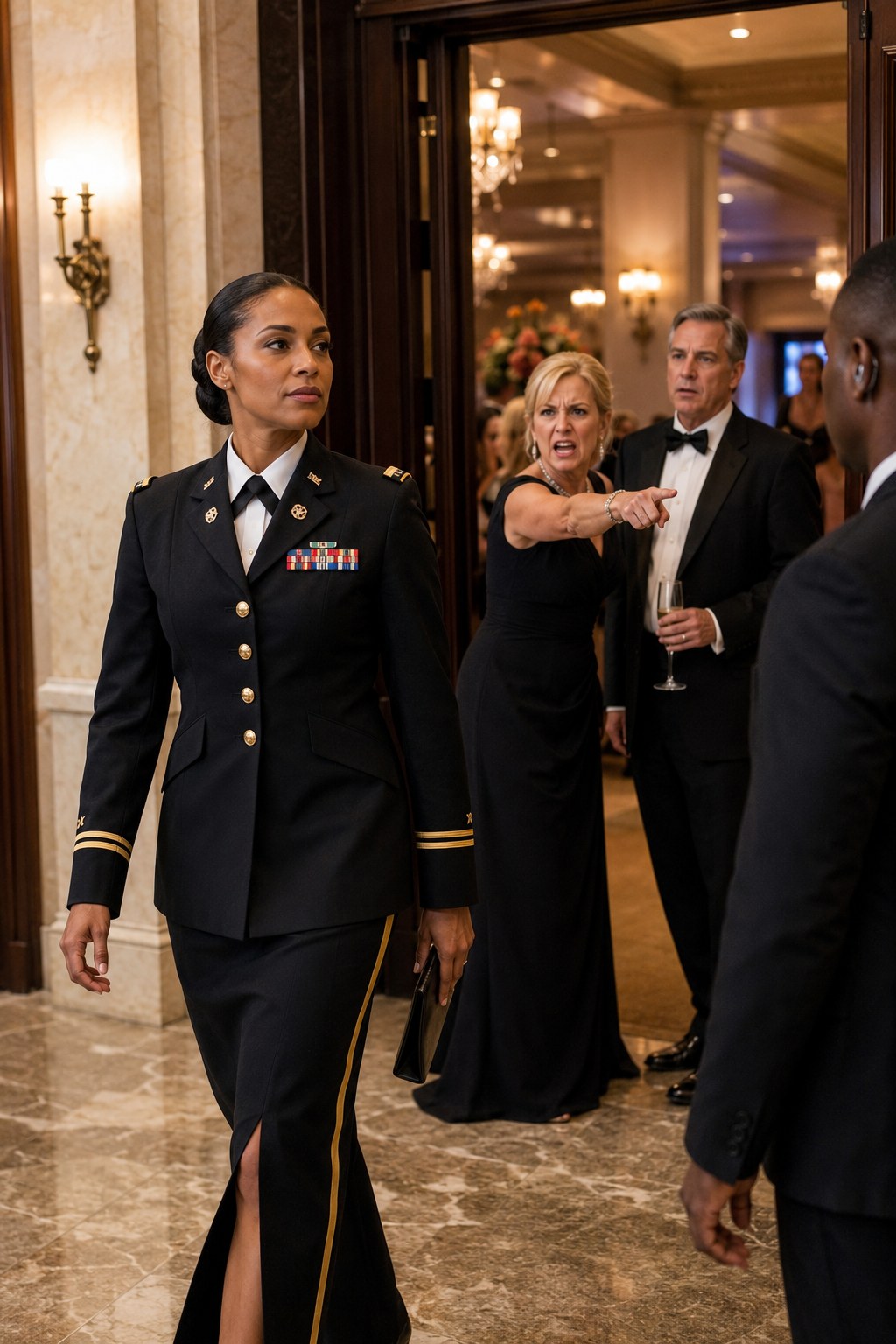
"Captain Morgan briefed my unit through the Harlan extraction review," he said. "She caught a timing error three senior officers missed."
Heather blinked.
The charity-board couple looked at me again.
Landon continued, "That correction saved forty-six minutes and probably six lives."
My stepfather closed his eyes.
There are numbers that make mockery impossible.
Heather tried to smile through it. "Well, Nora never tells us these things."
"You never ask," I said.
It was not clever. It was not dramatic. It was only true, and truth said plainly at a dinner table can be more violent than shouting.
My mother whispered my name like a warning.
For years, that whisper had worked. It had turned me softer, smaller, more willing to help everyone recover from what Heather said. But I had sat in rooms where warnings meant weather, fuel, injury, enemy movement, decisions that would follow people home in pieces if handled badly. My mother's whisper no longer qualified.
Heather looked at Landon with a helpless little laugh.
"I was joking."
"No," he said. "You were comfortable."
That was when I almost felt sorry for her.
Not because she deserved it. Because comfort had been her whole inheritance. A family that translated cruelty into personality. A mother who called it confidence. A table that rewarded sharpness when it was aimed at me.
After dinner, Heather followed me to the coat closet.
"You embarrassed me," she said.
I took my coat from the hanger.
"No. I stopped helping you do it to me."
The sentence followed me all the way to the driveway.
The Salute Took The Smile Off Her Face
The family tried to make the salute sound less serious after dinner.
Some were direct. Some traveled through relatives, managers, attorneys, carefully worded texts, and voices suddenly softened by consequence. A few people wanted forgiveness because they had always imagined themselves as decent. A few wanted access restored. A few wanted the old arrangement back, the one where Nora absorbed the insult and everyone else got to call the evening normal.
That arrangement was gone.
Heather learned that quiet service can outrank a whole room's opinion.
The ugly part was how easily her family accepted a smaller version of her because it entertained them.
So Nora changed what came next.
Nora let the post-dinner messages wait. She had spent enough years reporting for people who had never earned command.
People later asked if it felt like power.
Not exactly.
Power sounded too dramatic for what settled over her afterward.
What remained was quieter and steadier.
She no longer translated her service into words small enough for Heather to mock.
The next week, my mother called and asked if I could "come explain things properly" because Heather was upset that people from the dinner had started asking questions.
That was the old rhythm again. Heather caused harm, the room noticed, and somehow I was invited back to repair the discomfort. I told my mother there was nothing to explain. If anyone had questions, they could ask Heather why she needed my life to be smaller than hers.
My mother went quiet.
"You sound different," she said.
"No," I said. "You are hearing me without interruption."
In the end, Nora left before dessert, not because she was wounded, but because she no longer needed the room to recover.