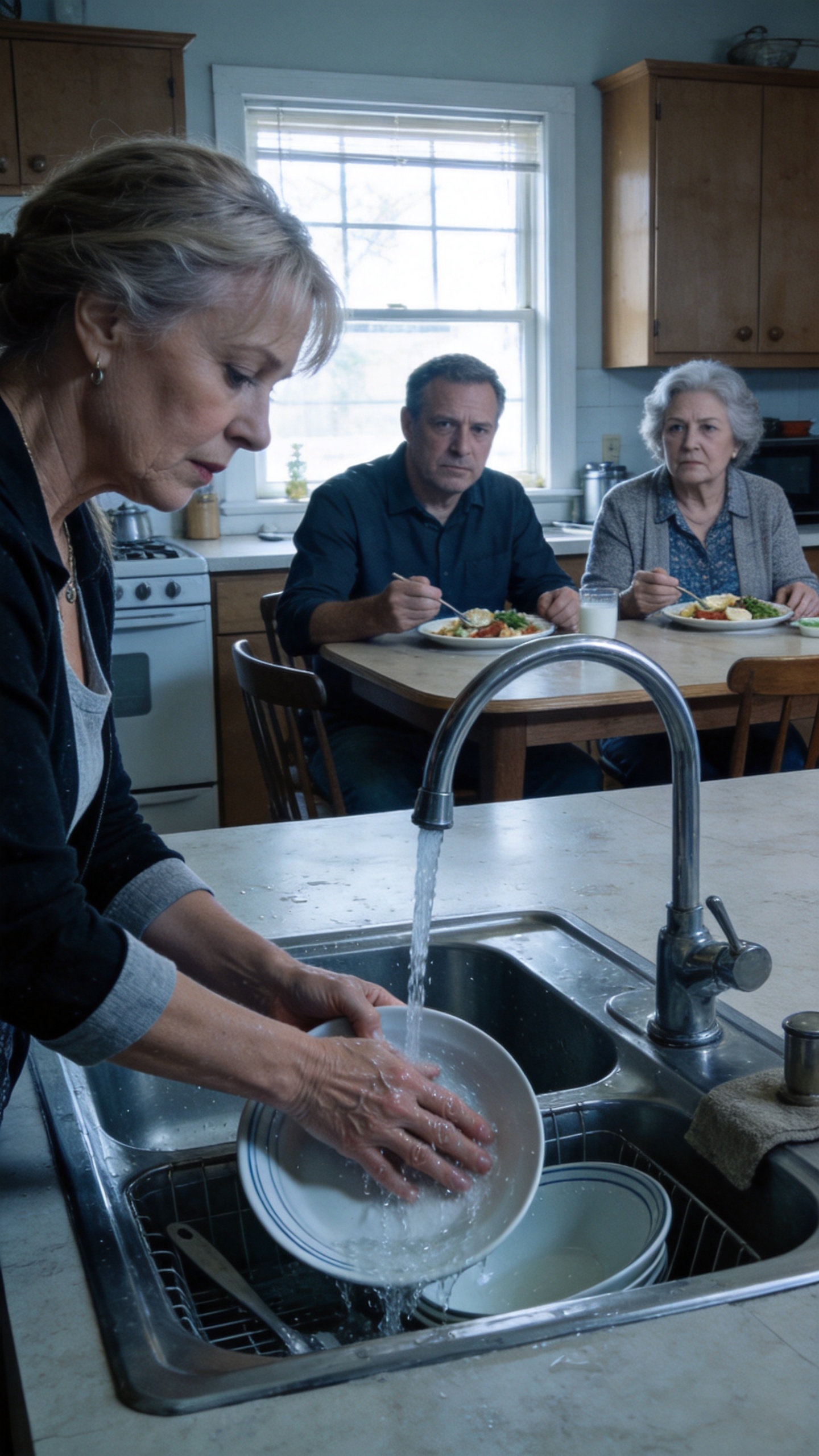
On the first day of our marriage, my mother-in-law placed a black notebook on our bed and said, "Everyone eats before you. If there's anything left over, then you can eat."
It was enough to break her pride.
I stayed near the doorway, not touching anything.
Watch the salt, Mrs. Whitmore.
Thomas has to watch his blood pressure.
Sure.
I'm just trying to learn the right way.
The Revelation and Reconciliation
On the first day of our marriage, my mother-in-law put a black notebook on our bed.
She said, "In this family, everyone eats before you. If there's anything left over, then you can eat."
Nearly three hours late, the meal was finally served.
The gravy had a sharp, sour taste.
No one said anything directly.
When someone tried to put a plate in front of me, I gently shook my head.
"I can't sit yet. Mrs. Whitmore taught me that the elders must eat first. After everyone finishes, I'll clean the kitchen and eat whatever's left," I said.
Whispers spread through the room.
"That isn't tradition. It's abuse," someone murmured.
"Doesn't she also work full-time?" another asked.
Thomas put his fork on his plate.
"Margaret, Robert would never have allowed a woman to be treated like a servant in his memory," he said.
But the black notebook still held its darkest secret.
I reached into my purse and took out the folded letter.
"There's something else the family should know. I found this inside the notebook," I said.
Slowly, Thomas's expression changed from anger to disbelief.
"This is Robert's signature," he said.
The room went completely silent.
The letter described unauthorized money withdrawals, jewelry secretly sold, loans opened in Robert's name when he was seriously ill, and a warning that if anything happened to him, the family should look into the deed to the house.
Mrs. Whitmore covered her mouth.
"I only did those things because I had no choice," she stammered.
"After Robert got sick, nobody helped me. I was scared."
"And that gave you the right to turn your guilt into rules that punished other women?" one of the aunts asked.
Nathan walked towards me, his face pale.
"Mom... is that why you never let us look through Dad's documents?" he asked.
Mrs. Whitmore sank into a chair.
She no longer looked like the boss of the house.
She looked like an old woman stuck in a role she'd created so no one would question her.
"My mother-in-law treated me this way too," she confessed through tears.
"She made me eat standing in the kitchen. She said a daughter-in-law learned obedience through hunger. I promised myself no one would ever humiliate me again. But I became just like her."
The anger in me didn't go away.
Understanding the wound that made someone hit you doesn't excuse the blow.
But it might explain where that hand learned to strike.
That evening, after the relatives left with stiff hugs and uncomfortable looks, Mrs. Whitmore asked Nathan and me to stay.
The black notebook was on the table.
"I was wrong," she said.
"About Robert. About both of you. About this home."
I took a sheet of paper from my purse.
"This isn't a threat. It's an agreement. If you want Nathan and me to keep living here, there'll be mutual respect. Otherwise, we'll move out by the end of the week," I said.
"Mom, I don't want to leave you. But I won't let my wife be treated like she's less important than anyone else," Nathan said.
Mrs. Whitmore read the agreement twice.
No one would use money to control another person.
Household work would be divided fairly.
No one would enter our bedroom without knocking.
And no tradition would ever be more important than a person's dignity.
A New Beginning in the Family
"What happens if I sign it?" she asked.
"Then we begin again," I replied.
"Not as opponents. As a family."
She remained silent for several long seconds.
The following morning, I woke to the smell of fresh coffee.
When I came downstairs, I saw Mrs. Whitmore rinsing strawberries.
She was in a simple robe, with her hair loosely tied back.
"I thought we might make pancakes," she said without looking straight at me.
"Nathan always loved them when he was young."
"I'll prepare the batter. You can show me how you like the fruit sliced."
Nathan appeared in the doorway.
Mrs. Whitmore looked at him seriously.
That breakfast had three identical plates, three cups of coffee, and three chairs around the same table.
Mrs. Whitmore cut a piece from one pancake and put it on my plate.
"Eat it before it gets cold, Lauren."
A tight ache formed in my throat.
That morning, I realized that not every family battle is won by raising your voice.
Some battles are won by enduring an injustice so precisely that everyone finally has to recognize how cruel it really is.
And a real home is never built on rank or hierarchy.
It is built with enough chairs so that no one is ever made to wait while standing.
After breakfast, Mrs. Whitmore carried the black notebook to the sideboard.
For a moment, she just stood there with it in both hands.
That notebook had ruled her kitchen longer than I had been alive.
It had told daughters-in-law when to sit, when to serve, when to be quiet, and when to pretend hunger was respect.
Nathan watched from the sink, a dish towel over his shoulder.
He didn't rush her.
Neither did I.
Finally, she opened the bottom drawer and placed the notebook inside.
She did not throw it away.
She was not suddenly a different woman.
But for the first time since I had entered that house, the rules were no longer lying open on the table like a threat.
That afternoon, Nathan washed the breakfast plates without being asked.
Mrs. Whitmore dried them.
I put the strawberries back in the refrigerator and noticed three forks soaking in the same warm water.
It was such a small thing.
Still, it stayed with me.
A family does not change because one person wins an argument.
It changes when the people who benefit from an old rule finally help carry it out and feel how ugly it is.
That night, I found Nathan in our room staring at the empty spot where the notebook had been.
"I should have spoken sooner," he said.
"Yes," I answered.
He nodded.
No excuse followed.
That was the first apology from him that actually sounded like a beginning.
The next morning, there was no notebook on our bed.
No list waited on my pillow.
No rule told me where to stand.
There was only Nathan's hand finding mine at the breakfast table while his mother poured three equal cups of coffee.
After breakfast, Mrs. Whitmore carried the black notebook to the sideboard.
For a moment, she just stood there with it in both hands.
That notebook had ruled her kitchen longer than I had been alive.
It had told daughters-in-law when to sit, when to serve, when to be quiet, and when to pretend hunger was respect.
Nathan watched from the sink, a dish towel over his shoulder.
He didn't rush her.
Neither did I.
Finally, she opened the bottom drawer and placed the notebook inside.
She did not throw it away.
She was not suddenly a different woman.
But for the first time since I had entered that house, the rules were no longer lying open on the table like a threat.
That afternoon, Nathan washed the breakfast plates without being asked.
Mrs. Whitmore dried them.
I put the strawberries back in the refrigerator and noticed three forks soaking in the same warm water.
It was such a small thing.
Still, it stayed with me.
A family does not change because one person wins an argument.
It changes when the people who benefit from an old rule finally help carry it out and feel how ugly it is.
That night, I found Nathan in our room staring at the empty spot where the notebook had been.
"I should have spoken sooner," he said.
"Yes," I answered.
He nodded.
No excuse followed.
That was the first apology from him that actually sounded like a beginning.
After breakfast, Mrs. Whitmore carried the black notebook to the sideboard.
For a moment, she just stood there with it in both hands.
That notebook had ruled her kitchen longer than I had been alive.
It had told daughters-in-law when to sit, when to serve, when to be quiet, and when to pretend hunger was respect.
Nathan watched from the sink, a dish towel over his shoulder.
He didn't rush her.
Neither did I.
Finally, she opened the bottom drawer and placed the notebook inside.
She did not throw it away.
She was not suddenly a different woman.
But for the first time since I had entered that house, the rules were no longer lying open on the table like a threat.
That afternoon, Nathan washed the breakfast plates without being asked.
Mrs. Whitmore dried them.
I put the strawberries back in the refrigerator and noticed three forks soaking in the same warm water.
It was such a small thing.
Still, it stayed with me.
A family does not change because one person wins an argument.
It changes when the people who benefit from an old rule finally help carry it out and feel how ugly it is.
That night, I found Nathan in our room staring at the empty spot where the notebook had been.
"I should have spoken sooner," he said.
"Yes," I answered.
He nodded.
No excuse followed.
That was the first apology from him that actually sounded like a beginning.