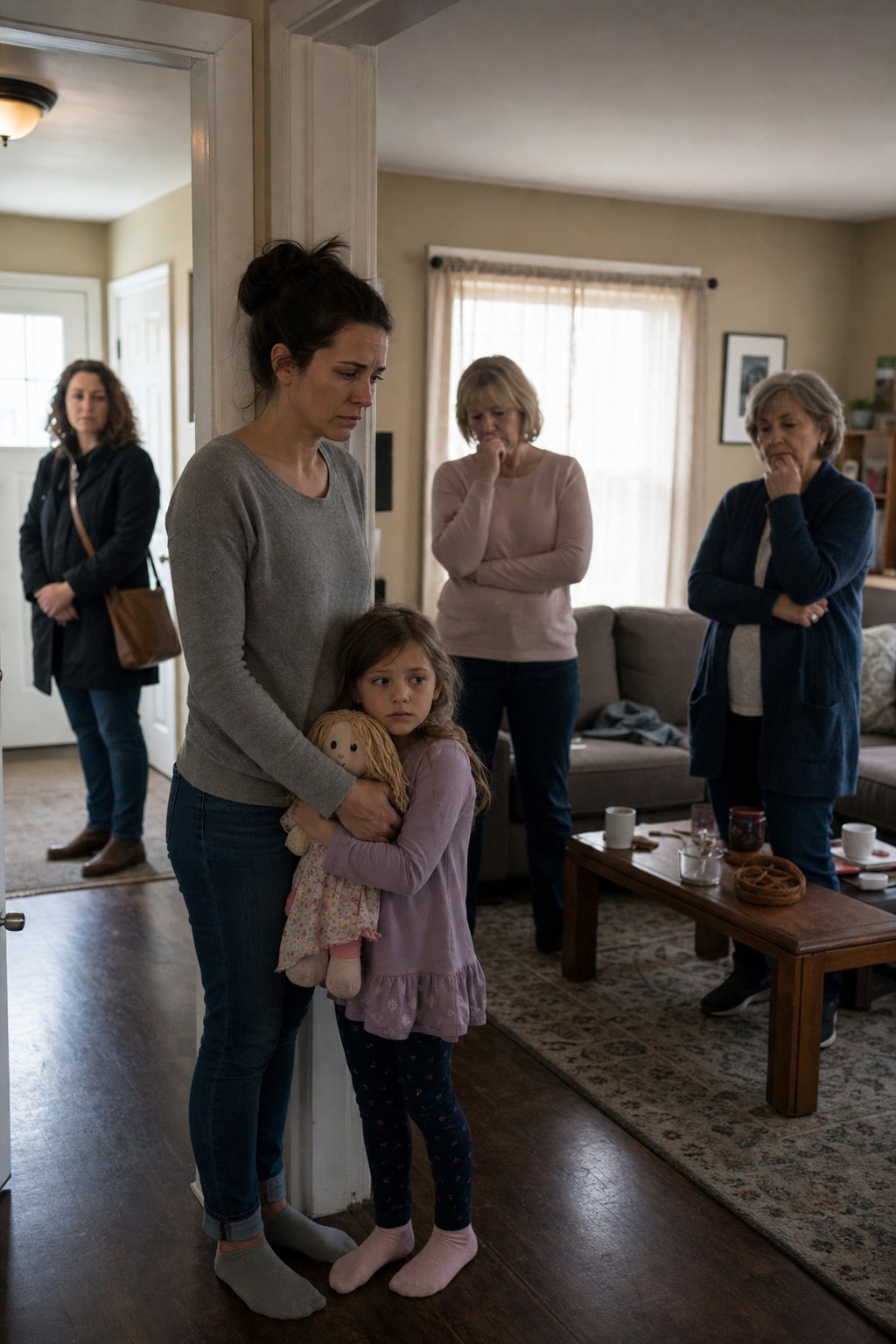
When I got back from a business trip, I saw my 3-year-old daughter with her head shaved, scared and shaking. My mother-in-law said, "That'll teach her not to steal."
Answer me, Elmer, I demanded.
Yes, I knew, Elmer finally mumbled.
Did you know she was capable of stealing from your own mother?
I pressed on.
I never thought she'd go this far, Elmer whispered.
But when they blamed Lily, you chose to believe them because admitting the truth would make you responsible for the financial mess, I said clearly.
Lydia turned to her son, looking shocked.
Were you giving her our family money, Elmer?
Lydia gasped.
I just wanted to help her out of a tough spot, Elmer admitted.
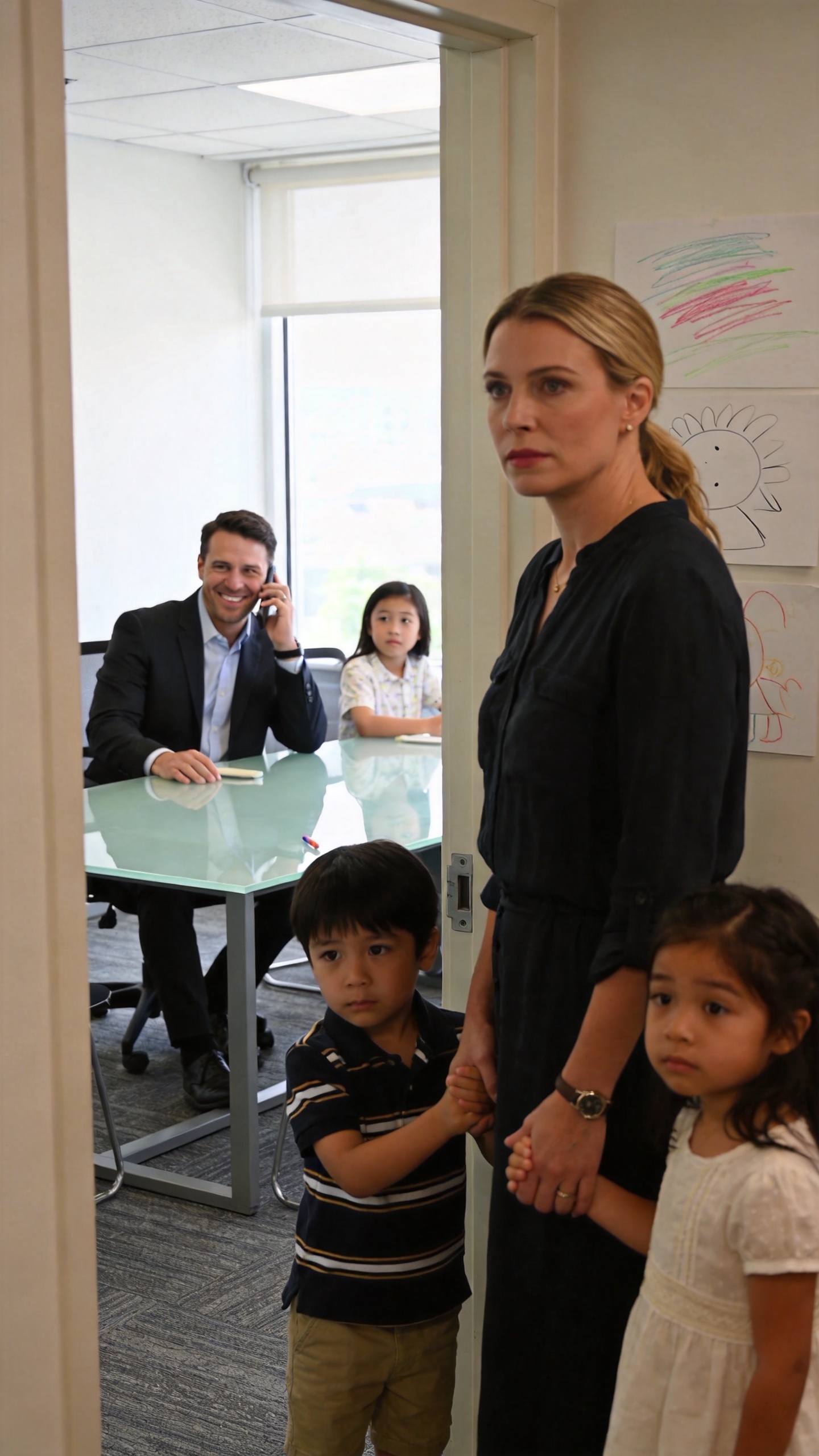
Heather sank deep into her office chair.
Elmer promised me no one would ever find out about the transfers, Heather mumbled.
Walter slammed his fist on the table.
They took us all for fools!
Walter roared.
For the first time, that angry man's rage wasn't aimed at me.
But I felt no satisfaction watching them turn on each other.
It just proved that in that toxic family, loyalty meant covering for the guilty and sacrificing the weakest.
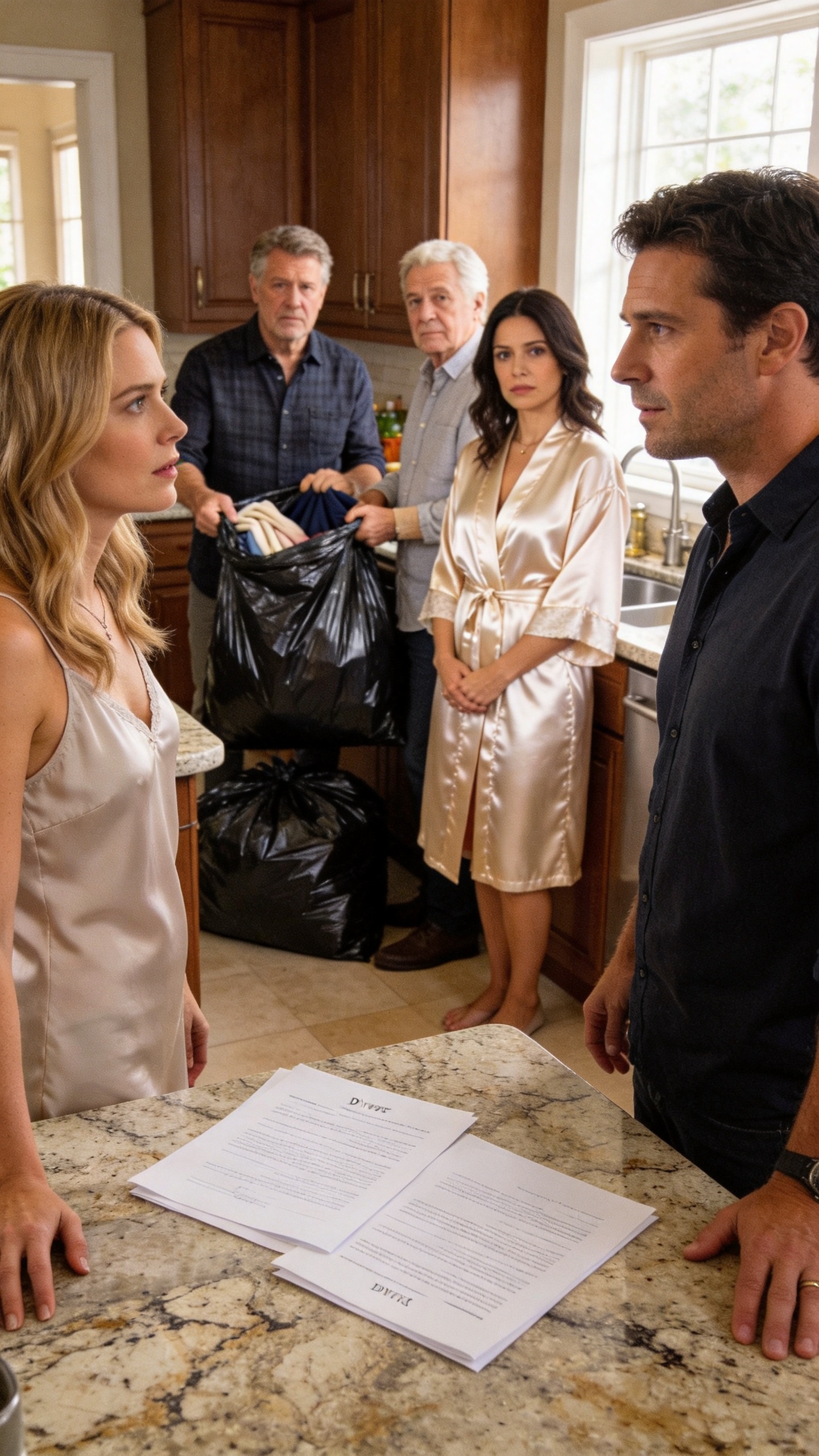
Naomi clearly listed my strict settlement conditions.
First, a full written apology, signed by all four of them, saying Lily never stole anything.
Second, full payment for the child's psychological therapy and my medical bills.
Third, the full return of all the money stolen from our joint account.
Fourth, a strict restraining order against Lydia, Walter, and Heather while the authorities judged the danger.
Fifth, temporary legal custody for me and closely supervised visits for Elmer.
And the sixth condition, I added firmly, is an immediate divorce.
Elmer looked up in a panic.
Joanna, we could move to another city, Elmer suggested.
You'd never have to go back to my parents' house.
The problem wasn't just living with them, Elmer, I told him.
The problem is that when your own daughter needed a father to protect her, you chose to be your mother's loyal son and your sister's silent partner.
Reaching a Settlement and Moving On
I made a terrible mistake, Elmer cried.
No, I replied coldly.
To make a mistake is to simply forget an important date.
You received a graphic photograph of my swollen face and you still ordered me to apologize to them.
I can take good care of Lily, Lydia wept.
I promise I am going to change my ways.
My daughter does not need you to change around her, I said.
She needs to feel completely safe away from you.
We are absolutely not going to sign a document of pure humiliation, Walter stated.
Naomi calmly slid him the official copies of the criminal complaint, the medical certificate, the psychological report, the security videos, and Heather's written confession.
Then we will simply continue our path through the criminal court and family law channels, Naomi stated without blinking.
Walter stared down at the frozen video printout where his hand was clearly raised in front of my face.
His arrogance instantly deflated.
He sat back down very slowly.
Heather was the very first person to sign the agreement.
Lydia followed her, crying bitter tears onto the paper.
Walter signed with his jaw clenched tight in anger.
Elmer took the longest time of all.
When he finally picked up the pen, he looked at me as if he expected me to step in and stop him.
I did not move a single muscle.
When I got back from a business trip, I saw my 3-year-old daughter with her head shaved, scared and shaking.
My mother-in-law said, "That'll teach her not to steal."
The following weeks were incredibly difficult for us.
The Prosecutor's Office officially opened a domestic investigation.
The legal case didn't land anyone in prison right away, but their actions had real consequences.
There were strict protective measures, mandatory anger management therapy for Lydia and Walter, full financial restitution, and an official investigation for domestic violence.
Heather had to testify about the theft and reach a legal agreement to return the bracelet's exact value.
She also lost her administrative job when her company found out she'd used falsified financial documents to apply for internal loans.
I didn't celebrate their public downfall.
All I really cared about was that they stopped lying about my little girl.
The divorce went through quickly because there was plenty of evidence of a violent living environment.
Our apartment had been bought during our marriage under a community property regime, and all my personal deposits were legally registered.
Elmer agreed to sell the property and give me my fair share, plus return the money he'd secretly transferred to his sister.
With the returned money and my personal savings, I rented a nice small apartment in Zapopan.
It had two bright bedrooms, a sunny balcony, and a clean kitchen where Lily could have breakfast without anyone yelling at her.
The first night we were there, she quietly walked through each room to check it out.
Does Grandma know where we live now, Mom?
Lily asked softly.
No, she doesn't, I assured her.
Can grandpa come inside this house? she whispered.
No, my love, he can never come here, I said.
Then she gently placed her favorite stuffed rabbit on the pillow and smiled.
It was the first time I'd seen her smile without a trace of fear since I got back.
Even so, the deep psychological wounds didn't heal overnight.
Lily would wake up screaming whenever she heard an electrical machine running in the house.
At the hair salon, she hid completely behind my legs.
If anyone mentioned a bracelet in conversation, she'd anxiously repeat her defense.
I didn't take it, she'd say quickly.
The child psychologist taught me not to just tell her to forget the trauma.
We repeatedly explained to her that the adults had lied, that she wasn't guilty of anything, and that her little body was hers.
We also gave her small, empowering choices every day.
She chose her own clothes, decided if she wanted to wear a colorful hat, and picked exactly who could touch her head.
Healing and Boundaries
Her hair slowly started to grow back, like a soft shadow covering her head.
Each inch seemed to restore a bit of the dignity that had been taken from her.
Elmer was legally allowed to see her once a week at a supervised visitation center.
The first visit was really hard to watch.
Lily hid behind me the whole time.
"I don't want Dad to take me back to Grandma's house," Lily cried.
Elmer knelt down a few steps away from us, looking defeated.
"I'm not going to take you there, Lily," Elmer promised.
"I swear."
She didn't run to hug him.
She just sat at a table coloring with crayons while he stood in front of her, not knowing how to get back the trust he'd so easily lost.
As time passed, he slowly started to talk to her more normally.
But every attempt at making up depended on Elmer's own actions, not my begging.
He had to go to regular therapy, admit in writing that he'd downplayed the family violence, and stop pressuring me to get our marriage back together.
One day, after a scheduled visit, he asked to talk to me alone in the hallway.
"My mom says she's very sick now and really wants to see Lily," Elmer said quietly.
"Maybe just a quick video call?"
Elmer asked.
"Joanna, she's still her biological grandmother," Elmer pleaded.
"And Lily is still the innocent little girl she forcibly shaved while she cried for help," I reminded him.
"Family ties don't erase the damage."
"I lost everything because I didn't stand up to them," he admitted.
"You didn't lose everything at once, Elmer," I told him honestly.
"You gave it away bit by bit every time you called what they did to us an exaggeration."
He didn't push the matter anymore.
Over the next few months, Lydia sent me several handwritten letters.
In the first ones, she rambled about her high blood pressure, her shame in front of the neighbors, and how lonely she felt.
She never mentioned Lily's fear.
I sent them all back without replying.
The fifth letter was different.
It said, "I finally realized I only think about what I lost. I have no right to ask Lily to forgive me. I just want to admit we punished her because she was the youngest and couldn't defend herself. I'll always be responsible for the horror."
I kept that letter for the child psychologist's file, not as a way for them to get back into our lives.
Walter never wrote to us.
He just paid the legally agreed - upon amount and followed the restriction order.
Heather disappeared from social media and moved in with an older aunt in Tepic.
Months later, she deposited the last part of the court - ordered repairs.
In the digital transfer description, she wrote two words: "For Lily."
I didn't reply.
Nora's news report was updated with the final legal outcome, still not revealing our real names.
She refused to publish anything that could endanger my daughter's privacy.
Some internet people wanted harsh punishments, but I knew true justice meant Lily could sleep at night, knowing I believed her and no one would silence her in the name of family.
The day we signed the final papers, I left the courthouse and saw Elmer standing alone on the stone stairs.
A New Beginning and Real Justice
As I walked up to Elmer, he quietly said, "Please forgive me. Not for trying to save our failed marriage. I know that's completely over. Forgive me because when Louisa desperately needed me to believe in her innocence, I chose the easier option for myself."
I looked at his face.
There was no more hatred left.
"Forgiveness doesn't magically change the real consequences of your choices, Elmer," I told him.
He agreed.
"I know it doesn't."
I then said, "Then just focus on becoming the father she truly deserves, even though you're no longer my husband."
He nodded slowly.
For the first time ever, he didn't try to justify his actions.
On that beautiful afternoon, I took Louisa to a local public park.
Her hair had grown back, covering her ears and starting to form small, lovely curls.
She was running happily after some soap bubbles when she suddenly stopped in front of an older girl with two long braids.
"Mom, when I grow up big, will you make me some braids just like those?"
Louisa asked, pointing.
"Of course I will, sweetie," I replied, smiling.
"But I'm always going to decide if I want to cut it or not, right?" she asked seriously.
A lump formed in my throat.
"Always, my love," I promised her.
Louisa smiled brightly and started running across the green grass again.
I used to think Walter's slap had destroyed my family.
But over time, I realized the violence had just shown that our family had been broken for years.
It was held together by toxic silence, financial debt, and fear.
Leaving that apartment wasn't destroying a family.
It was me refusing to let my innocent daughter be the next sacrifice for appearances.
Some people use the word "family" to demand obedience, even when it means cruel insults, beatings, or humiliation.
But a real family doesn't protect the guilty just because they're an adult.
And it doesn't force the innocent to be silent just because they're a child.
That night, while I was carefully combing through Louisa's new curls, she looked at our reflection in the bathroom mirror.
"Mom, we're really happy living here," Louisa said softly.
I wrapped my arms around her and hugged her tight.
"Yes, my love," I replied softly.
"Here, nobody ever has to apologize for defending themselves."
I finally understood that the best justice wasn't making them pay money, sign papers, or bow their heads.
It was that my daughter learned something no one could take away: her voice had value, her body deserved respect, and her mother would always be on her side.