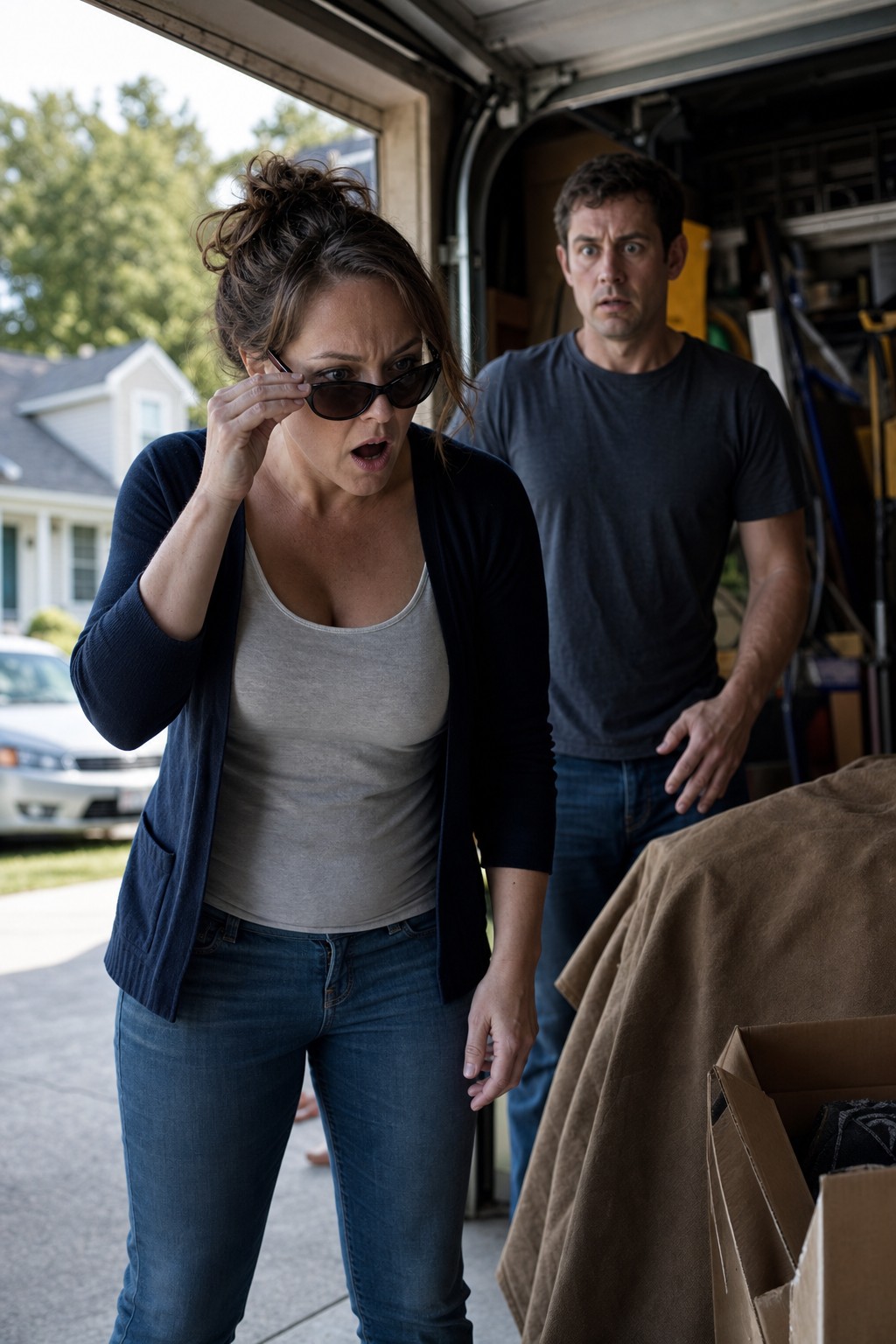
For Years, My Husband Thought My Failing Eyesight Would Hide His Secret - Then I Returned from Vision Surgery, Glanced into the Garage, and Shrieked, 'This Is Impossible!'
The Shadows of Doubt
Losing my eyesight transformed my life.
It also changed how I trusted others.
Looking back, I realize the darkest part of those years had little to do with my vision loss.
One warm afternoon, sunlight bathed the window as I sat with both hands wrapped around a mug of tea.
I could barely make out its shape.
Eleven years of marriage had molded my daily life into a set of small routines.
I knew my home by sound.
The hum of the refrigerator, the steady ticking of the hallway clock, and the low rumble of Tom's car pulling into the driveway each evening.
I was thirty-five and hadn't clearly seen my own face in almost ten years.
When Tom and I got married, my eyesight was normal.
A year later, a rare eye disease emerged and gradually stole my vision.
First, distant signs turned blurry.
Then, faces lost their details.
Eventually, everything faded into pale shapes and shadows.
By the fourth year, I started using a white cane.
By the sixth, I stopped pretending I could manage alone.
Moving through unfamiliar places had become too hard.
Within a few more years, I could barely see.
I could only detect light and large outlines.
Tom took charge of everything.
He drove me around, read the mail, and handled any task that needed clear vision.
"Don't worry about the garage, honey," my husband said one time, guiding me back to the kitchen.
"I'll sort it out now that you're more stable."
The garage had been ignored.
It was filled with all sorts of machines and supplies that were supposedly for my condition.
Tom also said he stored his tools, boxes, and car equipment there.
"I could at least help you organize it," I offered.
"Lisa, please. There's nothing in there for you. Let me take care of it. I'll get whatever you need."
I remembered the tension in his voice every time I mentioned the garage.
I told myself it was his way of protecting me.
That's what I thought love was.
That's what I believed devotion sounded like.
My best friend, Rachel, wasn't convinced.
"You've been shrinking, Lisa," Rachel said one afternoon as she sat across from me at the kitchen table.
"You used to argue with me about everything. Now you wait for Tom to decide."
"I know he has. But have you looked into that clinical trial I sent you?"
"Tom says it's a long shot. He doesn't want me to get my hopes up."
My friend went silent.
"And what do you want?"
I had no answer.
At some point, I'd stopped asking myself that question.
For years, specialists had told me there was nothing they could do.
Then, a month ago, Rachel told me about an experimental laser procedure through a clinical program.
The doctors warned that success wasn't guaranteed, and Tom insisted I was setting myself up for disappointment.
Still, I brought it up over dinner.
Tom put his fork on the table.
"Sweetheart, we talked about this."
"I know. I just thought..."
"You'll break your own heart," he said, and I heard that familiar tightness in his voice again.
"I don't want to watch you fall apart when it doesn't work."
I let out a slow breath.
"I've thought about it a lot," I said.
"Rachel's willing to help me through the recovery either way."
A New Vision and a Shocking Revelation
Tom repeated flatly, "Honey, of course."
He didn't refuse again.
Instead, he changed the subject to the leftovers, and I let him because arguing with Tom had never been easy for me.
A few days later, he left on another week - long business trip.
He kissed my forehead and promised to call every night.
The house fell silent around me.
With Rachel's help, I decided to take the chance on the surgery anyway.
The next afternoon, she arrived with a letter from the clinic.
I had been accepted into the trial.
That night, I thought about the person I used to be before the diagnosis.
The woman who argued with a repairman until he fixed the whole back deck.
The woman who picked out her own wall colors and drove to the mountains just to see the fall foliage.
Little by little, I'd given those parts of myself to Tom until being dependent became normal, and that normal became my identity.
For the first time in years, I was making my own choice.
The next morning, Rachel showed up at my door with coffee and a bag packed for the clinic.
"Are you still sure about this, Lisa?"
Dr. Patel was careful, patient, and upfront about all the risks.
The procedure took less time than I expected.
The recovery was strange.
For two days, everything looked like a blurry painting.
On the third morning, I opened my eyes and saw the ceiling fan.
I really saw it - the blades, the pull - chain, even the dust on the edges.
I cried for an hour.
A few days later, once Dr. Patel was sure I could manage on my own, Rachel drove me home.
I stood in the hallway, looking at details I'd forgotten.
"The curtains are blue," I whispered.
"I thought they were green. Tom always said they were green."
"They've been blue all along," Rachel said gently.
I walked through each room like a stranger in someone else's house.
The pictures on the fireplace.
The nick in the coffee table.
My own reflection in the bathroom mirror, older than I remembered but definitely me.
"I don't want to tell him yet," I said.
"I want him to come home and see me seeing him."
Rachel smiled, though a bit warily.
"Whatever you want, Lisa."
She left that afternoon after promising to check on me.
Alone in the quiet house, I suddenly remembered the boxes of Christmas lights Tom said were in the garage.
He'd talked about them so many times over the years.
Boxes of tangled lights from last Christmas, waiting in the garage.
I wanted to hang them across the living room.
I hadn't seen Christmas lights shine in years.
I walked toward the door at the back of the kitchen, the one I hadn't opened in longer than I could recall.
My hand rested on the knob.
The metal was cool and a bit loose, just as I'd imagined it all those years without touching it.
I turned it.
The garage door creaked open.
I stepped inside, expecting to smell dust and motor oil.
Instead, I smelled lavender.
My hand found the light switch from old habit.
The bulbs flickered on.
And the world I'd imagined for over a decade disappeared.
The Shocking Discovery
I stopped breathing.
There were no machines.
No tools.