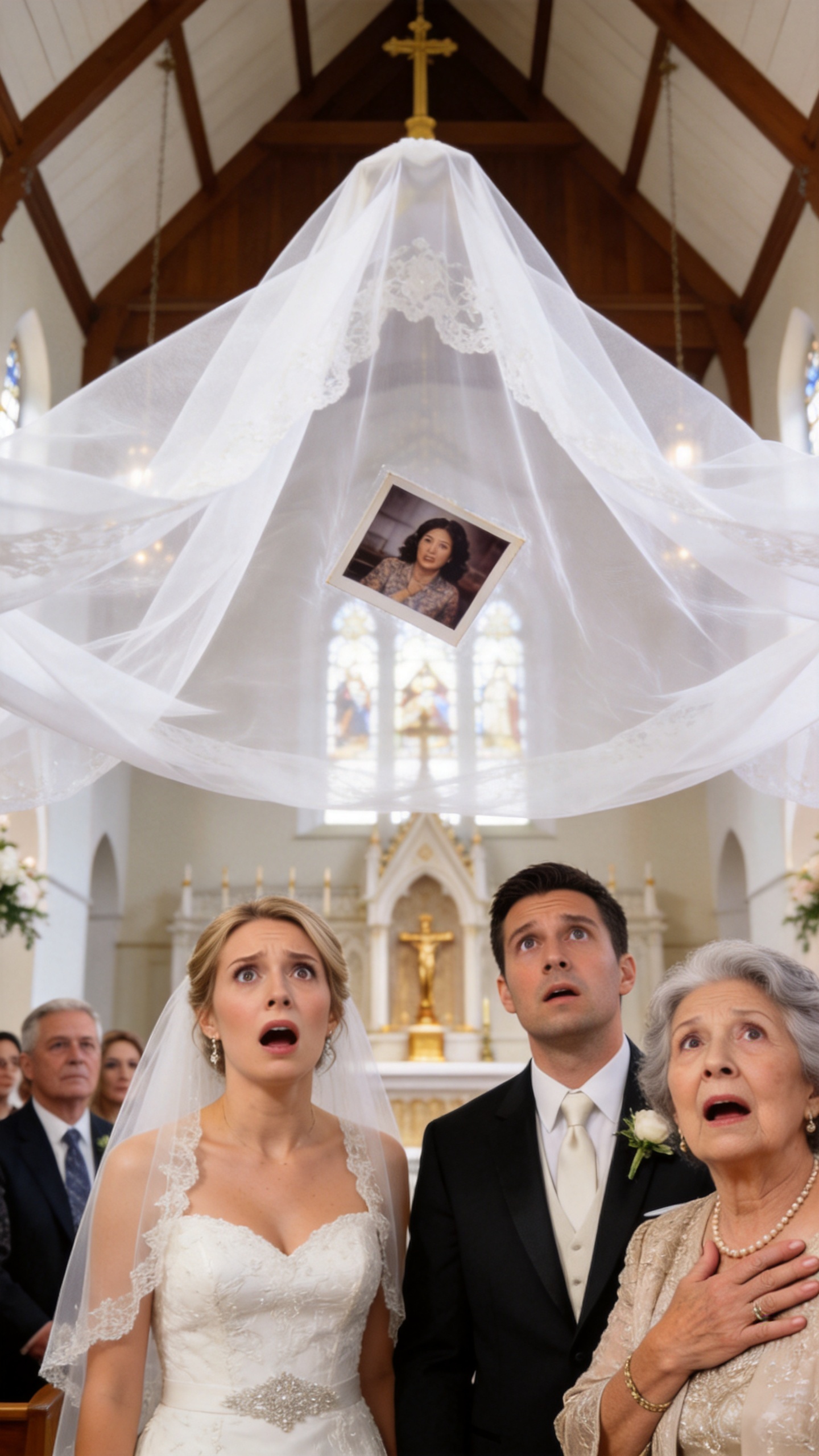
Our Divorce Was Final at Ten, My Mother-in-Law Put My Luggage Outside Before Noon, and That Night I Walked Into Her $800,000 Party for His Pregnant Mistress With a Sealed Envelope

At eleven-thirty, Beatrice Renshaw pushed my second suitcase down the marble steps. At eight-fifteen that evening, I would walk back up those steps carrying an envelope she could not order anyone to throw away.
Our divorce had been final for ninety minutes. My former husband watched from the doorway while his mother arranged my belongings beside the curb, leaving room for the florist's delivery van.
"Move those before the guests arrive, Mara," she said. "We have a great deal to prepare."
I looked at Julian. Seven years earlier, he had carried me across that threshold. Now he studied the driveway as though my luggage belonged to a stranger.
"Could you carry the blue one?"
He finally met my eyes. "Please don't make this difficult."
That sentence had followed me through our marriage. Beatrice opened our bedroom door without knocking; I was difficult. She questioned my spending at dinner; I was difficult. Julian always wanted peace, provided I paid for it.
I had stopped arguing two years before. Silence gave me time to notice things.
Beatrice stood above me in silk, her diamonds catching the late-morning sun. She reminded me not to return that evening.
"What's happening tonight?"
She glanced at Julian, enjoying the moment he had hoped to avoid.
"A celebration. Eight hundred thousand dollars, if you can imagine it. An orchestra, imported roses, the event planner who used to work for the governor. More than a hundred guests."
I waited until she supplied the names.
"Julian and Tessa."
Tessa Voss was twenty-eight. Her invoices called her a marketing consultant. The messages I had discovered six months earlier described a very different arrangement.
Then Beatrice added, "She's pregnant."
The taxi driver stepped out and opened his trunk. For a moment, that small, ordinary sound was the only thing I could hear.
Three fertility treatments. Two miscarriages. Julian sitting beside me in recovery rooms, promising we would face whatever came together.
"I planned to tell you after the divorce," he said.
He said it as if the timing had been considerate. His mother smiled as though a child could settle an argument she had been having with me for seven years.
I lifted the blue suitcase myself. "I hope you've checked how you're paying for tonight."
Beatrice laughed. I closed the taxi door before she could answer.
Two streets away, I opened a message from my attorney, Owen Fletcher: The filings are complete. The emergency orders have been entered. Call before you go anywhere near them.
I called him from the back seat.
What They Had Never Asked
The Renshaws believed I understood money only as something Julian permitted me to spend. They had never asked much about my work before the marriage.
I had been a forensic accountant, tracing ownership through trusts, acquisitions, and accounts designed to make money difficult to follow.
When my father died, he left a private investment company within a protected family trust. The inheritance was documented separately. Owen had reviewed those records long before our divorce negotiations.
I did not conceal marital property from Julian. My inherited assets were disclosed through the proper channels. He simply preferred his mother's story about the dependent woman he had rescued.
Five years earlier, Beatrice had borrowed against commercial properties, investment accounts, and the family mansion. The lender eventually wanted payment she could not make.
Through Alderwick Holdings, the company held by my trust, we acquired the distressed mortgage loan. Beatrice knew an investment firm had bought the debt and agreed to revised terms.
She did not know whose trust stood behind it. I had allowed the arrangement because I still thought helping Julian's family meant protecting our future.
Alderwick owned the loan and its security interests, not the house itself. Beatrice remained the owner, subject to the mortgage. Acquiring her debt had not given me the right to change her locks.
I wanted every step to survive scrutiny, especially from people eager to call me vindictive.
The family company's controlling shares had also been pledged as collateral. Those rights required their own notices and enforcement process; they were not a magic switch I could flip at dinner.
For years, the Renshaws had mistaken patience from their creditor for proof of their own financial strength.
Then I found Julian's messages to Tessa. While he discussed our supposedly depleted finances with the divorce lawyers, he promised her that the settlement would leave him with everything.
I started with statements I was entitled to review. Owen brought in the necessary legal process for the records I could not obtain myself.
Company names changed. Account numbers did not. A transfer described as a consulting expense reappeared as capital in another entity. Dates lined up with demands for financial disclosure.
Almost $12 million in marital assets had been concealed through shell companies and transfers Julian had failed to report.
Beatrice was not merely providing advice. Accounts she controlled received the money. Emails showed her discussing where it should go and what the paperwork should say.
Tessa appeared in the correspondence too. She knew the money was being moved out of my reach. We had emails, bank records, and recorded calls collected and reviewed with counsel.
The day before the divorce became final, Julian transferred another $2.4 million into an account controlled by his mother.
There was already a court order preserving the disputed funds. The $800,000 celebration was being funded from money covered by that order.
Our marriage could end that morning without erasing unresolved financial claims. Owen had made sure the concealed assets and disputed transfers remained before the court.
I had not spent the afternoon inventing a response to a pregnancy announcement. The records, applications, and creditor notices had been in preparation while Julian believed I was merely accepting defeat.
The Envelope
At seven that evening, I watched the party's livestream from Owen's office. Black sedans circled the driveway. Roses covered the railings above the spot where my suitcases had stood.
The camera swept past investors, executives, politicians, and photographers. Champagne filled a tower of glasses. Nothing suggested how badly the hosts needed borrowed appearances.
Tessa wore pale gold, one hand resting on her pregnancy. I remembered holding my own stomach in that house and trying to imagine a future.
Beatrice raised her glass. "To the beginning this family deserves."
Owen turned down the sound. On his desk lay copies of the emergency account-freezing injunction, mortgage enforcement notices, and the supporting financial disclosures.
There was also confirmation that the district attorney's financial crimes unit had received our evidence. A referral was not a conviction. The bank records would have to speak for themselves.
"Service can happen without you standing in that room," Owen said.
"I know."
He waited for my answer.
"This morning she made me carry my life past delivery men," I said. "Tonight I want to deliver something myself."