At My Son's Wedding, My Wife Came Home Shaking and Said She Had Only Fallen
Ellen Walked In With One Shoe Missing
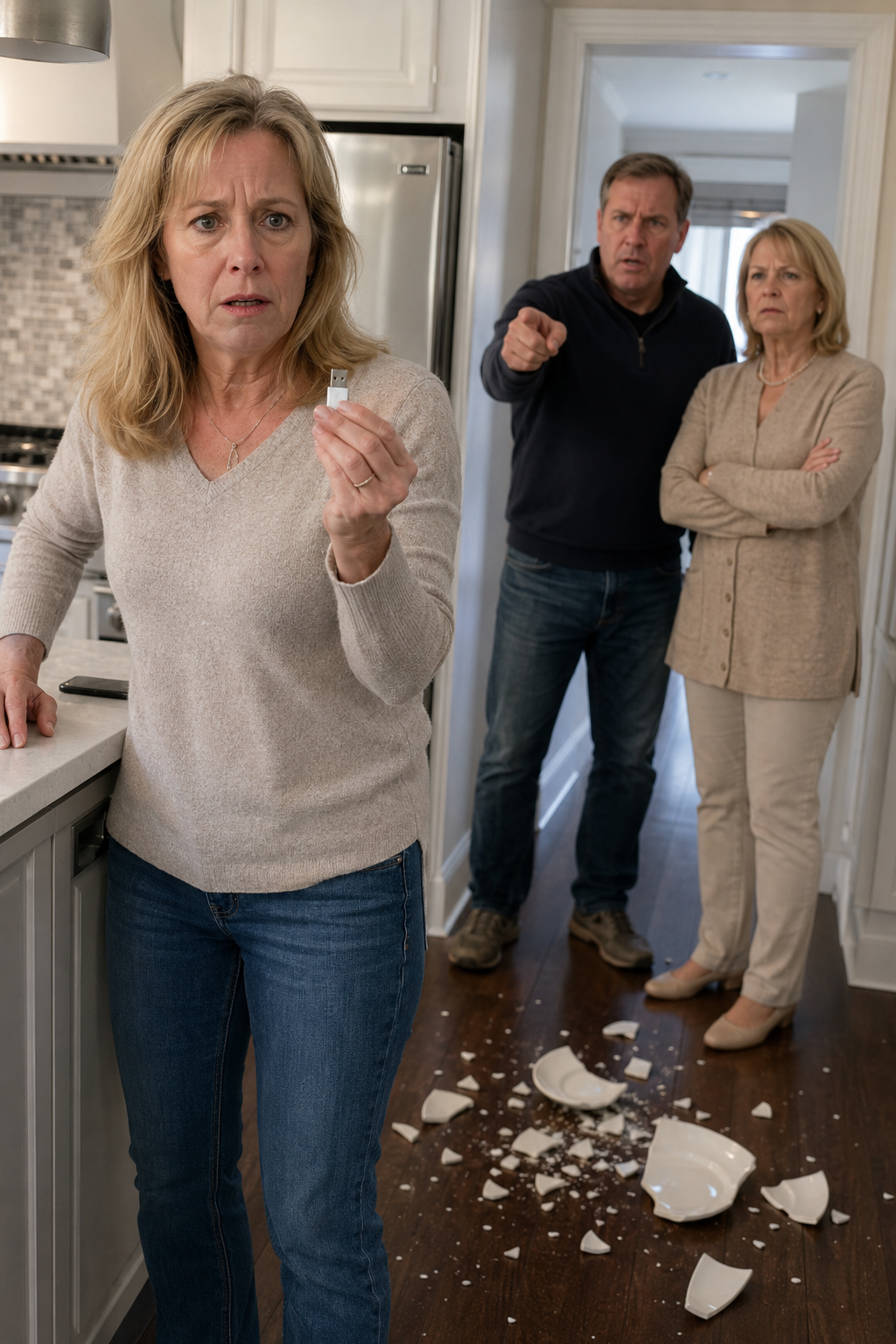
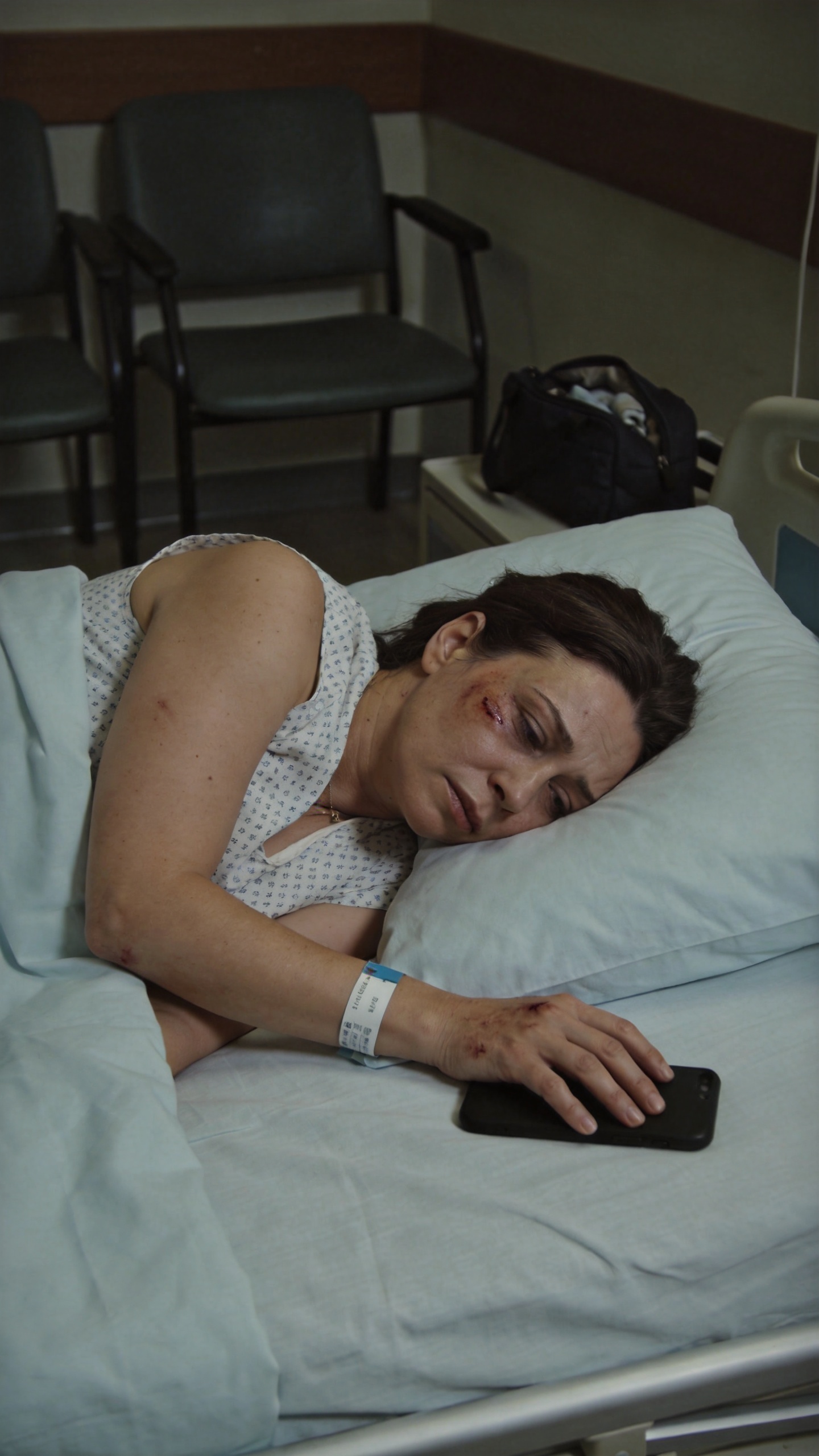
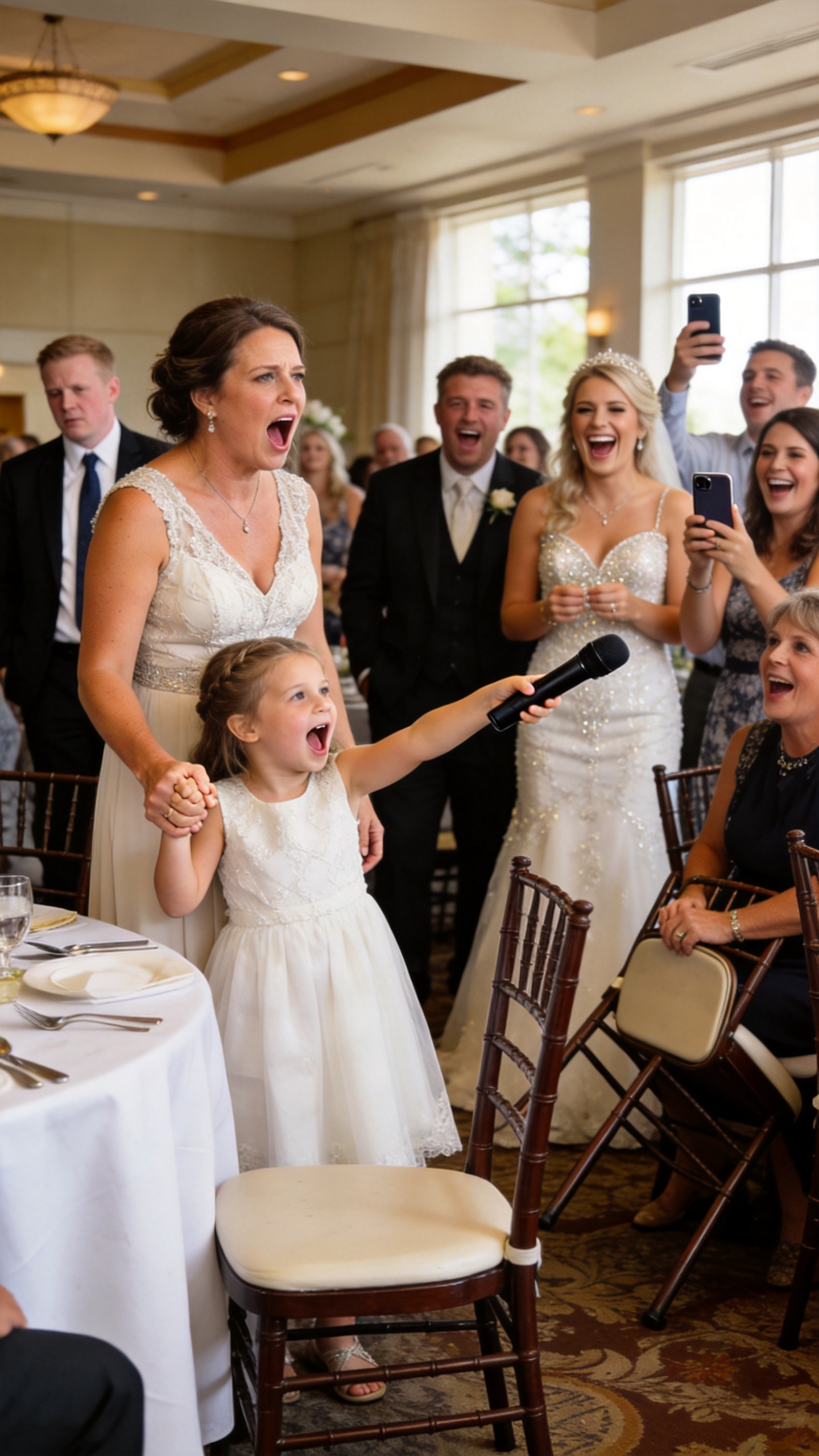
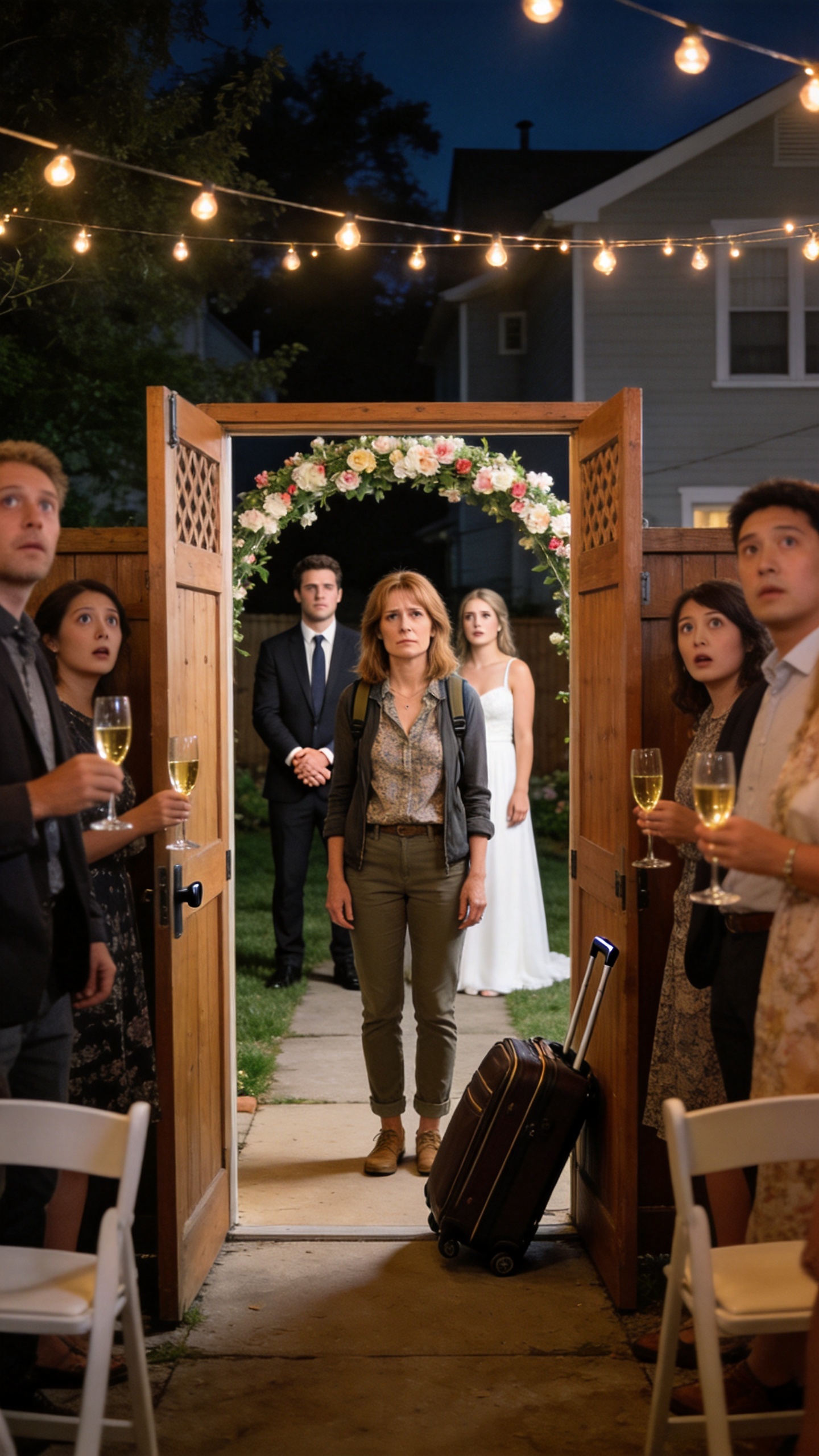
My wife came home from our son's wedding in a silver dress, one shoe missing, her hair half undone. She stood in our kitchen with her left hand shaking so hard that her pearl bracelet clicked against the counter.
"What happened?" I asked.
Ellen looked at me, then away. "I just fell," she whispered.
Her knee was swollen. A bruise had already begun to rise high on her arm, shaped too clearly like fingers. When I reached for her, she flinched.
I wanted to call Michael that second. Our son. The groom. The boy she had carried through fevers, exams, heartbreaks, and every reckless mistake I had quietly paid to repair.
Ellen grabbed my sleeve. "Do not ruin his night, Robert."
His night. Not hers. Not the night she came home shaking from a wedding we had helped fund, carrying pain she was still trying to hide from me.
So I helped her upstairs, put ice on her knee, and sat beside her while she slept in short, frightened bursts. Every time her phone vibrated, she woke as if someone had touched the bruise again.
I sat in the chair by our bed until dawn because I did not trust the quiet. Ellen was the kind of woman who could hide a migraine through a church luncheon and still remember who wanted lemon in their tea.
If she could not hold her face steady now, whatever had happened at that wedding had been worse than a fall.
The silver dress hung over the laundry-room sink where I had left it after helping her change. There was gray dust along one side of the skirt and a faint smear near the hem. One stocking was torn at the knee. Her missing shoe had not come home at all.
Those small details bothered me more than I wanted to admit. People who fall at weddings are surrounded by hands. Someone finds a chair. Someone brings water. Someone calls the husband. No one sends a woman home alone with one shoe missing unless the silence serves someone else.
At breakfast, Ellen tried to pour coffee and missed the cup. Hot drops hit the counter. She apologized as if the counter had feelings, then apologized again when I took the pot from her.
"Robert, please," she said.
"Please what?"
"Please let me decide when to talk."
I wanted to argue. I wanted to remind her that marriage had never meant one of us carried pain alone to protect the other from anger. But she looked so tired that I only nodded and cleaned the counter while my hands shook instead of hers.
The Call From The Hawthorne Estate
For two days, Ellen would not tell me more. She said she had fallen. She said it was crowded. She said weddings were emotional.
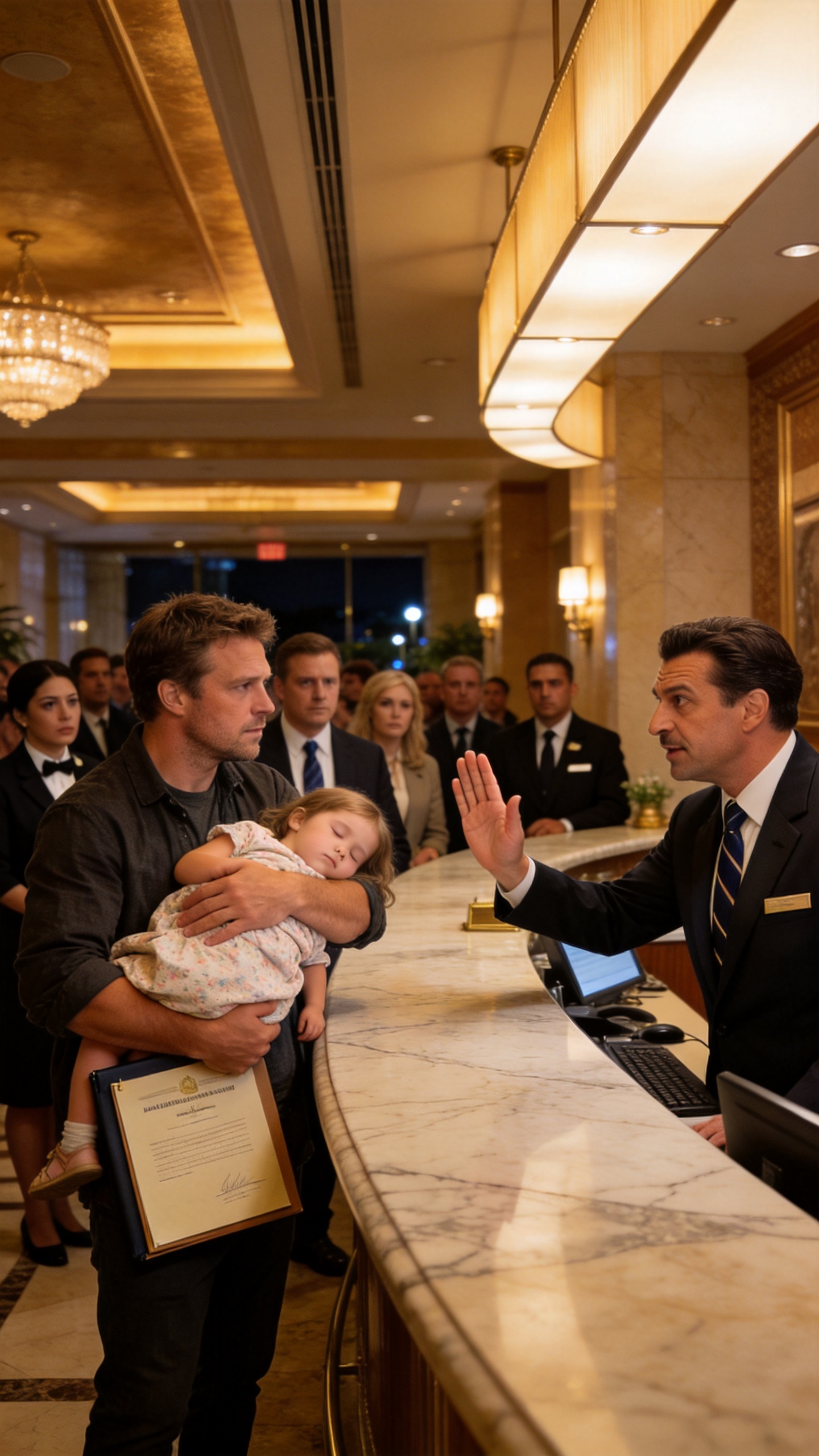
Then Daniel Pierce, the manager of The Hawthorne Estate, called and asked me to come alone.
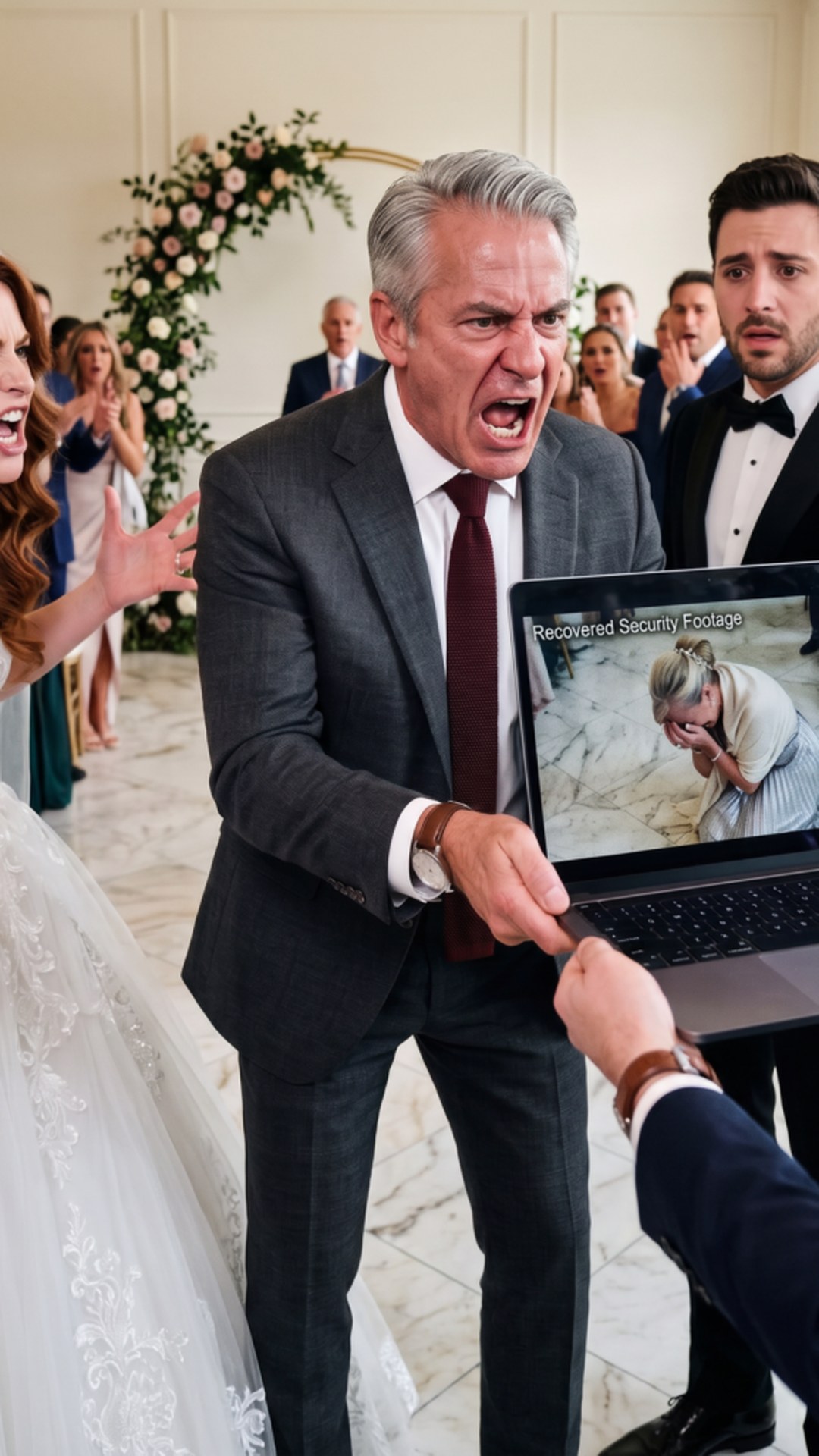
His voice was careful in a way that made my stomach go cold. "Mr. Whitaker, our technician recovered footage from one of the hallway cameras."
"What kind of footage?"
He paused. "You should see it in person."
The drive took thirty-eight minutes. I remember because I watched every number on the dashboard clock, trying to build a harmless explanation before I arrived.
Daniel met me at a side entrance. In his office, he closed the blinds before opening his laptop.
The video had no sound. It did not need any.
Before Daniel pressed play, he explained why he had called. A housekeeper had found Ellen's shoe behind a linen cart after the reception. Daniel had checked the incident log, found no report, and then asked security to review the corridor camera.
"We usually overwrite routine footage after thirty days," he said. "This was flagged because Mrs. Whitaker left property behind and because one staff member remembered seeing her limping near the service entrance."
That staff member had offered to call a car. Ellen had refused. Daniel did not say that to blame her. He said it gently, as if he understood that a humiliated person often chooses the quickest door out of a room.
He slid a clear bag across the desk. Inside was the shoe, the silver heel scuffed white on one side. Seeing it there, labeled like evidence, made my throat close.
"I am sorry to ask this," Daniel said, "but before I show you, do you want Mrs. Whitaker present?"
I looked at the bag, then at the laptop. "No. She already lived it once."
Daniel nodded as if that answer told him something about us. Then he placed a notepad beside the laptop and wrote the time stamp at the top before the video began.
"This camera covers the corridor from the bridal suite to the west service hall," he said. "The ballroom doors are outside the frame. The bridal party used this passage because the photographer wanted the family portraits staged before the grand entrance."
That carefulness steadied me. It reminded me that anger is not evidence. Evidence is evidence. The shoe. The time stamp. The footage. The staff note. The text Michael sent afterward.
By the time Daniel pressed play, I was no longer hoping the video would prove Ellen had exaggerated. I was only hoping it would not prove what my body already knew.
What The Camera Saw
Ellen appeared first in a rear corridor near the bridal suite. She carried a small box in both hands.
Michael followed in his tuxedo, jacket unbuttoned. Beside him stood Cassandra Vale, his new wife, all white satin and cold posture.
Ellen said something. Cassandra stepped toward her. Michael moved across the hallway, blocking the way out.
Then Cassandra knocked the box from Ellen's hands.
My wife bent as if to reach for it. Michael seized her arm. I leaned closer to the screen, unable to breathe.
Cassandra pointed toward the exit. Ellen shook her head.
Michael pushed his mother backward.
She struck the wall and fell to the floor. Cassandra crouched and said something close to Ellen's face. Michael did not help his mother stand. He watched while Cassandra kicked Ellen's shoe aside.
Then the two of them walked away together.
Daniel said he was sorry. I heard him, but I could not answer at first. I was watching the silent hallway where my son had decided his mother's body was easier to move than his wife's anger.
Daniel rewound the last ten seconds without asking. This time I saw what I had missed the first time: Cassandra looked down both ends of the hallway before she bent toward Ellen. Michael did too. They were not panicked. They were checking who had seen.
Ellen stayed on the floor for twenty-three seconds after they left. I counted because counting was easier than feeling. On the twenty-fourth second, she pushed herself up with one hand on the wall, the other still pressed to her ribs.
She picked up the cufflink box first. Not her shoe. Not her purse. The box. Even after being shoved, my wife reached for the gift she had brought our son.
The camera caught her standing there, swaying, while guests laughed at something off-screen near the ballroom doors. Nobody came down that corridor. Nobody knew a mother of the groom was leaning against wallpaper and trying to decide whether crying would make things worse.
Daniel gave me a copy of the footage on a drive. He also printed the incident note, the shoe recovery note, and the name of the staff member who had seen Ellen leave.
"I hope you never need any of this," he said.
"I already do," I told him.
The Cufflinks In The Box
When I came home, Ellen was in the living room pretending to read. The book had not moved in her hands.
I stood in the doorway and said, "I know."
Relief crossed her face first. Then shame replaced it. That nearly broke me more than the footage.
"Cassandra did not want me there," Ellen said. "She said mothers like me make weddings look cheap. She said I hovered. She said I embarrassed Michael in front of her family."
"And Michael?"
Ellen's eyes filled, but no tears fell. "He told me I always make everything about myself."
She had brought him my father's cufflinks, the simple silver squares my father wore at our wedding. Ellen polished them every Christmas because she believed love survived through small things carefully kept.
"Cassandra said heirlooms from dead working men did not belong in photographs," Ellen whispered.
Ellen told Michael she was still his mother. That was when he grabbed her.
"He said, 'Not tonight.'"
I looked at the bruising on her arm. "Why did you hide this from me?"
"Because I thought you would lose him."
I laughed once, without humor. "Ellen, he lost us in that hallway."
She covered her mouth then, not to hide tears but to hold back a sound I had never heard from her. It was not a sob. It was the small collapse of a woman realizing the bargain she had made with silence had not protected anybody.
Ellen told me the argument had started in the bridal suite. She had stepped in only to offer the cufflinks before the photographer took family portraits. Cassandra had looked at the box as if Ellen had placed trash on a satin chair.
"She asked if your father had bought them at a pawnshop," Ellen said.
My father had been a carpenter. He owned two good suits, one winter coat, and a set of cufflinks he polished with a handkerchief before every anniversary dinner with my mother. He had not left much money, but he had left pride that never needed permission from wealthy people.
Ellen had told Cassandra that. Quietly, she said. Too quietly, perhaps, because Cassandra smiled and told Michael, "This is exactly what I meant. Your family always turns sentiment into a performance."
Michael had flushed. Ellen thought, for one second, that he was embarrassed for Cassandra.
Then he said, "Mom, why are you doing this right now?"
That was the part she had not wanted to repeat. Not the shove. Not the wall. The look on our son's face when he decided she was the problem because defending her would cost him peace with his bride.
The Message That Made It Worse
That evening, Michael sent his first message since the wedding.
Great night. Hope Mom is not being dramatic about leaving early. Cassandra thinks she seemed upset.
I stared at the words until they blurred.
Then I answered only this: Your mother is resting. We will talk soon.
I did not send the video. I did not accuse him. I opened the safe in my office and removed the envelope Michael had asked about three months earlier.
Inside was the down-payment gift Ellen and I had planned to give him after the honeymoon. One hundred thousand dollars for the Main Line neighborhood Cassandra wanted.
Beside it was another folder. Michael's employment agreement.
He worked as a project manager at Whitaker Construction because I had created a place for him. He had a salary he had not earned, authority he was not ready to carry, and a future he assumed already belonged to him.
At 8:05 the next morning, I called our attorney, Margaret Ellis.
"Robert," she said, "is everything all right?"
"No," I replied. "But it is going to be clear."
After I hung up, I sat in my office with both folders open. The house gift was easy to understand. Money can be stopped with one instruction. The job was harder because I had allowed fatherhood to bleed into payroll.
Michael had joined Whitaker Construction three years earlier after leaving another firm under what he called "personality conflicts." I gave him small projects first. Then Cassandra came into his life, and suddenly he needed a title that sounded better at dinners.
Ellen had worried about it. She never said Michael was spoiled. She said he seemed frightened of being ordinary.
I had laughed then. I was not laughing now.
On my desk, the wedding program sat under the corner of the safe key. Cassandra's family names were printed in raised ink. Ours appeared in the same font, but I remembered how Ellen had said they changed the order twice because Cassandra wanted "the photographs to flow better."
I wondered how many small humiliations my wife had swallowed before the hallway. I wondered how many times Michael had watched and called it compromise.
Margaret Made Me Do It Properly
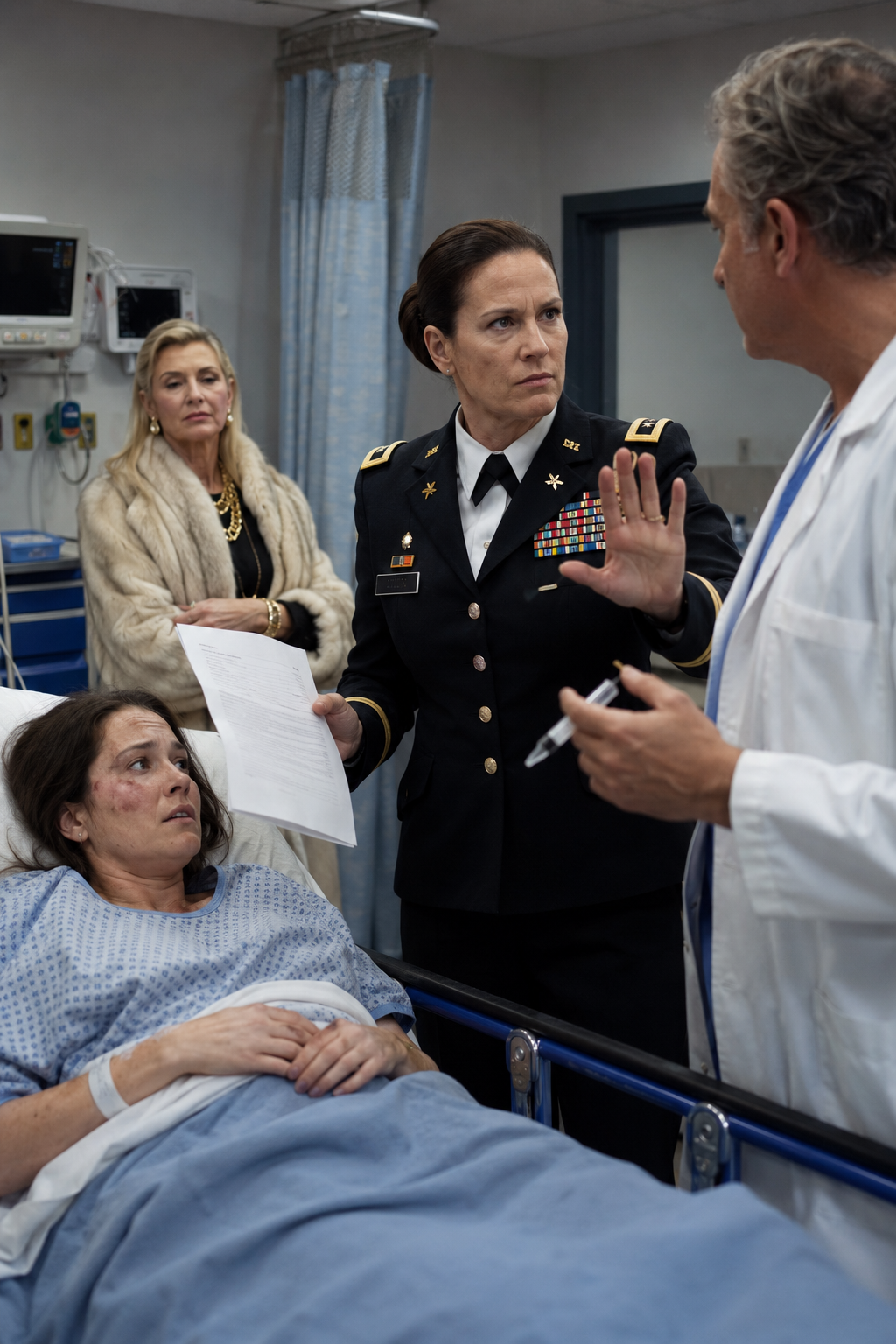
Margaret had represented us for twenty-two years. She watched the footage twice, her expression calm except for a tightening around her eyes.
"Does Ellen want criminal charges?" she asked.
"I have not asked."
"Ask her," Margaret said. "Not as a husband. As a witness. She gets the first decision on that."
Ellen chose no police. She did not want a trial, headlines, Cassandra's family calling her a liar, or Michael on the news.
"I want distance," she said. "I want peace. And I want him to know I saw him clearly."
Then she added the sentence that changed our house: "I want you to stop protecting him from consequences."
For years I had confused rescuing Michael with fatherhood. I covered checks. I called friends when he quit jobs. I co-signed debt. I dismissed complaints at work because Ellen still set an extra plate on Sundays.
I had built a smooth road beneath him, then wondered why he never learned to walk carefully.
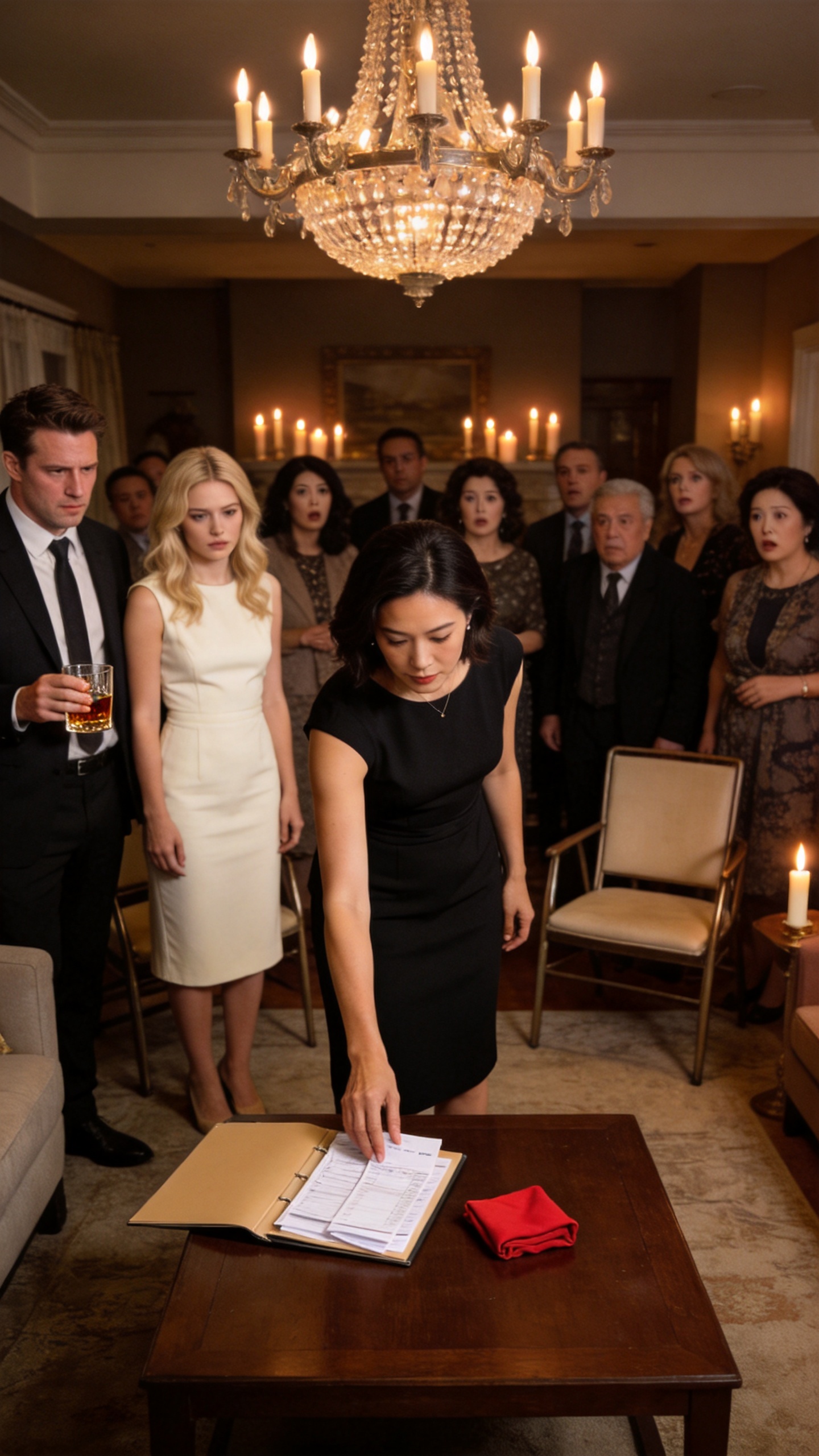
So we began where Margaret said we had to begin: with facts, documents, and no emotion on paper.
Margaret made me write down everything I was tempted to do and then cross out half of it.
"You can protect Ellen," she said. "You can protect your company. You can stop financing Michael's choices. What you cannot do is create a revenge trail he can turn into a story about your temper."
That sentence saved me from several mistakes.
We separated the issues. The wedding assault belonged to Ellen. The gift belonged to us. The employment matter belonged to the company and had to stand on its own record.
Margaret asked for every complaint about Michael from the past year. I had them. Of course I had them.
They were in emails I had minimized, conversations I had softened, warnings I had turned into private talks because public accountability felt cruel when the employee was my son.
I printed them all: the delayed permit packet from March, the flooring subcontractor he had blamed for a schedule he never confirmed, and the client who said Michael joked about "old money taste" while standing in her unfinished kitchen.
Margaret did not let me skip the uncomfortable parts. She asked when I first knew Michael was cutting corners. She asked which complaints I had handled verbally because I did not want a file. She asked whether any other employee would have received the same patience.
The answer was no.
Writing that answer hurt. Luis Ramirez had warned me twice. Janet had warned me three times. A client named Mrs. Feld had written that Michael made her feel foolish about costs. I had apologized, discounted the invoice, and told myself Michael was still learning.
So Margaret made me call Luis and Janet into her office separately. Not to gossip. Not to ask them to take sides. To ask for written records of work conduct and only work conduct.
Luis arrived with a folder already prepared.
"I am sorry, Robert," he said.
"For what?"
"For being relieved you are finally asking."
I went home that night and told Ellen what he had said. She touched my hand across the kitchen table.
"That is what protecting him cost other people," she said.
I had no defense.
The Gift Disappeared First
Michael arrived at my office after a two-day minimoon in the Poconos. He was tanned, relaxed, and wearing a watch Cassandra had posted online with the caption, My husband has taste now.
"Dad," he said. "You look serious."
"Sit down."
I gave him his ninety-day performance review. Missed deadlines. Undocumented change orders. Client escalations. Supervisors who no longer wanted to report to him.
His smile weakened. "Are you kidding me?"
"No."
"You are doing this right after my wedding?"
"I should have done it before your wedding."
Then I took out the envelope with the house money.
"This was intended as a wedding gift," I said. "It will not be given."
Color rose across his face. "Cassandra already contacted a realtor."
"That was premature."
"She is going to be humiliated."
I studied him. "Interesting choice of concern."
He stared at me as if I had started speaking a language he had never had to learn.
"You promised," he said.
"No. I planned."
"Mom knew about it."
"Your mother is bruised because you put your hands on her."
The words landed. For one second, Michael looked like the boy who used to run to the porch when thunder frightened him. Then his jaw tightened, and the grown man returned with all his practiced defenses.
"She told you that?"
"The venue showed me."
He went still. Not ashamed at first. Caught. There is a difference, and that difference can break a parent's heart with surgical precision.
"It was not like that," he said.
"It was exactly like that. I watched you grab her. I watched you push her. I watched you leave her."
His eyes moved to the envelope. Even then, part of him was measuring the money against the injury.
"Dad, Cassandra is already stressed. Her parents are asking questions about the house."
"Then answer them honestly."
He gave a bitter laugh. "You have no idea what her family is like."
"I know what ours became when you decided their opinion mattered more than your mother's safety."
He stood so fast the chair legs scraped the floor. For years, that sound would have made me soften. That morning, it only sounded like wood against wood.
Cassandra Called The Wrong Woman
Three hours later, Cassandra called Ellen. I was beside her when the phone rang.
Ellen put it on speaker.
"I hope you are proud of yourself," Cassandra said, bright and cold. "You created a huge problem. Robert is acting irrationally because you could not handle a little family tension."
Ellen repeated, "A little family tension."
"You fell," Cassandra said. "You told everyone you fell."
There it was. The trap Cassandra believed she had built from Ellen's silence.
Ellen looked at me. I nodded once.
"Cassandra," she said, "The Hawthorne Estate recovered the hallway footage."