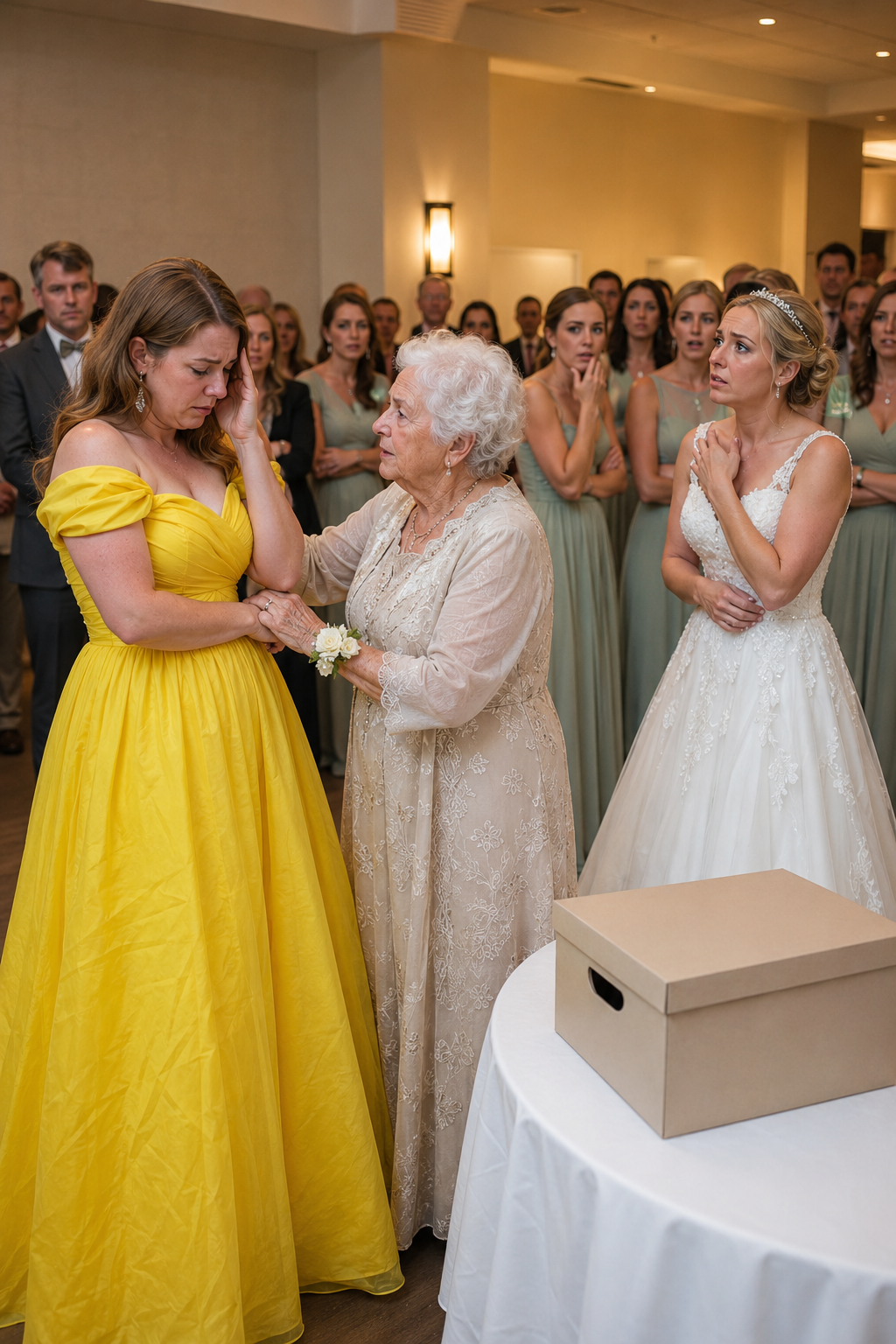
"If You Won't Move Into Assisted Living, Pack Your Bags And Leave My House," My Son Said, Certain I Had Nowhere Else To Go. I Didn't Argue. I Calmly Folded My Clothes, Closed My Suitcase, And Waited.
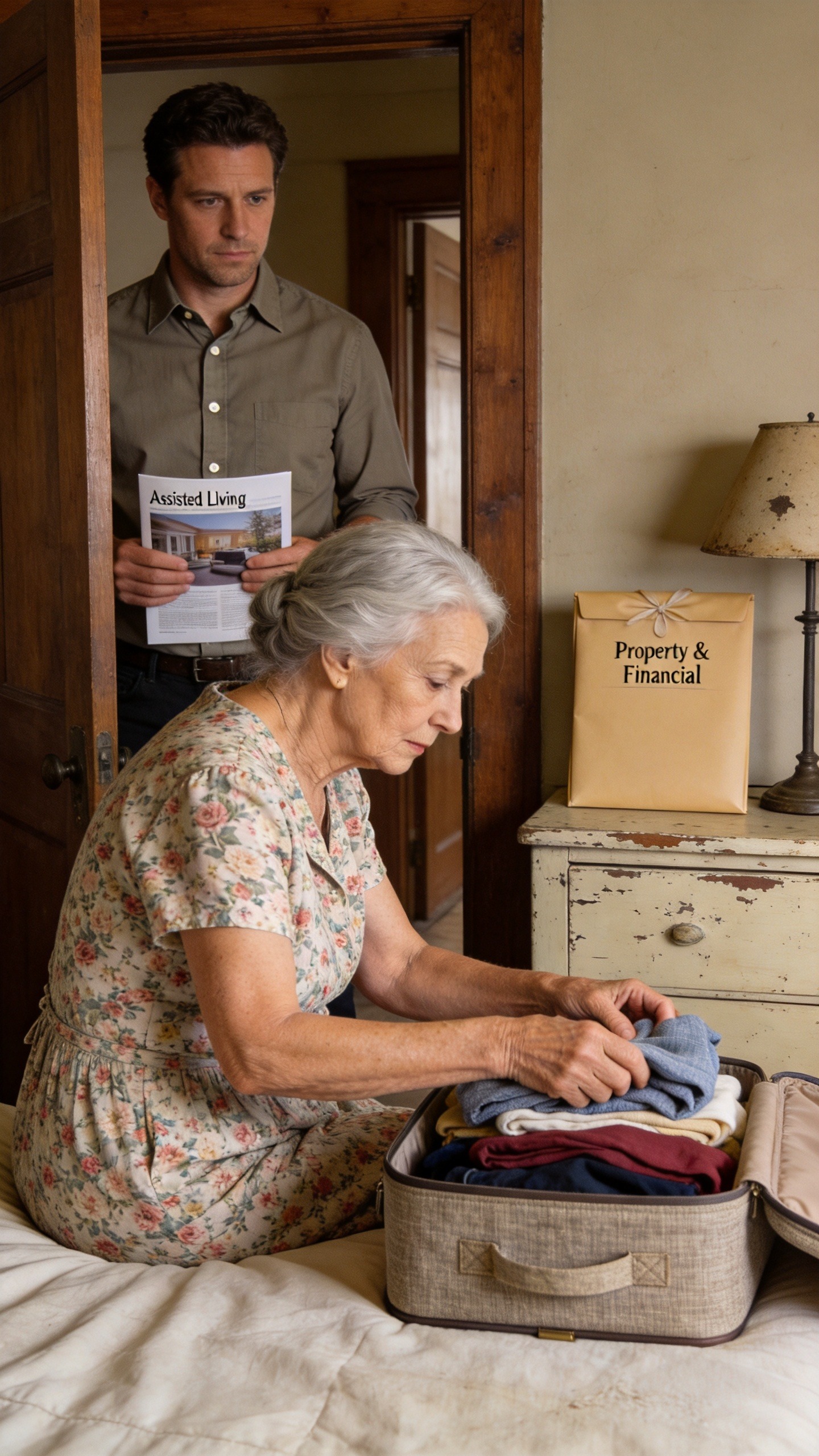
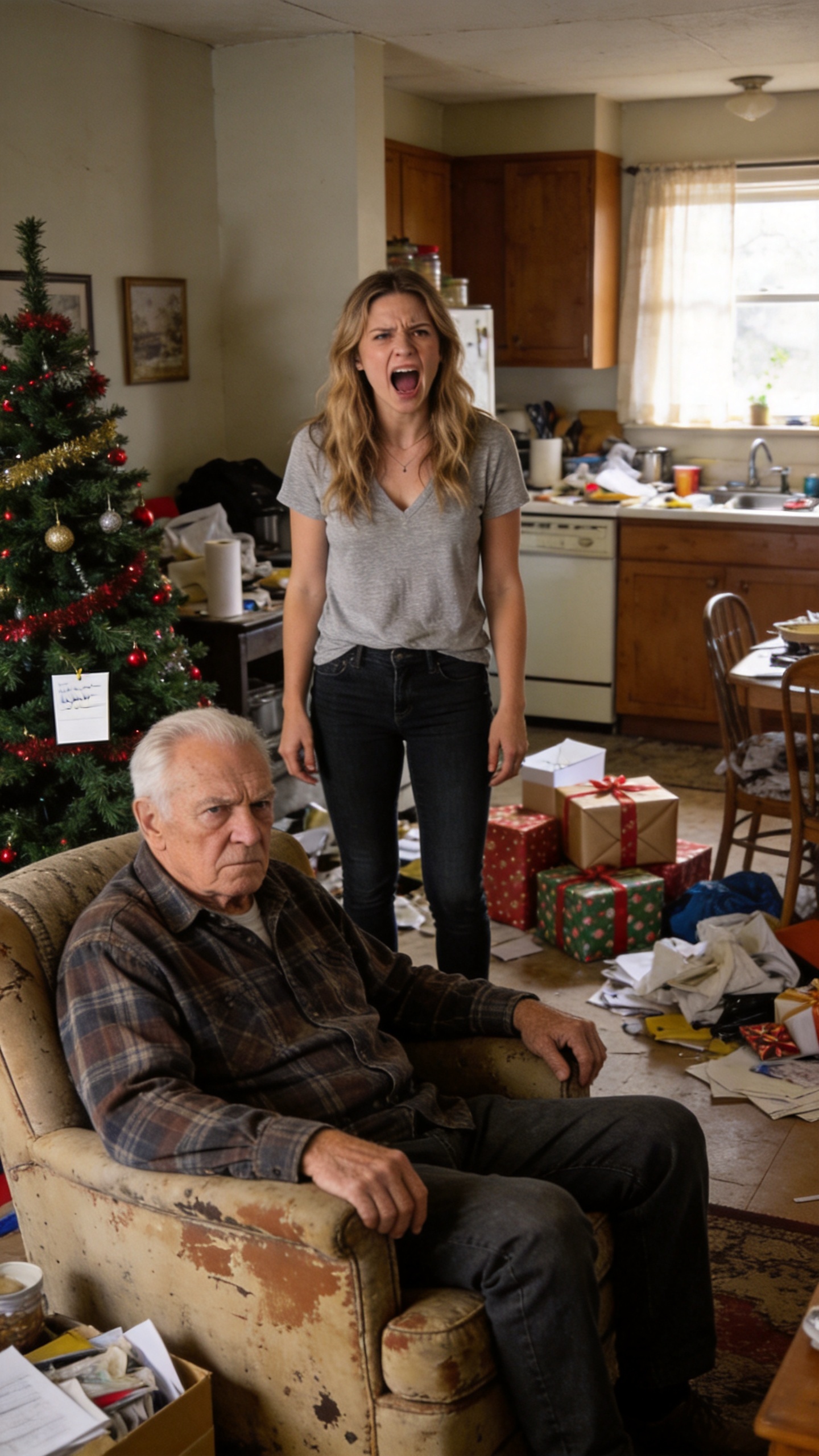
My son said it from across the kitchen island, softly enough that the words almost sounded reasonable.
"If you won't move into assisted living, pack your bags and leave my house today."
Miles did not shout. He had never needed to. He stood beside a glossy brochure full of smiling seniors, neat walking paths, and promises about independence. His wife, Brooke, had already set a pen on top of the application.
The chicken soup behind me kept simmering. I had started it before sunrise because their youngest had a cough. For a few seconds, I stared at the pot instead of my son.
The carrots needed more time. The flame was too high. The broth wanted salt.
Small things were easier to fix than the truth in front of me: Miles believed I no longer belonged in the house my money had helped build.
"Did you hear me, Mom?" he asked.
"I heard you."
Brooke folded her arms. "Eleanor, we have been patient."
She used to call me Mom. Then I became Eleanor. Eventually, when she spoke about me while I was in the room, I became "she."
"She forgets things," Brooke said. "She interferes with the children. She insists on doing chores nobody asked her to do."
I looked at the soup, the folded laundry by the pantry, and the school form I had signed that morning because neither parent remembered it was due.
"What chores?"
Brooke sighed as if I had proved her point.
Miles rubbed his forehead. "Please don't make this harder."
For three years, that sentence had ended everything.
Please don't make this harder when my wedding photos disappeared from the living room.
Please don't make this harder when my bedroom became Brooke's office and I was moved beside the laundry room.
Please don't make this harder when I asked why the money from selling my condo had never produced the statements Miles promised.
That morning, I finally understood what he meant. Making things easier meant vanishing quietly so no one had to admit they had erased me.
I turned off the burner. The click sounded cleaner than any answer I could have given.
"I'll pack," I said.
Miles's shoulders relaxed before he could hide it.
That relief hurt more than the ultimatum.
The Room They Gave Me
My name is Eleanor Reed. For almost forty years, I made wedding gowns.
I knew satin by the way it warmed under my fingers. I could restore old lace without stripping away its history. Brides trusted me with dresses that had belonged to mothers, grandmothers, and women they missed so badly they could barely speak their names.
My husband, Samuel, loved that work. He said I could make fabric tell the truth.
Samuel and his closest friend, Victor Harlan, built a hospitality linen company from a rented warehouse and two battered delivery vans. Samuel handled textiles. Victor handled hotels and properties.
Their fortunes eventually looked different, but their friendship never did. Victor could arrive in a tailored coat and still eat grilled cheese at our table while Samuel complained about baseball.
When Samuel died, he asked Victor to make sure I was protected. I thought he meant insurance.
Grief made paperwork foggy. Miles placed documents in front of me, marked with sticky tabs. He said they were routine. He said the company would support me. He said, "I've got you, Mom."
I believed him because he was my only child.
Two years later, I sold my condo in Rosebridge and moved into Miles and Brooke's new house in Westmere. Miles promised me a private suite on the main floor.
Brooke said the children would love having me close.
Miles also asked me to invest part of the sale proceeds into the family company. "It protects Dad's legacy," he said.
That sentence found the softest place in me.
I put four hundred thousand dollars into the business under what Miles called a preferred family investment. Another portion paid for renovations, including the suite that was supposedly meant for me.
The suite was never finished.
First I stayed in the guest room. Then Brooke's mother visited, and I was moved to the small room beside the laundry area "just for a week."
The week became three years.
The promised suite became Brooke's office, exercise room, and video-call background. My dresses hung on a rolling rack. The children's coats filled the hooks outside my door.
At first, helping felt like family. I packed lunches, cooked dinners, watched the children, and mended costumes. Ava collected lace scraps. Ben learned to level flour with the back of a butter knife.
Then usefulness became obligation.
Brooke stopped asking whether I could pick up the children. She sent calendar invitations. Guests arrived without warning. Laundry baskets appeared outside my door. Grocery lists came with no money attached.
If I sat down before the dishes were finished, Brooke would glance at the sink until I stood again. If I left my cardigan on a chair, she carried it to my room with two fingers, as if my things contaminated the clean lines of her house.
Miles rarely saw those moments. Or maybe he trained himself not to see them. He came home late, kissed the children, praised the dinner, and accepted the quiet house as proof that everyone inside it was fine.
On birthdays, I was useful enough to bake cakes and invisible enough to stand at the edge of photographs. At school concerts, Brooke introduced me as "Miles's mother" to people who had already heard I was becoming difficult.
When I asked Miles about my investment statements, he always had a reason.
"Accounting is reorganizing."
"The money is working."
"Don't worry about business."
I wanted so badly not to worry that I obeyed.
The Brochure On The Counter
Brooke began mentioning assisted living casually.
A friend's mother loved her community. A brochure appeared near the coffee maker. Mail arrived from facilities I had never contacted.
Then came her little list of concerns.
If I misplaced my glasses, she mentioned memory. If I asked a question twice because the television was loud, she looked at Miles. If I was tired after babysitting all day, she said I was struggling.
One night, I found a typed page in the printer tray.
Eleanor - Recent Concerns.
It mentioned a cup left near the sink, one forgotten grocery item, and the time I asked Ava about homework after Brooke had already asked.
At the bottom was a note: Discuss transition before summer. Convert current room into study and storage.
I photographed the page without knowing why.
Maybe every seamstress carries an accountant inside her. A pattern becomes undeniable only when every piece is laid beside the next.
After that, I began keeping small records. Not dramatic records. Just dates on a calendar, screenshots of facility emails, and notes about conversations that left me feeling as if the floor had shifted under my feet.
I wrote down the day Brooke told Ava not to ask me for help with a history project because "Grandma gets confused by instructions." I wrote down the afternoon Miles asked me to sign a new banking form while the children were arguing in the next room.
The form disappeared when I said I wanted to read it after dinner.
I began noticing other absences too.
Mail from the company stopped coming to the house. Bank envelopes arrived already opened. When I asked Brooke whether she had seen the quarterly report, she told me Miles handled "stressful things" for me now.
"At your age," she said, "peace matters more than paperwork."
Peace, in that house, meant ignorance.
So I started rebuilding my own memory trail. I called the bank from the grocery store parking lot because it was the only place I could speak without Brooke walking past the door.
I learned that my online access had been changed to an email address I did not recognize. The representative could not give details without a branch visit, but she did say the change had been authorized through a family management profile.
I wrote that phrase down on the back of a receipt.
Family management profile.
It sounded harmless. It sounded like a son helping his aging mother. It also sounded like a velvet rope placed across every document I needed to understand my own life.
When I came home, Brooke was waiting by the garage entrance.
"Long grocery trip," she said.
"The pharmacy line was slow."
It was my first deliberate lie in that house. I hated how easily it came. Then I realized I was not lying to protect wrongdoing. I was lying to protect the only path I had left toward the truth.
That was when fear finally became practical. I placed Samuel's old letters in a folder, slipped my marriage certificate behind them, and moved the folder under the lining of my suitcase.
On the morning Miles told me to leave, I packed two suitcases.
Clothes. Samuel's photograph. Our marriage certificate. Old company letters. My sewing shears. A wooden jewelry box I had brought from my grandmother's house.
When I opened the box, most of the jewelry was gone.
The pearl earrings remained. My grandmother's sapphire pin did not. Neither did the gold bracelet Samuel had given me for our twenty-fifth anniversary.
Brooke appeared in the doorway. "Are you almost done?"
"Where is my jewelry?"
Her face did not move. "What jewelry?"
"The sapphire pin and Samuel's bracelet."
"You probably misplaced them. That is exactly why we are worried."
The answer came too quickly.
She did not look toward the dresser. She did not offer to help me search. She stood there with one hand on the doorframe, already waiting for me to accept the version of reality that made her innocent and me unreliable.
I remembered wearing the bracelet at Ava's spring concert. I remembered Brooke touching it afterward and saying vintage gold had become fashionable again. I remembered placing it back in the box that night.
Memory is a strange thing. People can insult it for months, but when a fact matters, it can return with the exact weight of a clasp in your palm.
I put the nearly empty box into my suitcase and sent one message.
Victor, you once said if I ever needed a door opened, I should call. Is that still true?
His reply came in less than a minute.
Always. Where are you?
The Car At The Curb
Victor arrived an hour later in a black sedan.
Miles opened the door before the driver reached the porch. He had expected a taxi.
Victor Harlan stepped out, silver-haired, calm, and leaning lightly on a cane after knee surgery. At seventy-two, he still entered a driveway like a man used to rooms going quiet when decisions mattered.
He walked straight to me.
"Ellie."
He took both my hands. For the first time that morning, my composure almost cracked.
"You came."
"You called."
Miles blocked the doorway. "Mr. Harlan, this is a private family matter."
Victor glanced past him at the assisted-living brochure on the island. "So I see."
Brooke said, "We offered Eleanor a safe option. She chose to react emotionally."
I answered before Victor could. "I chose to leave after being told to leave."
Miles looked at me. "Mom, we can discuss this later."
"No. You had three years to discuss how I lived here. You chose this morning to end the conversation."
Victor lifted my larger suitcase himself. The driver moved to help, but Victor shook his head.
For years, people had handed me things to carry: laundry, groceries, children, expectations. Victor carried my suitcase as if the weight deserved to be shared.
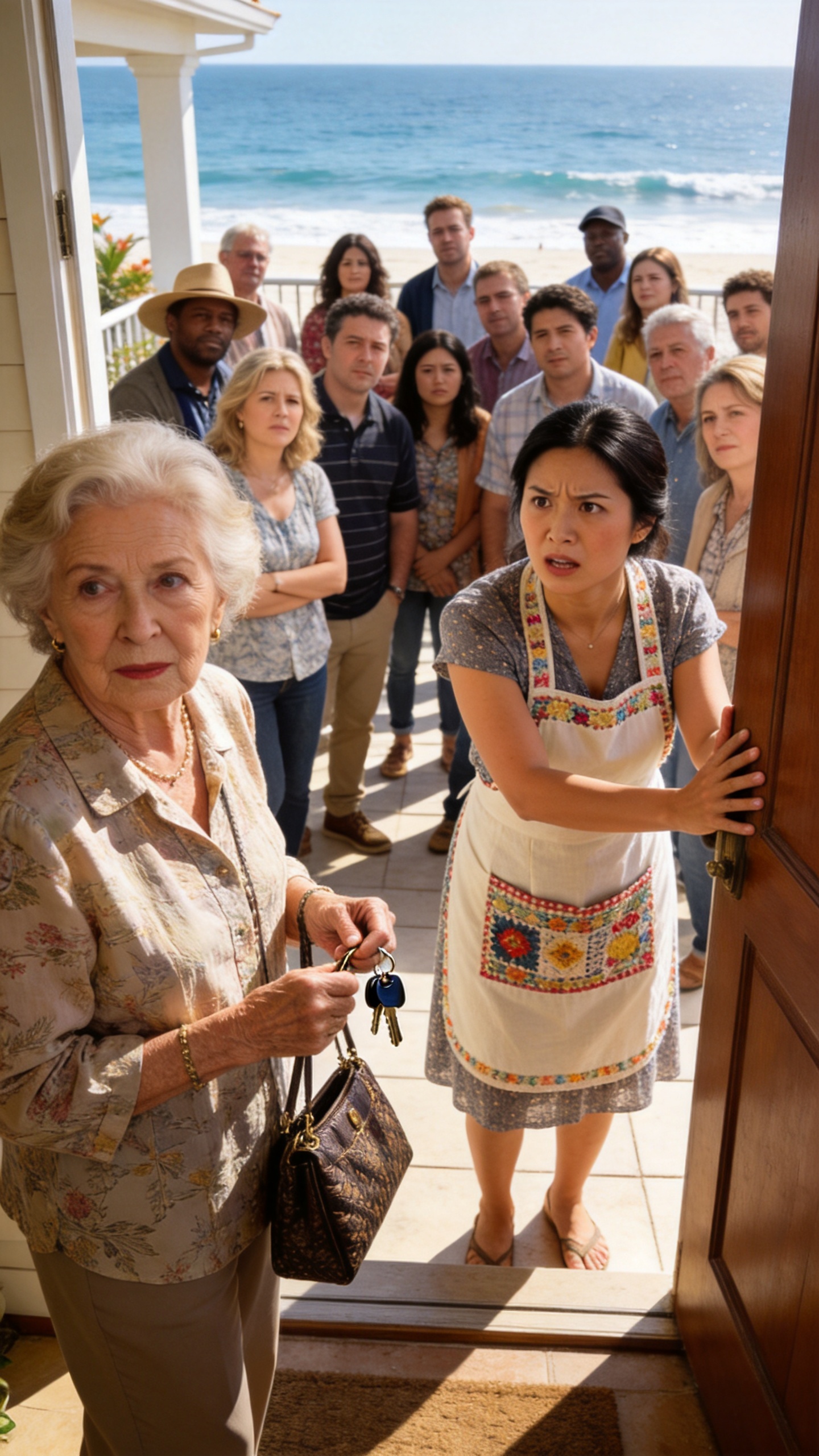
Before I got into the car, Ava and Ben stood at the stairs crying.
"This is not goodbye," I told them.
"Are you coming back?" Ava whispered.
I looked toward Miles. "I will see you soon."
Brooke put her hands on both children's shoulders as if she were protecting them from me. Ben tried to step forward anyway, and she tightened her grip.
"Don't make this confusing," she said.
"It is already confusing," Ava said through tears. "Grandma lives here."
For a moment, Miles looked as if those words had reached him. Then Brooke whispered something I could not hear, and his face closed again.
As we pulled away, my son stood stunned on the porch. Not because I left. Because Victor Harlan had come for me.
Miles understood money. He understood influence. For the first time, he had to understand that my life extended beyond the small room he had assigned me.
The Folder Samuel Left Behind
Victor took me to his apartment above the lake.
The guest room had a desk, clean towels, and a window wide enough to hold the whole gray afternoon. There were no storage boxes. No coats on the door. No exercise bike in the corner.
I set Samuel's photograph on the nightstand.
That evening, Victor made tomato soup and grilled cheese. Simple food, he said, was best when a day had already become complicated.
Then he asked, "What did Miles mean when he said the company supported you?"
I told him about the monthly deposits, the missing statements, and the four hundred thousand dollars from my condo.
Victor went quiet.
"Samuel left you more than support," he said.
He returned with a leather folder stamped with Samuel's initials. Victor had kept copies because he had still been chairman when the succession plan was written.
The page said I owned forty percent of Reed-Harlan Hospitality Linens through a marital trust.
Voting rights retained. Quarterly distributions. Independent access to financial records.
I read the line again and again.
"Forty percent?"
"Yes," Victor said.
"Miles told me the shares were moved into a family holding company."
"Only if you approved a valid transfer."
I opened the folder I had packed. Some papers carried my signature. Others carried initials that looked close, but wrong. The curve of the E was not mine. The final stroke in Reed did not lift the way my hand always did.
The differences looked small until Priya later placed my bank signature, my passport signature, and the company forms side by side. Then they became loud. My own hand had a hesitation before the R, a habit from decades of signing invoices in cramped studio spaces.
The disputed forms were smoother. Too smooth. They looked like a person copying the idea of my name instead of writing it from inside my hand.
Another page claimed I had waived independent advice. I remembered Miles telling me outside counsel would be expensive and unnecessary because family should not have to pay strangers to trust each other.
I had nodded then, ashamed of appearing suspicious.
Victor called his attorney, Priya Nair, that night.
Priya arrived the next morning with legal pads and a patience that made every question sharper.
"Did anyone explain that this document transferred voting control?"
"No."
"Did independent counsel represent you?"
"No."
"Did you authorize distributions to be redirected?"
"I did not know there were distributions."
Priya closed one folder. "Then we collect facts before emotion enters the room."
She asked me to describe ordinary days in Miles's house, not because chores were legal claims by themselves, but because control often leaves fingerprints in routine. Who opened the mail. Who kept the passwords. Who decided which room belonged to whom.
By lunch, my embarrassment had shifted into something steadier. I had not been foolish for trusting my son. He had been wrong to make trust expensive.
The Money Trail
It took two weeks.
During that time, Miles called every day.
At first he sounded angry. "You're creating drama."
Then cautious. "Victor should not interfere in family business."
Then frightened. "Please don't sign anything without speaking to me."
I answered only once.
"I will speak when I understand what happened to my shares."
The line went silent.
"What shares?" he asked.
That question told me enough.
Priya's investigation showed that my forty-percent interest had generated almost two million dollars after Samuel's death. Only a small portion reached me.
The rest moved through a management company Miles controlled.
Some financed the failed expansion of Reed Home Group. Some helped pay for the Westmere house. Some covered personal expenses that had nothing to do with business.
My four hundred thousand dollars had also been recorded wrongly. Instead of preferred capital with repayment priority, the books called it a family contribution with no guaranteed return.
There was no innocent explanation for that.
The monthly deposits I had been told were kindness were actually fragments of money already mine. Miles had presented them as support while keeping the larger distributions behind a door I had never been allowed to see.
Priya traced one payment to the kitchen renovation where I cooked every morning. Another trail led to the main-floor suite that became Brooke's office. My own money had helped build the rooms where they discussed sending me away.
The account descriptions were bland enough to make theft look tidy: family transition, administrative support, temporary allocation. Priya read them without raising her voice, which made them worse.
"Soft words are useful when someone wants hard facts to look harmless," she said.
A second accountant, hired by Victor but reporting to Priya, built a timeline on a long conference table.
Blue stickers marked money that should have come to me. Yellow stickers marked company spending. Red stickers marked documents with questionable signatures.
When the table filled, I had to sit down.
The pattern was not a mistake hidden in complexity. It was a staircase.
First, Miles had redirected statements. Then he had limited my access. Then he had used my condo money to stabilize the house and business.
"They needed you outside the house before you understood the documents," Priya said.
I thought of Miles standing at the island, sounding tired and reasonable, as if he were the one being forced into a painful decision. He had not been solving a family problem. He had been closing a witness out of her own home.
A handwriting specialist found two transfer authorizations inconsistent with my verified signature.
Then the missing jewelry opened another door.
Priya sent a preservation notice for my belongings. Brooke's attorney claimed the sapphire pin and bracelet had never been in the house.
Three days later, a consignment dealer contacted Priya.
The sapphire pin had been sold eleven months earlier using Brooke's identification. The bracelet had been sold separately.
Both payments entered an account Brooke controlled.
That account paid for designer clothes, hotel stays, and rent on a small downtown apartment Miles knew nothing about.
More money had reached the same account through invoices from a marketing consultant named Colin Voss. The invoices described strategy services. Almost no actual work existed.
Messages suggested Brooke and Colin were more than business partners.
Priya warned me not to let scandal become the story.
"The affair explains motive," she said. "The records prove the damage."
She was right.
The woman who wanted my room for storage had sold my grandmother's pin to fund a life she was hiding from my son.
Miles had defended her while treating me as the burden.
The Boardroom
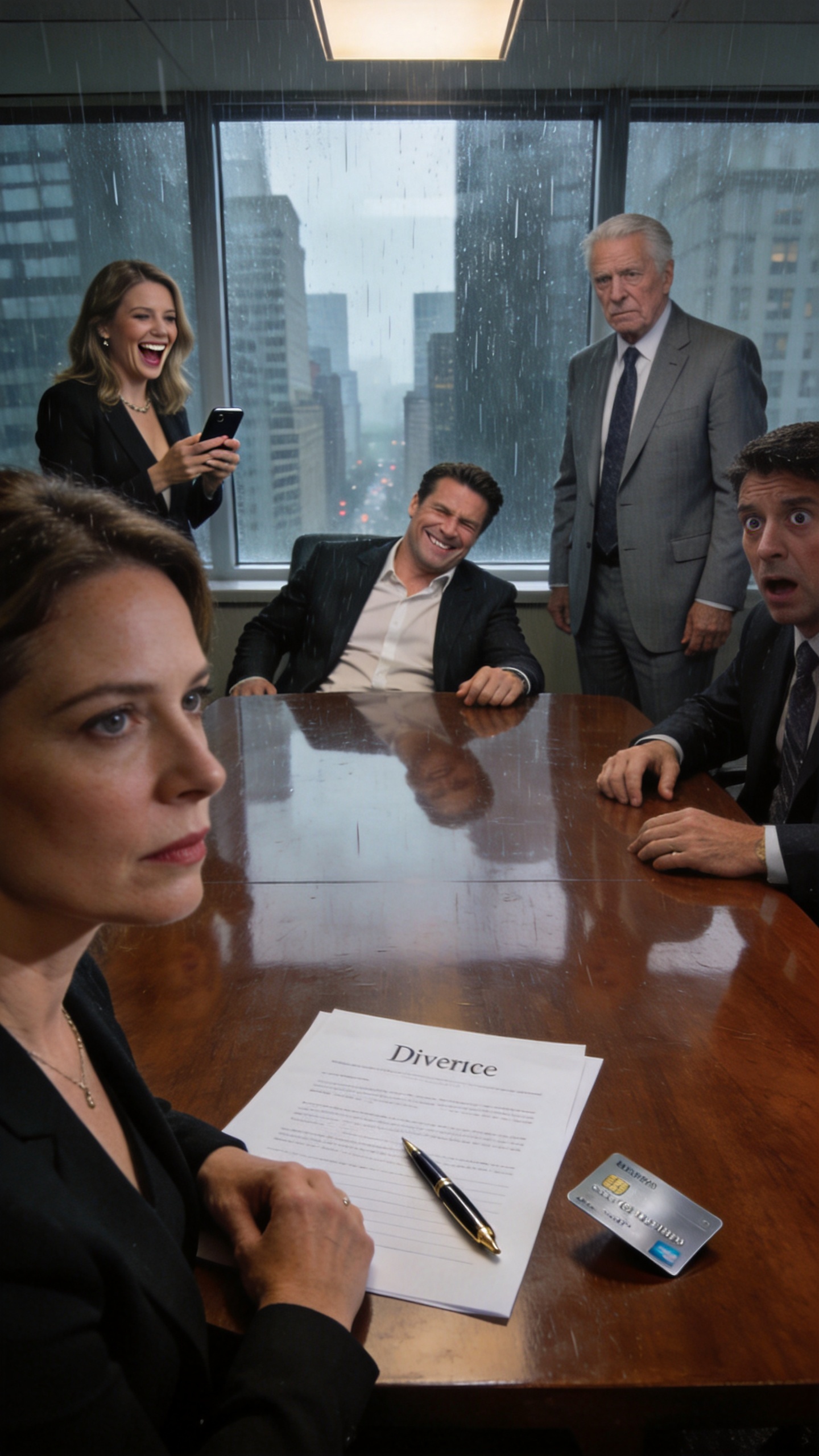
The confrontation happened in a Reed Home Group boardroom.