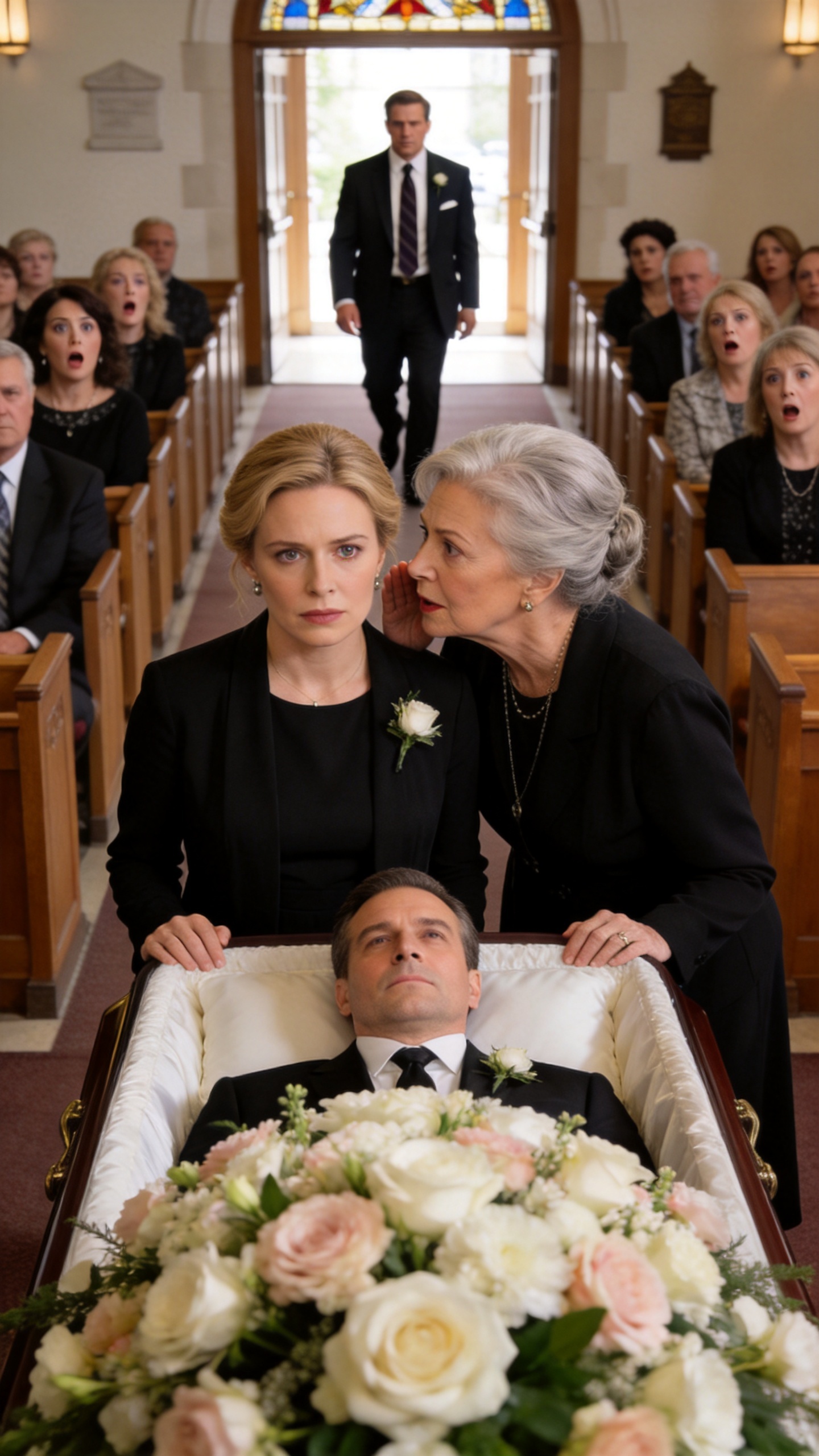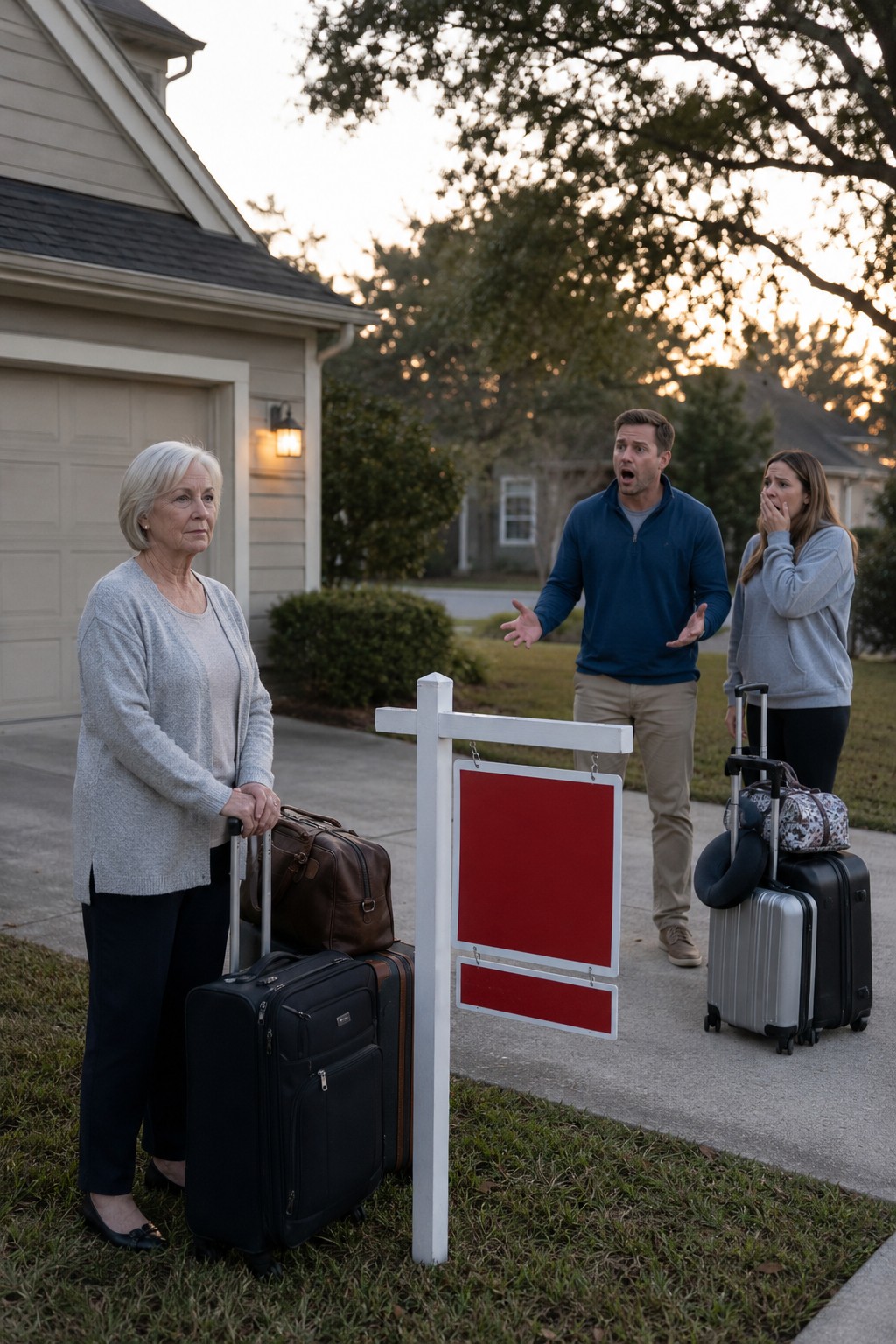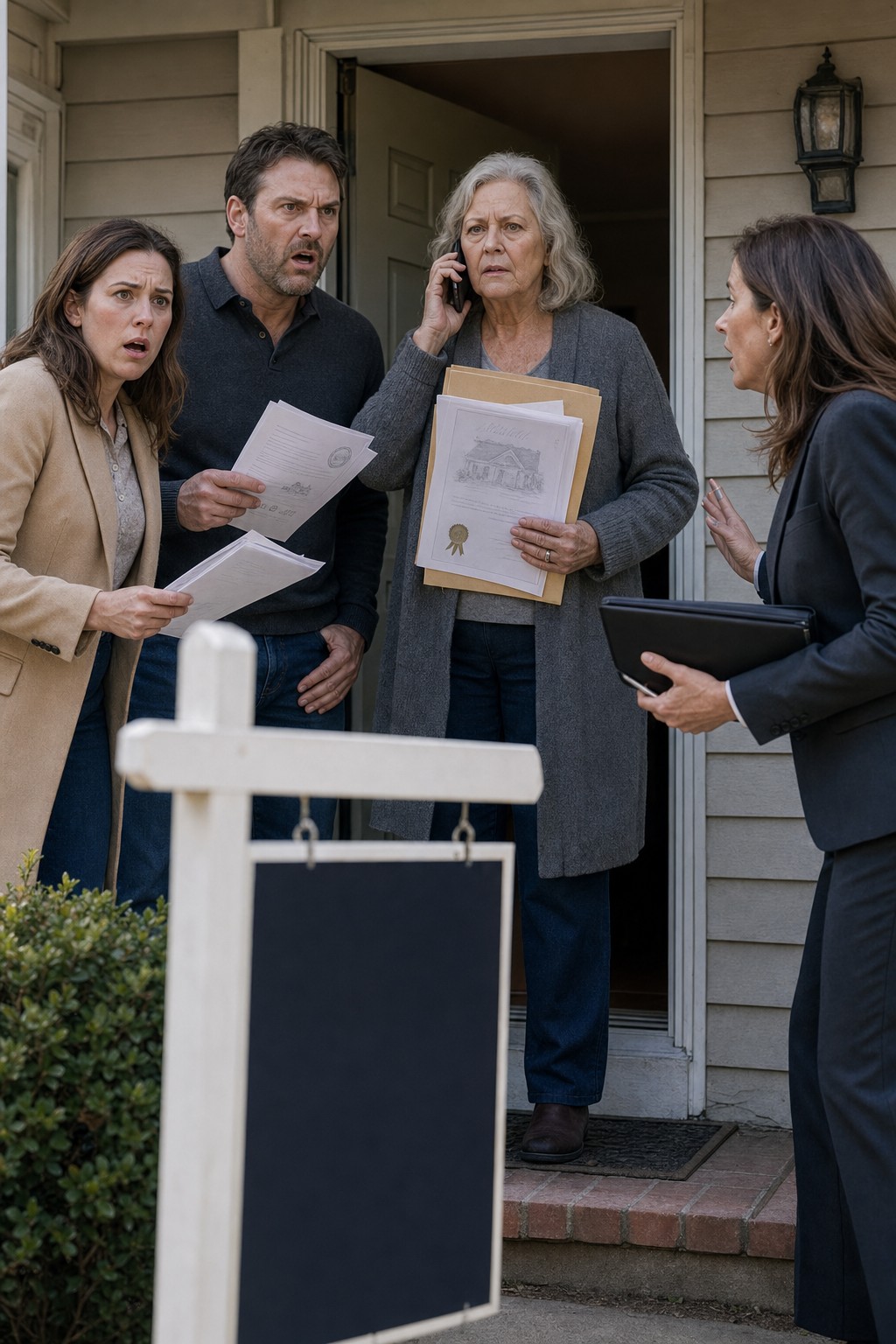
My Sister Embarrassed Me In Front Of Everyone At Dinner, Pushed Me Down, And Let The Whole Table Laugh While I Sat There Hurting. But None Of Them Realized That Moment Was The End Of My Silence - By Morning, My Phone Had 73 Missed Calls.
The Table Laughed While I Was On The Floor
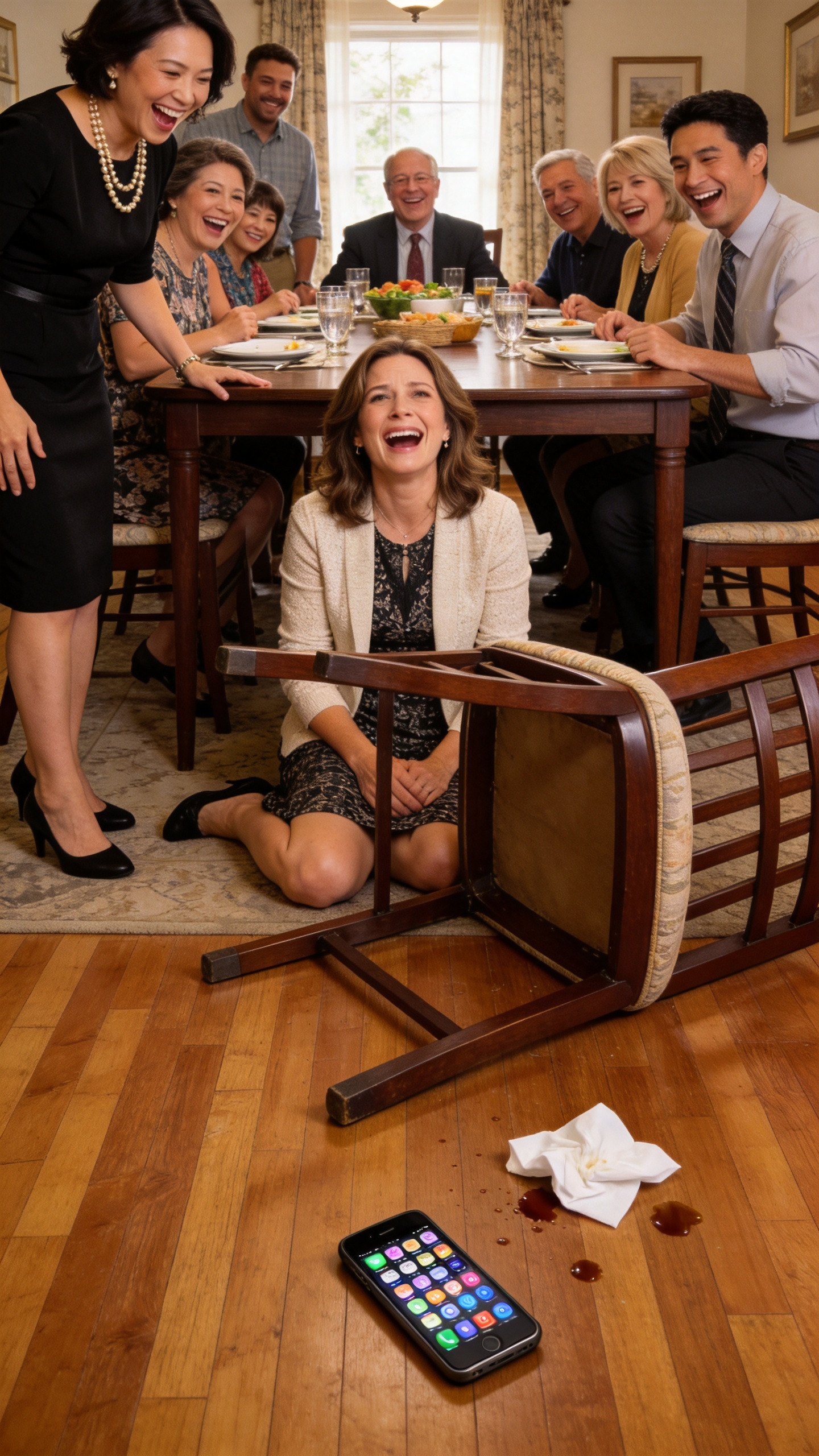
"Get down from the table. If you want to eat, eat on the floor." My sister Madison said it loudly enough for every guest in the dining room to hear. Before I could even process the insult, her perfectly manicured hand hit my shoulder.
My chair rocked backward. A second later, I was on the hardwood floor. My hip struck first, then my elbow, then whatever was left of my dignity. Twenty-three relatives and family friends sat around the table in pearls, watches, designer dresses, and polished shoes, all staring at me as if I were the evening's entertainment.
For one heartbeat, no one made a sound. Then someone laughed. My cousin Tyler tried to hide it behind his hand, but I saw his smile. Aunt Denise gasped as if she were offended, but she did not rise from her chair. Madison's husband lowered his face toward his wineglass, smirking.
My father stared down at his plate. My mother pressed her lips into a thin line, not because she was angry at Madison, but because she was warning me. Do not react. Do not embarrass the family. I sat on the floor beside the dining table in the house I owned.
Madison stood above me in a cream silk dress, her blonde hair pinned neatly at the back of her neck. Her smile was polished, cruel, and sharp. "Don't act surprised, Claire," she said. "You've been taking from this family for years. Stop pretending you deserve a seat with the adults." More laughter moved through the room.
My hands curled against the floor. For years, they had called me quiet, cold, difficult, ungrateful. I was the daughter who had somehow "gotten lucky" in business, even though I had worked myself nearly sick to build everything I had.
When my father's investments failed, I paid my parents' mortgage. When Madison's wedding became too expensive, I covered the bill. When Tyler nearly lost his house, I saved him. I bought that beautiful home through my company's holding firm, then let my parents host Sunday dinners there because my mother said it helped her feel respectable again.
And somehow, over time, they all started behaving as though the house belonged to Madison. She leaned closer and whispered, "You may have the money, Claire, but I have the family. Don't forget that." That was when I looked up at her.
And smiled. Not brightly. Not dramatically. Just enough to make uncertainty cross her face. "Enjoy tonight," I said softly. "It's the last dinner you'll ever take from me." Her expression stiffened. "What is that supposed to mean?" I stood up slowly, brushed off my black trousers, and took my phone from my pocket.
No shouting. No crying. No public breakdown. Just one tap. The first email went out. Then the second. Then the legal notices I had scheduled in advance began sending. Madison laughed too loudly. "Oh no. Claire sent a scary little message." I looked around the table one final time.
"For everyone who thought my silence meant permission," I said, "check your inbox." My mother's face lost its color first. My father grabbed his phone. Madison's husband stopped smiling. By morning, I had seventy-three missed calls.
The first one came at 11:47 that night. Mom. Then Dad. Then Madison. Then Dad again. After that came Aunt Denise, Tyler, my mother's church friend Elaine, and even Madison's real estate agent. I answered none of them. I sat barefoot in my downtown apartment, drinking tea while my phone buzzed across the counter like a frightened insect.
Rain slid down the windows, and Chicago glowed beneath a cold November night. Cars passed below, their headlights blurring across the wet streets. I had not returned to the dinner. I had driven straight to the city, parked beneath my building, taken the elevator upstairs, and ignored the swelling bruise on my elbow.
At midnight, the replies began. NOTICE OF OCCUPANCY TERMINATION. DEMAND FOR REPAYMENT. BUSINESS ACCOUNT ACCESS REVOKED. LEGAL COUNSEL COPIED. I had not destroyed them in a moment of rage. That was what they would never understand.
I had prepared everything because preparation was the only thing my family ever respected. Three weeks earlier, Madison had stood at a charity luncheon and told donors that I was "financially unstable" and "emotionally dependent on family support." She said it sweetly, one hand resting on my arm, while wearing earrings I had paid for.
People believed her because Madison always looked like a woman sharing painful truths with reluctance. That same afternoon, my CFO called me. "Claire," Jonah said carefully, "did you approve Madison's request for a personal withdrawal from the foundation account?" I had approved nothing.
Madison had used my mother's old email login, attached a fake authorization, and attempted to transfer $180,000 from the family foundation I funded into a so-called temporary events account controlled by her husband. That was the moment my guilt died.
Her shoving me at dinner was not the beginning. It was only the final signature on a confession she had been writing for years. At 2:13 a.m., my father left his first voicemail. "Claire, answer the phone. Your mother is crying. I don't know what you think you're doing, but you need to fix this." I listened once.
Then I deleted it. At 3:02, Madison called eleven times. At 3:09, she texted. You psycho. You can't throw Mom and Dad out. I replied with one sentence. They have thirty days, exactly as stated in the agreement they signed. Three dots appeared.
Vanished. Appeared again. That house belongs to the family. No, I typed back. It belongs to Westbridge Holdings LLC. She called immediately. I let it ring. By sunrise, I had showered, dressed in a navy suit, wrapped my bruised elbow, and gone to my office on Wacker Drive.
My assistant, Priya, looked up the moment I entered. "You've had calls," she said. "I know." "Your sister came to security at 7:20. They didn't let her upstairs." "Good." Priya hesitated. "Your mother is in the lobby now." For the first time that morning, my stomach tightened.
Not because I was afraid of my mother. Because a small, foolish part of me still hoped she had come to choose me. I stared through the glass wall of my office at the gray river below. "Send her up," I said. Five minutes later, Evelyn Mercer walked into my office wearing the same pearl necklace she had worn at dinner.
Her eyes were red, but her makeup remained perfect. She did not ask about my elbow. She did not apologize. She looked at me as if I had committed a crime against the family name. "Claire," she whispered, "how could you do this to us?" I stood behind my desk.
The old version of me would have explained. She would have softened her tone. She would have apologized for making consequences uncomfortable. Instead, I opened the folder in front of me and slid one document across the desk. "How could you watch your daughter get shoved onto the floor," I asked, "inside a house your daughter pays for?" My mother stared at the paper.
Then she looked at me. For once, she had no answer. She sat down without being invited. That was when I knew she was scared. Evelyn Mercer never sat unless she controlled the room. At restaurants, she chose the chair with the best view of the door.
At family events, she placed herself at the head of the table, even when the table was not hers. But in my office, she lowered herself into the gray leather chair and clutched the document like it was dangerous. "This is cruel," she said.
"No," I answered. "It's documented." Her eyes moved down the page. The document listed every major payment I had made on behalf of my family over seven years: mortgage arrears, taxes, medical premiums, credit card settlements, failed investments, home renovations, Madison's wedding deposit, Madison's second wedding dress, and emergency loans that were never repaid.
The total was $1,284,611.43. I had not counted birthdays, vacations, or gifts. Only rescues. My mother's hands trembled. "You made a list?" she asked. "I kept records." "Family doesn't keep records." "People who are used do." She flinched.
For a moment, I saw the woman beneath the image: tired, aging, frightened, still proud but no longer untouchable. Then her chin lifted, and the familiar mask returned. "Madison should not have pushed you," she said stiffly. "But you know how she gets when she's under pressure." I almost laughed.
My Silence Ended Before Dessert
Under pressure. Madison had used that excuse her entire life. When she forgot birthdays, she was under pressure. When she insulted waiters, she was under pressure. When she spent money she did not have, she was under pressure. Somehow, Madison's pressure always became my burden.
"She tried to steal from my foundation," I said. My mother froze. I watched her face closely. Not surprise. Fear. That told me enough. "You knew," I said.
"I didn't know everything." "That isn't an answer." "She said it was temporary. She said you wouldn't understand because you are too strict about money." "She forged authorization using your old email." "She said she had access." "Because you gave it to her?" My mother looked away.
Rain tapped faintly against the office window. My phone lit up again. Madison. I turned it face down. "Claire," Mom said, her voice quieter now, "your sister's husband is in serious trouble." Blake Harrington had always carried himself like a man waiting for applause.
Italian shoes. Leased cars. Big words at family barbecues. He called himself a consultant, though no one ever knew what he actually consulted on. My investigator found the truth in two days.
Blake owed money to private lenders, former business partners, and at least one person whose civil complaint my attorney described as "very unpleasant." Madison had been trying to plug the holes with my money while still posting champagne brunch photos online.
"How much does he owe?" I asked. Mom pressed her lips together. "How much, Mom?" "I don't know." "You knew enough to stay silent." Her eyes sharpened. "Madison has children." "So do plenty of people who don't commit fraud." "Do not talk about your sister like she is a criminal." I leaned forward.
"Then she should stop acting like one." Silence filled the room. When I was twelve, Madison broke my violin bow before a school recital because Dad had praised me at dinner. Mom said accidents happened. When I was seventeen, Madison told everyone I cheated on the SAT because I scored higher than she did.
Mom said I should avoid bragging. When I was twenty-four, Madison cried during my promotion dinner because her engagement was not getting enough attention. Mom asked me to reschedule my celebration. By thirty-five, I had confused exhaustion with loyalty.
Finally, my mother asked, "What do you want?" That question hurt more than the shove. Because no one in my family ever asked me what I wanted unless they were preparing to explain why I could not have it. "I want you and Dad out of my house within thirty days," I said.
"I want Madison removed from every account, board, property, and committee connected to my name or my money. I want Blake banned from my company events. I want the foundation reimbursed for every legal expense caused by Madison's attempted transfer." My mother stared at me.
"And I want a public correction," I added. Her face tightened. "Public?" "Yes. Madison told people I was unstable and dependent on family support. She will correct that statement in writing to everyone who heard it." "She will never agree." "Then I file the fraud package." My mother's breath caught.
I opened the second folder and turned it toward her. Copies of emails. Login records. The forged authorization. Bank details. A statement from Jonah. Screenshots of Madison's messages to Blake saying, Claire never audits family stuff.
My mother covered her mouth. "She has children," she whispered. "And they deserve at least one adult who understands consequences." Before she could respond, the office door opened. Priya stepped in, calm but tense. "Claire, I'm sorry. Security says your sister is downstairs again. She refuses to leave." I looked at my mother.