My Son-In-Law Smirked, "What Can You Do, Old Lady?" After I Saw My Daughter's Bruises, So I Sent One Photo To The Detective He Never Knew I Knew
Derek denied everything.
Then he said she bruised easily.
Then she fell.
Then I was dramatic.
Then Claire was unstable.
Then marriage was private.
The lies came so fast they tripped each other.
That is what happens when a man is used to controlling one frightened woman and suddenly has to perform for people who have heard his script before.
Mateo asked for Claire's phone.
She hesitated.
I squeezed her hand.
Not to push.
To remind her she was not alone in the room anymore.
She unlocked it.
The messages were worse than the bruises in some ways.
Apologies that sounded like warnings.
Warnings dressed like love.
Instructions about what to say if anyone asked.
Photos he made her send to prove where she was.
One text from that morning:
If your mother comes over, you better not start acting injured.
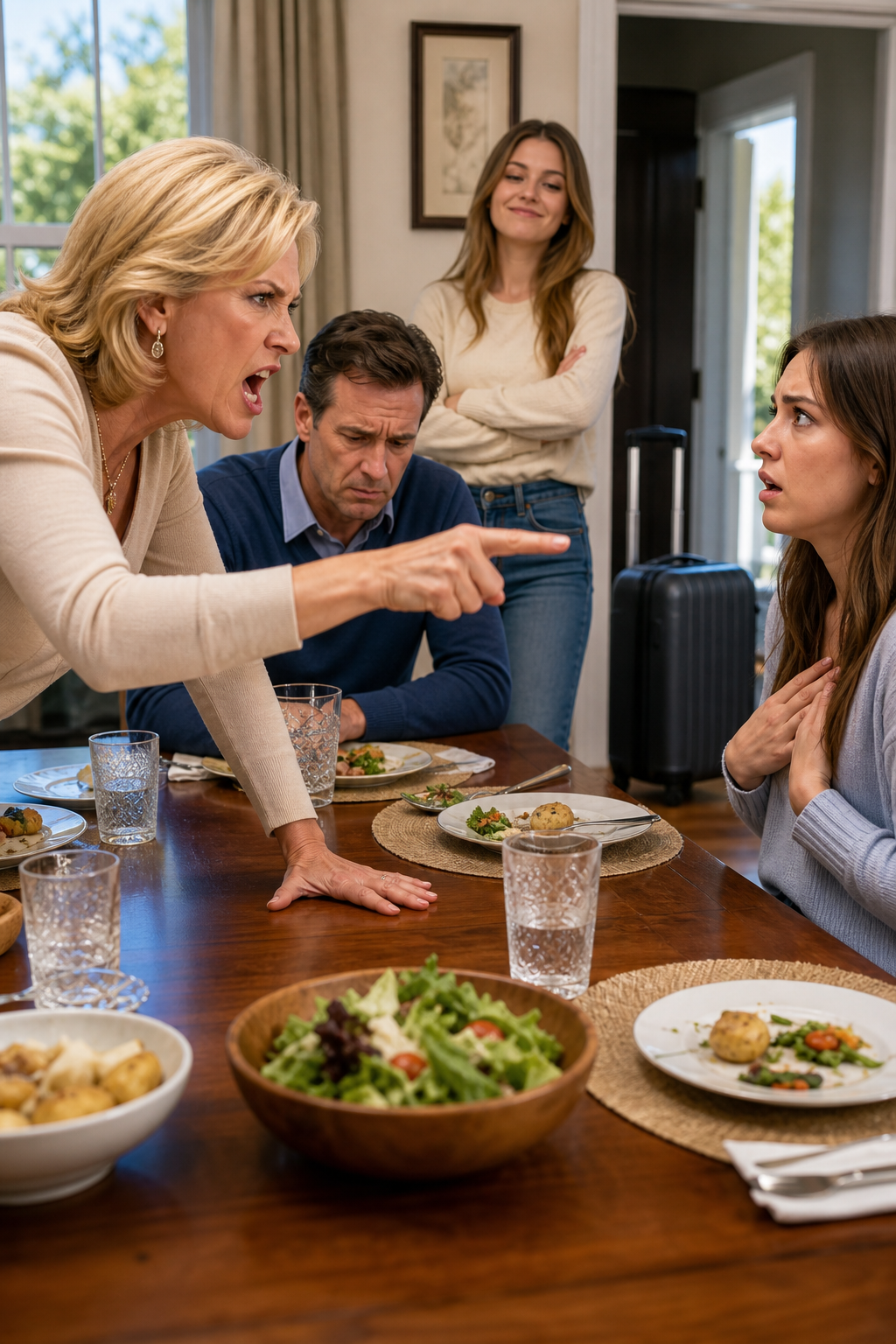
Derek saw Mateo read it.
The color changed under his skin.
He asked if they could talk privately.
No.
He asked if this was really necessary.
Yes.
He asked Claire if she was "seriously doing this."
She looked at me.
Then at the overnight bag I had not yet packed but already knew I would.
"I am leaving," she said.
For the first time since I entered that apartment, she sounded like herself.
Not fully.
Enough.
Enough can save a life when it arrives on time.
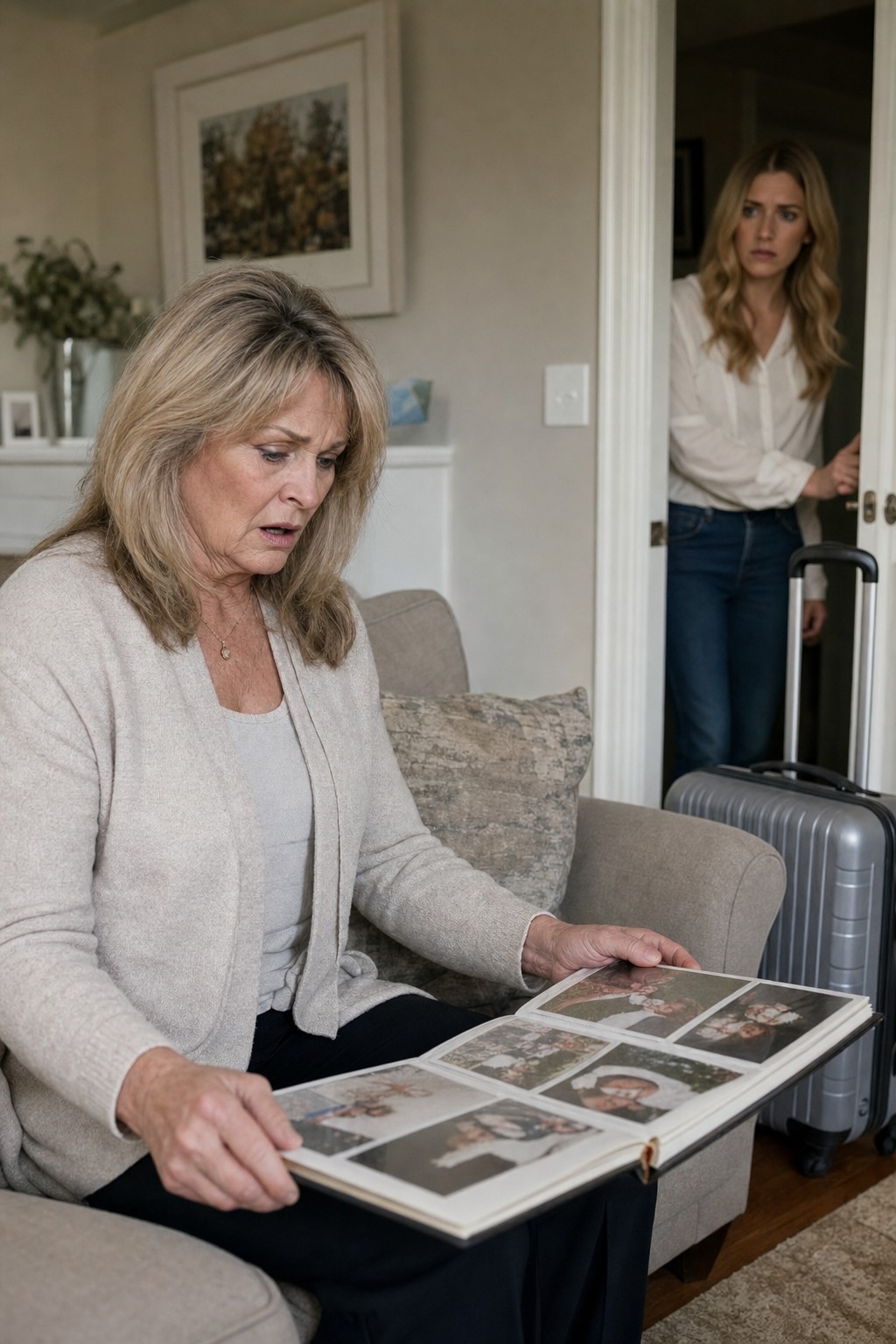
She Left With One Bag And No Wedding Album
Claire took medication, documents, three sweaters, and the old college sweatshirt she wore whenever she was sick in my house.
She did not take framed photos.
She did not take the wedding album.
She did not take the ceramic bowl they bought on their honeymoon.
That told me something too.
When a woman escapes with only what keeps her body safe, do not ask why she left memories behind.
Ask what those memories had become.
The legal process moved slower than my anger wanted.
Protective order.
Medical exam.
Statements.
Digital evidence.
Follow-up interviews.
Derek texted me once from an unknown number:
You destroyed my marriage.
I did not respond.
He destroyed it the first time he decided my daughter's fear was easier to manage than his own violence.
For weeks, Claire apologized for everything.
For crying.
For needing the guest room.
For jumping when a cabinet closed too hard.
For taking too long in the shower.
Fear had trained her to narrate her own existence like an inconvenience.
I corrected her every time.
You are not trouble.
You are not weak.
You are not the reason he hurt you.
Months later, she laughed in my kitchen while peeling an orange.
Then she covered her mouth, startled by the sound.
I had to turn toward the sink.
Not because I was sad.
Because I remembered the little girl who laughed before jokes landed, and I understood she had not disappeared.
She had been cornered.
Those are different things.
Derek asked what I could do.
I answered with one photo.
One message.
One detective at the door.
One daughter walking out beside me without asking permission from the man who thought no one was coming.
Gray hair did not make me harmless.
It only meant I had lived long enough to know that some men are most dangerous in private.
So I made sure he had witnesses.
Later, Claire told me the photo mattered before the police even arrived.
Not because it frightened Derek.
Because it proved to her that someone else saw what he had spent years making her doubt.
Abuse had taught her to edit herself in real time.
Maybe it was not that bad.
Maybe he had only grabbed her because she was leaving the room.
Maybe the split lip looked worse than it felt.
Maybe telling the truth would ruin everyone else's life.
Then the photo existed.
A frame outside his control.
A second set of eyes that did not love him, fear him, sleep beside him, or depend on his mood to get through dinner.
That is why documentation matters.
Not because pain only counts when captured.
Pain counts the first time it happens.
But evidence can sometimes hold the truth steady while the injured person is too tired to hold it alone.
The hardest day was not the day she left.
It was ten days later, when she asked if she could go back to get the blue mixing bowl.
Not the wedding album.
Not clothes.
A bowl.
She said it had been her grandmother's and Derek hated it because the glaze was chipped.
That was when I understood how abuse makes people grieve sideways. She was not asking for the bowl only. She was asking whether anything from that home could still belong to her without pulling her back inside it.
Mateo arranged a civil standby.
I drove her.
She walked in with two officers and came out six minutes later holding the bowl against her chest like a rescued animal.
Derek watched from the hallway and said nothing.
For once, he had an audience he could not train.
The protective order hearing was the first time Claire sat on the opposite side of a room from Derek and did not ask me whether her face looked wrong.
That sounds small unless you have watched fear dress a woman for years.
She wore a green sweater.
Her hair was pinned back.
The bruise near her mouth had faded yellow.
Derek's attorney tried to make the photo sound theatrical.
The judge looked at the image, then at the message he had sent that morning, then at Claire's medical notes.
"Documentation is not theater," she said.
Claire cried then.
Quietly.
Not because the hearing was over.
Because someone in authority had said the thing she had needed to hear:
Proof was not betrayal.
Truth was not drama.
Leaving was not destruction.
It was the first lawful thing her fear had allowed her to do.
The blue bowl sits in my kitchen now.
Claire uses it for oranges.
Every time she reaches for it without asking, I see another small piece of her come home.
Healing did not look like a movie.
It looked like grocery lists.
Changed passwords.
New curtains.
A phone charging on the kitchen counter without fear of who might check it.
That ordinary freedom was the victory Derek never imagined could matter.