Why One Rare Detail About Prince George Has Royal Watchers Looking at the Future Very Differently
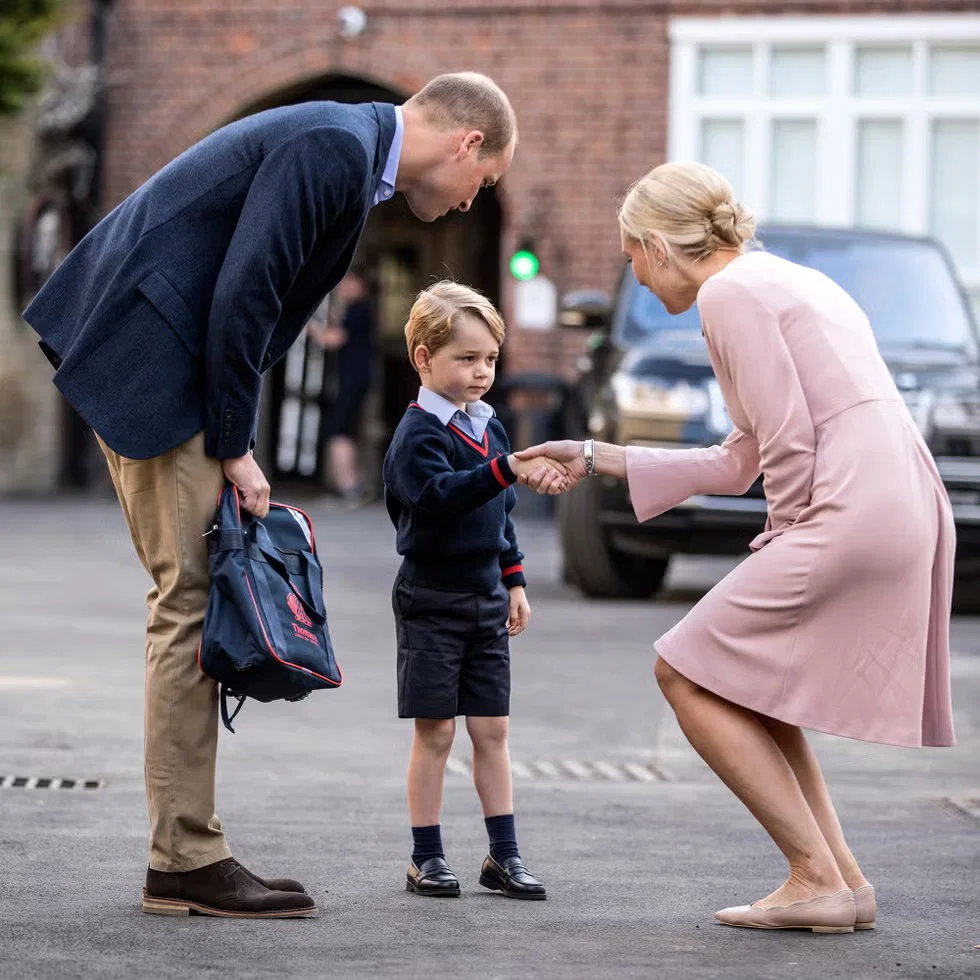
Prince George has been photographed since infancy as though the public were already trying to read the future from his face. That is the strange burden of being born second in line to the throne: every school appearance, every balcony wave, every football match outing is treated as a clue about the kind of king he may someday become.
But the latest wave of fascination around George is not really about his posture or his confidence at public events. It is about the idea that he carries a rare trait modern royal history has not seen in a future king for centuries: a maternal family line rooted in ordinary British life rather than aristocratic blood.
On paper, that may sound like a genealogical footnote. In practice, it has become one of the most emotionally potent stories attached to George so far.
The monarchy survives on symbolism, and George symbolizes more than continuity. Through Catherine, he also represents a visible link to families far outside old noble circles. His ancestry on his mother’s side includes the kinds of people many Britons actually find in their own family trees—workers, tradespeople, people who built stable lives without titles. That does not make George less royal, but it makes the future story told about him feel more socially grounded.
The reason this matters is simple: the monarchy has spent years trying to look less sealed off from ordinary life.
William has spoken in broader terms about a more modern institution, one more focused on relevance, empathy, and practical connection than theatrical distance.
George’s background naturally fits that effort. He is still growing up inside immense privilege and protocol, but the public can imagine him as the first future king in a very long time whose story does not begin and end with aristocratic inheritance.
That helps explain why people watch him so closely at public events. When George appears with William at commemorations or sporting occasions, he is not only being introduced as the next generation.
He is being interpreted as proof that the monarchy’s future might feel more recognizably modern than its past. The public sees not just a royal child, but a child standing at the intersection of two worlds: institution and ordinary family life.