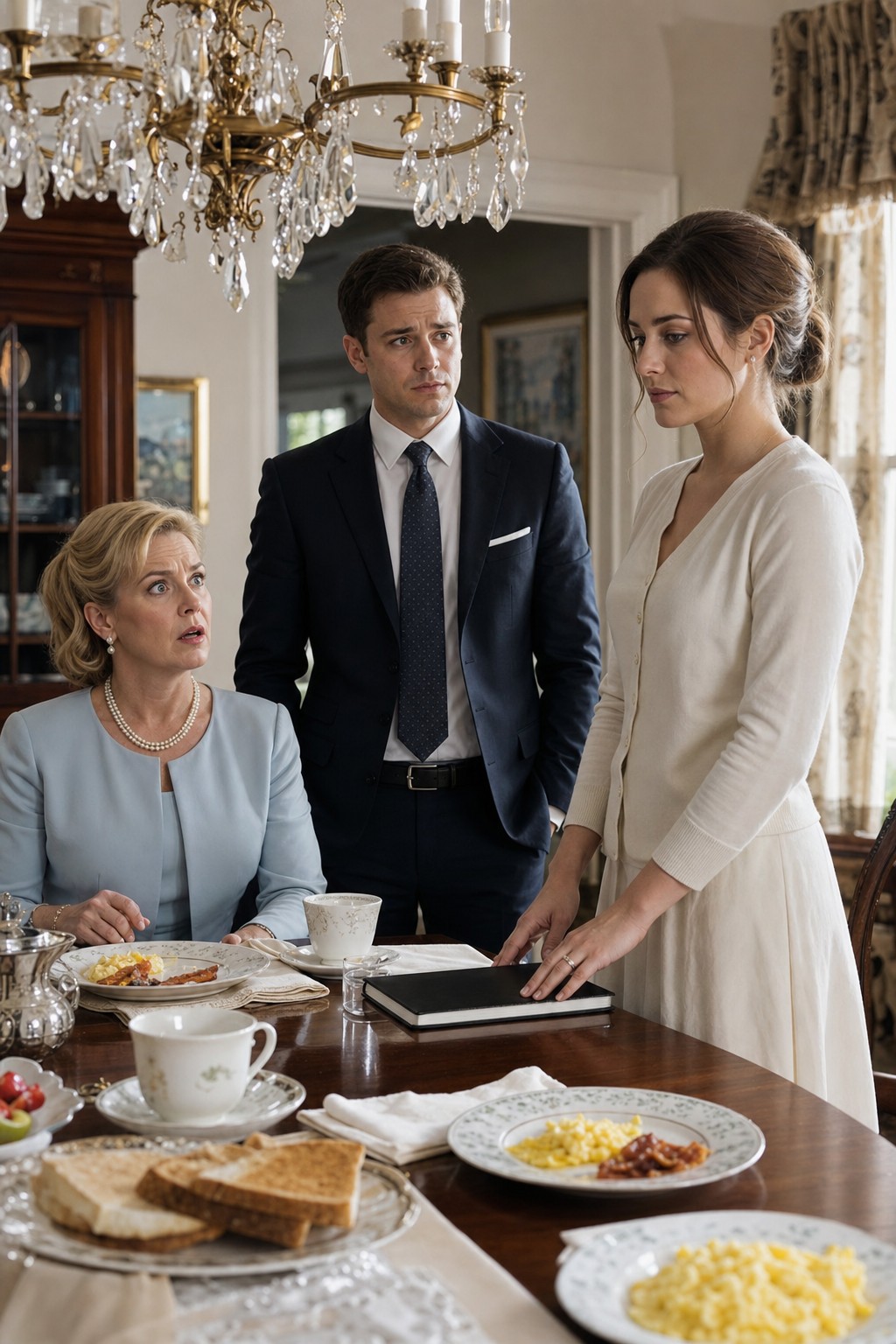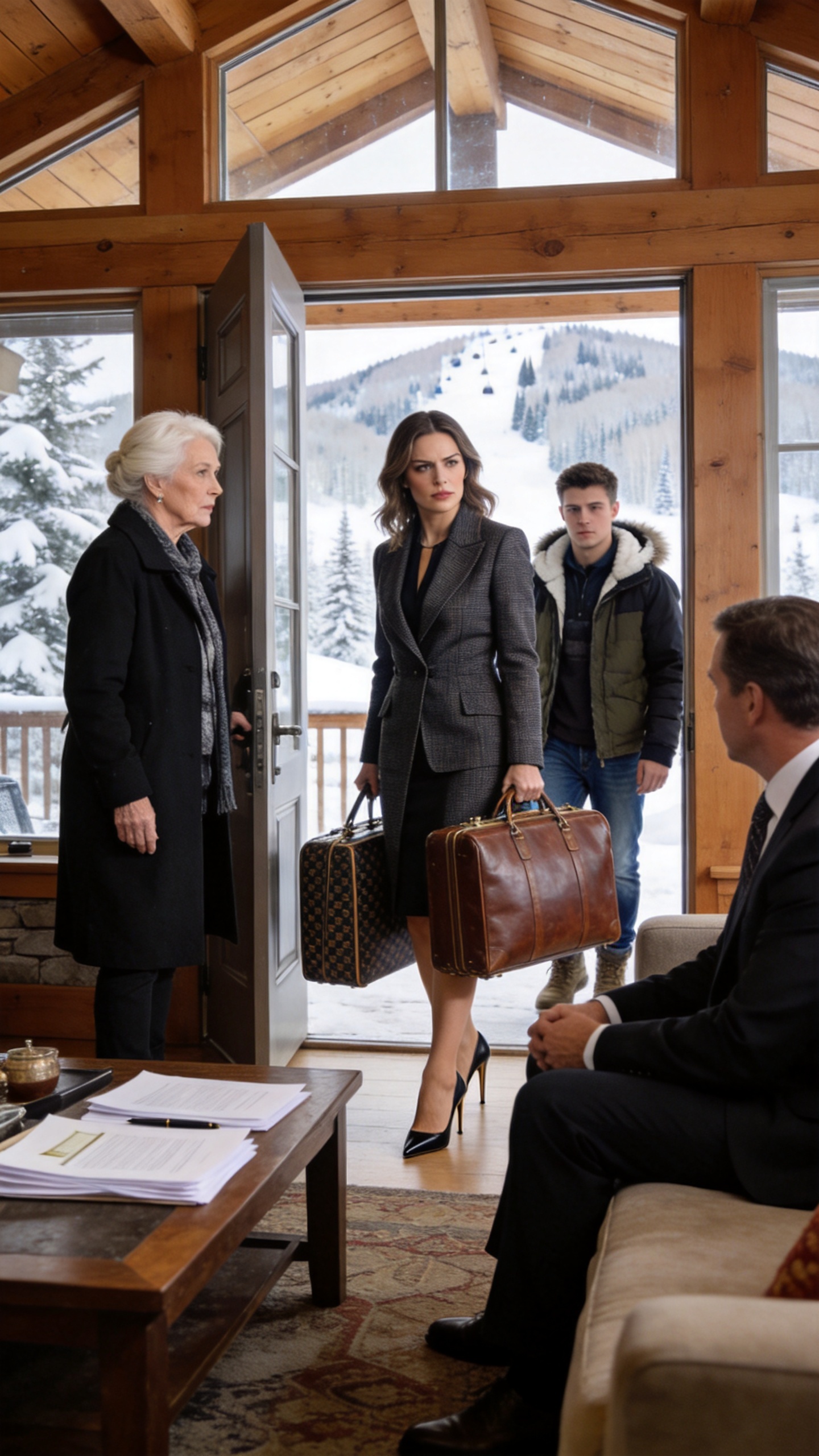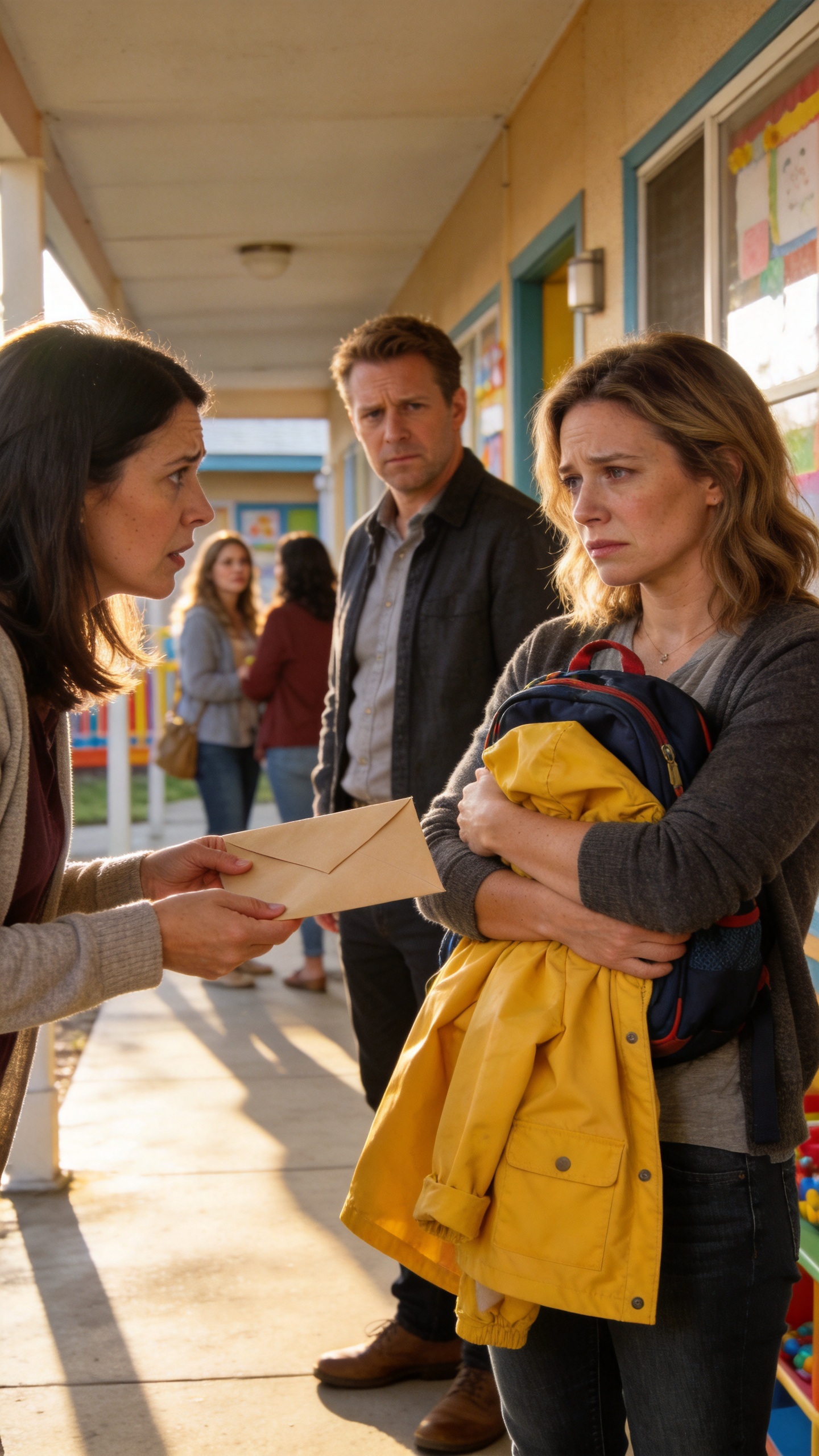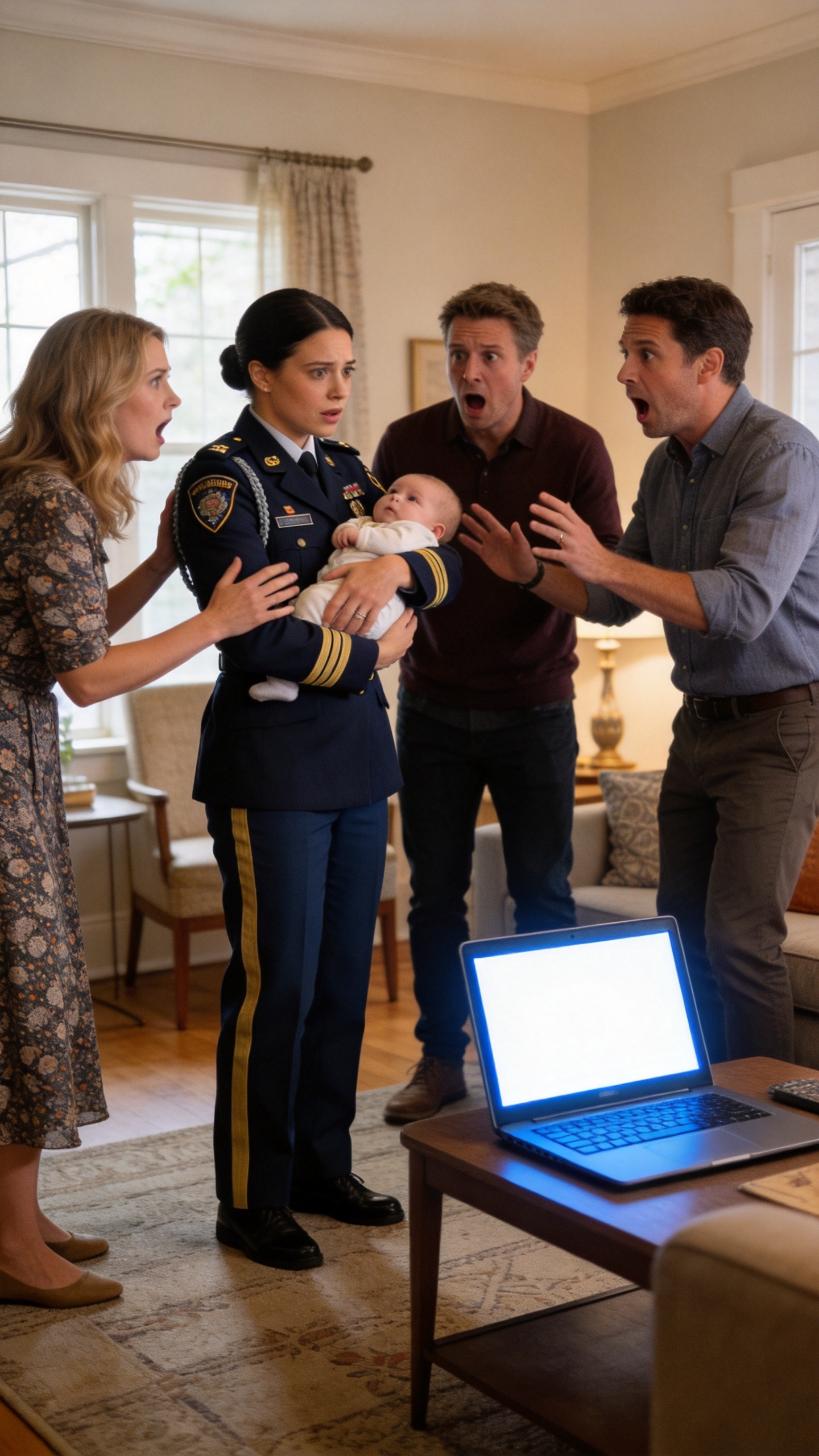
I Came Home Two Days Early and Found My Mother Throwing a Party With 20 Friends While My Wife Had Both Hands Bandaged and My 5-Year-Old Daughter Was Crying Over the Sink. “Serve My Guests First, Then You Can Eat,” My Mother Ordered. I Said Nothing—I Gave Everyone Five Minutes to Leave. Then a Pot of Boiling Water and a Hidden Recording Exposed What Had Really Been Happening in My Home.
Her little arms shaking from exhaustion.
My mother snapped:
“Squeeze harder! If you're old enough to play with toys, you're old enough to help around the house!”
In a third video, Celia softly asked if she could sit and have a bowl of soup.
She'd just spent four hours making an elaborate dinner for my mother's bridge club.
My mother's voice sneered:
“My guests eat first. You can have the leftovers when we're done.”
But the video that really broke me was only eighteen seconds long.
Emily was sitting on the cold tile floor of the laundry room.
Crying quietly.
Holding her burned fingers.
My mother zoomed in on my daughter's hands.
She hissed menacingly:
“See what happens when you're lazy? Hot water burns. Stop crying before your father gets home. If he sees you throwing a fit, he'll know your mother can't raise a proper child.”
I closed the laptop screen.
I ran to the bathroom.
I threw up in the sink.
Not just because I saw what a monster my mother was.
But because I realized what kind of husband and father I'd been the past year.
A blind, passive fool who left his family unprotected because it was easier to pretend all was well.
The Door That Closed
The next morning, I took Celia to an urgent care center for a full medical check - up.
I took Emily to a pediatric child psychologist.
Celia's official medical report noted burns from different dates.
Severe contact dermatitis from long - term exposure to industrial cleaning chemicals.
Cuts on her hands.
Swelling in her wrist tissues.
The child psychologist's report was even worse.
Emily showed severe situational anxiety.
Hyper - vigilance.
And a direct, scary link between her grandmother and physical punishment.
“The most important thing now,” the psychologist told us in the debrief, “is for your daughter to see that the adults who should protect her will actually step up and do so.”
Those words hit me like a ton of bricks.
That afternoon, I hired a top - notch family law and domestic violence attorney.
We handed in the medical records.
The psychological assessment.
The cloud video files.
We applied for an emergency protection order that would stop Lillian from getting anywhere close to Celia or Emily.
That very day, Lillian was officially removed from our home.
In front of two officers in uniform, I went into the guest room.
I stuffed her clothes into her suitcases.
I rolled them out into the hallway.
She sobbed loudly.
She grabbed my arm.
“Nathan, please forgive me! I was just stressed out! I lost my cool!”
“Did you ‘lose your cool’ for a whole year, Lillian?” I asked, pulling my arm away.
“I was just trying to teach her to be a good wife!” she shouted.
I stopped packing.
I stared straight into her eyes.
“A wife is a partner, not a servant. A grandchild is a little girl, not free help. And being my mother doesn't give you the right to mistreat my family.”
Seeing that crying wasn't working, she switched to threatening me.
“Where am I supposed to live?! You're throwing your own mother out onto the street!”
“You have a fully paid - off, two - bedroom condo in Ohio,” I said coldly.
“That's where you should be.”
“You're going to make me live alone?!”
“You have two other kids,” I said. “Call them.”
That made her furious.
“They don't have as much money as you!”
“Then you should have thought about that before you turned my home into a nightmare.”
I put her luggage outside the front door.
I changed the digital lock code right then.
When she heard the deadbolt lock, her face twisted with rage.
“Are you really locking your own mother out?!”
“I'm locking out the person who hurt my wife and child,” I said through the speaker.
She took the elevator down, cursing me all the way.
The Backlash
Two hours later, the family's negative reaction started.
My older brother, Derek, called me from Columbus.
“Are you crazy, Nathan?!” he yelled over the phone.
“Mom called me crying! She said you kicked her out like a stray dog!”
Without saying a word, I texted him a high - quality photo of Celia's burned wrist.
And a ten - second video of Emily crying by the washbucket.
The line was silent for a long time.
“Mom's always had a tough personality, Nathan…” Derek mumbled, his tone changing right away.
“Then take her to your place,” I replied coldly.
“Give her your master bedroom, send her a monthly allowance, and let her have twenty friends over while your wife scrubs the floors on her knees.”
“That's… that's not the same.”
“Yes, it is. It's exactly alike.”
I hung up on him.
No one in the family offered to take her in.
I immediately stopped the $2,000 monthly allowance I'd been sending to my mother's bank account for a year.
I didn't leave her broke.
Her state pension and home were still hers.
But I refused to pay for her fancy dresses, expensive lunches, or social life anymore.
That decision led to a bunch of angry text messages from aunts and cousins.
My aunt sent a long message saying “a son must always respect his mother, no matter her faults.”
I replied to the family group chat by uploading one video file.
The clip of Celia on her knees scrubbing the baseboards while my mother laughed at her.
I didn't add a caption.
I didn't give an explanation.
For almost ten minutes, no one typed a response.
Then, one by one, family members started leaving the group chat quietly.
Derek stopped calling me.
My aunt deleted her earlier messages.
My mother eventually moved back to her condo in Ohio.
As the truth spread in her social group, some of the women who'd been to her parties at my apartment started keeping their distance from her.
Some of them had seen the hot gravy thrown.
Some had noticed my daughter's red hands.
The woman who'd demanded iced tea at our place actually called Celia weeks later.
She gave a tearful apology.
“I saw what was happening in that kitchen and I looked the other way because it was easy,” the woman admitted.
“I'm so ashamed of myself.”
Celia listened quietly.
She accepted the apology.
And hung up.
After that, she looked at me and said something I'll never forget:
“Sometimes abuse goes on for years because the people around convince themselves that being quiet is the same as being innocent.”
The New Noise
Over the next six months, my focus completely changed.
I stopped worrying about being a “good son” to a harmful mother.
I put all my energy into being a good husband and father.
I asked my firm for a remote work setup for several months.
I learned how to braid Emily's hair for kindergarten.
Even though my first tries looked really uneven.
The first time I loaded and ran our new dishwasher, Emily stood in front of it for ten minutes.
Watching the blue light show the cycle like it was a magic performance.
“Does the machine wash all of them by itself, Daddy?” she whispered.
“Every single one, sweetie,” I said, kneeling down beside her.
“And… I don't need to stand on the stool anymore?”
I put my arms around her tiny shoulders.
Struggling not to cry.
“You're five, Emily. In this house, your only job is to play, learn, and be loved.”
She hugged my neck so tightly I could hardly breathe.
For Celia, healing took much longer.
Her skin's physical wounds healed in weeks.
But the emotional scars were deep.
For months, she'd shyly ask permission for normal things.
“Can I order takeout tonight?”
“Do you mind if I sit and rest for an hour?”
Each question painfully reminded me of the conditioning under my mother's rule.
One evening, I held her hands.
“Celia, this is your home. You never need my okay to rest, eat, or just be.”
She put down her glass.
She looked at me gently.
“I know, Nathan. But my mind is still catching up with reality.”
“I'll remind you every day until it does.”
Six months later, our home was transformed.
Not because of new furniture.
Because it was noisy.
Emily sang loudly while coloring at the table.
Celia played her music while baking in the kitchen.
I'd come home to toys on the rug.
An unwashed mug on the counter.
Paintings on the fridge.
I used to love order.
Now, that lovely mess meant no one in my home was scared.
The Festival
On a cool October Saturday, we went to Emily's school fall festival.
Emily was in a three - legged race.
Celia and I stood by the sidelines.
Cheering so loudly the other parents laughed.
When Emily finished second, she ran to us.
Smiling widely.
I picked her up.
“You were great, princess!”
As I spun her, I saw someone outside the school fence.
It was my mother.
She wore an old, faded coat.
Holding a bag of strawberry candies.
Emily's favorite.
She stood far back.
Outside the gates.
She didn't come closer.
She knew she couldn't.
The order was strict.
For a moment, our eyes met.
She didn't wear a fancy dress.
She had no friends around her.
She seemed smaller.
Older.
Very alone.
I felt sad.
But I didn't mix sadness with duty.
My mother sent letters in the past months.
First, they were full of anger and blame.
Then came excuses.
“I just wanted to help Celia.”
“I'm old - fashioned.”
She never said:
“What I did to your family was wrong.”
Until a week before the festival, a note came to my office:
“Nathan, I saw the videos. My voice made me sick. I don't know when I became like that. If Celia and Emily want to hear me say sorry, I'll say it without excuses.”
I didn't reply.
Not to punish her.
Because real forgiveness isn't a free pass back into the lives of those you hurt.
On the grass, Emily tapped my cheek.
“Daddy, what are you looking at?”
“Nothing, sweetie,” I kissed her nose.
“I'm looking at you.”
I didn't tell her Grandma was by the fence.
The psychologist was clear.
Reconciliation would happen only if Emily felt safe to ask for it.
Not for an adult's guilt.
I took Celia's hand.
We walked to the food stands.
We bought cider.
Popcorn.
And a big slice of pumpkin cake that Emily wanted to share.
Before eating, Emily stopped.
She looked at Celia.
“Can I eat this, Mommy?”
Celia and I froze.
That simple question still echoed the past.
I knelt to her level.
“In our family, Emily,” I said gently, “you never have to earn food, rest, or your place at the table.”
She smiled brightly.
“Then I want the frosted piece!”
We laughed.
Watching them share cake, I finally learned something after 34 years.
Family isn't a debt that costs your soul.
Being related doesn't give the right to abuse or control.
Respect isn't silent while loved ones are hurt.
Setting boundaries doesn't break a family.”
Often, it's the sole thing capable of rescuing those who've lived in fear for far too long.
On that day, I didn't think I'd lost a mother.
I felt like I'd finally grown into the husband and father my family had always needed.
Celia squeezed my hand.
She didn't need to say a word.
We both understood what this quiet afternoon meant.
For the first time in years, the three of us could laugh without checking the kitchen first.
Nobody was hiding in the hall.
Nobody was waiting to take over our table.
For the first time in ages, when we drove home that night and locked the front door, none of us feared who might be on the other side.