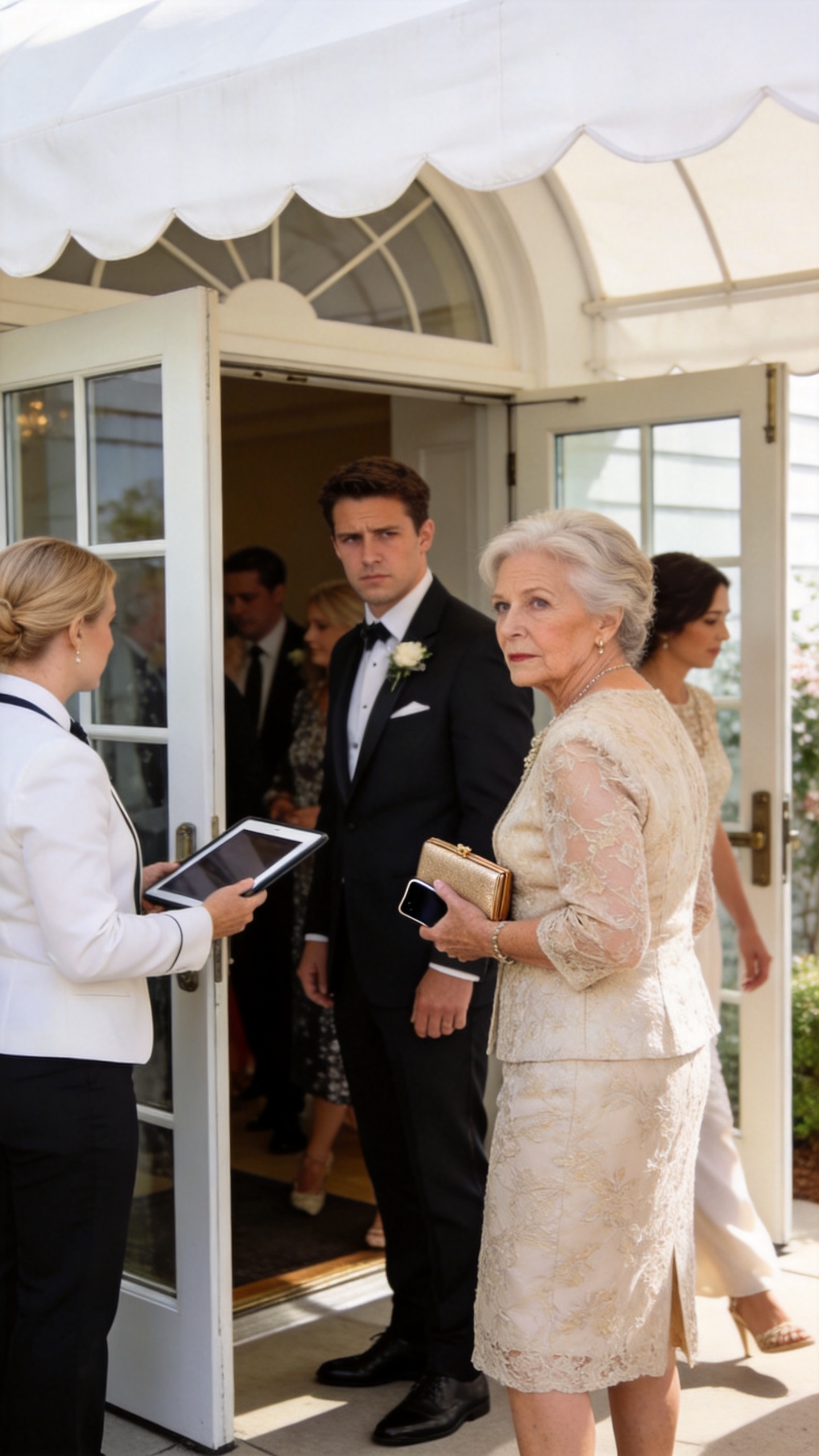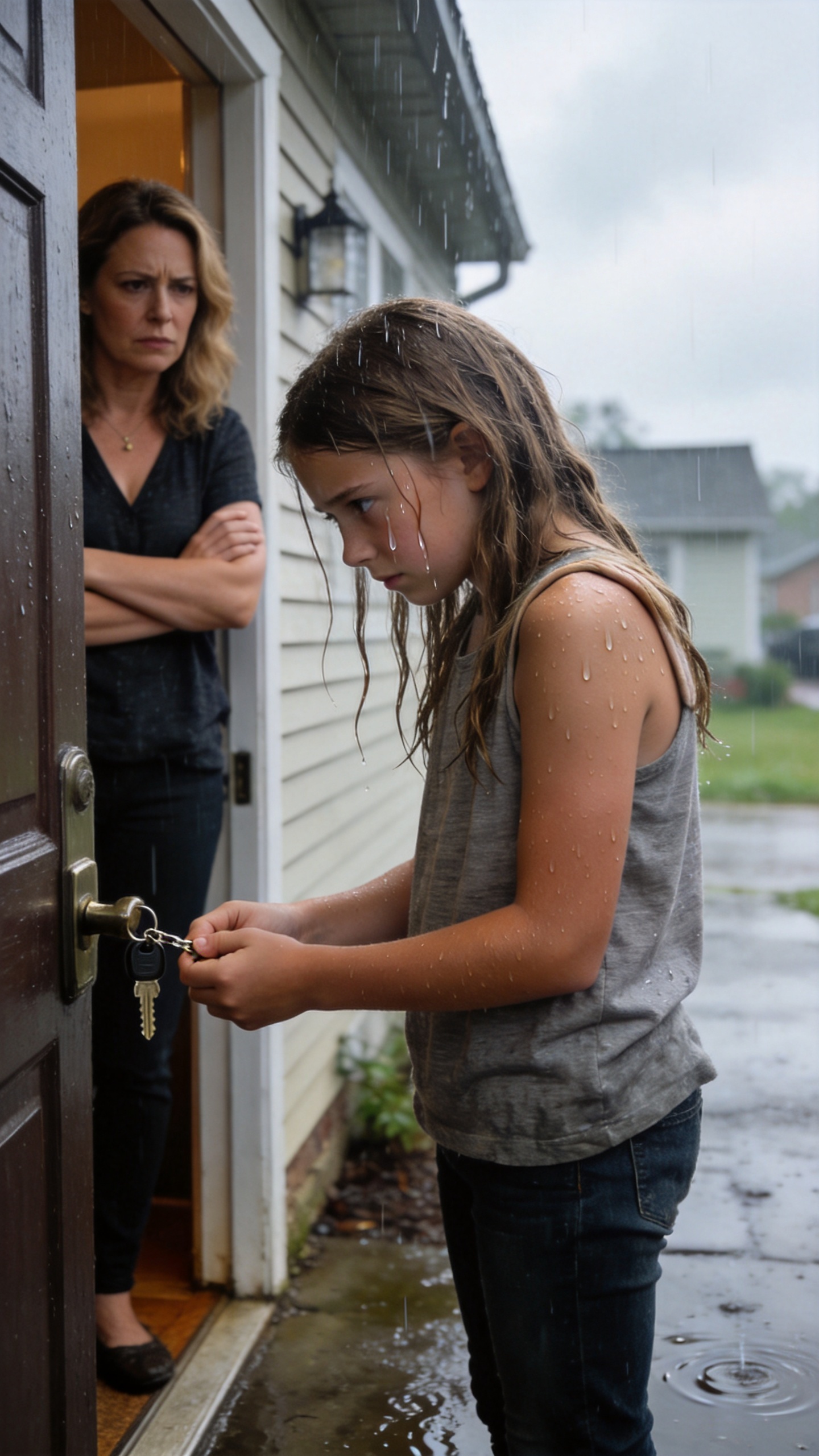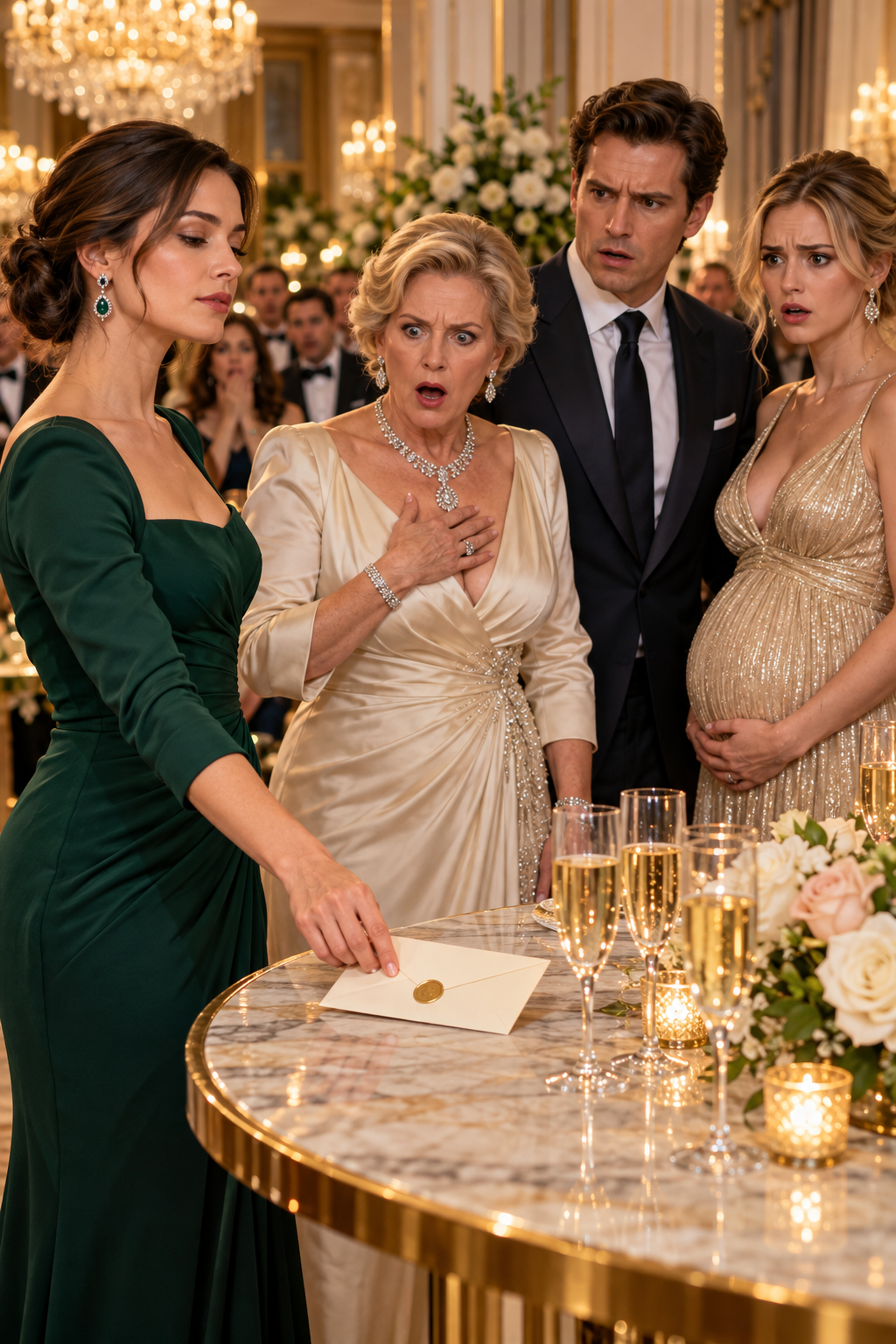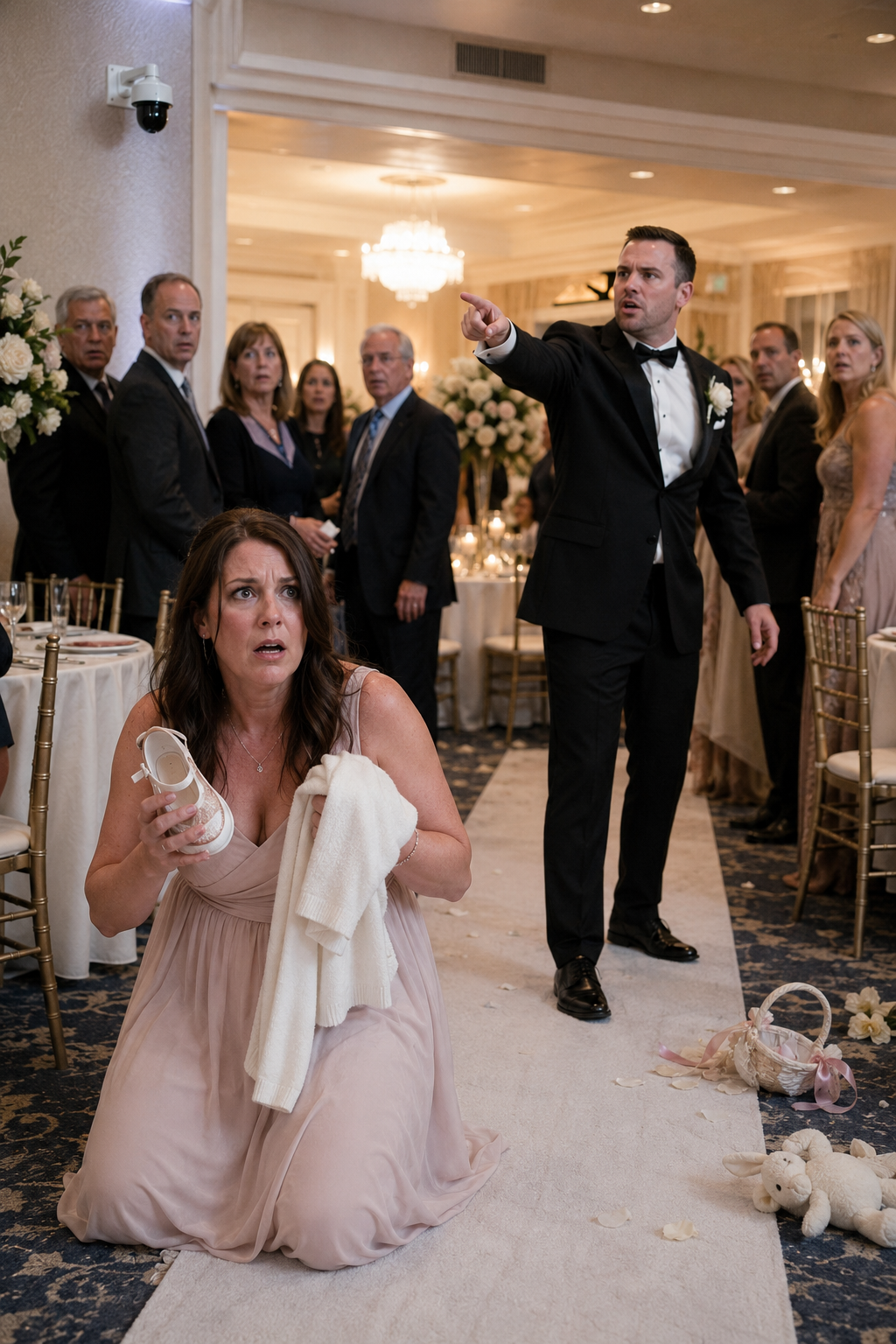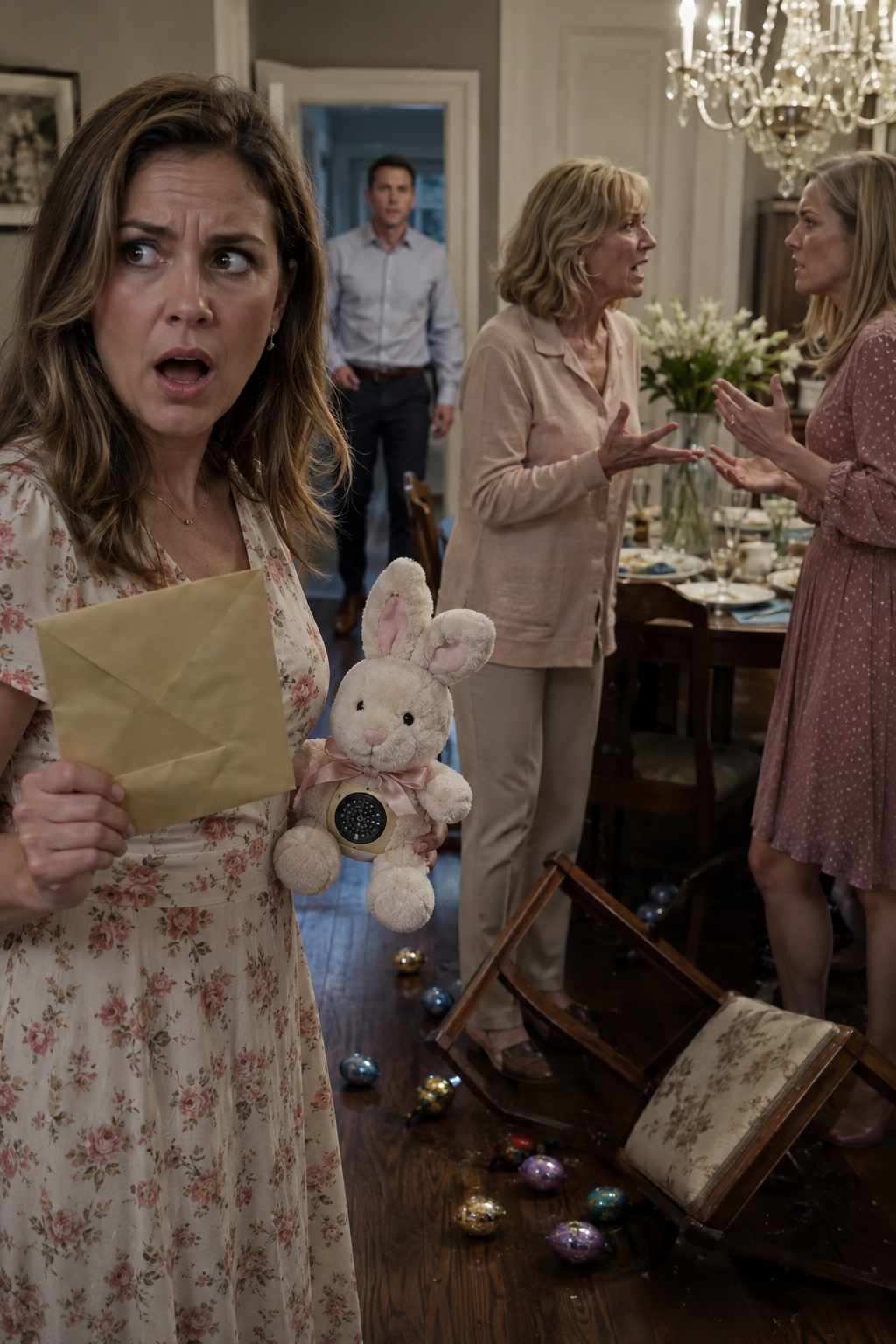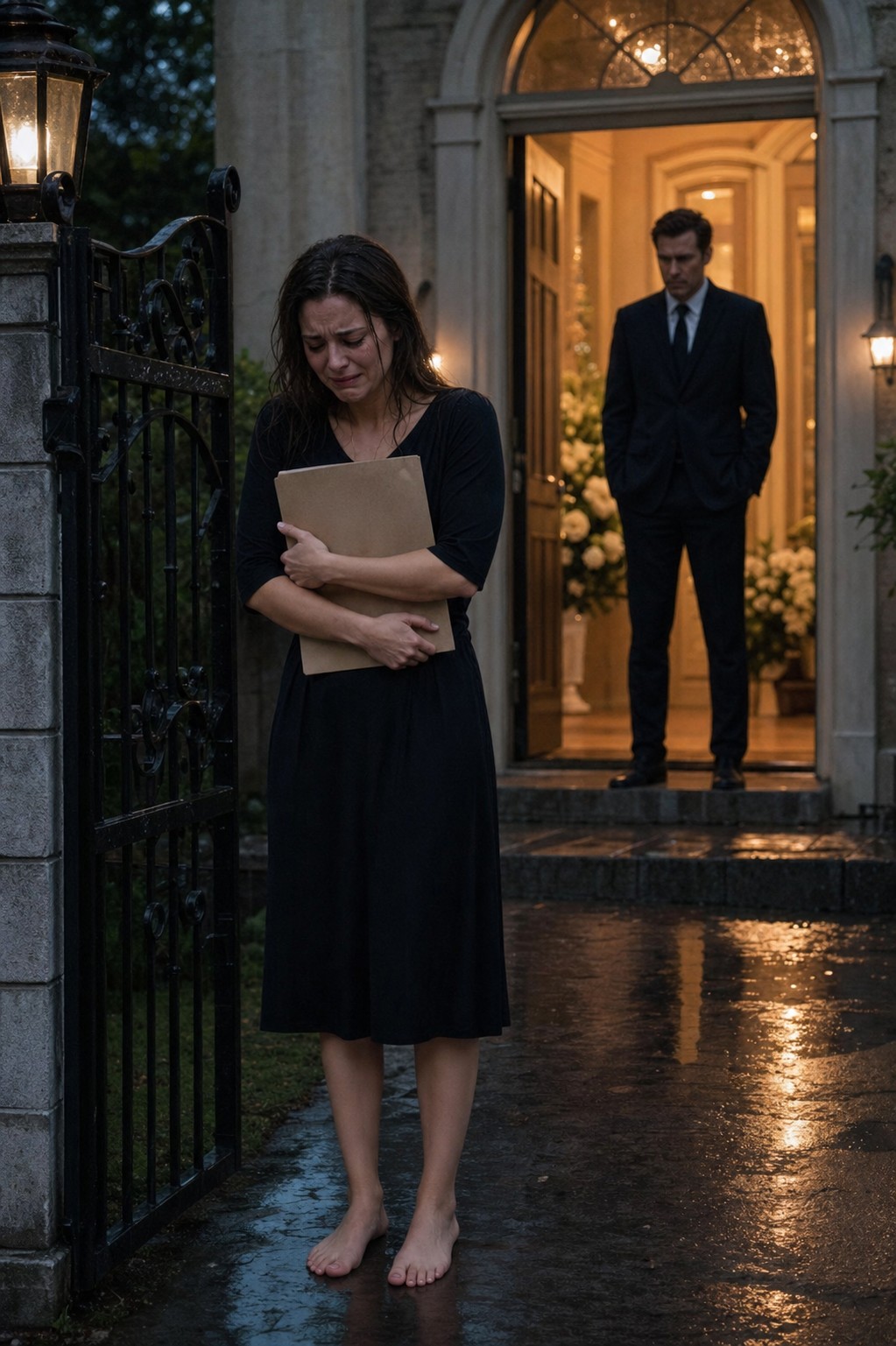
Sick, exhausted, and sitting on the floor, I signed the divorce papers while my husband promised I would leave with nothing.
“It’s cruel nonsense.”
“There’s no stamp.”
“Then someone left it in the mailbox.”
“Why was it in the nursery-”
Vivian’s eyes hardened.
“Because I was trying to spare you.”
“Who wrote it-”
“How would I know-”
Nora examined the handwriting. It was uneven, childish. The blue crayon had pressed so hard into the card that the lines left grooves.
At the bottom was a small bird.
A wren.
Nora’s mother had once used the same symbol on every note she tucked into Nora’s school lunches.
The house had been named Ashford House, but her mother always called it the Wren’s Nest.
Nora looked up.
Vivian was watching the postcard.
Not with confusion.
With fear.
“Who wrote this-” Nora repeated.
Vivian stood.
“You need sleep.”
“I need an answer.”
“You need psychiatric help.”
The words landed harder than Nora expected.
Vivian gathered the remaining papers and walked away.
Nora remained outside the locked nursery, holding the postcard with both hands.
The next morning, it was gone.
Nora searched the bedroom, the hall, and every pocket of her robe. She emptied drawers and checked beneath furniture.
Nothing.
At breakfast, Graham read messages on his phone while Vivian directed the housekeeper.
Nora sat opposite him.
“Your mother was in the nursery last night.”
Graham did not look up.
“Why were you awake-”
“That is not the question.”
“She heard a noise.”
“She had a box of documents.”
Vivian poured coffee.
“Nora was confused. Her fever was high.”
“It was not.”
“You were shaking.”
“I’m shaking now.”
Graham finally looked at her.
Her hand was trembling around the water glass.
His expression held concern for less than a second. Then irritation replaced it.
“Did you take your medication-”
“The doctor said the medication might be causing the dizziness.”
“You told me the doctor wasn’t sure.”
“He isn’t.”
Graham exhaled.
“We can’t keep doing this every morning.”
“Doing what-”
“Turning everything into a crisis.”
Nora looked at him.
“Nine years ago, our daughter’s nursery was locked. Last night your mother was inside it with private documents and a postcard describing the ceiling. I want to know why.”
The days that followed did not move like a neat victory.
They moved like a file being opened one drawer at a time.
Every person who had laughed, threatened, or looked away discovered that the humiliation was only the first page of a much larger record.
Her grandmother had left her Ashford House, a portfolio of investments, and controlling interest in a restoration fund. Nora used part of that inheritance to support Graham’s first independent development.
Nora guaranteed loans, negotiated with preservation boards, and introduced him to investors who trusted the Rowan name. She worked quietly because Graham shone brightest when he believed the light belonged to him.
Nora watched through the window as he crossed the courtyard, speaking quietly. Vivian appeared beneath the archway near the garden and joined him.
The forged signature had been copied from a restoration contract Nora signed five years earlier. The notary seal belonged to a man who had died eight months before the application was submitted.
The main building resembled a stone boarding school, with arched windows and carefully trimmed gardens. Children lived there under private medical, behavioral, or custodial arrangements. Some had disabilities requiring constant care.
Others had wealthy families determined to keep them out of public systems.
“And Vivian could destroy evidence. Graham could move money. They could blame each other and bury the truth beneath lawyers.”
She returned to Ashford House and allowed Vivian to see her exhaustion. She attended medical appointments. She stopped eating food prepared in the house after Naomi’s warning, though tests found no evidence of poisoning.
“We also found a trust petition prepared by Vivian. It would designate Graham as Sophie’s permanent custodian after your divorce, on the grounds that you were medically and psychologically incapable.”
“The lender’s forensic report will be completed Friday. Child protection is prepared to seek emergency custody. The prosecutor wants one more thing.”
“You intended to declare me incompetent, take my house, obtain permanent custody of the daughter you helped hide, and then tell the world you rescued her.”
“Vivian Whitman, you are under arrest on suspicion of fraud, identity theft, conspiracy to commit custodial interference, falsification of medical records, and obstruction.”
“Graham Whitman, you are under arrest on suspicion of conspiracy, attempted fraud, and filing false statements in a custodial proceeding.”
Nora remembered long meetings with trustees when she was twenty-five. Her grandmother had distrusted easy wealth and charming men.
“If an owner or spouse attempted to transfer, mortgage, or encumber the property through fraud, the house would automatically pass into an irrevocable trust for the owner’s living descendants.”
The board removed him from Whitman Development after the criminal charges became public. Several partners withdrew. His expensive apartment was frozen as part of the fraud investigation.
The woman with whom Nora suspected he had begun an affair disappeared before anyone confirmed it.
A recording from Ashford House in which Graham admitted knowing Sophie was alive.
The original hospital administrator accepted a plea agreement and testified that Vivian had paid her to alter records. She also revealed that Graham learned the full truth four years earlier and agreed to maintain the deception.
When asked why, Graham gave three answers.
He feared Nora would leave him.
He feared losing control of the company.
He feared his mother.
None explained why he had visited Sophie and returned home to sleep beside Nora.
The court sentenced Vivian first.
She stood before the judge in a dark suit, still immaculate.
She claimed love had guided her.
The judge replied, “Love does not falsify a death.”
Graham’s sentencing came months later.
Nora attended because Sophie asked her to.
She sat in the back row.
Graham looked older. His hair had grayed at the temples. His shoulders, once held with effortless confidence, curved inward.
Before the judge entered, he turned and saw Nora.
For several seconds, they looked at each other.
His lips formed her name.
Nora felt grief.
Not desire.
Not forgiveness.
Grief for the young man in the ruined theater, the one who had carried brass sconces out of the rain. Perhaps he had truly existed. Perhaps ambition had hollowed him gradually. Perhaps Vivian had taught him that love was another asset to control.
None of it mattered enough to return Sophie’s childhood.
Graham received a prison sentence, followed by probation and permanent restrictions on unsupervised contact with Sophie.
Outside the courthouse, reporters shouted questions.
Nora walked past them without answering.
Naomi followed.
“You’re free,” she said.
Nora looked at the sky.
“No.”
Naomi frowned.
Nora smiled faintly.
“I’m becoming free.”
On Sophie’s tenth birthday, Ashford House filled with children.
There were balloons in the foyer, cake in the dining room, and muddy shoes everywhere Vivian had once forbidden them.
Sophie wore a silver bracelet engraved with a tiny flower.
The bracelet had waited in Nora’s jewelry drawer for ten years.
Near sunset, the children ran into the garden. Nora remained beneath the portico, watching Sophie chase a red ball across the lawn.
Naomi approached carrying an envelope.
“No legal documents today,” Nora warned.
“This isn’t from me.”
The envelope bore no return address.
Inside was a folded sheet of paper and the original postcard.
The blue-crayon house.
The crooked chimney.
The words:
Does the yellow-star room still exist-
Nora turned it over.
A message had been added beneath the first.
I knew you would find me.
Nora looked toward Sophie.
The child stood near the fountain, watching her.
Nora raised the card.
Sophie smiled nervously.
Later, after the guests left, they sat together in the nursery.
“You sent it,” Nora said.
Sophie hugged her knees.
“I wasn’t allowed to mail things.”
“How did you know the address-”
“Grandma Vivian had envelopes in her bag. I copied one.”
“You drew the house.”
“Dad showed me pictures.”
Nora felt anger stir but kept her voice gentle.
“Why did you ask about the stars-”
“In the photograph, you were smiling under them. I thought if the room still existed, maybe you remembered me.”
Nora reached for her hand.
Sophie let her take it.
“How did the card get into the nursery-”
“I gave it to Grandma Vivian.”
Nora blinked.
“You gave it to her-”
“I told her it was a drawing for the house. She got angry when she read it.”
“Then why didn’t she destroy it-”
“I put two cards in the envelope.”
Nora stared.
Sophie’s mouth twitched.
“One was blank.”
“You switched them-”
Sophie nodded.
“The real one was inside her document box. I thought she would take it home.”
Nora remembered the box splitting open in the hall.
The postcard falling among the papers.
A nine-year-old child had placed the first crack in Vivian’s plan.
“What about the lender-” Nora asked slowly.
Sophie looked down.
“I heard Grandma talking about the money.”
“Sophie.”
“She left her computer open at Northstar. I saw your name.”
Nora’s pulse quickened.
“What did you do-”
“There was a phone number. I wrote it in my sketchbook.”
“You called them-”
“Not exactly.”
Sophie looked embarrassed.
“There was a form online asking whether the owner approved the loan. I wrote no.”
Nora sat back.
The fraud department had contacted her the next morning.
Everyone had assumed the automated system flagged a discrepancy.
It had been Sophie.
The child they believed powerless.
The child they discussed as though she could not understand.
The child hidden behind sealed records and locked doors.
Sophie had started her own rescue.
“Why didn’t you tell me before-”
“I thought you might be angry because I used the computer.”
Nora laughed through tears.
Then she pulled Sophie into her arms.
This time, Sophie did not retreat after three seconds.
She held on.
“I’m not angry,” Nora whispered. “I’m proud.”
“I didn’t know whether it would work.”
“Neither did I.”
Sophie rested her cheek against Nora’s shoulder.
“Did the house really become mine because they tried to steal it-”
“Yes.”
“That’s strange.”
“It is.”
“Grandma Vivian said houses belong to the strongest person.”
Nora looked up at the yellow stars.
“She was wrong.”
“Who do they belong to-”
“The person whose name is on the truth.”
Sophie considered this.
Then she smiled.
Outside, wind moved through the old trees.
Ashford House creaked softly around them, not haunted, not grieving, but settling into a new shape.
Nora had once believed the house preserved every loss.
Her mother’s final Christmas.
Her grandmother’s footsteps.
The nursery waiting behind a locked door.
The marriage collapsing beneath its chandeliers.
But houses did not remember only sorrow.
They remembered doors reopening.
They remembered children returning.
They remembered laughter arriving where silence had lived too long.
Sophie slipped her hand into Nora’s.
“Can we sleep here tonight-”
“In the nursery-”
“Our room,” Sophie corrected.
Nora smiled.
“Yes.”
They spread blankets beneath the painted ceiling. Nora turned off the lamp, and moonlight touched the yellow stars.
For a while, Sophie remained awake beside her.
“Mum-”
Nora’s heart caught at the word.
“Yes-”
“Why did you sign the divorce papers if you knew what they did-”
Nora looked through the darkness.
“Because leaving someone who betrayed you is not losing.”
“What is it-”
“Choosing what they can never take again.”
Sophie was silent.
Then she whispered, “Us-”
Nora reached for her daughter’s hand.
“Us.”
Within minutes, Sophie’s breathing deepened.
Nora remained awake, listening.
Nine years earlier, she had stood in this room and believed she would never hear her child breathe beneath these stars.
Now the sound filled every corner.
On the mantel stood no white urn.
No ashes.
Only a framed blue-crayon drawing of a crooked house, a tiny girl, and a bird flying toward an open window.
Graham had promised Nora she would walk out with nothing.
Vivian had believed the house would become hers.
Instead, their forged signature had exposed their crimes, destroyed their plan, and transferred Ashford House beyond their reach.
But the greatest thing Nora recovered was never written on a deed.
It was sleeping beside her.
And as dawn touched the windows, Nora finally understood the truth the house had guarded all along.
She had not rescued Sophie alone.
Sophie had been fighting her way home.