My Eight-Year-Old Chose His Rich Father in Court and Said I Couldn't Give Him a Future. Seven Days Later, He Slipped Me a Black Card at the Airport Worth $3.8 Million
The farmhouse sat beyond a gravel drive and white paddock fencing. There were three dark SUVs outside and no horses in sight.
Rusk parked where we could see the house without blocking the team already watching it. He joined the deputies and agents outside, leaving Leena and me behind the closed car doors.
Leena sat beside me. I kept my hands locked together because I was afraid of what they would do if I let go.
The front door opened.
Adrian came out with his collar undone, his expensive confidence gone. Behind him walked a broad man in a tailored coat, one hand fastened around Miles's shoulder.
I knew without an introduction that he was Voss.
My son held Everett's lighthouse against his chest. It looked heavier than I remembered.
Voss reached toward it. "You can give me that now."
Miles tightened his grip.
Adrian bent toward him. "Don't make this difficult. Hand it over."
"Grandpa told me not to."
Voss's hand stopped. His voice grew softer, which frightened me more than shouting would have.
"Your grandfather isn't here to tell you anything."
Miles stood so stiffly that I could see his knees shaking.
"He told me what to say if you talked like that. He already mailed a copy."
For a second, nobody moved.
"A copy of what?" Voss asked.
"What you're looking for. To the man with the badge. Four years ago."
Voss looked toward Adrian. That hesitation bought the agents the seconds they needed.
Rusk's voice cut across the driveway. Agents came forward, identifying themselves. Voss's hand left Miles's shoulder as shouted commands filled the space between the cars and the house.
I had promised to wait. I remember Leena catching my sleeve, then an agent moving Miles clear and calling that it was safe. I was out of the car before I knew I'd opened the door.
Miles saw me. The lighthouse fell into the grass, and he ran.
His whole weight struck me. I dropped to one knee on the gravel and held him while he cried against my neck.
"You waited," he kept saying. "Mom, you waited."
I could only press my cheek against his hair. His blazer smelled of dust and the familiar shampoo I'd packed.
"I've got you. You're staying with me."
Behind him, Adrian stood in handcuffs.
"Miles," he said. "I never meant for you to..."
My son turned without letting go of my sleeve.
"You said Mom couldn't make my life good. She did. You just didn't see it."
Adrian looked down. For once, he had no better offer to make.
Inside the Brass Base
Investigators collected the lighthouse where it had fallen. Its base unscrewed, revealing a narrow compartment with a tiny key and a folded sheet in Everett's handwriting.
The paper identified a safe-deposit box at a bank in Annapolis. It wasn't the whole case hidden in a toy-sized tower. It was the route to the records Everett had been afraid to leave in his office.
With the required authority, investigators opened the box. Inside were a letter for Miles and records arranged so another person could follow them: account numbers, dates, shell-company details, and the names of three men.
Adrian's name wasn't among those three.
That didn't erase his conduct. The fuller records showed how he'd been pulled further into the operation under threats, until protecting his position and protecting his child had become choices he kept making in the wrong order.
The documents also accounted for the card.
Everett had separated $3.8 million of his own lawful wealth from the business before his death. He had arranged a custodial account within a trust for Miles, unknown to Adrian.
The card was connected to that account. It wasn't permission for an eight-year-old to spend millions. Everett's written instructions required release through Miles's mother, with safeguards honoring whether the boy believed she could be approached safely.
Leena had the arrangements reviewed and the funds verified. A birthday PIN could open an account interface; it couldn't replace the paperwork protecting a child's inheritance.
I hadn't touched the money, and I was grateful for that. Whatever Everett intended, I hadn't known enough to distinguish a gift from a trap.
Miles told us he'd found the saved video while looking through his old tablet. Everett had explained the card, the lighthouse, and who could be trusted. The brass tower had remained in the study after his death, overlooked among ordinary possessions.
The claim about a mailed copy had been an instruction in that video. At the farmhouse, Miles had repeated it because he had no other defense.
Rusk wouldn't promise us that Everett had managed to send every record he intended. What mattered was that Voss had stopped to wonder. A dead man's warning had given a frightened boy time.
Watching Miles sleep afterward, I couldn't celebrate the cleverness of it. He was eight. Adults had handed him secrets when they should have handed him safety.
Leena closed the trust folder gently.
"His grandfather prepared so much," she said. "But he couldn't know whether anyone would reach you."
I looked at my son's shoes by the door. One lace still held a grain of farmhouse gravel.
"He shouldn't have had to be the messenger."
"No," she said. "And now he doesn't."
A Future He Could Come Home To
By the following spring, the case against Adrian ended in a guilty plea. His cooperation and the documented threats brought a reduced sentence, not freedom. He would serve his time in federal prison.
I understood more about his fear by then. Understanding didn't make me forget whose shoulder Voss had been gripping while Adrian stood beside them.
Voss and two other men were convicted of money laundering and racketeering. Court-appointed managers took over the hotels, preserving jobs for employees who had known nothing about the operation.
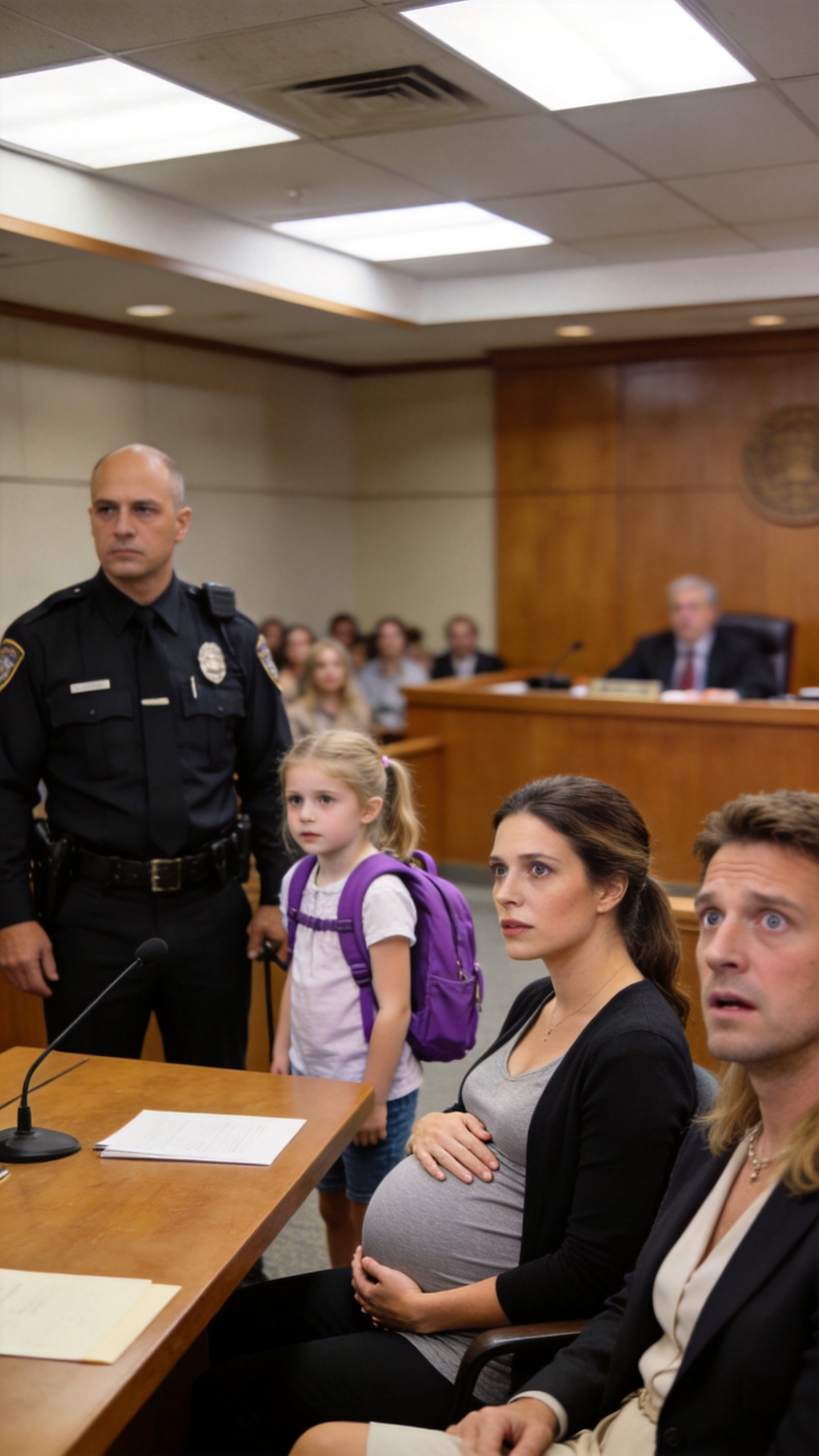
Our custody judge reopened the case. This time, Miles spoke to her privately without his father sitting beside him. He told her why he had used those words and how frightened he'd been.
She restored primary custody to me. In her written order, she acknowledged his courage and regretted that adults had put him in a position to need it. I keep that page, though I wish there had been no reason to write it.
The inheritance remained protected for Miles, with me appointed trustee. After professional review of the trust's terms, I bought the townhouse we'd been renting and cleared its small mortgage. We didn't move to an estate.
Most of the money stayed reserved for his education and future needs. His bedroom kept the same curtains. The dishwasher kept its old name.
Adrian's letters arrived from prison each month. His return address belonged to a world I couldn't reconcile with the man who used to criticize our parking space. I left the decision about answering with Miles.
Eventually, he did answer. He wanted his father to know he felt less angry, but that being sorry wasn't the same as being brave. I mailed what he chose to say, without adding a message of my own.
There was no sudden reunion inside that envelope. There was room for Miles to decide what came next, and for once nobody demanded that he decide quickly.
His other wish was easier to share. He wanted part of Everett's money to reach children whose families were struggling. We called the small charitable fund Harbor Steps.
It helped cover school essentials, warm clothing, and places in after-school programs. I handled the arrangements; Miles wasn't going to become responsible for another set of adults because he had inherited money.
When the first plans were ready, I spread the papers across our kitchen table. Miles leaned over my elbow, following the rows of expenses with one finger.
"Which part is Grandpa's?" he asked.
I started to explain the amount set aside for the fund. He shook his head.
"No. Which part helps somebody?"
I turned the pages around so he could see them properly. Money had filled so many conversations he wasn't meant to hear. Here, at least, I could show him where it would go.
He stopped at the after-school program. He knew what it was to watch a classroom empty while he waited for me to finish work.
"They can stay until someone comes?"
"That's what this helps pay for."
He nodded and pushed the page back toward me. He didn't ask how much that left him. I had spent years worrying about what I couldn't buy for him; he was thinking about a child he hadn't met.
When he went to fetch his school bag, I gathered the fund papers beside the trust documents. His name appeared on nearly every page. I was the one who had to sign.
That was how it should have been from the beginning. He could have wishes, questions, even money of his own, without being the person charged with keeping everyone safe.
The card had remained unused. Now the money it represented could do something useful because people had checked its origins, read the instructions, and accepted responsibility for it. Waiting hadn't meant leaving it untouched forever.
Miles returned with a crumpled school permission slip. He set it on top of the financial papers and searched the table for a pen.
"You forgot this yesterday."
"Then you'd better leave it where I can't miss it."
He laid it across my hand.
I laughed, and he looked pleased with himself. It was such a small correction: a child reminding his mother about a form, certain she would deal with it. No hidden compartment. No warning he couldn't explain.
I signed it before clearing the table.
The next morning, he called from the door to ask whether I was coming. His bag was already on his back, the permission slip safely inside.
I had once mistaken his rehearsed words in court for the truth about our home. At the airport, I'd chosen to believe his whispered request instead, even before I could understand it.
Now he was impatient because we were going to be late for school.
"Coming," I said, and reached for my keys.