My Eight-Year-Old Chose His Rich Father in Court and Said I Couldn't Give Him a Future. Seven Days Later, He Slipped Me a Black Card at the Airport Worth $3.8 Million
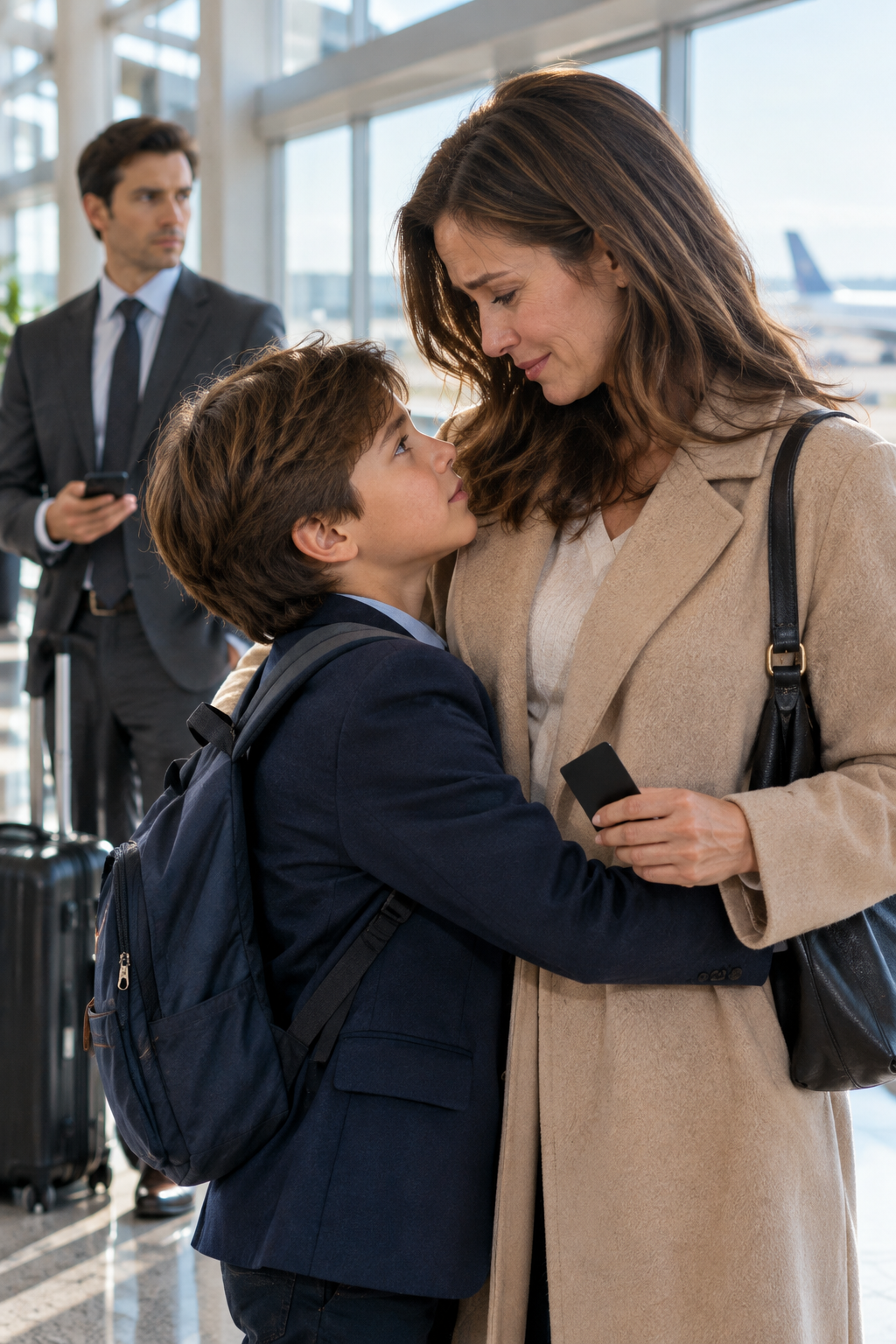
My son wouldn't meet my eyes when he told the judge he wanted his father. A week later, at the airport, he buried his face in my coat and pushed a black bank card into my pocket.
"Wait for me, Mom," he whispered. "Please."
His father was watching from beside the security line. I thought the hug was an apology for choosing a bigger house over me. Then my phone lit up with a message about $3.8 million and a warning: his father must never get the card.
The Words He Borrowed
I'm Claire Bennett, thirty-nine. Until that hearing, I thought I understood the shape of my eight-year-old son's life. Miles lived with me, visited his father, and came home wanting the same bedtime story he'd wanted since kindergarten.
My former husband, Adrian Vale, came from hotel money. His family owned properties and investment businesses across Maryland and neighboring states. He could make a dinner reservation sound like an introduction to a better class of people.
We had divorced five years earlier. He kept the estate, the cars, and most of the assets he'd always controlled. I rented a narrow townhouse outside Rockville and worked as an administrative coordinator.
I couldn't offer summer villas. I could offer a packed lunch with the crusts removed, a ride to school, and somebody beside his bed whenever a fever made the room seem frightening.
Then Adrian asked the court for primary custody. His lawyers described private schools, overseas opportunities, and mentors who could open doors. They laid photographs of the estate beside a printed plan for Miles's future.
My folder held attendance records, medical appointments, and notes from teachers. I knew those pages described a childhood. Across the table, they looked painfully plain.
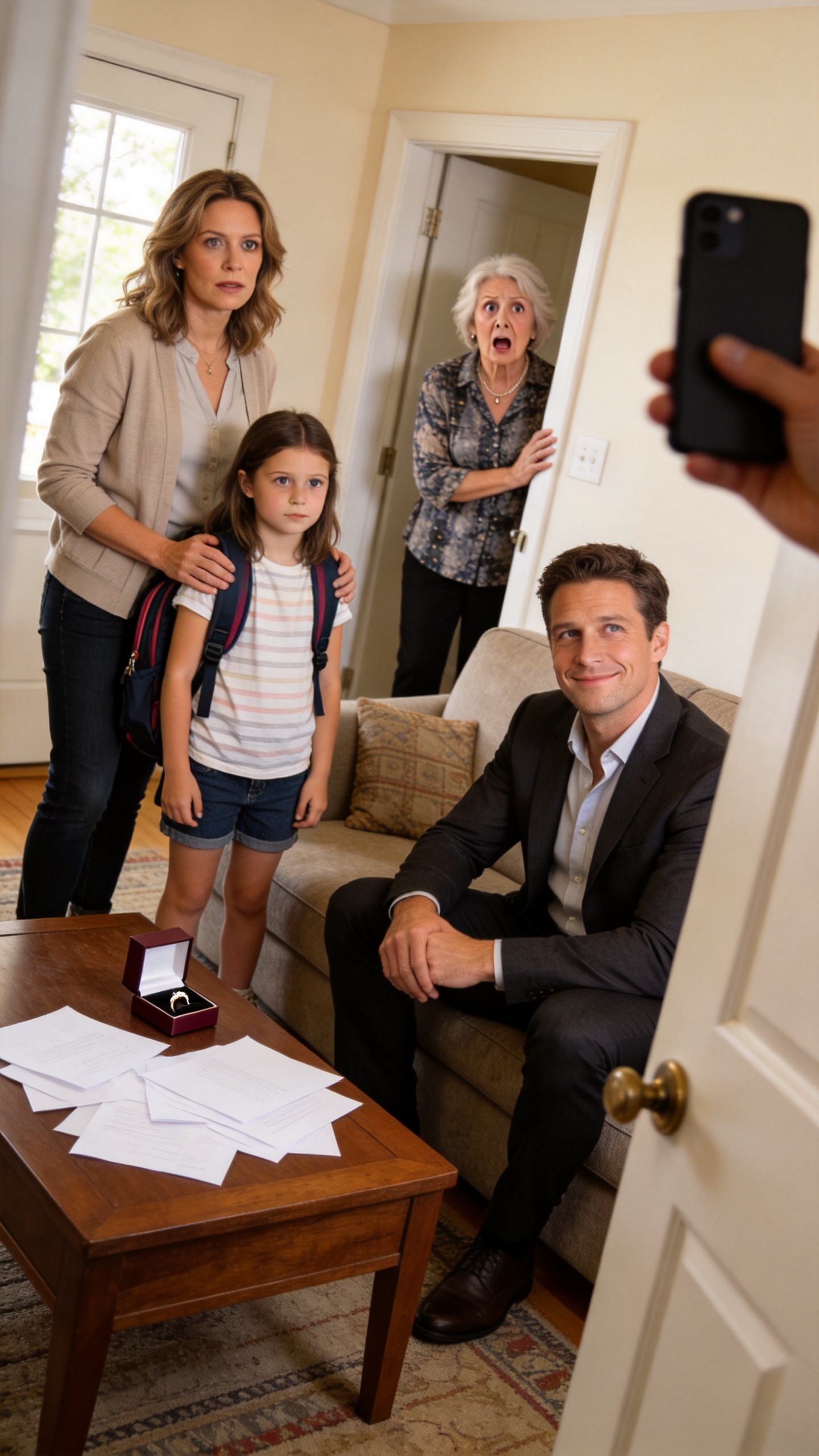
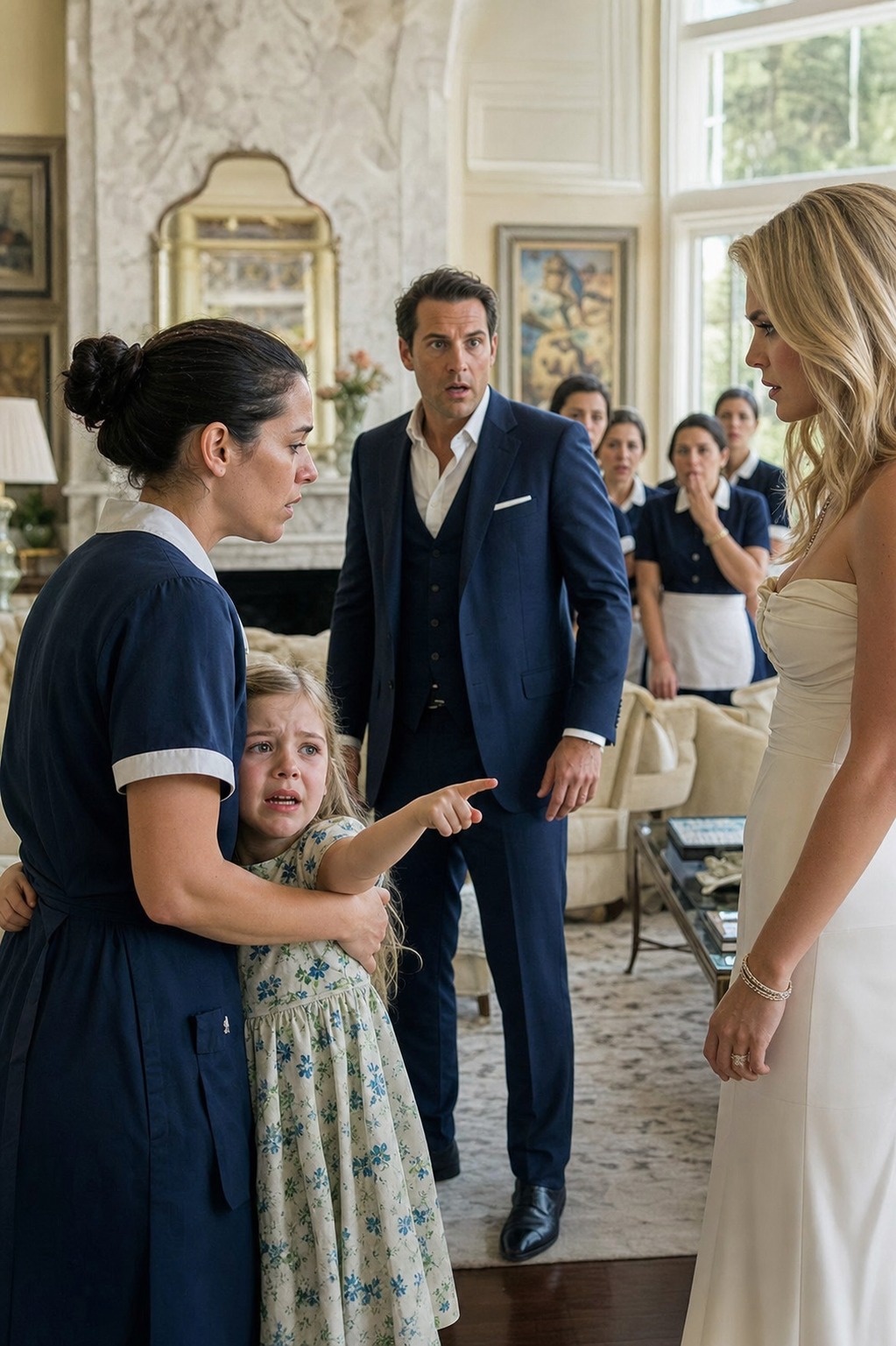
In the judge's chambers, Miles wore a navy blazer I hadn't bought. His fingers disappeared inside the cuffs. When she asked where he wanted to live, he looked at the carpet before answering.
"With Dad. Mom can't give me the future I should have."
The sentence sounded too polished for a boy who still called the dishwasher the plate machine. Adrian's mouth moved into a small, satisfied smile.
I kept waiting for Miles to glance over and take it back. He didn't.
The judge considered his statement alongside the adults' evidence. The order transferred primary custody and permitted an extended overseas stay within specified travel conditions. I walked out feeling as though my ordinary life had been entered as evidence against me.
For seven days, I folded his clothes and tried not to resent the suitcase. I told myself a child could love his mother and still prefer a life she couldn't afford. Knowing that didn't make his empty room easier to face.
At Baltimore-Washington International Airport, Adrian checked his phone while Miles stood between us. The itinerary Adrian had supplied began with a domestic connection before the overseas leg.
"We're ready," Adrian said. "Say goodbye."
Miles crossed the few feet to me slowly. Then he clung so hard that his forehead pressed against my ribs. Something flat slid under the edge of my pocket.
"Don't cry. Just wait for me."
"Wait for what, sweetheart?"
He looked toward his father, then squeezed my waist again. "Trust me."
Adrian called him. I watched them pass through security and kept watching after I could no longer see the little navy jacket.
Only then did I reach into my coat. The card was black, with no name on its face. Before I could decide whether it was real, a voice message arrived from the tablet Miles's grandfather had given him.
"Mom, that card goes with three point eight million dollars. Your birthday is the PIN. Don't ask any of Dad's friends about it. I'll tell you more when I can."
I listened twice, barely hearing the airport around me.
Another message followed. "Dad thinks Grandpa Everett got rid of everything before he died. He doesn't know what I found."
Everett Vale had been dead for four years. I had assumed everything he owned belonged, eventually, to Adrian. I called the tablet. There was no answer.
On my second attempt, the call failed immediately. Then one final line appeared: "Whatever he says, don't give Dad the card."
The Lighthouse on the Desk
I couldn't make myself drive home. I booked a room near the airport, checked the lock twice, and set the card on a desk covered with hotel stationery.
It looked absurdly small for something that could change our lives. I didn't put it into a cash machine. I didn't search for a way to check the account. I kept replaying my son's voice instead.
At 11:40 that night, a new recording arrived. I heard a latch click before Miles spoke.
"I'm in the bathroom. Dad thinks I'm doing my teeth. Grandpa left me a video on the tablet. The password is the dinosaur's name. The one you gave me."
His breath caught, then steadied.
"I can't send the video. But he said you'd understand this: the paper's inside the lighthouse."
For a moment I saw Everett's study as clearly as the room around me. A brass lighthouse stood beside his blotter, heavy enough that Miles had needed both hands to lift it.
Everett was a restrained man who seldom volunteered affection. With his grandson, he softened. Miles alone could move the lighthouse, turning its little windows toward the afternoon sun.
During our last visit before Everett died, he'd held it out to my four-year-old.
"It will belong to you when you're old enough to look after something important."
I'd heard a grandfather promising an ornament. Now I wondered how much fear had been hidden inside that quiet room.
The password was a name a child could remember, not a set of financial instructions a four-year-old could understand. The video had waited while Miles grew old enough to follow it.
But why had Everett left any of this with a child? And what had Adrian recognized in his son's behavior that had made custody suddenly so urgent?
Before dawn, I sent an urgent message to Leena Desai, the lawyer who had once helped me resolve a rental dispute. She knew none of Adrian's family. That felt more valuable than a grand office.
She called me at seven. I told her everything, beginning with the hearing and ending with the lighthouse.
"Leave the card alone," she said. "No purchases, no balance inquiry. We don't know who can see activity on that account. Bring it and the messages to my office."
"You think the money is stolen?"
"I think we shouldn't guess. And I think your son needs adults handling this now."
Her voice stayed even. Mine wouldn't. Before hanging up, I asked whether I should call Adrian.
"Not before we understand what would put Miles at greater risk."
She arranged to see me at nine. I spent the remaining time sitting on the edge of the hotel bed, wearing my coat because the card was back in its pocket.
The Man Waiting Four Years
At Leena's office in Bethesda, I kept my phone in my hand, afraid another message would arrive while I was putting it away. She brought me straight into a meeting.
"Special Agent Daniel Rusk," she said. "FBI financial crimes. I contacted him this morning after our call."
I stopped in the doorway. "How did a bank card bring the FBI here so quickly?"
"You haven't brought us a new case," Rusk said. "You've brought us a possible way forward in Everett Vale's. His supporting records have been missing for four years."
I sat down slowly.
Months before his heart attack, Everett had reported that money was moving through the family hotels in ways he couldn't reconcile with their business. Someone inside the company was helping dangerous men disguise criminal proceeds.
"He wanted proof before giving us names," Rusk said. "He was especially worried about his son. He hoped Adrian had been threatened into helping rather than volunteering."
Everett's death had cut off their contact. Without his records, investigators had struggled to connect the hotels' legitimate operations to the shell companies moving money behind them.
One name had kept returning: Malcolm Voss.
"Over the last six months, we had reason to believe Adrian was looking for something his father left behind," Rusk said. "Something Voss wanted recovered."
I looked at Leena. "The custody petition."
"Access to Miles," she said. "And a reason to keep him at the estate, where Adrian could watch what he touched and ask what he remembered."
The sentence in the judge's chambers came back to me, every borrowed syllable. My son hadn't been weighing two houses. He'd been trying to convince his father he wanted to be there.
I couldn't know exactly what he had understood. I could see how badly he'd needed Adrian to stop suspecting him long enough to protect what he'd found.
"He should never have had to do that," I said.
"No," Leena answered. "He shouldn't."
I told Rusk about the brass ornament in Everett's study. He asked whether I had current permission to enter the estate. I didn't.
"We can't simply search the house," he said. "We'll need lawful access and enough support for a warrant. Your messages matter, but we have to establish where the evidence is."
At 9:12, my phone vibrated against the conference table.
Miles's new recording sounded different. No careful whisper, only breath pushed through fear.
"Dad found Grandpa's video. He took my tablet. I got it back for a minute. I said it was cartoons, but he doesn't believe me. We're seeing Mr. Voss today. Please come, Mom."
Leena reached for my arm as I stood.
Rusk was already on his phone. "Which flight did they actually board?"
"I don't know. I saw them go through security, not onto the plane. Adrian hasn't sent an arrival message."
Then I remembered something Miles had said during a drive the previous week. Dad had another house, one with horses. Grandma didn't know about it. It was near a little town called Brook Hollow.
Rusk looked up sharply.
"A property there belongs to a company connected to Voss. Our team has been watching it for two weeks."
He called the surveillance team. Their confirmation settled the confusion: Adrian and Miles were at the farmhouse. Whatever the itinerary promised, they had not left the area.
Later, we learned Adrian had abandoned the trip before boarding and returned to the estate. Miles had reached the study that evening and taken the lighthouse before they drove to the farmhouse.
At the office, all I knew was that my child had asked me to hurry.
Leena contacted the local sheriff's office while Rusk coordinated the field team. When he told me to remain behind, I shook my head.
"If you get him out, he'll need somebody he knows."
Rusk considered me for a moment. "You remain in the vehicle until an agent says otherwise."
I agreed. Leena came with me. The drive took seventy minutes, and I watched every mile pass as though I could make the car go faster by refusing to blink.