For Twenty Years, My Family Called Me A Useless Failure. Then They Dragged Me Into Federal Court To Steal My Cybersecurity Company, Laughing At My Silence, Until I Rolled Up My Sleeve And The Judge Ordered Every Door Locked

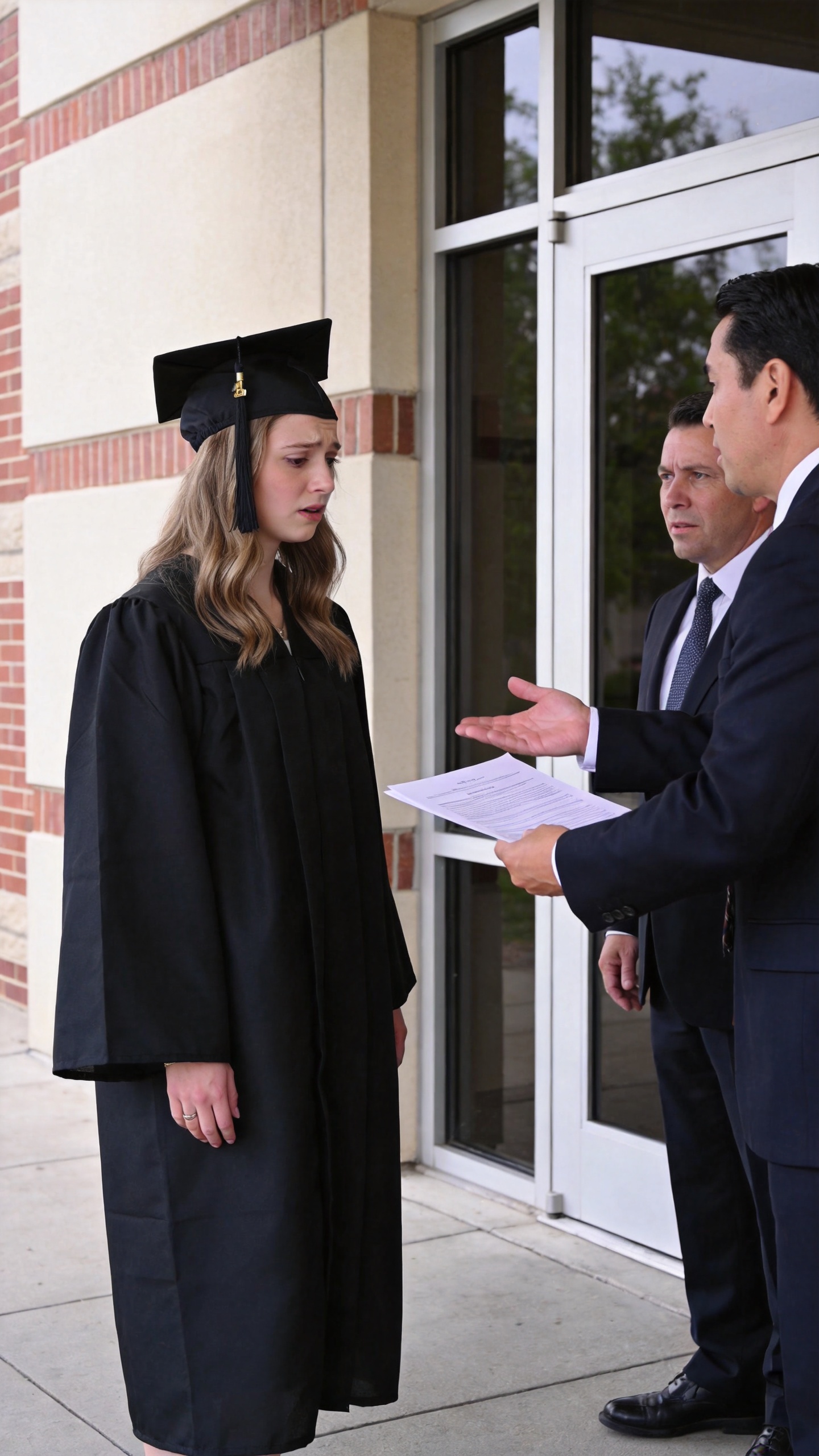
"Sign the transfer, Evelyn, or I swear I will make sure you leave this courthouse with nothing."
My brother's hand slammed against the marble wall beside my head hard enough to make the security camera above us tremble.
Bradley Cross had always needed an audience.
Even in the federal courthouse, even with two bailiffs thirty feet away and a clerk pretending not to stare from behind a glass window, he leaned close enough for me to smell coffee, rage, and the expensive cologne my father still paid for.
My father stood behind him in a charcoal suit, holding the complaint packet like scripture.
"Do not make this uglier than it already is," Walter Cross said. "You built that company with family money. You owe us."
I looked down at the papers in his hand.
Cross Meridian Systems.
The company they had mocked for a decade as "Evelyn's little computer thing."
The company they now claimed was a family asset because one old bank statement showed my father had once paid for a laptop when I was seventeen.
Twenty years of jokes, shut doors, holiday insults, and careful public humiliation had led us to this hallway.
My brother grabbed the lapel of my navy jacket.
"Say something," he hissed. "Or are you still too dumb to understand what grown-up money looks like?"
I did say something.
Quietly.
"Take your hand off me."
Bradley laughed.
My father did too.
That was when my sister-in-law lifted her phone, not to call security, but to record.
They Had Built Their Lives On My Silence
My family had decided I was worthless before I was old enough to understand the verdict.
Walter Cross liked children who performed well in rooms he could show off. Bradley was loud, handsome, athletic, and reckless in ways my father called confidence. My younger sister Maren learned early that crying prettily earned faster forgiveness than telling the truth.
I was quiet.
Quiet became slow.
Slow became strange.
Strange became useless.
By the time I was fifteen, my father had a full vocabulary for me.
"A waste of tuition."
"Book smart in the wrong direction."
"No instinct for people."
"Your brother will run things. You just try not to embarrass us."
When I turned nineteen, I stopped trying to convince them I had value they could not measure at dinner.
I left Ohio with two bags, a scholarship nobody in my family attended the ceremony for, and an acceptance letter to a defense technology fellowship that I kept folded inside a library book so my father would not call someone and ruin it.
For years, they thought I disappeared into a chain of ordinary IT jobs.
I let them.
Every Thanksgiving, I came back thinner, quieter, and more careful. Bradley would toss his keys on the table and ask whether I had learned to fix printers yet. Maren would ask if I had "met anyone normal." My father would give me the end chair nearest the kitchen and introduce me to guests as "our private one."
He never asked why I carried myself like someone who checked exits before sitting.
He never asked why federal cars sometimes waited outside the airport when I came home.
He never asked where the scars came from.
Not the thin white lines crossing my shoulder.
Not the burn scar above my ribs.
Not the jagged ridge near my left wrist that disappeared under a watch face whenever I fastened it tightly enough.
My mother had been the last person in that family who knew how to ask a question without using it as a weapon. After she died, the house filled with people who spoke about loyalty while dividing her jewelry, furniture, and memories into piles.
I built my life somewhere else.
Cross Meridian Systems began in a borrowed server room under a military research grant. It became a private cybersecurity firm after a breach at a European field hospital nearly cost twelve people their lives. We built containment tools for infrastructure attacks, encrypted response systems for emergency medical networks, and detection models for threats most civilians would never hear about unless the news used words like "outage" or "incident" because the true vocabulary would frighten them.
My family heard "technology" and imagined stock options.
They heard "company" and imagined my father should have a seat at the table.
They heard "valuation" and finally remembered I existed.
Three months before the lawsuit, Bradley called me for the first time in almost two years.
"Dad says you're doing well."
That was his greeting.
Not hello.
Not how are you.
Dad says you're doing well.
"I'm fine," I said.
"Define fine."
I looked across my office at a wall of threat maps glowing blue in the dark.
"Busy."
He laughed. "Still dramatic. Listen, I need bridge capital. Just six months. Maren said you liquidated something."
Maren had not guessed.
She had read it in a stolen email my father forwarded from an old accountant who should have known better. A minority investor had purchased a stake in Cross Meridian. The number was large enough to wake the family from twenty years of not caring.
When I refused, their tone changed fast.
My father called the next morning.
"You owe this family an accounting."
I hung up.
Two weeks later, a process server walked into our Washington office with a civil claim alleging fraud, conversion of family property, unjust enrichment, and elder financial abuse.
Elder financial abuse.
Against my father.
The same man who had once stood in a restaurant doorway and told me not to mention my scholarship because Bradley had lost another internship and "needed the evening."
Their claim was ridiculous.
Their timing was not.
They filed on the same week Cross Meridian was scheduled to finalize a classified federal contract. A public dispute over ownership could freeze part of the review. If they forced discovery, they might expose names, systems, and facilities protected under federal agreements.
They did not understand what they had touched.
They only understood that I had something and they wanted it.
So I went to court alone.
Not because I lacked counsel.
Because the first appearance was not where the case would be won.
It was where I needed to see whether my family still believed I would shrink.
The Judge Recognized The Wound Before The Name
Bradley shoved me again.
This time my shoulder hit the marble.
A woman near the elevator gasped. His wife, Celia, kept recording. My father did not move except to straighten his cuffs.
"You always do this," Bradley said. "You stand there like you're better than everyone."
"No," I said. "I stand there because I learned young that reacting was what you wanted."
His face flushed.
He raised his hand.
For a second, the hallway narrowed to his palm, my father's stillness, Celia's phone, and the old familiar knowledge that some families do not stop violence because violence is part of how they keep order.
Then the courtroom doors opened.
"All parties for Cross v. Cross Meridian Systems," the clerk called.
Bradley's hand dropped.
He smiled as if he had chosen mercy.
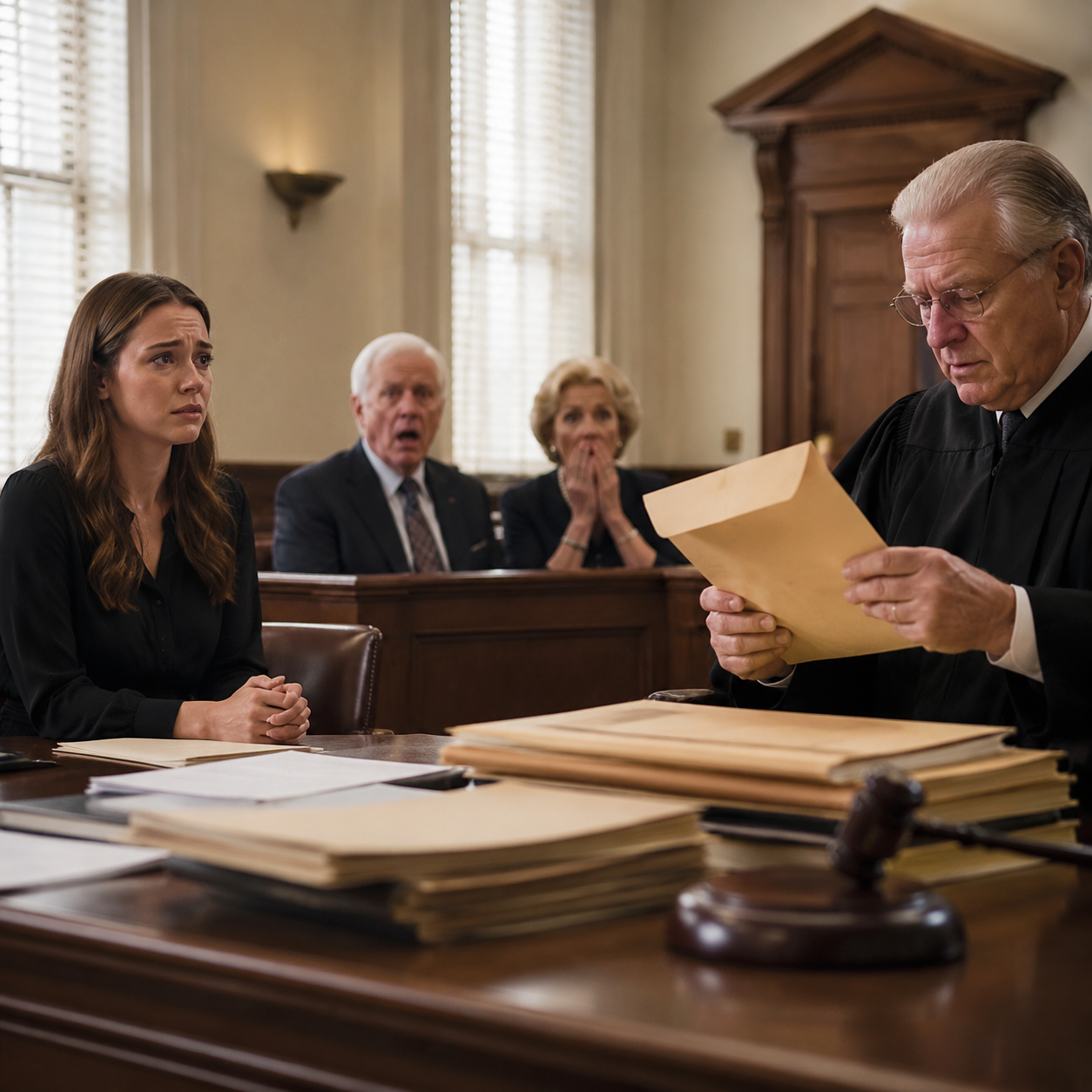
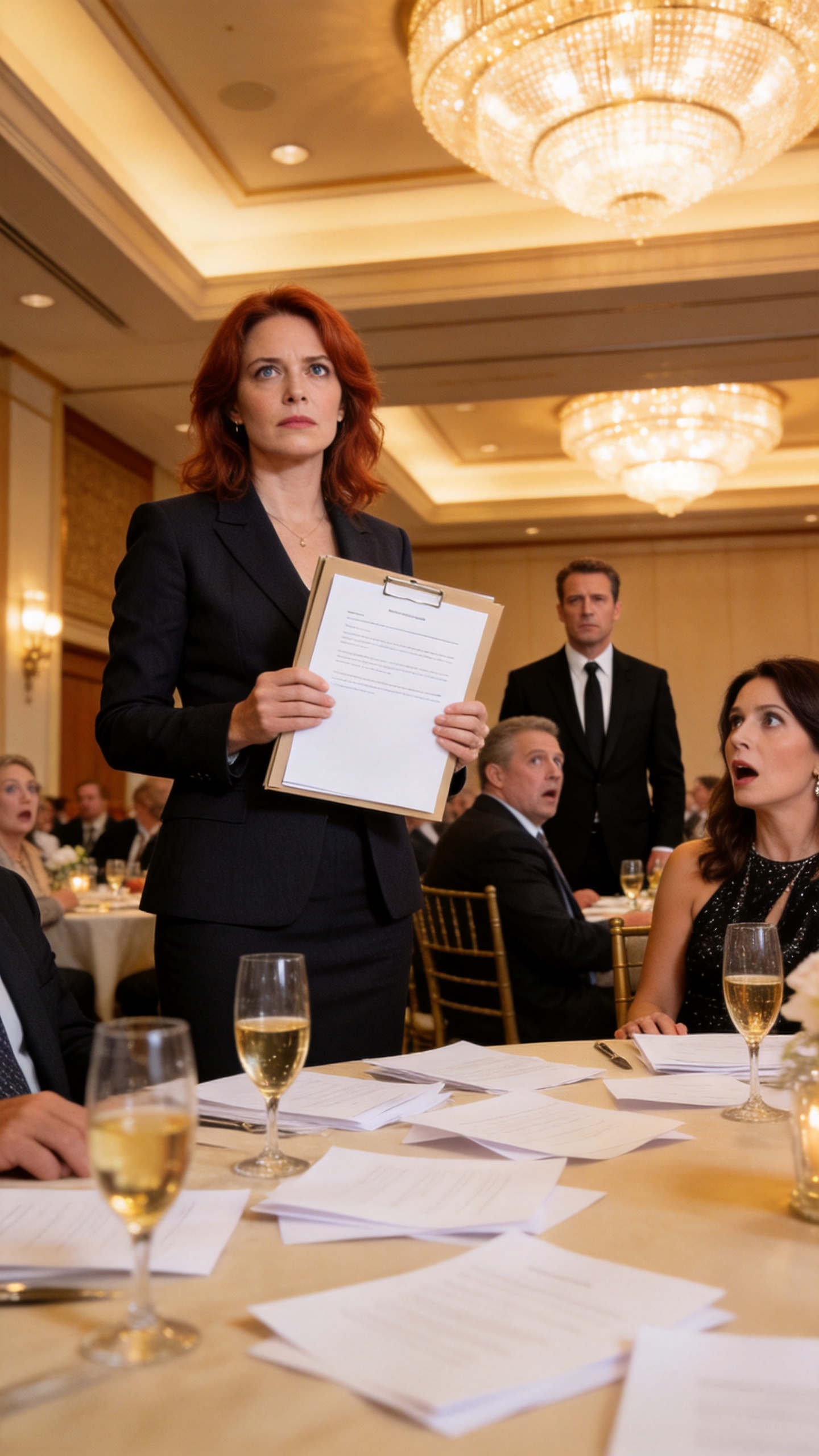
Inside, the courtroom smelled of old wood, toner, and the faint metallic chill of federal air conditioning. My father's attorney, Martin Pell, spread his folders across the plaintiff's table with theatrical confidence. Bradley sat beside him, bouncing one knee. Maren slipped into the row behind them wearing black pearls and a wounded expression she had probably practiced in the car.
I sat alone at the defense table.
No briefcase.
No lawyer beside me.
Just one sealed envelope and a small black drive inside my jacket pocket.
Judge Abram Whitaker entered without looking up.
He was in his early sixties, narrow-faced, silver-haired, and known for impatience with civil greed dressed as moral injury. He adjusted his glasses, opened the case file, and began in a dry voice.
"We are here on plaintiffs' emergency motion for provisional control over Cross Meridian Systems pending ownership determination."
My father's attorney rose.
"Your Honor, this is a straightforward family asset case. Miss Cross used resources supplied by her father, concealed profits for years, and now refuses to support the family that made her success possible."
Miss Cross.
Bradley smirked.
My father folded his hands.
Maren bowed her head as if grieving my selfishness.
Judge Whitaker turned to me.
"Counsel for the defendant?"
"I am appearing on my own behalf for this hearing."
His eyes finally lifted.
For one clean second, he looked annoyed.
Then he saw my face.
The change was not dramatic at first. It was smaller than that. His fingers stopped moving over the file. His mouth tightened. His gaze dropped to my left wrist, where the edge of my scar had slipped below my watch.
Then all the color left him.
"Ms. Cross," he said, and the room changed because his voice had changed. "Would you please state your full legal name for the record?"
Bradley muttered, "Oh, come on."
The judge did not look at him.
"Evelyn Mara Cross," I said.
"Any former service designation?"
Pell laughed once. "Your Honor, this is a corporate ownership matter, not a military parade."
Judge Whitaker's hand struck the bench.
"Mr. Pell, sit down."
The attorney froze.
I reached for the button of my jacket.
My father's eyes narrowed. "Evelyn, don't start some performance."
I removed the jacket slowly.
Under it, I wore a sleeveless dark blouse because I had known this moment might come. The scars across my shoulder, upper arm, and collarbone were not pretty. They were not cinematic. They were warped, pale, and brutal, crossing the skin in ridges where heat and shrapnel had rewritten me.
The gallery made one sound.
Not a gasp.
A retreat.
Maren covered her mouth.
Bradley's smirk vanished.
My father stared at my arm as if the marks were an accusation he could not send back.
Judge Whitaker rose from the bench.
"Seal the courtroom," he ordered.
The bailiffs moved immediately.
Pell stood halfway. "Your Honor?"
"No one leaves," the judge said. "No one records. No one transmits. Marshal, collect all phones in the gallery."
Celia's face went white around her phone.
The judge's eyes remained on me.
"Colonel Cross," he said quietly, "I was not informed you were the defendant."
My father whispered, "Colonel?"
I folded my jacket over the back of the chair.
"Retired," I said. "Technically."
Judge Whitaker swallowed.
He knew enough.
Not everything.
But enough.
Four years earlier, a classified hospital network in Jordan had gone dark during a coordinated attack. A convoy was hit. A field judge advocate team was trapped. An evacuation corridor failed. My unit restored communications under fire long enough to move civilians and federal personnel out before the second strike.
Abram Whitaker's daughter had been on that convoy.
He had written me a letter I never answered because the mission file remained sealed and because I did not know what to do with gratitude from strangers when my own family still laughed at my job.
Now he stood above my father's lawsuit with that memory in his face.
"This docket is compromised," he said.
Pell's mouth opened.
"If you speak," the judge snapped, "I will hold you in contempt before you finish the first syllable."
The courtroom fell still enough for the air vents to sound loud.
Their Case Became Evidence Against Them
My father found his voice first.
"Evelyn," he said, badly. "Why didn't you tell us?"
It was almost funny.
The first honest question he had asked me in twenty years arrived only after a judge called me Colonel.
"Tell you what?" I asked. "That I was injured? That I served? That I built systems your attorney is trying to subpoena under a civil fraud claim?"
Bradley pushed back from the table.
"This is fake. Scars don't make you special."
Judge Whitaker looked at him as if Bradley had tracked mud across a flag.
"Mr. Cross, your sister's designation places parts of this matter under federal security review."
"She's not my sister when she hoards money," Bradley spat. "That's our company."
I reached into my pocket and placed the black drive on the table.
Pell stared at it.
"What is that?"
"The filing history of Cross Meridian Systems," I said. "Corporate formation, investor records, grant documents, security classifications, federal contracting restrictions, and every email your office sent demanding ownership access to systems you were legally forbidden to request."
My father went rigid.
Pell said, "We made routine discovery demands."
"You demanded network architecture, client lists, classified contract schedules, and banking pathways linked to federal emergency infrastructure."
The judge looked toward the bailiff.
"Marshal, notify the security officer in chambers. Now."
Bradley's knee started bouncing again, but faster.
Maren leaned forward, hissing, "Dad, what did you ask for?"
My father snapped, "Be quiet."
There it was.
The old family order, trying to reassemble itself under federal lights.
I opened the sealed envelope and removed three pages.