My Parents Walked Into Court Certain The Seven South Carolina Beach Cottages Were Theirs, And My Mother Said, "She Shouldn't Get A Penny." Then The Judge Opened My Grandmother's Envelope
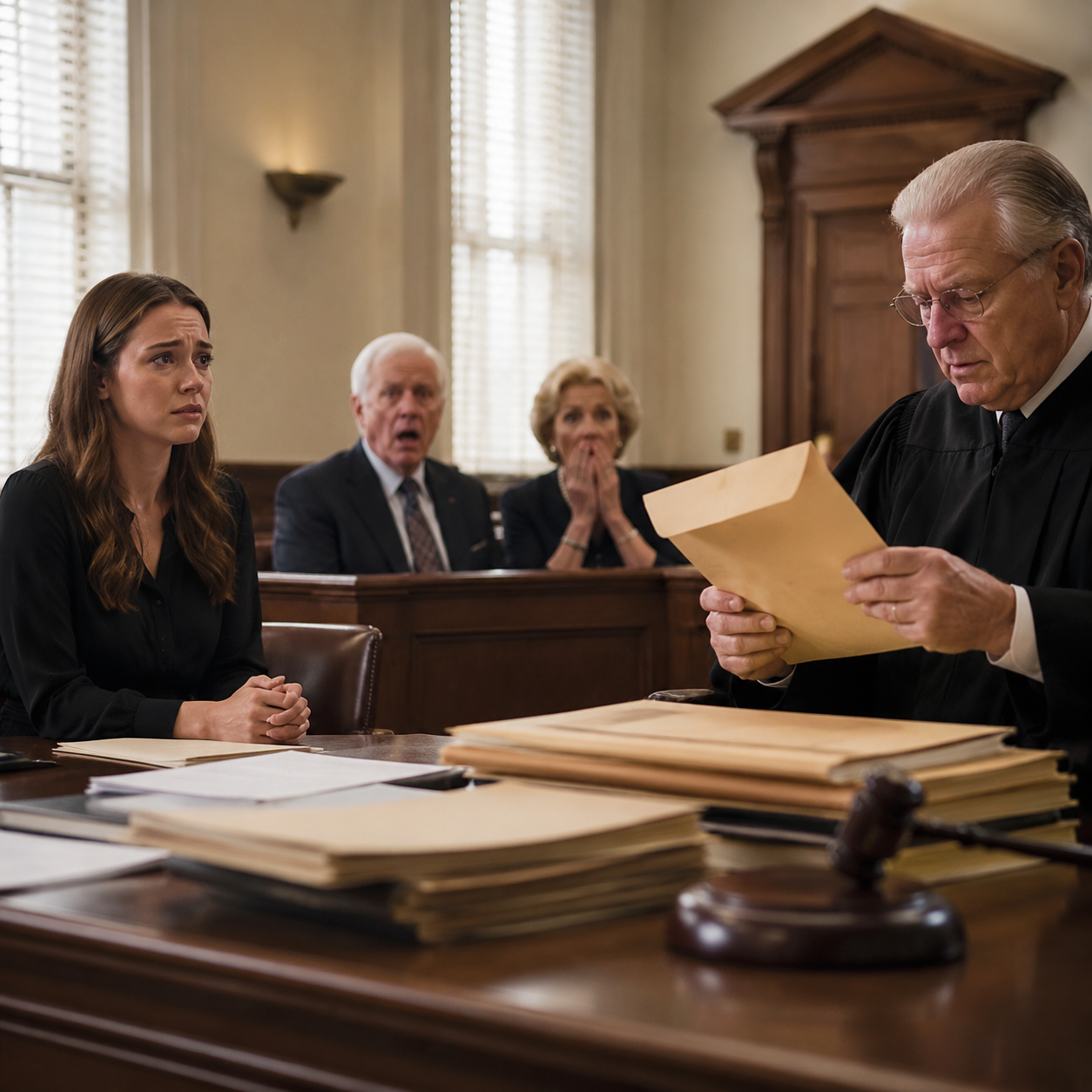
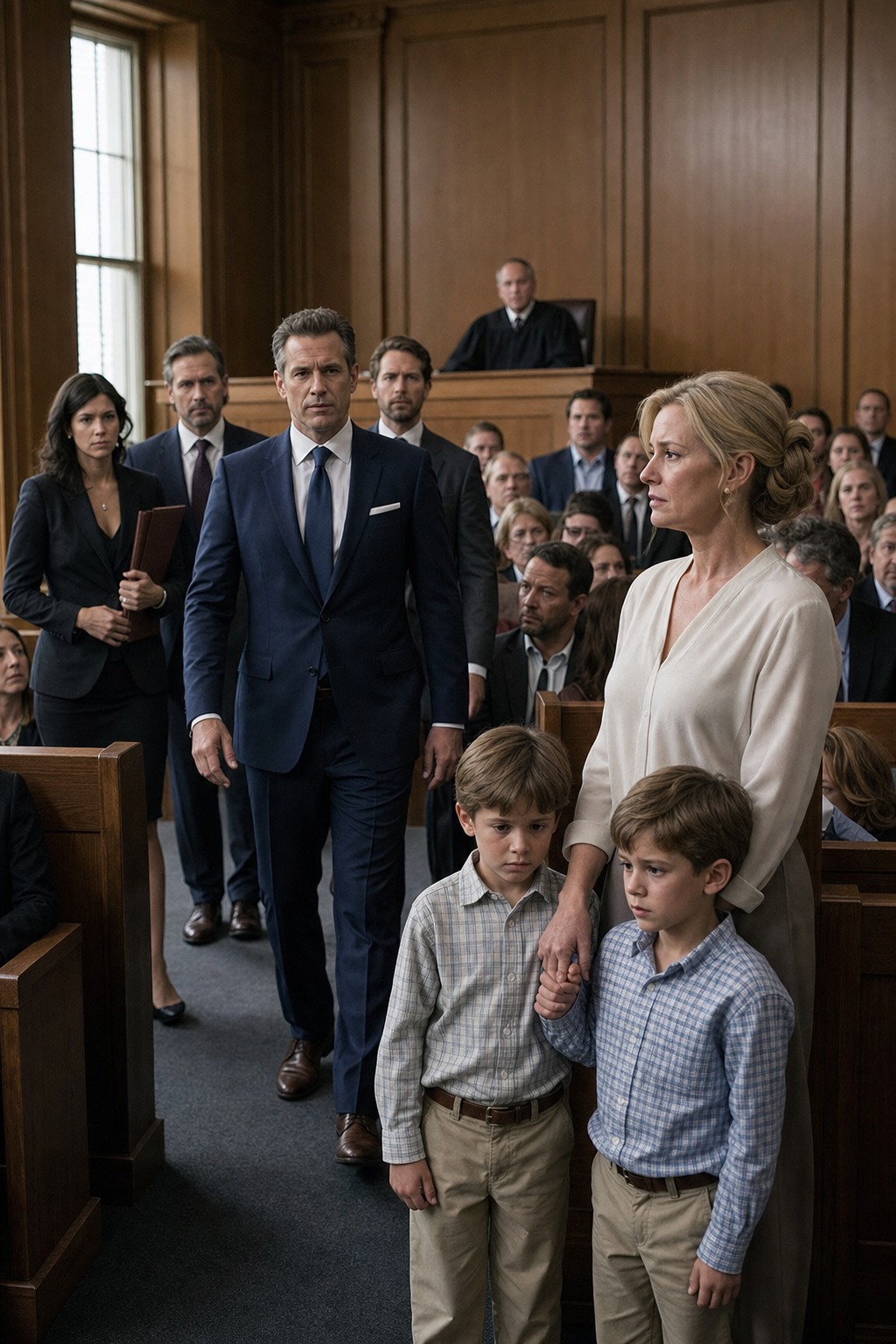
My father walked into the Charleston County probate courtroom like a man arriving to collect keys, not answer questions.
"The seven beach cottages belong to us," Howard Mercer said, smoothing his gray suit jacket while he looked straight past me. "Our daughter removed herself from this family years ago."
My mother, Marla, folded her hands on the table and smiled at the judge.
"She should not receive a penny," she said. "Not after the way she abandoned us."
Their attorney, Edwin Sharp, gave a practiced little nod, as if the matter had already been reduced to paperwork and my presence was only a delay. Behind him sat my older brother, Wade, in a tan sport coat, pretending to read an email on his phone.
I sat alone at the other table.
No lawyer beside me.
No husband whispering that everything would be fine.
No wealthy aunt arriving late with a folder full of miracles.
Just me, Lydia Mercer, thirty-four years old, wearing the navy dress I had bought on clearance the week my grandmother Ruth died.
Judge Marianne Cole adjusted her glasses and looked down at the file.
"Ms. Mercer, your parents claim you signed a beneficiary release removing yourself from the Seabrook Lane Family Trust."
"I did not sign it," I said.
My mother made a small sound that was almost a laugh.
My father leaned back. "Lydia has always confused feelings with facts. She left after a disagreement about responsibility. Now that the cottages are worth more, she wants a share."
That was the story they had brought into court.
I was greedy.
I was unstable.
I was a daughter who had drifted away and come back only when the tide brought money.
No one mentioned that I had spent nearly nine years running those cottages from a folding desk in the laundry room. No one mentioned the hurricanes, the broken septic line, the guests who called at two in the morning because sand had jammed a sliding door. No one mentioned that my grandmother had taught me every lock code, every vendor name, every hidden pipe under those old houses on the South Carolina coast.
Edwin Sharp stood and slid a document toward the clerk.
A beneficiary release.
My name typed at the top.
My supposed signature on the last page.
A witness line.
A notary stamp.
My mother watched me with that clean, controlled smile she had used my whole life when she wanted me to feel small.
"Your Honor," Edwin said, "this document was executed voluntarily. Ms. Mercer cannot now undo a lawful release simply because the assets have appreciated."
The judge studied the pages.
I heard the air-conditioning hum above us. I heard the scrape of Wade's shoe under the bench. I heard my own heart, hard and slow, as if it had learned not to panic until permission was granted.
Then Judge Cole looked at me.
"Do you have anything to submit?"
I reached into my canvas tote and took out a sealed cream envelope.
My mother's smile thinned.
My father's eyes narrowed.
"This was left by my grandmother," I said. "Her estate attorney in Beaufort released it to me last month."
Edwin was already on his feet. "Objection. We have not authenticated that material."
Judge Cole raised one hand without looking at him. "You may sit down while I review it."
He sat.
The envelope made a soft tearing sound when the judge opened it.
For the first time that morning, my parents stopped looking proud.
They Had Built Their Case On My Silence
Judge Cole unfolded the first page slowly.
Then the second.
Then she paused.
Her eyebrows lifted just enough for the room to notice.
She read another paragraph, turned the page, and let out one short breath that was not quite a laugh.
"Well," she said, quietly. "This changes the shape of the morning."
My mother went still.
My father leaned toward Edwin. "What does that mean?"
The judge looked over the top of the letter.
"Mr. and Mrs. Mercer, did you know Ruth Mercer included bank records, handwriting samples, maintenance ledgers, and a sworn statement from a former notary with this envelope?"
My mother's face lost color under her makeup.
"That cannot be right," she said.
"It appears very right," Judge Cole replied.
She looked back down at the letter. "Ruth Mercer states that her granddaughter Lydia was never to be removed as a beneficiary of the Seabrook Lane Family Trust unless Lydia appeared in person before Ruth's own counsel and signed a release in that counsel's office."
I pressed my hands together under the table.
Grandma Ruth had always sounded firm when she was alive. Even when she was tired. Even when her hands shook around a coffee mug. Hearing the judge read her words in that courtroom made the empty chair beside me feel less empty.
Judge Cole continued.
"She further states that if any release appeared after her death, especially one dated during her final illness, it should be treated as suspicious and reviewed against the verification packet attached here."
Edwin Sharp cleared his throat. "Your Honor, older family members often make emotional statements near the end of life."
"This is not an emotional statement," the judge said. "This is a set of instructions."
My father shifted in his chair.
My mother looked at me then, really looked at me, and I saw what had been under her smile the whole time.
Not confidence.
Calculation.
She had expected me to come with nothing but hurt.
She had not expected Ruth to come with me.
Judge Cole lifted the release document.
"The notary listed on this beneficiary release is Joyce Harlan."
Edwin nodded once. "Correct, Your Honor."
"According to the verification packet," the judge said, "Joyce Harlan had surrendered her commission and moved into assisted living four months before this document was supposedly notarized. According to the death certificate attached here, she died six weeks before the date on this release."
Wade's phone slipped from his hand and hit the bench.
The sound was small.
In that room, it was enormous.
My mother whispered, "Howard."
My father did not answer her. He was staring at the document as if the ink itself had betrayed him.
Judge Cole's voice sharpened.
"Mr. Mercer, do not speak to anyone at counsel table right now."
He closed his mouth.
It was the first time I had ever seen my father obey a woman on the first request.
The judge ordered the disputed release marked for forensic review. She froze all transfers, refinancing, rental distributions, and management changes connected to the seven cottages. Then she ordered a complete accounting of every dollar that had moved through Seabrook Lane Family Trust for the previous six years.
Every word seemed to remove a brick from the wall my parents had built around those properties.
Transfer.
Frozen.
Accounting.
Forensic.
Wade stood up before the judge finished speaking.
"Your Honor," he said, his voice rough. "I need to say something."
My mother turned so fast her chair scraped the floor.
"Sit down," she hissed.
Wade did not sit.
For the first time in years, my brother looked at me instead of through me.
"I signed as a witness," he said. "But I never saw Lydia sign anything."
My father rose halfway from his chair. "Wade."
Judge Cole brought her palm down on the bench.
"Mr. Mercer, sit down."
He sat.
Wade swallowed. "Dad told me it was just a family tax update. He said Lydia had already agreed to step away. He said the trust needed my witness signature so the accountants could clean up old records."
My mother closed her eyes.
Not in regret.
In fury.
Because Wade had not exposed their mistake.
He had exposed their method.
The Brother Who Benefited Finally Looked Up
The judge called a short recess, but for several seconds no one moved.
People in the gallery stared at my parents with the open curiosity of strangers who had expected a dull estate dispute and found themselves watching a family split down the middle.
My father stood slowly, still trying to hold the posture of a man in charge.
My mother remained seated with one hand over her mouth.
Wade came toward me.
"Lydia," he said.
I looked at him from my chair. "How long did you know?"
He flinched before he answered.
"Not at first."
"That is not an answer."
He rubbed both hands over his face. "I thought you had walked away. Dad said you were angry about Grandma leaving him in charge. Mom said you only helped with the cottages because you wanted everyone to praise you."
I almost smiled. Not because it was funny. Because it was so perfectly them.
"I rebuilt Cottage Three after the storm while you were in Greenville selling vacation packages you didn't own," I said.
His eyes dropped.
"I know."
"I handled mold remediation in July. I fought the insurance carrier. I found plumbers when the main line backed up into two bathrooms during a wedding weekend."
"I know."
"Then you signed a witness statement that helped erase me."
He had no defense for that.
Across the aisle, my mother stood and walked toward us with careful steps, every inch of her still arranged for an audience.
"Lydia," she said softly, "do not turn your brother against us."
I looked at her. "You did that when you made him useful."
Her mouth tightened.
For my whole life, Marla Mercer had believed emotion was something other people spilled and she stepped around. She could make a room feel guilty without raising her voice. She could call cruelty "practicality" and make herself sound mature.
But now there were dates on paper.
Dates did not care how calm she sounded.
"Your grandmother was not thinking clearly," she said.
"She was clear enough to predict exactly what you would do."
Her eyes hardened.
For one second, the courtroom version of my mother disappeared, and I saw the woman I had known in kitchens, hallways, and hospital rooms. The woman who did not hate me because I failed.
She hated me because Ruth had trusted me with something she wanted.
My father joined us near the aisle.
"Enough," he said.
That word used to end conversations in our house.
Enough meant stop crying.
Enough meant stop questioning.
Enough meant let your brother have it because family peace mattered more than fairness.
But I was not fifteen anymore, and we were not in his house.
"No," I said.
He stared at me as if I had spoken another language.
"You have no idea what those cottages require," he said.
"I know exactly what they require."
"You think cleaning schedules and guest emails make you capable of managing real assets?"
"I handled the assets before you discovered they were worth stealing."
Wade looked away.
My mother's lips parted, but no words came out.
"For nine years," I said, "I handled reservations, vendors, storm repairs, permits, tax packets, cleaning crews, county inspections, angry guests, and emergency contractors. You showed up twice a year to stand on a porch and tell people the family business was thriving."
My father's face went red.
The bailiff called everyone back into session.
As we returned to our tables, I noticed my parents were no longer watching the judge.
They were watching Edwin Sharp.
That told me something I had missed before.
Their confidence had never come from proof.
It had come from believing someone else could make the lack of proof look expensive enough to scare me.
Judge Cole resumed and looked at Wade.
"Mr. Mercer, do you wish to make a sworn statement?"
Edwin stood. "Your Honor, I strongly advise against allowing surprise testimony in a preliminary probate matter."
"You are not counsel for Mr. Wade Mercer," the judge said.
The room tightened.
Wade looked at my father.