For Twenty Years, My Family Called Me A Useless Failure. Then They Dragged Me Into Federal Court To Steal My Cybersecurity Company, Laughing At My Silence, Until I Rolled Up My Sleeve And The Judge Ordered Every Door Locked
"Your Honor, I also request the court admit this for immediate review."
Pell objected before he could stop himself.
The judge did not blink. "Overruled."
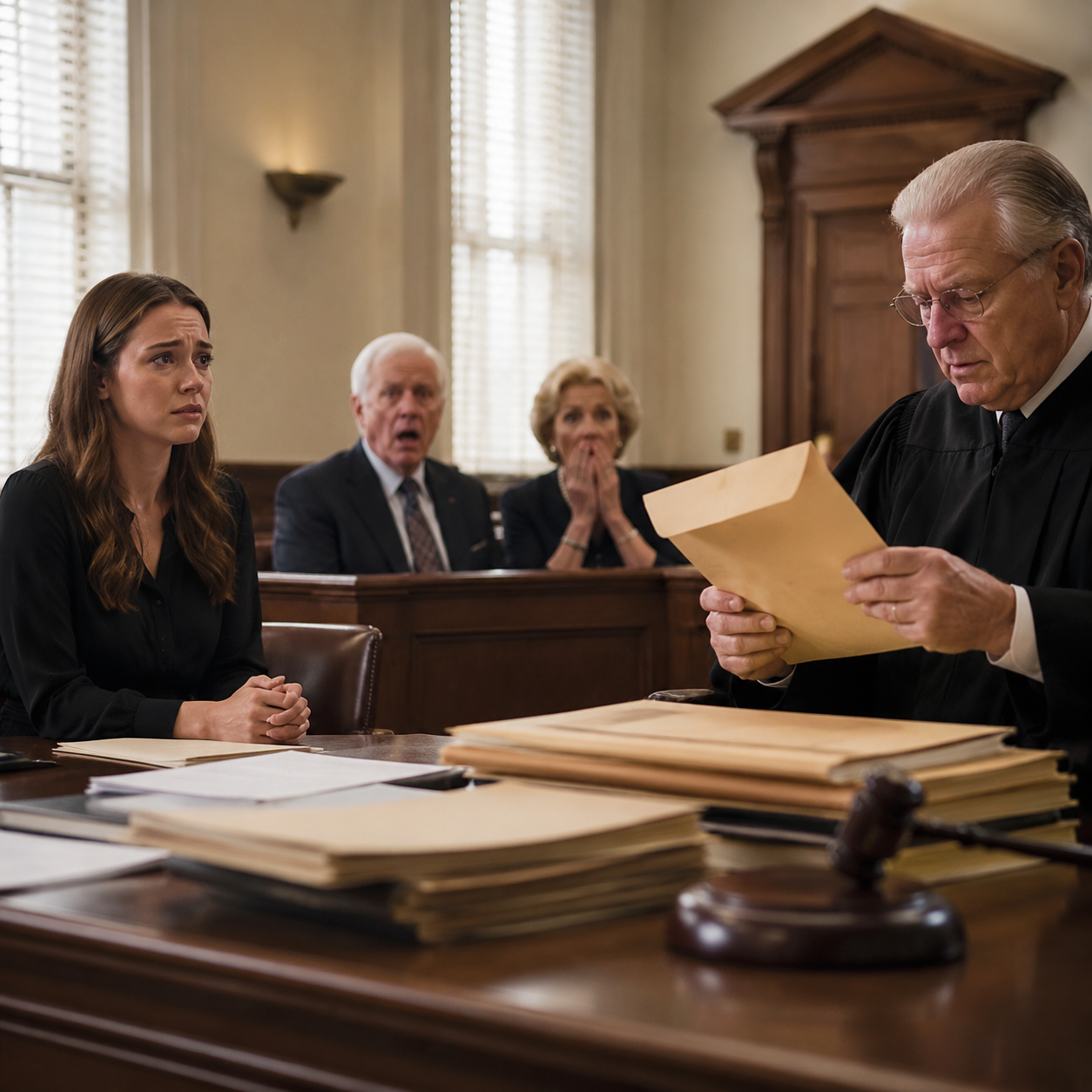
I handed the pages to the marshal, who carried them to the bench.
Judge Whitaker read the first page.
Then the second.
By the third, his jaw had hardened.
"Mr. Pell," he said, "did you or did you not receive notice from the Department of Defense contracting office that Cross Meridian Systems operates under protected federal agreements?"
Pell's lips parted.
No answer came.
My father turned on him. "You said it was intimidation language."
The attorney's face shone with sweat.
"It was vague."
"It was signed by a federal contracting officer," I said.
Bradley slammed his palm on the table.
"Who cares? She has money. We need it."
That sentence saved everyone time.
Need was not ownership.
Need was not law.
Need was not a family duty.
Judge Whitaker leaned forward.
"Mr. Cross, why do you need it?"
For the first time since we entered, Bradley hesitated.
My father said quickly, "Objection."
Pell whispered, "You are not counsel."
I looked at Bradley.
"Tell him."
His eyes flicked to mine.
The old hatred was still there, but fear had opened a crack beneath it.
Maren whispered, "Brad."
I said, "Tell the federal judge why your father filed an emergency motion to seize my company before Friday."
Bradley wiped his mouth with the back of his hand.
"It's none of your business."
"You made it mine when you tried to turn my operating accounts into your escape fund."
My father's chair scraped.
"Enough."
The judge's voice cut across his.
"Mr. Bradley Cross, answer the question."
Bradley looked at our father.
Our father looked away.
That was the moment Bradley understood something I had understood as a child.
Walter Cross protected family only when family protected Walter Cross.
"I owe money," Bradley said.
Maren closed her eyes.
Pell sat down slowly.
"How much?" the judge asked.
Bradley's face twisted.
"Six million."
The courtroom seemed to pull back from him.
"To whom?"
He did not answer.
I did.
"A private lending group currently under federal investigation for laundering through shell logistics firms."
My father rounded on me.
"How could you know that?"
I let the question sit in the room.
Then I said, "Because one of those shell firms tried to breach a hospital network last month."
Nobody moved.
The whole lawsuit changed shape.
It was no longer a greedy family trying to grab a daughter's company.
It was a greedy family dragging a federal contractor into court while carrying a debt trail connected to an active investigation.
The judge ordered a recess that did not feel like a recess. It felt like a door closing.
Two federal security officers arrived in plain suits. Then another attorney from the U.S. Attorney's office. Then a woman I recognized from the contracting division, who looked at me once with a mixture of apology and relief.
My father stood when she entered.
"This is absurd," he said. "This is a family dispute."
The woman looked at the complaint packet.
"Not anymore."
Bradley grabbed his briefcase.
A bailiff stepped in front of him.
"Sir, sit down."
"I need air."
"You need permission."
The words landed harder than they should have because Bradley had spent his whole life taking exits for granted.
Maren began to cry.
Not loudly.
Not beautifully.
Just small, frightened sounds into the sleeve of a black dress she had chosen because she thought court would make her look wronged.
I felt less satisfaction than I expected.
Maybe because the room finally saw them and the sight was ugly.
Maybe because being believed does not refund the years spent preparing proof.
The Room They Chose Became The Room That Held Them
The emergency hearing resumed under seal.
No cameras.
No phones.
No gallery.
Just the judge, federal counsel, security officers, my family, their trembling attorney, and me at the table they had expected to empty.
Judge Whitaker denied the motion in the first five minutes.
That was the smallest consequence.
Then he referred the filing for sanctions.
That was the second.
Then federal counsel requested immediate preservation of all communications between Walter Cross, Bradley Cross, Martin Pell, and any lender, consultant, or intermediary involved in the attempt to seize Cross Meridian assets.
That was when my father's face truly changed.
He had survived embarrassment before. He had survived debt, lies, and public contradiction. He had survived by moving quickly from one story to the next before anyone could examine the floor beneath him.
Preservation meant no movement.
No deletion.
No private rewriting.
No family version.
"Your Honor," Pell said weakly, "my clients are unsophisticated parties who may not have understood the full nature of the demands."
I almost admired the desperation.
Unsophisticated.
My father, who had run three companies and bullied accountants for sport.
Bradley, who could structure a gambling debt through two fake consulting invoices but could not structure a life.
Maren, who had forwarded my old emails to our father and then acted wounded when the paper trail returned with her name on it.
Judge Whitaker removed his glasses.
"Mr. Pell, your clients attempted to acquire operational control of a protected contractor through an emergency civil motion built on a fabricated family-duty theory. They did so while one plaintiff was carrying debt connected to an active federal investigation. Do not insult this court by calling that confusion."
My father put both hands on the table.
"Evelyn can fix this."
Every face turned toward him.
He did not look at the judge.
He looked at me.
There was the old command in his eyes, stripped of polish but not gone.
Fix what your brother broke.
Absorb what your family did.
Be useful now, after all the years we called you useless.
"No," I said.
One word.
Twenty years late.
But clean.
My father stared.
"Evelyn."
"No."
Bradley leaned forward, sweating through his shirt.
"They will kill me."
"Then you should tell federal counsel everything you know."
"You're my sister."
"You remembered that in the hallway when you wanted my signature."
He flinched.
Good.
Maren whispered my name.
I looked at her.
She had spent years telling relatives I was unstable, secretive, impossible to love. She had turned every absence into proof of arrogance and every boundary into cruelty. Now she looked at me with mascara under her eyes and the sudden knowledge that I had been carrying more than silence.
"I didn't know," she said.
"You didn't ask."
It was not forgiveness.
It was not a speech.
It was the truth, and it had edges.
By late afternoon, my father's attorney was no longer giving confident interviews in the hallway. He was sitting in a conference room with his own counsel. Bradley was taken through a side door for questioning. My father refused to answer without a lawyer and discovered that saying "my daughter" did not open federal doors.
Before I left, Judge Whitaker asked to speak to me in chambers.
The room was small, lined with books, and quieter than the courtroom.
He stood by the window for a moment before turning.
"Colonel Cross," he said, "my daughter is alive because of people like you."
"Because of my team," I said.
"Yes. Of course."
He nodded once.
"I am sorry your family learned who you were this way."
I looked down at the sleeve I had pulled over my scars.
"They did not learn who I was," I said. "They learned they could not use who I was."
He accepted that.
Outside the courthouse, the sky had turned silver. Reporters waited beyond the steps, but the sealed order gave them little to chase. My family's public story collapsed into whispers, then into questions, then into the long administrative silence of people who had touched something dangerous and finally understood that danger has paperwork too.
Six months later, Cross Meridian moved into a larger operations center outside Arlington.
My name was not on the glass in huge letters. I never liked that kind of thing.
It was on the contracts.
On the payroll.
On the systems that stayed awake at three in the morning while hospitals, grids, and emergency networks slept under our watch.
One afternoon, a receptionist told me Walter Cross was in the lobby.
He looked smaller than I remembered.
That was not age.
That was consequence.
Bradley had entered a plea agreement. Maren had stopped posting wounded little essays about family betrayal after federal counsel requested her devices. Pell lost clients. My father lost the ability to tell the story first.
He stood in my lobby holding a folder.
"I need a statement," he said.
Not hello.
Not I'm sorry.
A statement.
"For the lender investigation?" I asked.
His mouth tightened.
"For the family."
I looked at him for a long moment.
Twenty years ago, I would have explained.
Ten years ago, I would have defended.
That day, I only said, "You should speak to your attorney."
"Evelyn, please."
The word sounded unused in his mouth.
I almost felt sorry for him.
Almost.
"You told a federal judge I owed you my life," I said. "Consider this the first time I disagree without needing your permission."
Then I walked back through the security doors.
They closed behind me with a soft, final click.
No one locked them.
No one needed to.
For the first time in my life, my family was on the other side because I chose it.