I Came Home From A Business Trip And Found My Wife And Newborn Barely Alive While My Mother Said, "Maybe She Never Should Have Been A Mother." Then The Hospital Doctor Saw The Bruises On Her Wrists And Called The Police
"If taking care of a baby is so hard for her, maybe she never should have become a mother."
Those were my mother's first words when I walked into our bedroom and found my wife barely conscious.
My newborn son was crying beside her.
Not the strong, angry cry I had heard in the hospital.
A thin, broken sound.
Like he had been crying too long for anyone to still believe help was coming.
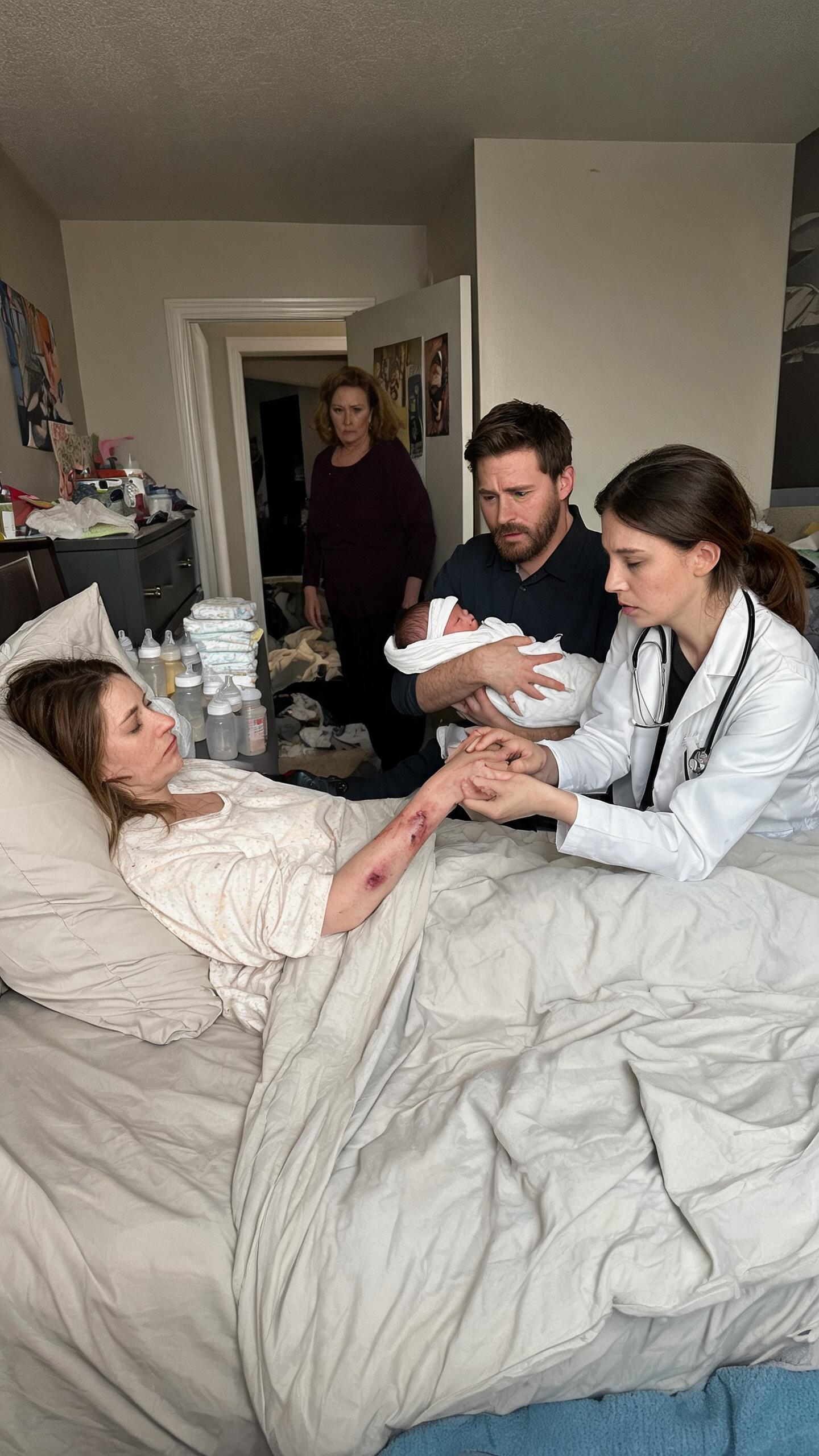
Hannah lay half turned on the bed, one arm hanging over the side, her lips cracked, her skin gray beneath the yellow bedside lamp.
The room smelled sour.
Milk.
Sweat.
Old diapers.
Fear.
"Hannah?"
Her eyes opened slowly.
She looked at me as if I were someone she had been trying to reach from underwater.
My mother stood near the doorway in a lavender cardigan, holding a mug of tea.
My sister, Jill, sat on the dresser scrolling her phone.
Neither of them moved toward the baby.
Neither of them looked alarmed.
"Don't be dramatic, Caleb," my mother said. "New mothers love making everything look like a crisis."
I stepped closer to the bed.
My son's face was flushed, his tiny fists jerking weakly against the blanket.
His diaper was soaked through.
Hannah tried to lift her hand.
She could not.
"Please," she whispered.
That one word did what three days of phone calls had failed to do.
It broke through every excuse I had made for the woman who raised me.
I picked up my son first.
He was too warm.
Too light.
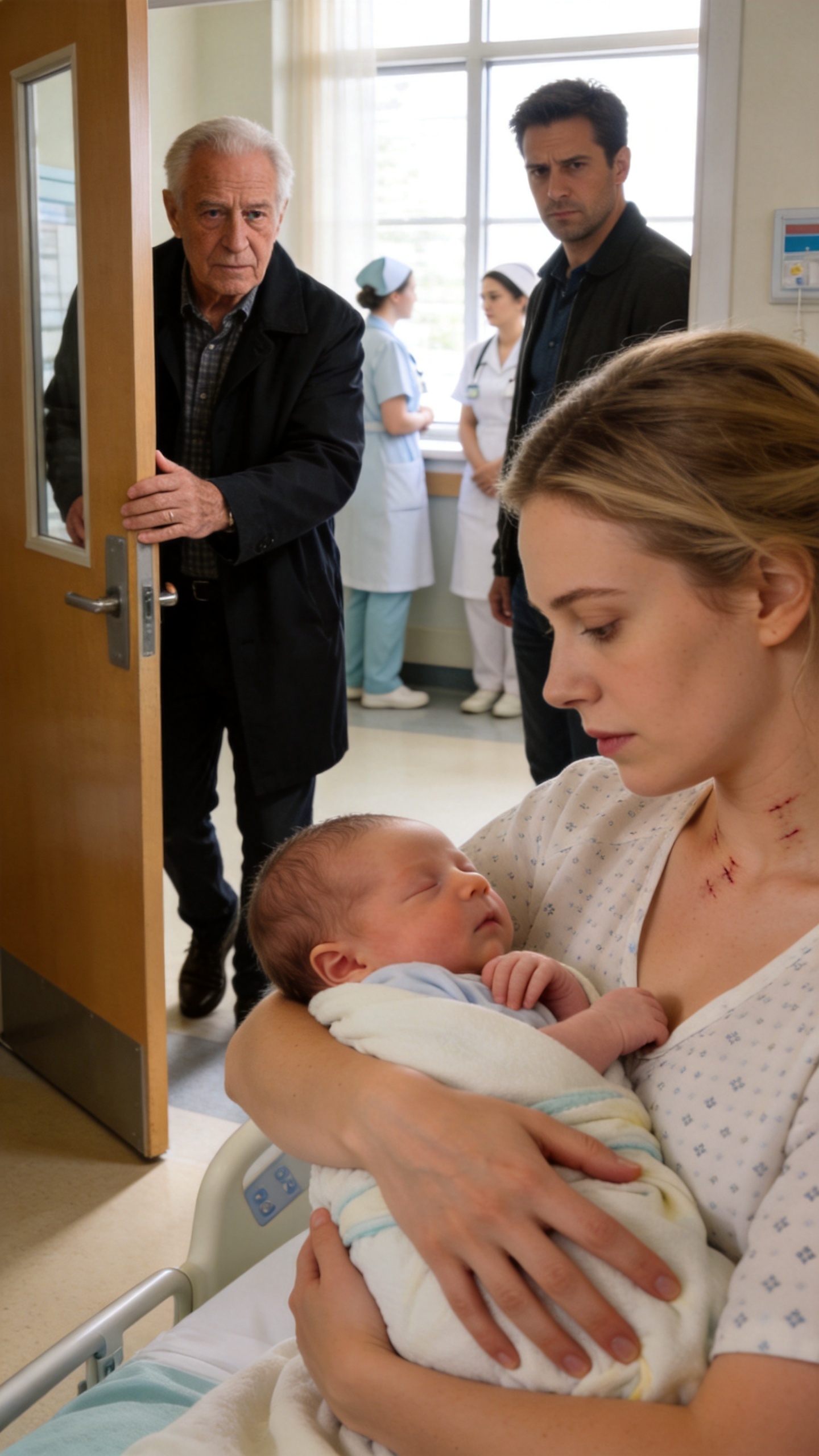
Then I saw Hannah's wrists.
Purple bruises circled both of them.
Not accidental.
Not from holding a baby.
Finger marks.
My mother saw where I was looking.
"She gets hysterical," she said quickly. "We had to keep her from hurting herself."
Hannah made a sound.
Not a word.
A protest too weak to stand.
I turned toward my mother.
"What did you do?"
Her face hardened.
"I saved you from a woman who was never fit for this family."
I Left Her With The Person Who Hated Her Most
My wife had begged me not to leave.
Not dramatically.
Not with tears or threats.
Just one quiet sentence in the hospital room while our son slept in the clear plastic bassinet.
"Caleb, I don't feel safe with your mother."
I should have listened.
Instead, I said, "She means well."
Three words.
Cowardly words.
Convenient words.
Words husbands use when they want peace more than truth.
My mother, Meredith Vale, had disliked Hannah from the beginning.
Hannah was a high school art teacher from a family that ate dinner in the kitchen and fixed things before replacing them. My mother believed our last name required women who knew which fork to use at charity luncheons and which insults to swallow with a smile.
At our rehearsal dinner, she called Hannah "refreshingly ordinary."
When Hannah got pregnant, she told me not to let "the baby turn into leverage."
When we bought our house, she urged me to put it only in my name.
"Love is sweet," she said. "Legal clarity is smarter."
Hannah heard enough to understand the threat.
I heard enough to change the subject.
That was my failure.
Then our son, Mason, arrived three weeks early.
Hannah labored for nineteen hours.
She tore badly.
She shook from exhaustion when they placed him on her chest, and still she whispered, "Hi, baby," like the whole world had become soft in her hands.
For two days, my mother performed kindness.
Flowers.
Soup.
Pictures.
"Let me help," she said every time a nurse walked in.
On the third morning, the freight company I managed called about a warehouse shutdown in St. Louis. Flooding, inventory loss, employees stranded, insurance deadlines.
I told my boss no.
My mother put a hand on my shoulder.
"Go," she said. "Hannah and the baby will be with me."
Hannah looked at me from the hospital bed.
Her eyes said stay.
My mouth said, "I'll be back in two days."
It took four.
Every time I called, my mother answered.
Hannah was sleeping.
Mason was fed.
Everything was fine.
When Hannah finally got the phone, her voice was barely there.
"Come home," she whispered.
Then the line went dead.
I drove through the night.
I arrived with diapers, a green blanket, and pastries from the bakery Hannah loved.
The front door was unlocked.
The living room television blared.
Meredith and Jill were asleep on the couch with wine glasses on the coffee table.
Dirty bottles sat in the sink.
The house felt wrong before I reached the bedroom.
Then I opened the door and saw the truth I had left my wife inside.
The Doctor Saw What I Had Refused To See
I called 911 with Mason in one arm and my wife trying to stay conscious on the bed.
My mother followed me down the hallway.
"Do not embarrass this family with emergency services."
I turned on her so fast she stepped back.
"You don't get to say family right now."
Jill finally looked up from her phone.
"Mom was helping. Hannah kept refusing to cooperate."
"Cooperate with what?"
Neither of them answered.
The paramedics arrived seven minutes later.
Seven minutes can hold a lifetime when your newborn is too hot and your wife is too weak to explain what happened.
One paramedic took Mason.
Another checked Hannah's blood pressure and said a word I had only heard in safety training.
"Dehydrated."
Then another.
"Infection."
Then, quieter, while looking at her wrists:
"Possible restraint marks."
My mother said, "She scratches herself when she's upset."
The paramedic looked at me.
Not at her.
Me.
I understood the question.
I had been in the house five minutes and already everyone with eyes could see what I had avoided for years.
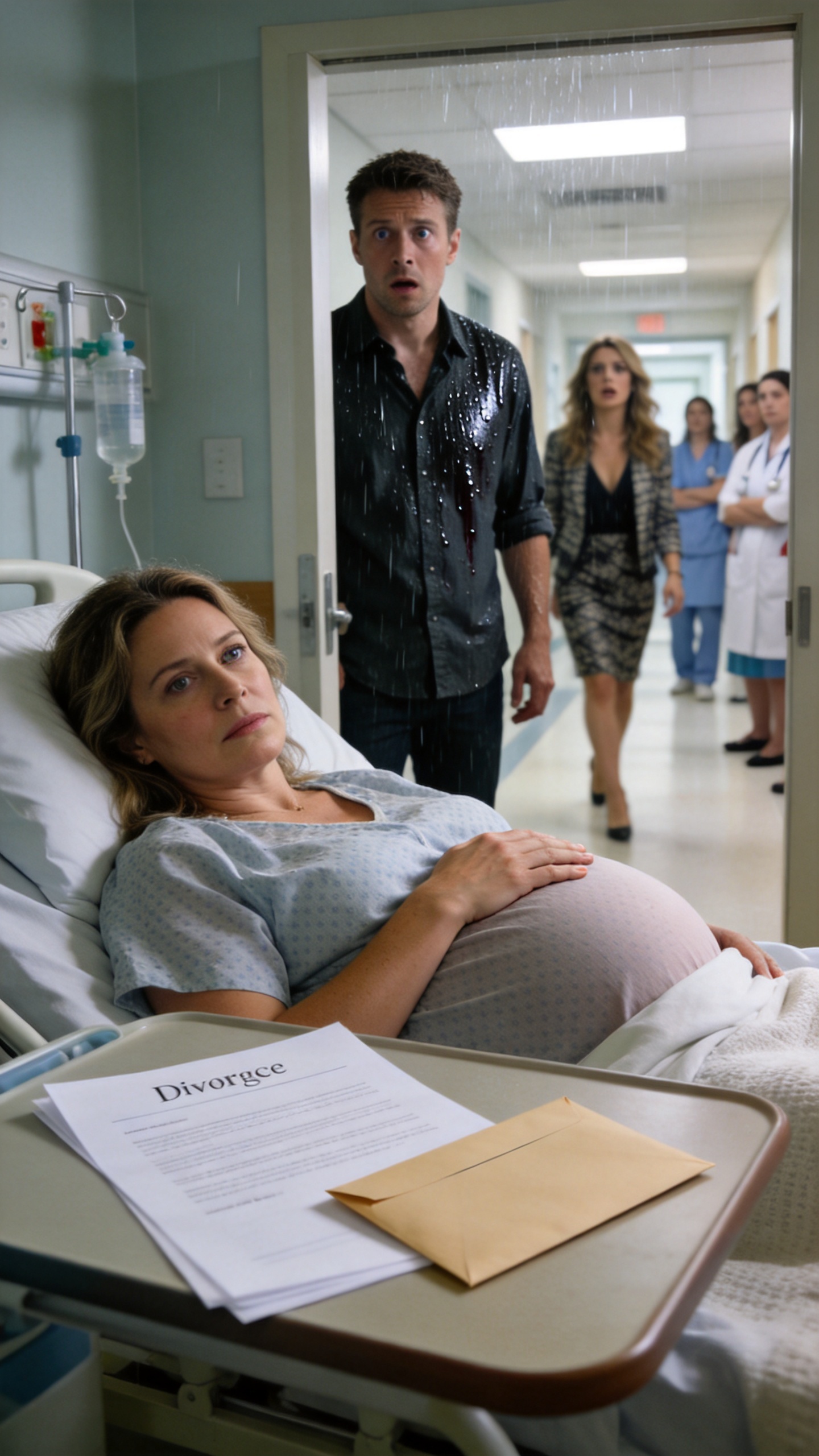
At the hospital, Dr. Alana Pierce met us in the emergency room.
She was small, brisk, and terrifyingly calm.
She checked Mason first.
Fever.
Dehydration.
Diaper rash bordering on infection.
Then Hannah.
Postpartum infection.
Severe dehydration.
Bruising on both wrists.
Bruising on one upper arm.
A split inside her lower lip.
Dr. Pierce stepped back from the bed and looked directly at me.
"Who was caring for her?"
My mother answered before I could.
"I was. And I did everything possible, but she refused food, refused help, refused to listen."
Hannah's eyes filled with tears.
"She wouldn't let me hold him," she whispered.
The room stopped.
Dr. Pierce turned.