The Night I Stopped Being Afraid Was The Night My Husband Learned The Woman He Had Trapped In His House Had Been Recording Everything
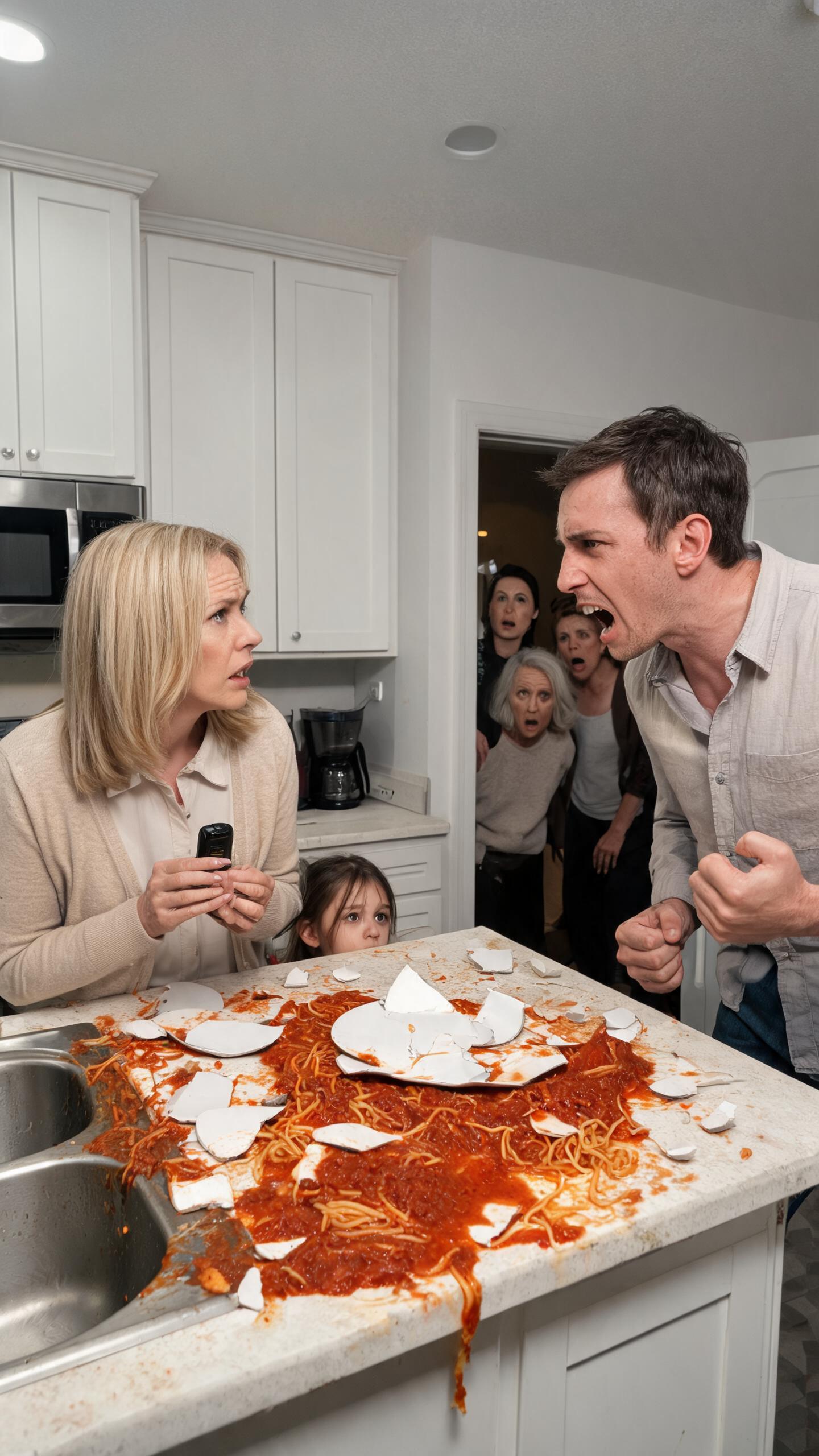
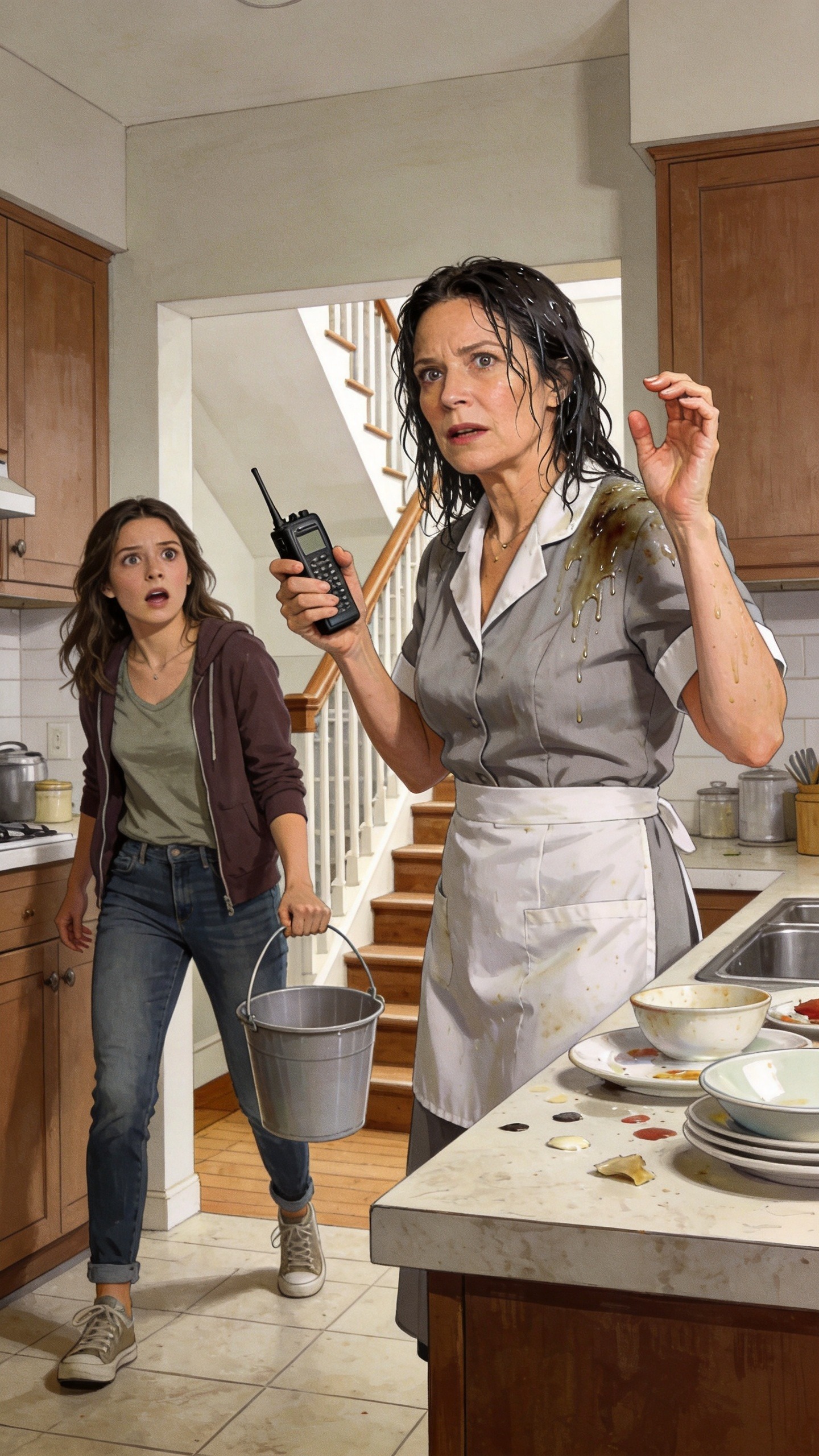
The night I stopped being afraid began with a plate breaking against the kitchen wall.
Not thrown at me.
Never directly at me.
Mateo had always been careful about that.
He liked damage with explanations.
A cracked mug could be clumsiness.
A shattered plate could be temper.
A bruise on my wrist could be me pulling away too fast when he "only wanted to talk."
I stood barefoot on the tile while white ceramic pieces slid under the cabinets and tomato sauce ran down the wall like something the house itself was trying to bleed out.
My daughter, Lily, was upstairs pretending to sleep.
She was eight years old.
She had learned to pretend because children in houses like ours become actors before they learn multiplication.
Mateo stood between me and the hallway, one hand braced on the counter, his white shirt still tucked neatly into his trousers from the foundation dinner we had left twenty minutes earlier.
"You embarrassed me tonight," he said.
My throat closed.
At the dinner, a woman from the school board had asked what work I did before I married him.
I had answered.
That was all.
"I was a trauma nurse," I said. "Before Lily was born."
The woman smiled and asked if I ever missed it.
I said yes.
Mateo's hand had tightened around my chair so hard his knuckles paled.
On the drive home, he did not speak.
Silence was worse than shouting.
Shouting told you where the storm was.
Silence made you wait for lightning.
Now he stepped closer.
"You don't miss work," he said. "You miss attention."
I looked at the sauce on the wall.
Not at his face.
Looking at his face made him angrier.
"I answered a question."
He laughed once.
"You answered like a woman who forgot who pays for this house."
The old fear rose first.
It always did.
It came from the stomach, not the mind, a cold animal instinct that told me to lower my voice, soften my face, make myself smaller, survive until morning.
But beneath it, something else moved.
Not courage.
Courage sounds too clean.
This was exhaustion sharpened into a blade.
Because earlier that afternoon, Lily had handed me a picture from school.
Three stick figures.
A mother with no mouth.
A father with very large hands.
A little girl standing outside a house with the door drawn shut.
"Why don't I have a mouth?" I had asked softly.
Lily looked at the floor.
"Because Daddy gets mad when you talk."
That was when the last tender lie inside me died.
So when Mateo lifted his hand toward the cabinet above my head and slammed it hard enough to make glasses jump, I did not flinch.
For the first time in twelve years, I did not flinch.
His eyes changed.
Men like Mateo notice fear the way bankers notice numbers.
When it is missing, they panic.
"What's wrong with you?" he asked.
I reached into the pocket of my cardigan and pressed the tiny recorder off.
Then I looked at him.
"Nothing," I said. "Not anymore."
He Had Built A House Where Silence Looked Like Marriage
When I met Mateo Alvarez, everyone said I was lucky.
He was charming in the public way that makes private cruelty hard to describe.
He remembered names.
He opened doors.
He sent flowers to nurses' stations and thanked waiters by looking them in the eye.
At the hospital fundraiser where we met, he listened to me talk about night shifts as if I were the only woman in the room.
I was twenty-nine, exhausted, and still paying off my mother's medical bills.
Mateo was thirty-eight, polished, and already running a chain of rehabilitation clinics with his family name on the buildings.
He called my work heroic.
Then, slowly, he began teaching me that heroism was not attractive at home.
"You don't need double shifts now."
"My wife shouldn't be coming home smelling like hospital disinfectant."
"Lily needs a mother who is present."
Each sentence sounded almost loving if I said it to myself in the right voice.
By the time I realized he had not rescued me from exhaustion but relocated it, I had quit nursing, moved into his house, and signed the joint accounts he said would make life simpler.
Nothing was simple after that.
The grocery card had limits.
The car had a tracker "for safety."
My phone password became a point of marriage trust, while his phone stayed face down, locked, and out of reach.
When I cried, he called it instability.
When I objected, he called it disrespect.
When I stopped objecting, he called it peace.
His mother, Isabel, adored the version of me he presented: quiet Elena, grateful Elena, Elena who hosted dinners and never corrected anyone when they praised Mateo for funding a women's shelter his accountants had created for tax reasons.
"You are fortunate," Isabel told me once, touching the diamond cross at her throat. "A man like my son gives structure to a woman with too much feeling."
I smiled because Mateo was watching.
That became my life.
Smile when watched.
Explain nothing.
Hide receipts.
Hide cash.
Hide Lily's fear because if I admitted my daughter was afraid, I would have to admit I had taught her to be.
The first time I tried to leave, Lily was four.
I packed two duffel bags while Mateo was at a conference in Dallas.
By midnight, my debit card was frozen.
By morning, Isabel was at the door with Mateo's attorney.
Not police.
Not shouting.
Paperwork.
The attorney explained that Mateo had documented "episodes" of anxiety and "erratic parenting concerns." If I left with Lily without a custody agreement, he would file for emergency return.
I knew enough from the hospital to understand how official language can make a woman sound unreliable before she ever opens her mouth.
I unpacked.
Mateo came home that night with lilies.
"Don't ever scare me like that again," he whispered.
The flowers smelled sweet for three days.
Then they rotted in the vase.
The Proof Was Not One Bruise But A Pattern
The recorder was not my idea.
It was Mara's.
Mara worked the front desk at Lily's pediatrician's office and had once been a patient of mine years earlier after a car accident.
She recognized me before I recognized myself.
"You look tired," she said one afternoon while Lily colored in the waiting room.
People said that constantly.
This time, I nearly cried.
Mara did not ask questions where others could hear.
She wrote a phone number on the back of an appointment card and slid it beneath Lily's immunization form.
"For sleep support," she said.
The number belonged to a legal clinic.
Not a divorce shark.
Not someone promising dramatic escape.
A patient woman named Evelyn who spoke in practical steps.
"Do not announce anything," she said. "Do not threaten him with what you have. Build a record."
So I built one.
Quietly.
Dates.
Screenshots.
Bank notices.
Photos of broken things.
A copy of the tracker invoice from the car.
Voice recordings when I could.
I learned that Mateo did not need to hit me to control me.
That was the first sentence Evelyn made me write in my own hand.
Control is not always a fist.
Sometimes it is a frozen card.
A lawyer at the door.
A doctor friend willing to describe you as emotional.
A school donation large enough to make teachers hesitate before questioning the father who signs checks.
The hardest evidence came from Lily.
I did not want to use my child as proof.
Evelyn understood.
"We are not using her," she said. "We are protecting what she has already been forced to witness."
Lily's teacher, Mrs. Bell, had saved three drawings.
The mother with no mouth.
The father with large hands.
A third picture of a house with windows colored black.
On the back, Lily had written: When Dad is mad, Mommy becomes quiet.