I Bought My Parents A $425,000 Seaside Mansion For Their 50th Anniversary, But When I Arrived My Mother Was Crying And My Father Was Shaking
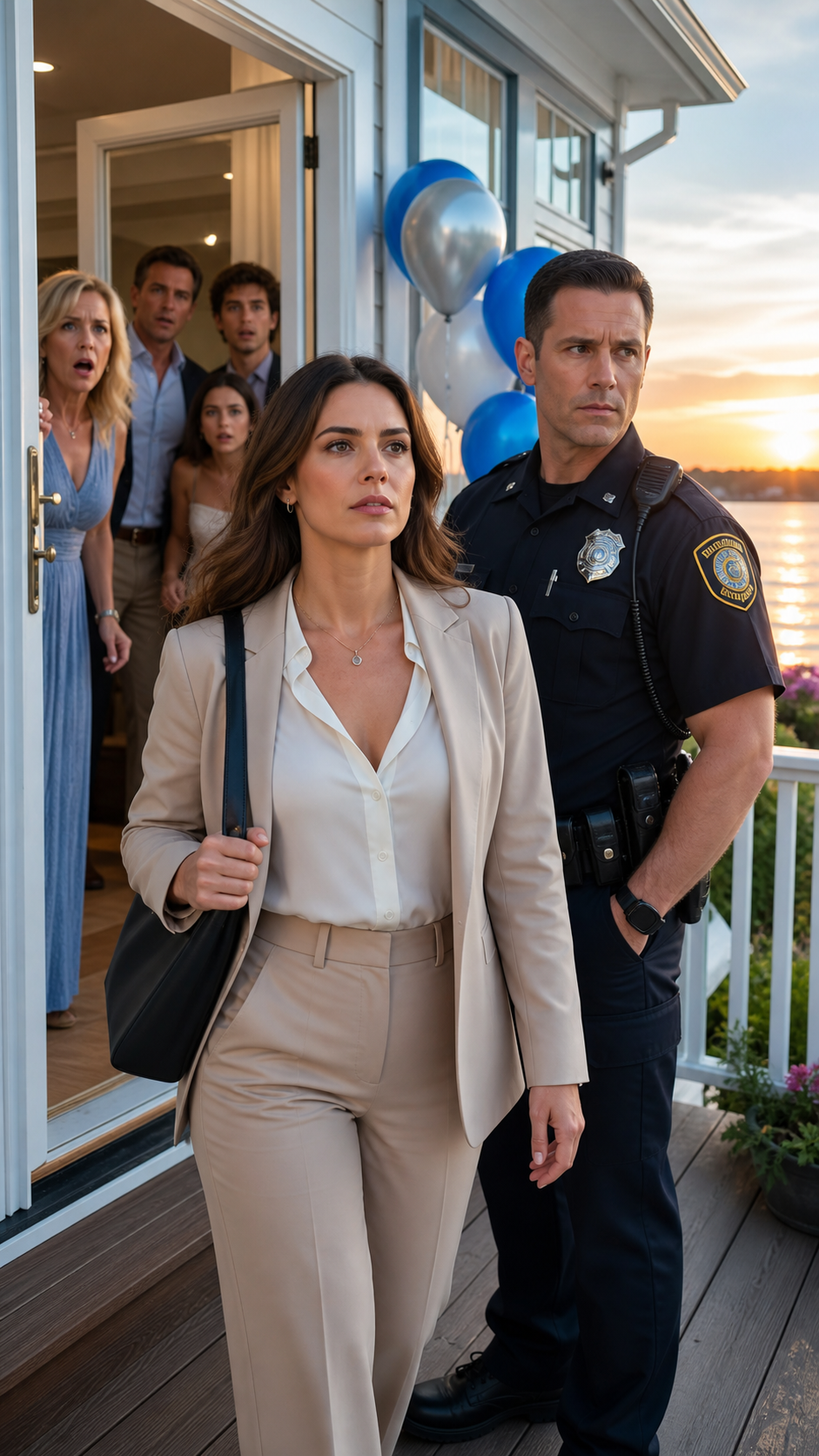
"Mr. Dalton, Mrs. Dalton, you need to gather your essential belongings and leave these premises today," she stated. "Mr. Sinclair has confirmed that you are no longer welcome here."
Gregory's face darkened in anger.
"You are really kicking out a family with two children?" he asked.
Officer Miller did not blink.
"You are being directed to leave a property where you are no longer welcome after serious allegations of threats and intimidation were reported," she replied.
Fiona's voice lowered into a bitter hiss.
"Lucas, you cannot really be doing this to us," she said.
I looked at her for a long, silent moment.
This was my older sister, the girl who had once taught me to ride a bike before laughing when I inevitably fell.
She was the woman who sent my mother flowers every Mother's Day, only to borrow money from her two weeks later.
She was the daughter who understood exactly how deeply our parents loved her and had used that love like a spare key to their lives.
"I am not doing anything to you," I said. "You did all of this to yourselves."
Tears filled her eyes, but whether they were real or rehearsed, I no longer cared.
They packed their bags while the officers watched every move.
That was when we saw just how far their hostile takeover had actually gone.
Gregory had stuffed my father's expensive fishing rods into trash bags in the garage like garbage.
Fiona had placed my mother's hand-stitched quilts into plastic bins marked for donation.
In the master bedroom, my parents' clothing had been shoved into laundry baskets while Fiona's designer dresses hung in the closet.
Gregory's shaving kit sat beside my father's sink as if he were never leaving.
Their sons had dragged a heavy gaming chair across the hardwood floor in the study, leaving deep, permanent scratches behind.
My mother stood in the hallway with one hand pressed to her chest.
"I did not know they moved your military shadow box," she whispered to my father.
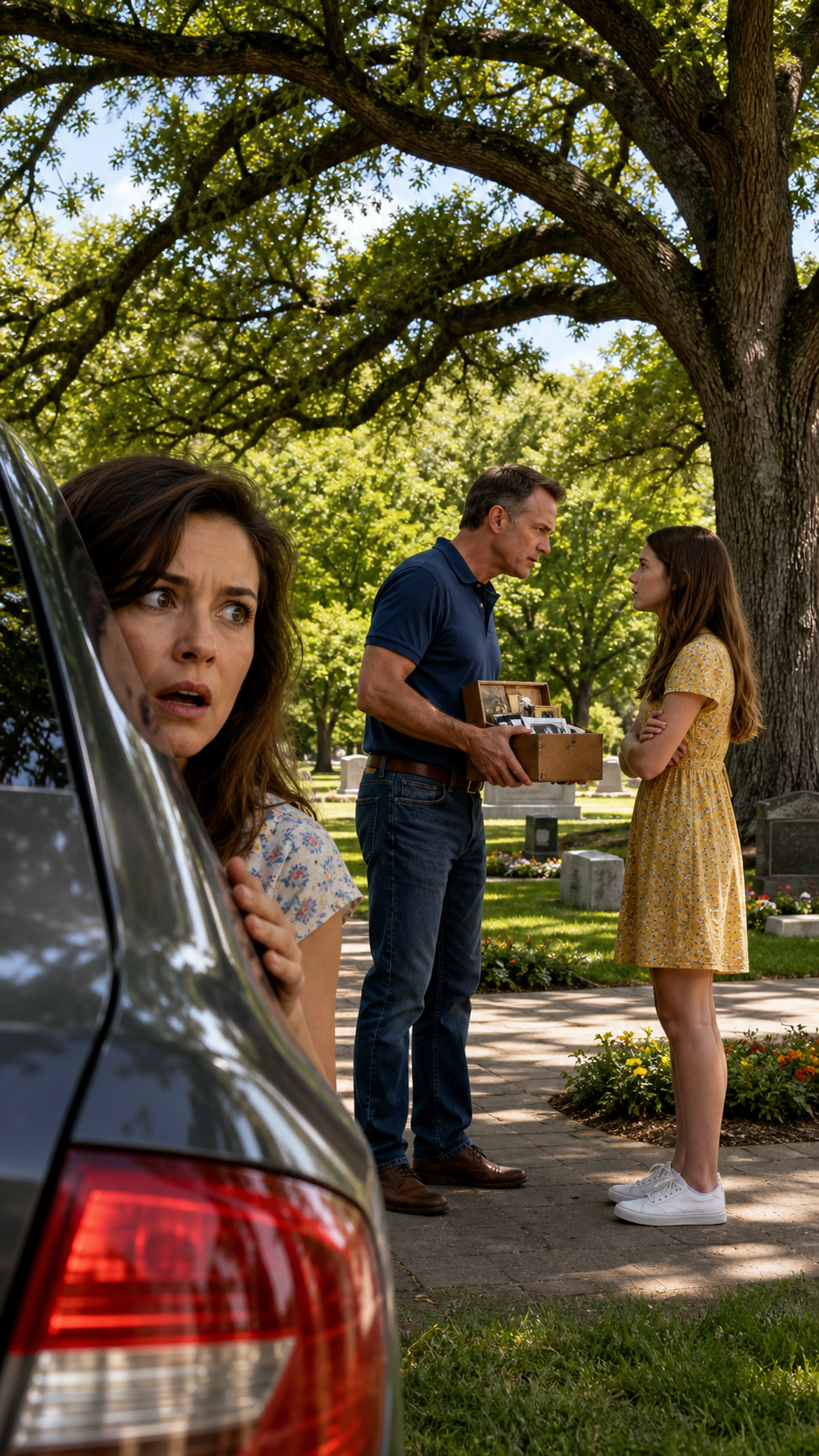
My father stepped into the study and stopped cold.
The military box sat open on the desk, and inside were his medals, old letters, photographs from his time in the service, and the folded flag from his brother's funeral.
Someone had carelessly dropped a pile of printer paper on top of the sacred items.
My father lifted the flag with both hands, and something in his face changed permanently.
For years, my father had been a gentle man, but very few people ever understood the difference between being gentle and being weak.
He had built decks in the summer heat, fixed engines in the freezing winter, and never once lifted a hand against anyone in our family.
He had always believed that peace was something a man protected by swallowing his pride, but standing there with that flag in his hands, he finally stopped swallowing.
He turned toward Gregory.
"You will never speak to my wife again," my father said in a voice that shook the room.
Gregory gave a bitter, mocking smile.
"Samuel, let's be reasonable," he started.
"My name is Mr. Sinclair to you," my father corrected him.
Fiona started crying harder, begging for mercy.
"Father, please stop this," she pleaded.
He looked at her next, his gaze harder than I had ever seen it.
"And you," he said, his voice clear and resonant, "will not call your mother for money, you will not send your sons to ask for expensive gifts, and you will not tell people we abandoned you, because you brought all of this into our home yourself."
Fiona looked completely stunned, as if the concept of consequences were a language she had never been forced to learn.
By the time the sun set over the ocean, Gregory's truck was finally loaded.
The boys carried out their bags without meeting anyone's eyes.
Fiona paused near the front steps, gripping her purse.
"Where are we supposed to go?" she asked, hoping for a handout.
"You are going to the house you currently live in," I said.
Gregory muttered, "We are actually behind on the payments."
That information caught my attention, but it did not earn my sympathy.
"How far behind are you?" I asked.
Fiona glared at Gregory, who remained silent.
Later, I learned the cold truth.
Their house in New Jersey was nearing foreclosure because Gregory had lost his job months earlier after being caught falsifying expense reports at his firm. ← Prev Part →
I bought my parents a $425,000 seaside mansion for their 50th anniversary, but when I arrived, my mother was crying and my father was shaking.
I bought my parents a $425,000 seaside mansion for their 50th anniversary, but when I arrived, my mother was crying and my father was shaking.
I bought my parents a $425,000 seaside mansion for their 50th anniversary, but when I arrived, my mother was crying and my father was shaking.
Fiona's online business was mostly staged photos, unpaid bills, and mounting credit card debt.
They had come to Oregon not for a visit, but for a financial rescue they intended to steal instead of ask for.
Gregory had convinced Fiona that if they occupied the mansion long enough, guilt and confusion would finish the job, and my parents would move into the guest cottage.
Then Fiona would pressure me to make things official, because she had children, she had needs, and she had always believed her needs meant she owned whatever she wanted.
But the plan collapsed because their greed made Gregory impatient.
He raised his voice too early, he grabbed my mother too hard, and he made the fatal mistake of confusing my father's kindness for a total surrender.
When the truck finally drove away, Fiona looked back once from the passenger seat, but I did not wave goodbye.
After they left, the house felt enormous.
It was not yet peaceful, but it was finally emptied of the danger they had brought with them.
My mother stood in the living room, staring at the damage.
There were crumbs ground into the expensive rug, rings on the coffee table, a broken vase by the window, and her anniversary photograph still lying face-down on the mantel.
"I am so sorry for all of this," she said.
I turned to her. "What are you apologizing for?"
The Seaside House Answered To One Name
"For letting them into our home in the first place," she whispered.
My father lowered himself onto the couch and looked completely exhausted, appearing older than he had that very morning.
"They are our daughter and her family," he said. "We simply thought we could help them without being swallowed up by their problems."
I sat across from them.
"You can love Fiona, but she cannot have keys to your life," I said.
My mother cried again, but it was a soft, cleansing release.
The following week was not dramatic, but it was incredibly practical.
That was what real protection looked like after the shouting finally stopped.
I had the locks replaced, the security code changed, and high-definition cameras installed at the driveway and the porch.
My attorney updated the residency agreement, making it brutally clear that my parents had lifetime use of the house and that no guest could stay longer than ten days without my written approval.
My mother resisted that last part initially.
"It sounds so cold," she said.
"No," my father said from the kitchen table. "It sounds absolutely necessary."
That was the first time he had taken my side so firmly before she could try to soften the moment.
I hired a local cleaning crew and a handyman to repair the study floor, the cracked window, and the porch railing Gregory had damaged.
Mrs. Evans from next door brought over fresh blueberry muffins and pretended she was not checking on them every single morning.
The neighbors changed as well, and people who had once only waved politely now stopped to talk.
Mr. Alvarez from two houses down offered to walk the property line with my father to ensure everything was secure.
A retired attorney across the street gave my mother the number for a local elder advocacy group.
Slowly, the house became what it was always meant to be: not a trophy and not a battleground, but a sanctuary.
Fiona called nine times in three days, but my mother did not pick up the phone.
On the fourth day, Fiona sent a long, manipulative text message.
She claimed Gregory was under intense pressure, that the boys were traumatized by the police intervention, and that I had embarrassed her in front of the neighbors.
She said my father had exaggerated the situation and that my mother knew how emotional he could be.
Then she wrote the final line: You owe me at least a conversation.
My mother read the message at the kitchen table, her hands trembling, but she did not cry this time.
My father placed his palm over hers.
"You do not owe her the chance to hurt you twice," he said.
My mother blocked Fiona's phone number herself.
For the first time in my life, I watched my mother choose peace without apologizing for it.
Three months later, my parents hosted the anniversary party they should have had from the start.
It was nothing enormous, just the neighbors, a few old friends, and a small jazz trio playing near the porch.
My mother wore a beautiful pale blue dress, and my father wore a linen jacket and the classic watch my mother had given him when he retired.
The ocean breeze kept lifting her silver hair, and my father kept smoothing it down as if they were newlyweds again.
During dinner, my father stood with a glass of sparkling cider in his hand.
"I had a speech prepared," he said, gesturing to the blank piece of paper in his hand while everyone laughed.
He looked at my mother, then at me.
"Fifty years ago, Helen married a man with no money, one decent suit, and a used car that stalled at every traffic light, and she never once made me feel poor," he began.
My mother covered her mouth with her hand, fighting back tears.
My father continued, "We raised two children, we made mistakes, we forgave too quickly, and we often confused keeping the peace with actually having peace."
His eyes found mine across the table.
"Our son gave us this house, but more than that, he reminded us that a gift is not something people get to steal just because they want it."
The porch fell quiet except for the rhythmic sound of the ocean waves hitting the shore.
My father lifted his glass high.
"To Helen," he said. "And to doors that finally lock."
The laughter came first, then the applause from the guests.
My mother cried again, but those tears were different, as they seemed to lift a heavy burden from her shoulders.
Later that night, after everyone had gone, I found my father alone on the porch.
The moon shone bright over the water, and behind us, the mansion glowed warmly through the clean windows.
There was no shouting, no threats, and no one standing in the doorway claiming something that was not theirs.
My father handed me a mug of coffee.
"You know," he said, looking at the stars, "when Gregory told me to leave that day, I almost did."
I looked at him in surprise.
He kept watching the dark ocean.
"I did not believe him, but part of me thought maybe old people are just supposed to step aside and stop being trouble."
"You were never the trouble," I said.
"I know that now," he replied.
We stood together in silence for a long time.
Then he said, "I am incredibly proud of you, Lucas."
I smiled faintly. "For buying a house?"
"No," he said. "I am proud of you for walking into that room and not becoming like Gregory."
That statement stayed with me for a long time.
The truth was, I had wanted to destroy him, not physically, but I wanted to bury him under lawsuits, expose every lie, and make Fiona feel small for once in her life.
Some of that happened anyway, as their foreclosure went through, Gregory's reputation did not recover, and they moved into a small rental far away.
The boys had to change schools, and life did not protect them from the consequences of their parents' greed.
But I did not chase them, I simply protected my parents and stopped there.
A year later, Fiona sent a letter written in her careful handwriting.
She admitted some things, blamed Gregory less than I expected, and took more responsibility for herself than I thought she was capable of.
She wrote that she had mistaken our parents' love for something she could always spend like currency, and she asked if there might someday be a way to speak again.
My mother read the letter twice.
Then she folded it and placed it in a drawer.
"Not yet," she said simply.
My father nodded in agreement.
It was not a yes, and it was not a never.
It was simply not yet.
The seaside house remained theirs, and every morning, my mother opened the blue shutters.
Every afternoon, my father walked down to the beach with his coffee, even during the cold winter when the wind cut sharply across the dunes.
They learned the rhythm of the tides, the gulls, the foghorns, and the absolute beauty of the quiet.
On their fifty-first anniversary, I visited them again.
This time, when I pulled into the driveway, there were no unfamiliar cars, no boxes on the porch, no broken glass, and no shouting from inside.
My mother opened the door before I could even knock.
My father stood behind her, smiling with genuine joy.
"Welcome home," my mother said.
And for once, no one in that house was afraid of who might walk in next.
THE END. ← Prev Part