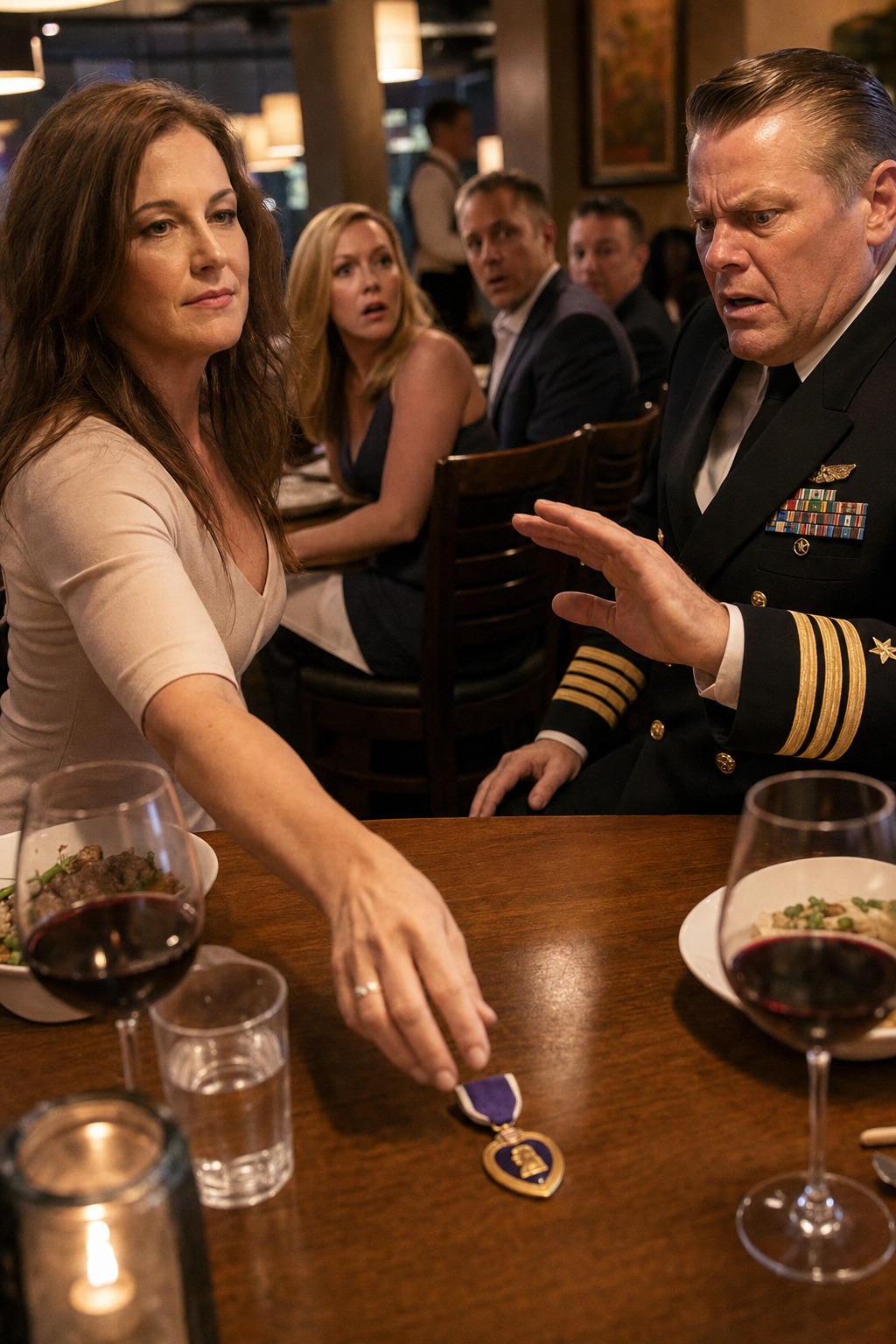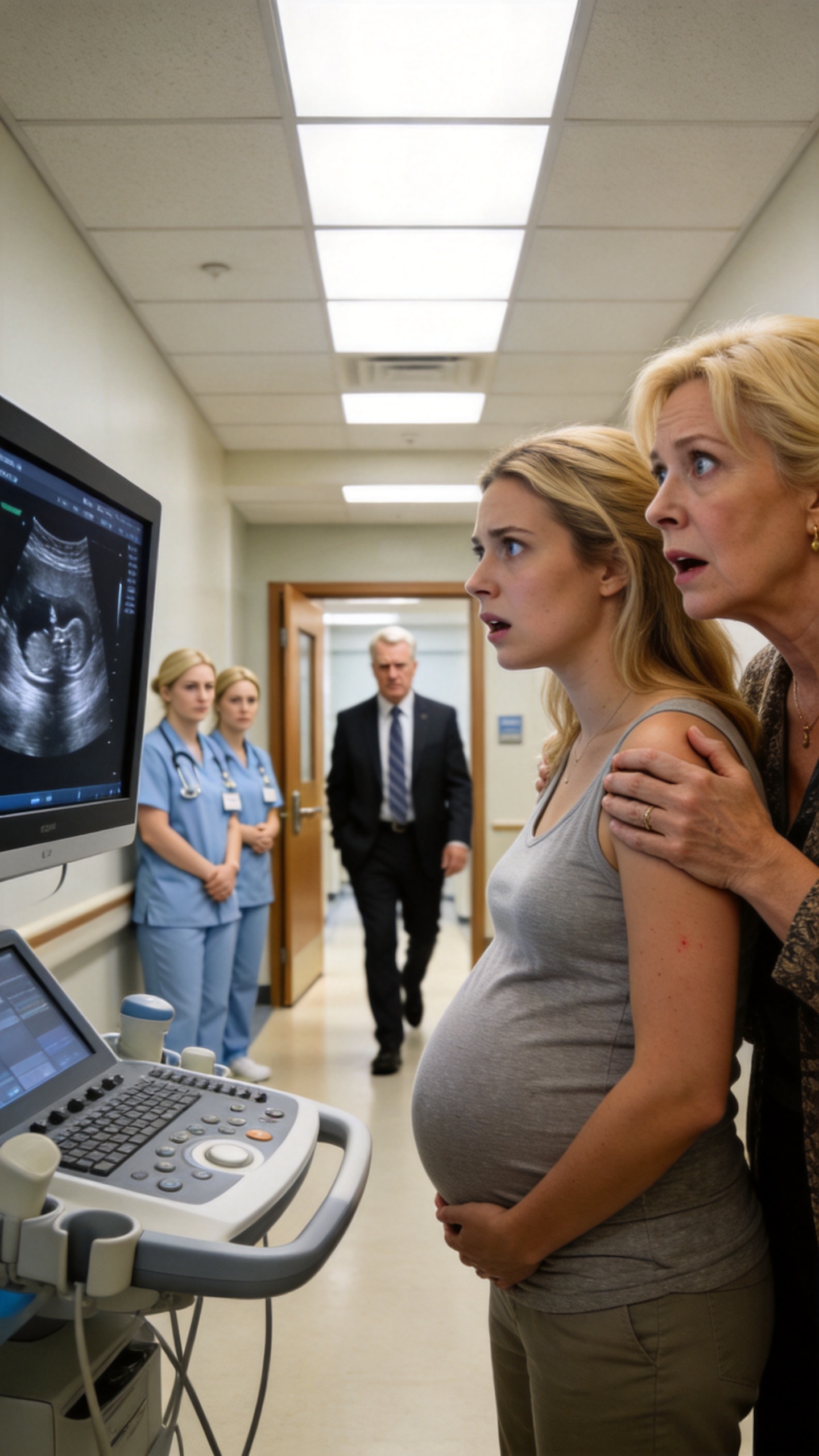
One year after the divorce, I ran into my ex-husband at the hospital, and when he smirked about having a one-year-old son with my former best friend, I smiled and said, "Really?" — five minutes before a man walked in and she dropped the baby bottle.
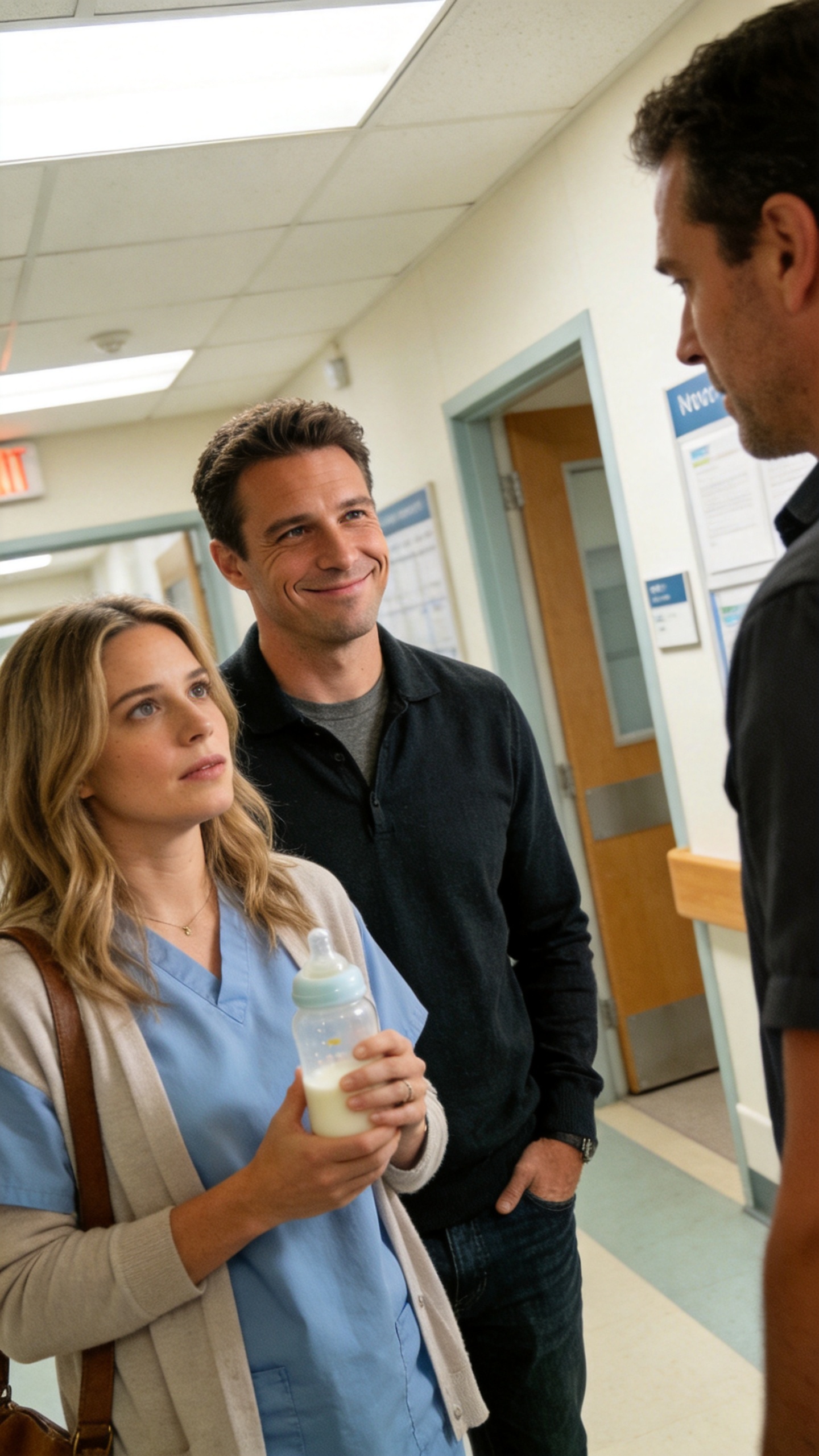
Five minutes before my ex-husband's life started falling apart, he was standing in the pediatric wing of St. Andrews Memorial Hospital in Indianapolis, Indiana, holding a monogrammed diaper bag and telling anyone within earshot that leaving me had been the smartest decision he had ever made.
I remember the exact time because it was 10:17 a.
m. I know because I looked at the dark wood wall clock above the nurse's station at the same moment I realized I was staring at Connor Fleming for the first time in nearly a year.
Some people say time heals everything, but I have never been completely sure about that theory. What I do know is that twelve months after a messy divorce, you simply stop expecting certain surprises.
You stop expecting to see your ex-husband in the middle of a busy Tuesday morning while you are carrying a tablet full of patient charts and trying to make it to an urgent staff meeting.
This was especially true when he was standing beside your former best friend, and it was even more jarring when she was cradling a newborn baby.
I froze for half a second in the middle of the hallway. My reaction was not because I still loved him, as that part of my heart had been gone for a long time.
However, some wounds leave deep scars, and those physical and emotional scars can ache when the weather changes. That morning, Indianapolis was cold and incredibly gray.
Heavy rain tapped against the hospital windows and streaked down the glass in uneven lines, which might explain the sudden chill I felt. Or maybe seeing the two people who helped destroy your marriage standing together in a public hospital hallway just never feels normal.
"Dr. Sinclair?"
one of the floor nurses glanced at me from behind the desk.
"Are you okay?"
"Yeah," I replied, shifting the tablet under my arm.
"I am just a bit distracted this morning."
The nurse nodded sympathetically and hurried away, immediately pulled back into the relentless rhythm of ringing phones, patient questions, and rolling metal carts. I thought I could walk past them without making eye contact, and I genuinely believed I had the strength to do it.
Unfortunately, Connor turned his head and saw me. His face lit up immediately, not with a sense of embarrassment or regret, but with pure amusement.
It was the same smug expression I had spent years looking at across dinner tables, in living rooms, and in rainy parking lots after arguments he insisted were entirely my fault.
"Well," he called out loudly, causing a few people to turn around.
"Look who it is."
Hospital waiting rooms have excellent acoustics when you least want them to, and his booming voice echoed off the linoleum. Melinda Travis looked up from the expensive stroller, and her smile was much smaller than Connor's.
She looked more cautious, proving that at least one of them had enough sense to be uncomfortable with the encounter. I considered continuing toward the elevator, but instead, I stopped.
After twenty years in medicine, I had learned that running from uncomfortable situations rarely makes them disappear.
"Hello, Connor," I said, keeping my voice level.
He grinned widely and stepped closer.
"Kirsten, it has been a while."
The baby in the stroller reached for a plush giraffe clipped to the handlebar, showing a tuft of blond hair and bright blue eyes. He looked about a year old, maybe a little bit younger.
Melinda adjusted his blue blanket with a careful little movement that felt strangely rehearsed, as if she desperately wanted everyone around us to notice how happy and picture-perfect her little family looked. For a long moment, nobody spoke, and the tension grew heavy.
Then Connor broke the silence by asking, "How have you been?"
The question sounded friendly enough on the surface, but his sharp tone certainly wasn't.
"I've been fine, Connor," I replied calmly.
"Still working too much, I assume?"
he asked with a mocking tilt of his head. I almost laughed out loud at that familiar accusation.
For years, every single disagreement in our marriage somehow circled back to my demanding career.
He complained about too many hospital shifts, too many medical conferences, too many critical patients, and too many late nights followed by early mornings. Never mind the fact that Connor worked sixty-hour weeks himself at his firm.
Never mind his own missed dinners, the business calls he took during our anniversaries, or the long weekends he spent locked away in his home office.
The rules had always been entirely different for me.
"I enjoy my work, and it keeps me fulfilled," I said.
"Oh, I know it does," he countered with a smirk.
A young couple sitting nearby exchanged glances, clearly sensing what the conversation really was. Most people can read the room in situations like this.
There is a particular sound to public humiliation before it fully arrives, marked by a tightening of voices, a pause that stretches too long, and a smile that does not belong on a human face. Connor took a step closer to me.
"I guess some things never change with you."
Melinda shifted uncomfortably on her feet.
"Connor, maybe we should go."
"What?"
He shrugged carelessly, looking around the room.
"We are all adults here, Melinda."
I knew that exact look on his face because he was actively performing for an audience. Some people naturally avoid public attention, but Connor always needed to be the center of it.
Then he delivered the line he had probably been waiting a year to say.
"Leaving you was truly the best decision I ever made."
The waiting room became completely quiet, and even the television mounted in the corner seemed less noticeable. Melinda stared intently at the floor, refusing to look at either of us.
I kept my expression entirely neutral, not because I was not angry, but because physicians learn emotional control early in their training.
You cannot panic during medical emergencies, you cannot lose your temper when people are counting on you, and you cannot let your face become the loudest thing in the room.
After enough years, that intense discipline becomes a natural habit. Connor was not finished speaking yet.
"A woman who can't have children shouldn't be surprised when a man finally builds a real family."
There it was, the old blade he loved twisting into my heart. For almost seven years, we had tried to have a family of our own.
It had been seven years of endless appointments, painful tests, expensive specialists, deep disappointment, crying in hospital parking lots, and driving home in absolute silence while rain or bright Indiana sunlight passed over the windshield.
At least, that was how I remembered it. Back then, I truly believed we were suffering together, but I did not know how horribly wrong I was.
The Room Learned What Silence Had Been Hiding
Melinda squeezed the plastic baby bottle in her hand.
"Connor, please stop this."
But he was enjoying himself far too much to stop now. He nodded toward the expensive stroller.
"I am incredibly lucky because I have a healthy one-year-old son with your former best friend."
The cruel words hung heavily in the air, clearly designed to cause maximum damage.
The funny thing is, I fully expected to feel devastated by them. Instead, I just felt deeply tired.
Maybe it was because I had already done my grieving during the divorce, or maybe because betrayal gets less powerful after enough time passes. Or perhaps it was because I knew something about his life that he did not.
I did not know everything yet, but I knew enough to remain calm. I looked down at the little boy in the stroller, knowing that none of this mess was his fault.
Then I looked up at Melinda, but she still would not meet my eyes. That surprised me because people who are proud of their choices usually do not spend their time staring at the linoleum floor.
Finally, I looked directly at Connor. He was waiting for a dramatic reaction like tears, anger, or a sharp word.
He wanted anything he could carry away as proof that he had still managed to hurt me. Instead, I just smiled a small, calm smile.
"Really?"
His confidence flickered for only a fraction of a second, but I definitely saw it.
It was the same way physicians notice subtle symptoms that others completely miss.
"What exactly does that mean?"
he asked, his smile faltering.
"Nothing at all," I shrugged.
"It is just interesting."
Now he looked visibly irritated because he was not controlling the conversation anymore. Right then, my phone buzzed inside my lab coat pocket, indicating a text message.
I glanced down and the sender's name immediately caught my attention. It was Kenneth Boyd, and I had not expected to hear from him that morning.
The message contained only six words: I'm downstairs. We need to talk.
My pulse quickened from surprise because Kenneth was not the kind of man who sent urgent text messages without an incredibly serious reason.
I slipped the phone back into my pocket. Connor was still staring at me, trying desperately to figure out why I was not completely upset.
For the first time all morning, I almost felt sorry for him, but the feeling passed quickly. Secrets in the Lobby The last thing I expected that Tuesday morning was an urgent text from Kenneth Boyd.
I had not spoken to him in almost three months, and his sudden presence at the hospital was startling. As I stepped away from the pediatric waiting area, I could still feel Connor's angry eyes burning into my back.
He hated unfinished conversations because he always needed the final word to feel like he had won.
I pressed the silver elevator button and waited for the doors to open. Just before they closed again, I heard Connor call after me across the hallway.
"Still running away from your problems, Kirsten?"
he shouted. I looked back at him through the narrowing gap.
"No, Connor, I am finally walking in the right direction."
The doors slid shut, and for once, I left him without a chance to answer. The elevator carried me smoothly down to the main lobby.
Outside, the rain continued to streak across the large glass windows facing the rain-slicked streets of Indianapolis. Patients and visitors hurried through the massive parking lot, holding large umbrellas against the miserable March weather.
Somewhere near the main entrance, a loud espresso machine hissed at the coffee kiosk. Kenneth was sitting at a small table near the hospital coffee stand, looking incredibly serious.
Even from a distance, his posture concerned me because he was not a dramatic man by nature. At fifty-eight, he had built a stellar reputation as one of the most respected corporate and family attorneys in the city.
People hired Kenneth when things became incredibly complicated. When he noticed me approaching, he stood up quickly.
"Kirsten, thank you for coming down so fast."
"Kenneth, your text sounded very urgent," I said as we shook hands.
He glanced around the crowded lobby before speaking.
"Can we find somewhere more private to sit?"
That request is never a good sign from a lawyer. We found a quiet corner table away from the main foot traffic, where the smell of fresh coffee mixed with the faint scent of medical disinfectant.
The familiar rhythm of my professional life surrounded us, complete with phones ringing and nurses calling out names.
Kenneth opened a thick manila folder on the table.
"I found something during the post-divorce audit."
My stomach tightened immediately.
"What kind of something, Kenneth?"
"The kind of information that changes everything about your settlement," he said, sliding several documents across the table.
"Take a look at these financial disclosures."
I scanned the first page, then the second, and my eyebrows lifted in shock by the third page.
"These numbers aren't right at all."
"No, they aren't," Kenneth replied grimly.
"Keep reading those bank records."
I stared at the investment statements and property disclosures, which were filled with columns of numbers.
They told a completely different story than the one Connor had presented under oath during our divorce proceedings.
"How much did he hide?"
I finally asked, looking up. Kenneth sighed deeply.
"Based on what my forensic accountants have found so far, it is close to seven hundred thousand dollars."
I blinked in sheer disbelief.
"Seven hundred thousand?"
"Yes, close to it," Kenneth confirmed.
It was not seven thousand or seventy thousand, but seven hundred thousand dollars in marital assets that Connor had hidden away. My first reaction was actually disbelief rather than anger.
Connor was not a criminal mastermind by any stretch.
He routinely forgot his computer passwords, lost important receipts, and once locked himself out of our own house three times in a single month. Yet, he had somehow managed to execute this massive deception.
"How did he even pull this off?"
I asked. Kenneth smiled slightly.
"That is the funny part of the investigation."
"I don't see what is funny about this," I murmured.
"Do you know how most financial investigations like this start?"
Kenneth asked.
"Someone gets incredibly greedy."
"That sounds exactly like Connor," I admitted.
Kenneth continued explaining the situation.
"Connor applied for financing on a major commercial property six months ago because he wanted to invest in a new medical office building downtown."
I almost laughed at the sheer absurdity of it. Connor absolutely loved appearances.
Successful men owned investment properties, so he decided he needed one too, regardless of whether he understood the financial details. He understood how it would look at dinner parties, and that was always enough for him.
The problem with massive lies is that they eventually collide with official paperwork, and paperwork never forgets the truth.
"When he applied for that commercial loan," Kenneth explained, "he had to disclose personal assets he never reported during your divorce."
Now I understood completely. The exact same documents that helped him qualify for the financing had accidentally exposed his perjury.
It was a massive, incredibly expensive mistake. For the first time that morning, a genuine smile crept onto my face, not because I felt victorious, but because the entire situation was beautifully absurd.
After all his meticulous planning, Connor had exposed himself just to buy a building. Kenneth chuckled quietly at my reaction.
"That reaction is much healthier than the one I had."
"What was your reaction, Kenneth?"
I asked.
"I spent twenty minutes yelling at my office printer in disbelief," he said with a chuckle.
That actually made me laugh, and it was the first genuine laugh I had experienced in days. A nearby visitor glanced over at us curiously, so I lowered my voice.
"What happens next in this process?"
I asked. Kenneth's expression became entirely serious again.
"We investigate further to find every hidden account, and then we petition the court to reopen the asset division."
I nodded slowly as the reality began to sink in. For an entire year, I had focused solely on moving forward with my life, working long hours, and healing from the emotional trauma.
The Evidence Changed The Shape Of The Night
Now, the past was walking back into my life wearing a legal folder. Part of me hated the disruption, but another part simply could not ignore the injustice.
"There is something else we discovered," Kenneth said, his tone shifting carefully.
I looked up, suddenly worried by the change in his voice.
"What is it?"
He hesitated for a moment before speaking.
"Kirsten, I need to ask you a very personal question about your marriage."
"Go ahead," I said, bracing myself.
"When you and Connor were trying to have children years ago, did he ever complete a full male fertility evaluation?"
Kenneth asked. The question caught me completely off guard, and I felt my chest tighten.
That subject still carried an immense amount of emotional weight.
"What about it?"
I whispered.
"I need to know if he completed the tests," Kenneth pressed gently.
I remembered every single painful appointment and every awkward conversation in beige medical offices. One memory stood out clearly above the rest.
Connor had always found convenient reasons not to finish certain medical examinations, citing work obligations, travel, scheduling conflicts, or insurance problems. At the time, I believed his excuses because I desperately wanted to trust him.