After the Crash Left Me Unable to Stand, I Called My Mom About My One-Year-Old Twins. She Said She Had Pickleball, Then My Baby Started Crying Beside My Hospital Bed
The Phone Call
The first sound I remember after the crash was metal folding around me.
The second was my daughter crying.
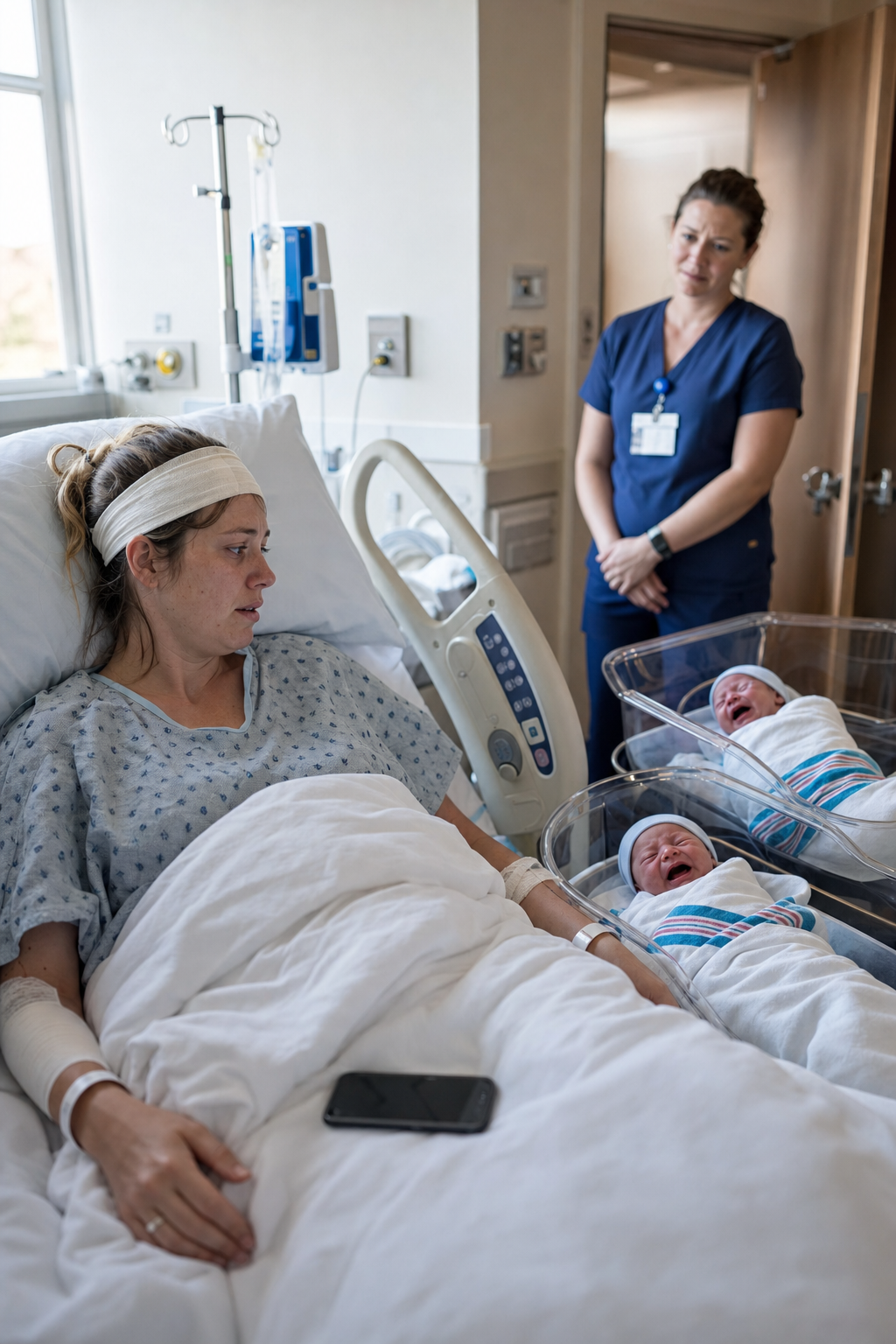
I woke under hospital lights with my mouth dry, my hips burning, and a nurse saying my name like she had been saying it for a long time.
"Elena, stay with me," she said. "Your babies are safe."
For one second, that was all I needed.
Leo and Maya were one year old. They had been in the back seat, tucked into the rear-facing car seats my late husband had installed himself before he died.
Those seats saved them.
I could not even turn my head without pain, but I heard both of them crying somewhere beyond the curtain, and my whole body tried to move.
It failed.
The surgeon came in later with a careful voice. Fractured pelvis. Two broken ribs. Torn ligaments. Months before I could walk normally again.
"You need help at home," he said.
I almost laughed.
Home was just me and the twins now.
My husband, Noah, had passed the year before from a sudden aneurysm. Since then, I had learned to carry two babies, two diaper bags, a job, a mortgage, grief, and everyone else's expectations without dropping anything.
Then a delivery truck ran a red light and left me pinned inside my own car.
The hospital arranged an emergency sitter for twenty-four hours.
Twenty-four hours.
That was the length of my family's mercy window.
So I called my mother.
My hand shook so badly the nurse had to hold the phone near my ear.
"Mom," I whispered. "I need you and Dad to take Leo and Maya for a few weeks. Just until I can stand."
There was a pause.
Not worry.
Not fear.
Just irritation.
"A few weeks?" my mother said.
"I was in a crash," I said. "I cannot lift them."
She sighed like I had interrupted a hair appointment.
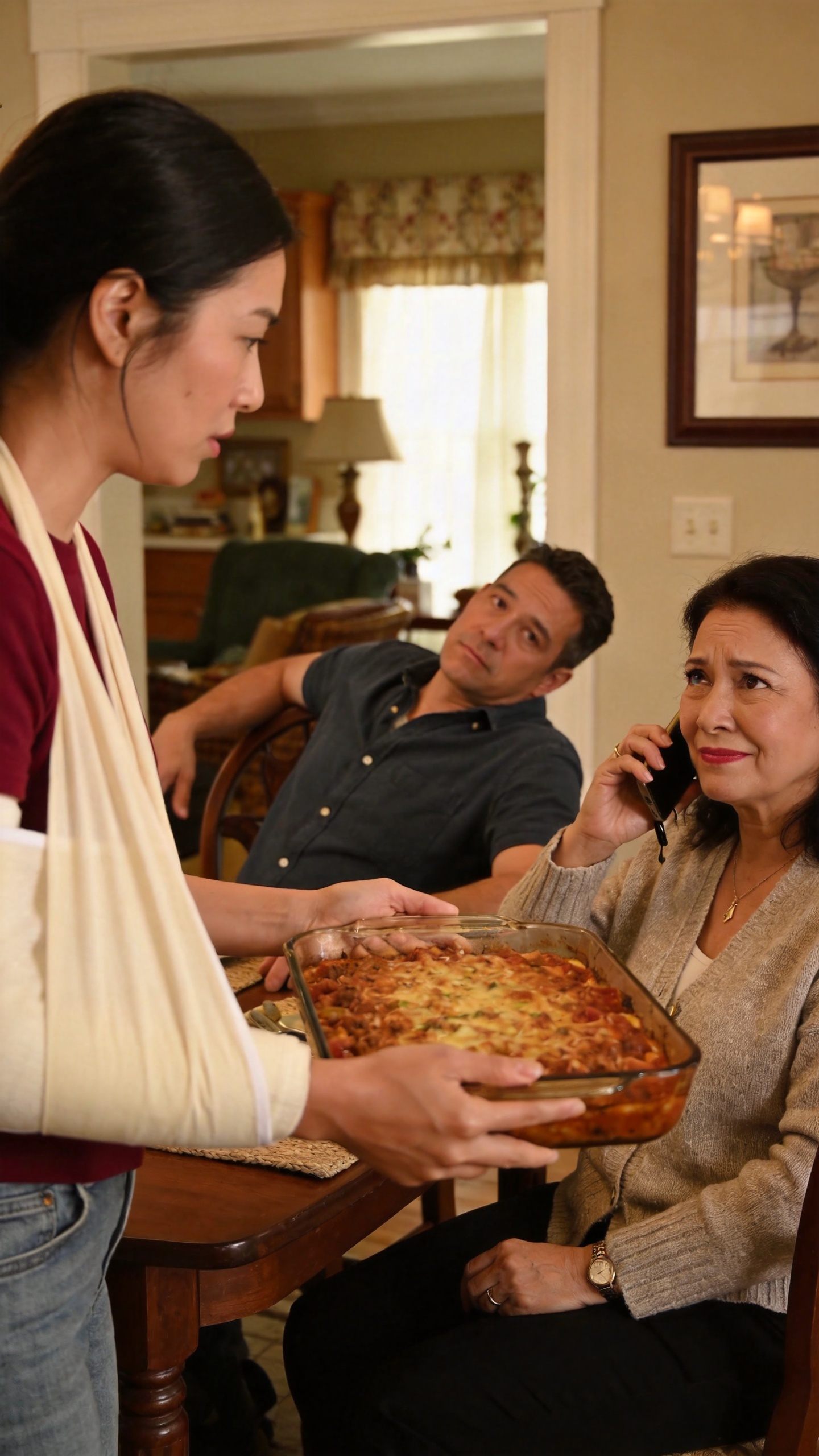
"Elena, I still need time for pickleball. Your sister never bothers us the way you do."
For a moment, I thought the pain medicine had changed the words.
"Mom," I said. "I was almost killed."
"And we are not built-in babysitters," she snapped. "Figure it out."
Then the line went dead.
Maya began crying in the next room.
Not a dramatic scream.
Just that tired little cry babies make when they have no idea why their mother will not come.
I lay there with my phone against my cheek, unable to sit up, unable to reach her, unable to do the one thing my whole body was begging me to do.
That was the moment something inside me changed.
Not loudly.
Not bravely.
It just stopped begging.
The Messages That Came After
A nurse named Clara found me staring at the ceiling.
She did not ask why I was crying.
She looked through the glass at the twins, then at the phone in my hand, and her face softened in a way that almost broke me.
"Who can I call for you?" she asked.
"Nobody," I said at first.
It came out automatically.
I had said "nobody" so many times since Noah died that it had become a habit.
Nobody could watch them.
Nobody could come over.
Nobody could pick up diapers.
Nobody could sit with me on the anniversary of my husband's funeral.
But that was not true.
There were people I paid. There were systems I had built. There were emergency options my company had offered me months ago, back when I was too proud to admit I might need them.
I had just kept calling family first because some childish part of me still believed they would choose me if the need was serious enough.
Clara moved the twins' bassinets closer to my room and found a social worker.
The social worker spoke gently about temporary care, recovery suites, licensed night nurses, and family assistance programs.
I answered questions with half my mind.
The other half kept hearing my mother's voice.
"Your sister never bothers us the way you do."
That was the sentence that stayed.
Not the pickleball.
Not even the hang-up.
It was the comparison.
My sister Seraphina had always been easy for them because she never asked for help.
She took it before anyone had to offer.
When her boutique failed, I covered three months of rent.
When her car was repossessed, I put her on my company payroll as a "brand consultant" even though she never produced a report.
When my parents wanted to move into a larger house near the country club, I bought it through my holding company because they could not qualify for the loan.
They called it their home.
I called it peace.
Or at least I had.
By evening, Clara helped me hold Leo for seven minutes.
Seven minutes was all my ribs allowed.
He pressed his warm little cheek against my hospital gown and hiccupped himself to sleep.
Maya watched from the crib with red eyes and one sock missing.
I looked at them and felt ashamed.
Not because I had needed help.
Because I had spent years making sure grown adults were comfortable while my own children had become optional to them.
My father texted around eight.
Your mother says you were rude.
That was all.
No "Are you alive?"
No "How are the babies?"
No "What hospital?"
Just a report that I had hurt her feelings while lying in a trauma ward.
I read it twice.
Then I put the phone down.
For the first time that day, I did not answer.
What I Had Been Paying For
The next morning, Daniel Cho walked into my room with a tablet under his arm.
Daniel was my attorney, but Noah had called him "the man who reads fine print like it insulted his mother."
He stood at the foot of my bed, took one look at the twins asleep beside me, and his expression changed.
"Tell me what you need," he said.
I told him everything.
Not in a clean speech.
In pieces.
My mother's call.
My father's text.
The hospital sitter running out.
The country club dues, the SUV lease, the medical premiums, the allowance my parents called "support," the consulting payments Seraphina treated like oxygen.
Daniel listened without interrupting.
When I finished, he tapped the tablet once.
"You want boundaries," he said.
"No," I said.