My Parents Said I Would Never Own A Home Like My Sister's. One Week Later, I Invited Her Over For Tea And Watched Her Smile Disappear
They came because Clara's mansion had a notice on the door, and my imperfect little house was dry, open, and safe.
Rain fell softly as their cars rolled onto the gravel. The porch light warmed the white railing I had sanded and painted myself. The steps still creaked on the left side, but they held.
Inside, the floors were unfinished in places. One kitchen wall still showed primer patches. The cabinets were old, and the dining table had a scratch down one side.
For once, nobody laughed.
I made tea because I did not know what else to do with four shaken people and years of resentment in my living room.
Clara sat with both hands around her mug. Elliot leaned against the counter. Dad examined the ceiling as if searching for a flaw that might restore the old order. Mom sat last and stared at her tea.
The room felt too small for all the things nobody had said.
Rain ticked against the window above the sink. Somewhere in the wall, the old pipes clicked as the house settled in the evening cool.
I used to hate those sounds because I imagined Clara hearing them and laughing later.
That night they comforted me. The house was old enough to speak, and everything it said was ordinary.
No sirens. No caution tape. No inspector recommending that we leave.
Then I placed my folder on the table.
The sound made everyone look.
"What is that?" Dad asked.
I opened it.
Survey.
Inspection report.
Soil notes.
Permit history.
Title file.
"I did not buy this house because I could not aim higher," I said. "I bought it because I knew what I was buying."
Clara looked at the pages. "You did all this for a house like this?"
"For the ground under a house like this."
Mom went very still.
"These are boring documents," I said, turning one page toward Clara. "That is exactly why they matter."
"Boring records are good. Boring means no one was begging for an exception three months before closing. Boring means the lot drains where it is supposed to drain."
"Boring means a future repair is probably a repair, not the beginning of a legal education."
Elliot leaned closer despite himself.
For the first time all day, he looked less angry than frightened of what he did not know.
"Stable lot," I continued. "Clean chain of title. No outstanding permit issues. Older construction, yes. Repairs needed, yes. But the bones are honest."
Dad picked up the inspection report.
He had always trusted documents when they supported him. Now that the documents supported me, he seemed unsure where to put his hands.
"A roof can be replaced," I said. "Cabinets can be rebuilt. A porch can be sanded. But if the land is wrong, granite does not save you."
Something in Clara's face gave way.
It was not dramatic. No sobbing, no speech. Just a quiet collapse around her eyes.
"I thought you were jealous," she said.
"I know."
"I thought you were trying to make me feel stupid when you mentioned inspections."
Mom lowered her gaze.
For years, my family had mistaken patience for weakness. They treated my research like fear. Clara's choices were praised because they looked expensive. Mine became jokes because they required work.
Now all of them were sitting inside the result of that work.
Dad cleared his throat.
"Maybe we underestimated your profession."
It was close to an apology.
Close was not enough.
"You underestimated me," I said.
The room went completely silent.
I expected Mom to defend herself. Instead, she looked around my kitchen as if she were seeing it for the first time.
"You did this yourself?" she asked.
"Most of it."
She swallowed. "I did not know."
"No," I said. "You did not ask."
What Changed After The Ground Moved
They stayed for nearly two hours.
We talked through what Clara and Elliot had been told, which documents they needed to request, and why the builder's glossy sales packet would not be enough. I gave practical help without accepting blame for decisions they had made after ignoring me.
I wrote a list on the back of an envelope: structural engineer, geotechnical report, permit history, drainage correspondence, homeowners' association notices, builder warranty language, insurance exclusions.
Elliot copied each item into his phone. Clara listened without interrupting.
That was another new thing.
When she did ask questions, they were smaller than usual. Not smaller because they were foolish, but because she finally understood that confidence was not the same as knowledge.
That boundary mattered.
When Clara left, she paused at my front door. Rain had dampened the toes of her expensive shoes.
"Mara," she said. "I am sorry about dinner."
She glanced at the railing, the patched wall, the plain little entryway.
"And about your house. All the things I said."
I could have said it was fine.
It had not been fine.
"Thank you," I said instead.
For that night, it was enough.
The following months were slow and expensive for Clara. Engineers returned with testing equipment. The homeowners formed a group. Attorneys appeared. The county released updates nobody liked. More cracks opened across driveways, then inside several houses.
My relatives stopped sharing photos of Clara's marble kitchen.
My mother stopped praising the pool.
Silence became the first apology, though not the one I deserved.
My house kept changing.
In September, I replaced the roof after arguing with three contractors until one gave me a fair price.
The day the new shingles went on, I stood in the yard after the crew left and looked up until my neck hurt.
Nothing about the roof was dramatic. It did not sparkle. It did not impress anyone driving by.
It simply promised that the next hard rain would stay outside, and that promise felt richer than any chandelier I had ever seen in Clara's photos.
In October, I refinished the cabinets, staining the old wood a deep walnut that made the kitchen feel steady instead of outdated.
I sanded floors one room at a time. I repaired windows. I cleared the backyard. A neighbor named Mrs. Rivera brought tomato seedlings. Another neighbor, Edwin, taught me how to reinforce the shed roof as long as I listened carefully and paid for the materials.
There were no gates on my street.
No guard booth.
No decorative pond hiding unstable land.
Just ordinary houses on ground that stayed where it belonged.
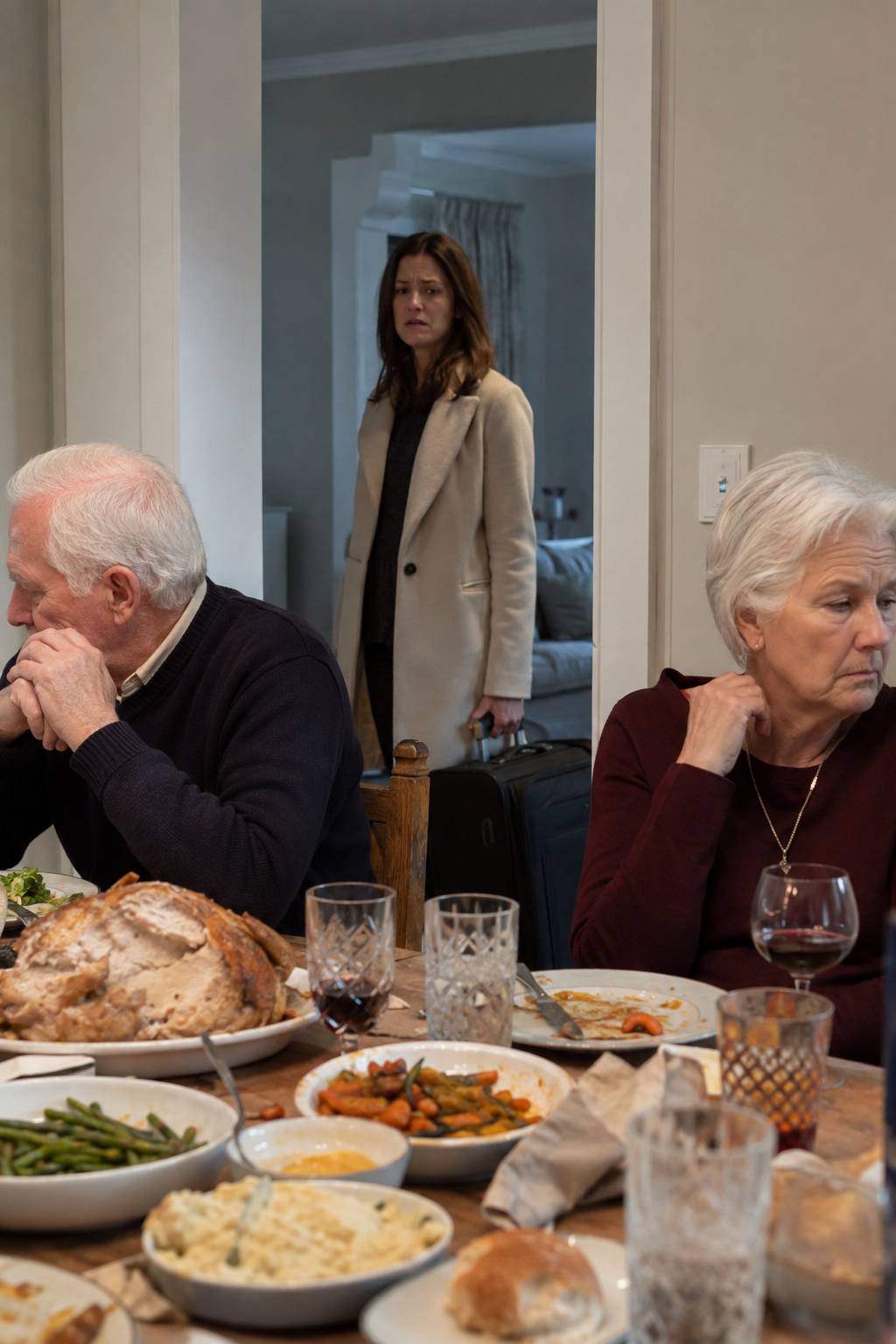
Thanksgiving was the first holiday I hosted.
Mom called two weeks before and sounded strangely formal.
"Would it be too much to have dinner at your place this year?"
I looked around my kitchen. The spacing on one cabinet door was still uneven. A scratch remained near the sink. One wall needed another coat of paint.
"Why?" I asked.
She was quiet.
"Because you have made it beautiful," she said at last. "And because I should have said that sooner."
It was not a complete apology.
But it was a beginning.
They arrived with covered dishes, flowers, and careful manners. Clara wore flat boots instead of heels. Elliot carried dessert. Dad brought a folding table without commenting on the size of my dining room.
Mom stopped in the doorway and took in the warm cabinets, polished floors, restored windows, brass lamp on the sideboard, and the house glowing with the evidence of effort.
"It feels like you," she said.
I did not know how to answer.
So I took the casserole from her and said, "Put your coat in the guest room."
During dinner, no one compared houses.
That was the first miracle.
No one mentioned square footage. No one asked whether I planned to upgrade. No one used the word potential.
We passed bowls, argued lightly about cranberry sauce, and made room on the table for one more dish because Dad had misjudged the space and, for once, did not turn that into a comment about my dining room.
I watched Clara help Mom with the plates and realized she was being careful around me. The old Clara would have made carefulness look insulting. This version looked as if she was practicing humility in a language she had only recently begun to learn.
The second came later, when Dad joined me on the back porch with coffee and looked toward the yard.
"If you want help with that back corner," he said, keeping his eyes on the fence, "I could come by next weekend."
There was no dramatic speech.
Only a quiet offer to work beside me.
By then, I had learned that some people cannot say they are sorry until they are holding a shovel.
The Home They Stopped Mocking
Clara's house remained unresolved for more than a year.
The lawsuit dragged. Reports changed. Temporary repairs were attempted and questioned. Their rental slowly stopped feeling temporary. The stress hurt Clara and Elliot, but it also changed them.
Elliot learned to ask better questions.
Clara started reading documents before signing them.
At first, she called me about legal forms and inspection language. Later, she called about ordinary things too.
Nearly eighteen months after the county notice, she came over alone. By then, roses were growing along the back fence, a nod to the woman who had owned the house before me and maybe to the version of myself who had kept going when nobody clapped.
Clara stood near the porch with a cup of coffee.
She had stopped dressing like every visit was a room she needed to win. That evening she wore jeans, an old sweater, and no jewelry except her wedding band.
The diamond pendant was gone from her throat. I did not ask why. Some questions are only invitations if the other person is ready to answer them.
"I used to think you settled," she said.
"I know."
"But I settled too," she said. "For how things looked. For what people would say. For Mom's face when she could brag."
The truth sat between us, uncomfortable and real.
"I am sorry," Clara said.
This time, I believed she understood the weight of it.
We did not become perfect sisters overnight. Real families do not heal because one person finally says the correct sentence.
But we became more honest.
Clara still likes beautiful things. I still appreciate a clean permit file. Mom still sometimes slips into praising appearances before catching herself.
But the old joke disappeared.
No one calls my house the fixer-upper anymore.
They call it Mara's place.
That name means more to me than any comparison ever could.
It means the house is no longer a punchline or a project people discuss as if I am not standing there. It means my choices belong to me.
It means the rooms I repaired with tired hands and careful savings finally get to exist without asking permission from anyone's idea of success.
Some evenings, when the setting sun stretches across the floorboards I restored, I stand in the kitchen with both hands around a mug of tea and remember that Sunday dinner.
I remember how humiliation can make a room feel small.
Then I look at the roof that stays dry, the porch that holds, the cabinets I rebuilt, and the yard slowly returning to life.
And I remember the day my sister's luxury house was declared unsafe while my imperfect little home opened its door and sheltered every person who had mocked it.
That is the thing about foundations.
Strong ones do not need to prove anything.