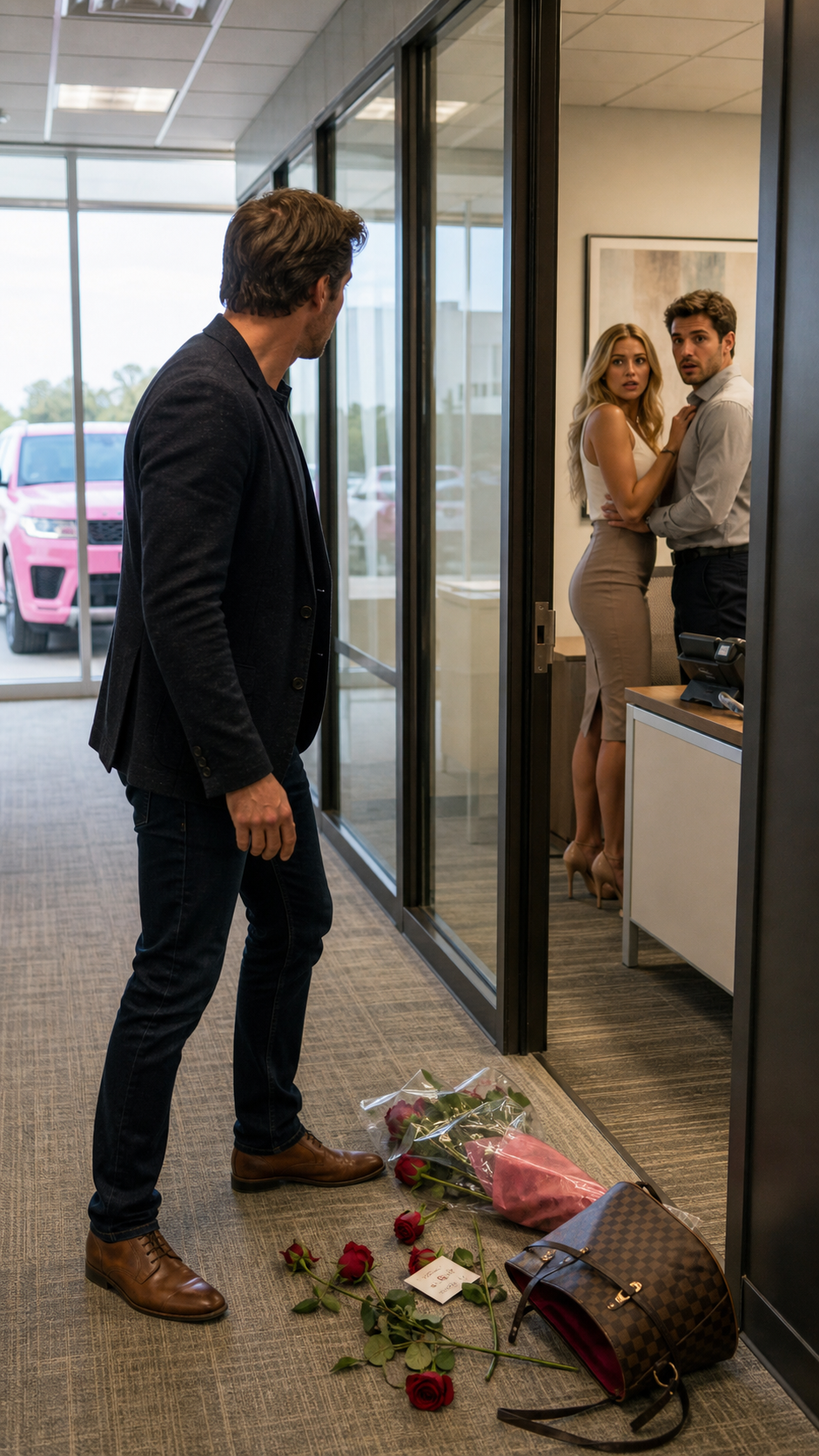
My Husband Snapped When Our Five-Year-Old Said, "Mommy, The Lady In The Red Car Pays Daddy To Cry." By Morning, I Found The Receipts He Had Hidden From Me

My husband snapped when our five-year-old daughter pointed across the grocery store parking lot and said, "Mommy, the lady in the red car pays Daddy to cry."
At first, I laughed.
Not because it was funny.
Because it was the kind of sentence a child says when she has mixed up every adult word in the room and turned it into something impossible.
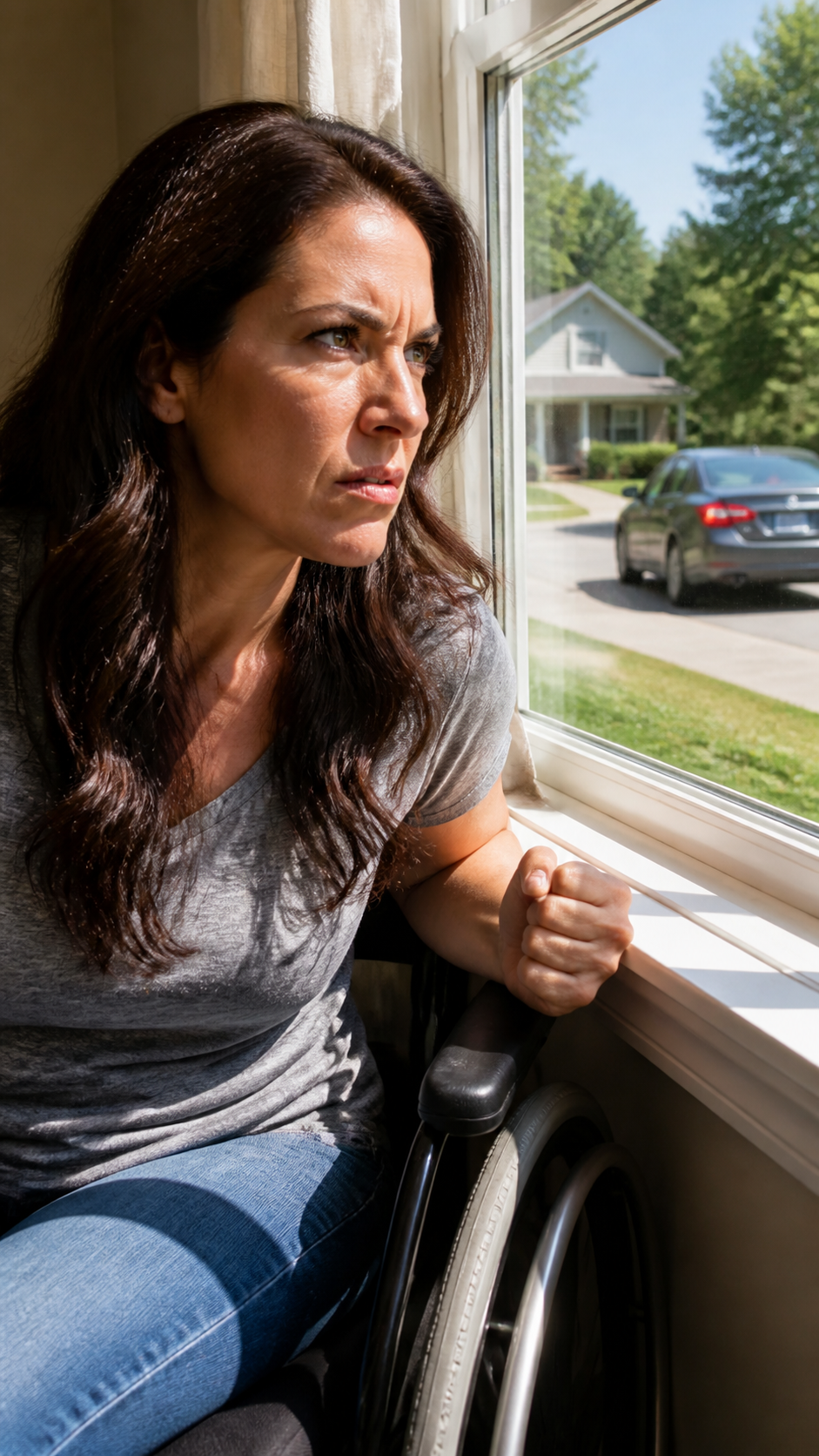
The parking lot was bright and ordinary.
Shopping carts rattled against metal rails.
A teenager in a green apron was collecting baskets near the entrance.
My husband, Aaron, was loading paper bags into the trunk while our daughter, Maisie, swung my hand back and forth.
Then the woman walked past us.
Blonde hair pinned low.
Red coat.
Red car two rows away.
I had seen her once before at Aaron's company holiday party, standing near the dessert table while he introduced her too quickly and then changed the subject.
"Hi, Aaron," she said.
His hand froze on a grocery bag.
Only for a second.
But after nine years of marriage, a second can be loud.
"Celia," he answered.
Her eyes moved to me.
"Nice to see you again."
"You too," I said, because women are trained to be polite even when their stomachs tighten.
She walked to the red car.
The lights blinked when she unlocked it.
Maisie lifted one small finger.
"That's her."
I looked down at my daughter.
"Her who, sweetheart?"
"The crying money lady."
Aaron slammed the trunk so hard Maisie jumped.
I turned toward him.
He had gone pale.
Not irritated.
Not embarrassed.
Pale.
"Maisie," he said sharply. "Stop making things up."
Our daughter flinched.
That was the first thing that scared me.
Aaron had never raised his voice at her.
Not once.
She hugged her stuffed rabbit against her chest and whispered, "But Daddy, you said I shouldn't tell Mommy about the crying money."
The parking lot kept moving around us.
Cars backed out.
Someone laughed near the automatic doors.
A cart wheel squeaked.
And my husband stood beside the trunk with both hands closed into fists, looking at the asphalt as if it could swallow the truth before I heard it.
He Had Always Been Too Steady
Aaron was the kind of man people trusted with heavy things.
He fixed shelves without being asked.
He remembered oil changes.
He carried sleeping children from cars with the gentleness of a man handling glass.
At his mother's funeral, he held my hand while I cried and did not shed a tear himself.
When Maisie was born early and spent six days under blue hospital light, he stood beside the incubator and spoke to the nurses in a calm voice while I shook so badly I could not sign forms.
I had mistaken that steadiness for strength.
Maybe he had too.
But over the past year, something had shifted.
He stayed in the garage after midnight.
He rubbed his eyes raw and blamed sawdust.
He took Tuesday evening drives and said he needed air.
Sometimes I heard him come in quietly and stand in the hallway outside Maisie's room without opening the door.
I thought he was tired.
I thought marriage in your forties simply grew quieter in places.
That was the excuse I gave our silence because I did not know what else to call it.
In the car after the grocery store, nobody spoke.
Maisie hummed to her rabbit in the back seat.
Aaron drove with both hands locked on the wheel.
I watched the red car disappear behind us in the side mirror until there was nothing left but sunlight.
At home, I sent Maisie upstairs with a snack and the promise of cartoons.
Then I followed Aaron into the kitchen.
He braced both hands on the counter, back turned.
"Who is she?"
He did not answer.
"Aaron. Who is Celia?"
His shoulders rose and fell.
"She is not what you think."
That sentence almost made me sick.
Because men only say that when what you think is close enough to frighten them.
"Then tell me what she is."
He turned around.
There were tears in his eyes.
I had never seen tears in his eyes.
Not at a funeral.
Not in a hospital.
Not after the winter we lost the baby whose nursery we never finished.
"Please do not hate me," he said.
The kitchen tilted.
"For what?"
He opened his mouth.
Then the doorbell rang.
Both of us jumped.
It was my neighbor with a package that had been left on her porch by mistake.
By the time she left, Aaron had shut down.
"I need a day," he said.
Then he walked into the garage and closed the door between us.
The Receipts Were Not For An Affair
I did not sleep.
At 5:40 the next morning, while Aaron went for his run, I opened the locked drawer in his desk.
I knew where he kept the spare key.
I had simply never used it.
Inside was a manila folder.
Receipts.
Dozens of them.
Every Tuesday.
Paid to Celia Warren.
The amounts were not romantic.
Not hotel rooms.
Not jewelry.
Not wine.
They were round, professional numbers.
One hundred forty.
One hundred forty.
One hundred forty.
My hands shook anyway.
Under the receipts was an appointment card.
Celia Warren, LCSW.
Grief Counseling And Trauma Recovery.
The words blurred.
I sat down so fast the chair scraped the floor.
Grief.
Not cheating.
Not the red car.
Not the polite smile in the parking lot.
Grief.
There was a folder on his laptop labeled Sessions.
I opened it with the guilt of someone trespassing in pain.
The first file was a worksheet about suppressed loss.
The second was a journal exercise.
The third was a draft Aaron had never sent.
I read one line and covered my mouth.
I do not know how to tell Lena I still miss the son we never got to bring home.