I Came Home From Caring For My Father And Found My Mother-In-Law Living In My Apartment, Saying, "Your Name Is Not On Anything Anymore," Until The Signature She Forged Cost Her Everything
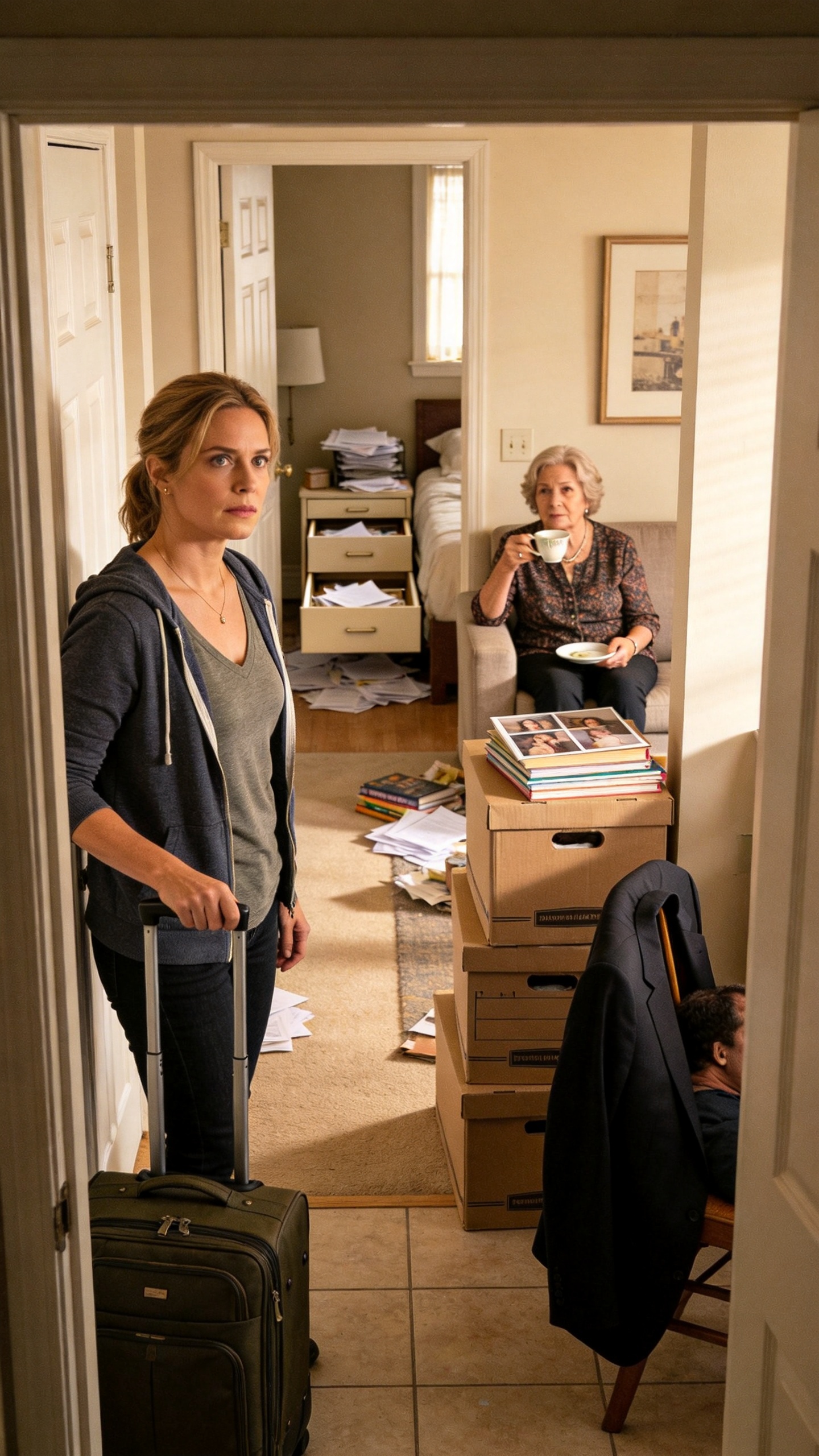
I came home from taking care of my father and found my mother-in-law drinking tea on my couch.
Not visiting.
Living there.
Her slippers were beside my coffee table. Her cardigan hung over the back of my chair. Her blood pressure pills sat beside the lamp I bought after my first promotion.
My books had been pushed into boxes near the hallway.
My wedding photo was gone.
And Patricia Vance looked up from my sofa as if I had interrupted her afternoon in a house that belonged to her.
"Oh," she said. "You are back early."
I stood in the doorway with my overnight bag still cutting into my shoulder.
"Why are you in my apartment?"
She smiled without warmth.
"Grant said you knew."
My husband was not home.
That was the first warning.
The second was the envelope on the kitchen counter with my name typed across the front.
Not handwritten.
Typed.
Like a stranger's file.
Patricia took a slow sip of tea.
"You should read that before making a scene."
She Had Already Moved Me Out In Her Head
I had been gone for seventeen days.
My father had fallen in his bathroom, broken his hip, and needed someone to handle the hospital, insurance calls, physical therapy, and the terrible silence of his empty house.
Grant said he understood.
He had kissed my forehead before I left and told me, "Do what you need to do. Mom and I will handle things here."
Apparently, handling things meant turning my apartment into Patricia's retirement suite.
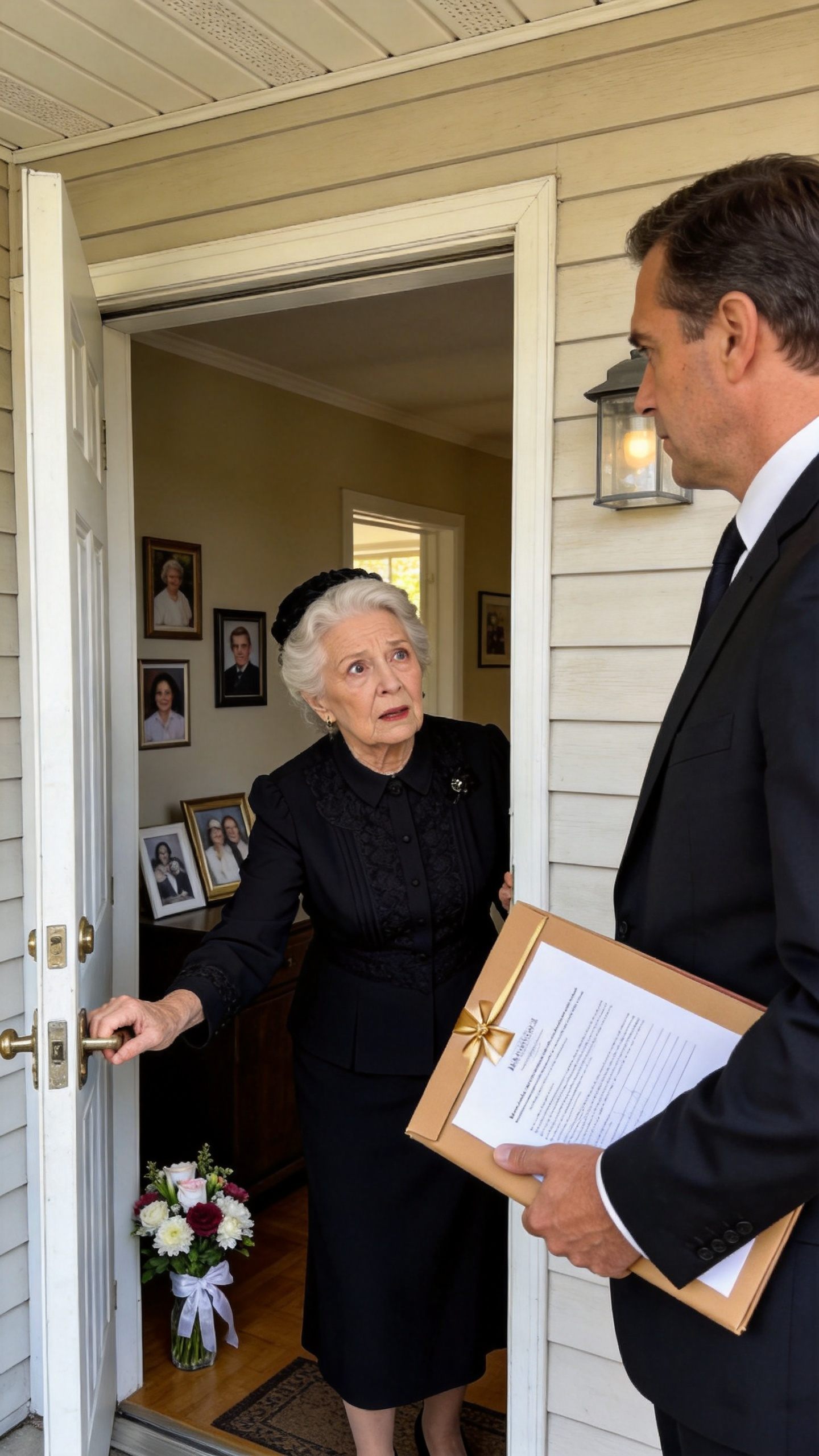
I walked to the counter and opened the envelope.
Inside was a printed letter from Grant.
Nora,
Since you have chosen to prioritize your father's household over ours, I think it is best that we separate living arrangements for now. Mom will be staying here. You can collect your personal items this week.
My hands went cold.
Personal items.
As if the apartment itself was not mine.
As if I had not made the down payment from the settlement after my mother died.
As if my name was not on the deed because I bought it two years before I married Grant.
I looked at Patricia.
"This is my apartment."
She set down her cup.
"It was. Grant explained everything."
"Explained what?"
"That you transferred it into the marital trust last year. Really, Nora, you should keep track of what you sign."
For a second, I could not breathe.
Then I laughed.
Not because it was funny.
Because my mind had reached for panic and found something sharper.
"Show me."
Patricia's smile faltered.
"Show you what?"
"The transfer."
She waved toward the envelope.
"Grant has the documents."
Of course he did.
Men like Grant never left theft lying in the kitchen.
They left summaries.
They left explanations.
They left wives wondering whether exhaustion had made them forget their own lives.
Patricia stood and walked toward the hallway as if she were giving me a tour.
"I moved your hobby things into storage," she said. "The shelves looked cluttered."
My hobby things.
She meant my mother's cookbooks.
She meant the framed photo of my parents in front of the diner they ran for twenty-seven years.
She meant the ceramic bluebird my father bought my mother the year I was born.
Every small object that made the apartment mine had been stripped from the rooms and stacked in cardboard boxes near the laundry closet.
I walked into the bedroom.
The cedar box under my side of the closet was open.
My mother's cashmere wrap was gone.
So was the deed folder.
That was when the anger became something colder.
Not louder.
Colder.
"Where is my property folder?"
Patricia leaned against the doorway.
"Grant put important papers somewhere safe."
"Safe from whom?"
"From emotional decisions."
I almost answered.
Then I saw the bottom drawer of Grant's nightstand.
It was open by less than an inch.
Grant hated open drawers. He once woke me at midnight because I had left a kitchen cabinet cracked after making tea.
So I waited until Patricia returned to the living room.
Then I stepped closer and pulled the drawer open.
Inside was a spare key to a bank lockbox.
Three blank notary forms.
A copy shop receipt dated two days after I left for my father's house.
And a sticky note in Grant's handwriting.
Use Nora's blue pen. Her N starts narrow.
For a moment I could not move.
The hidden drawer did not contain a misunderstanding.
It contained practice.
The Doorman Had Seen More Than Grant Expected
I did not argue with Patricia.
That surprised her.
She had expected tears. Maybe shouting. Maybe a desperate call to Grant so he could sound reasonable while I sounded unstable.
Instead, I carried my bag back into the hallway and went downstairs.
The doorman, Luis, stood behind the front desk.
He had worked in our building for nine years and had once helped me carry groceries upstairs during a snowstorm because Grant was "on a call."
When he saw my face, he straightened.
"Mrs. Hale?"
"When did Patricia move in?"
Luis looked toward the elevators.
"Four days ago."
"With Grant?"
He hesitated.
"With movers."
That answer told me enough.
"Did they log the move?"
Luis nodded.
"Building requires it."
"Did they use my authorization?"
He looked miserable.
"There was a form. Your signature was on it."
I held out my hand.
"I need a copy."
He did not ask why.
He printed the move-in log, the elevator reservation, and the scanned authorization form.
My name sat at the bottom in blue ink.
Except it was not my signature.
It leaned too far right. The N was wrong. The final loop in Hale was rounded, the way Grant always wrote it when he signed greeting cards for both of us.
I stared at that loop until the lobby lights blurred.
Then I called my attorney.
Not a divorce attorney.
My real estate attorney.
The woman who had handled the apartment purchase before Grant ever learned the code to the front door.
Her name was Simone Avery, and she answered on the second ring.
"Nora," she said. "Tell me you did not sign a deed transfer."
My stomach dropped.
"Why would you ask that?"
She exhaled.
"Because someone submitted a trust amendment with your signature last week. I flagged it because the notary commission number looked wrong. I was going to call you tomorrow."
I looked up at the ceiling of my own building and smiled for the first time since I had opened my door.
"Call me now."
Simone did not sound shocked.
That scared me more than if she had gasped.
"Do not go back upstairs alone," she said.
"Patricia is upstairs."
"Exactly."
She asked me to photograph the move-in log, the fake authorization, the copy shop receipt, and the notary forms.
I sent everything from the lobby while people walked past me carrying groceries, gym bags, flowers, ordinary lives.
For eleven minutes, I stood beside a fake ficus plant while my marriage rearranged itself into evidence.
Then Simone called back.
"The notary stamp belongs to a woman who retired two years ago."
My throat tightened.
"So it is fake."
"Worse," Simone said. "It is traceable."
She told me she had placed a title alert on my apartment after my mother died, back when I bought it with the settlement money and cried in her office because signing alone felt both brave and awful.
I had forgotten about the alert.
Simone had not.
That alert had stopped the trust transfer before it became permanent.
There was another problem.
Grant had used the rejected trust paperwork to request a home equity appointment at the bank.
For the next morning.
I sat down on the lobby bench.
He had not only tried to move his mother in.
He had tried to borrow against the apartment before I came home.
Against my mother's money.
Against my father's emergency.
Against the one place I owned before marriage could teach me what access really meant.
"Nora," Simone said, "can you stay calm tonight?"
I looked toward the elevator.
"I can do better than calm."
"What does that mean?"
"I can let him explain."
Simone paused.
Then she said, "Record everything you legally can."
Grant Thought Paperwork Was Quiet
Grant came home at 7:18 p.m.
He looked irritated before he looked guilty.