I Came Home From Another Woman's Bed At 4:17 In The Morning And Found A SOLD Sign Planted In My Front Yard
Then Juliet's attorney asked permission to enter one more exhibit.
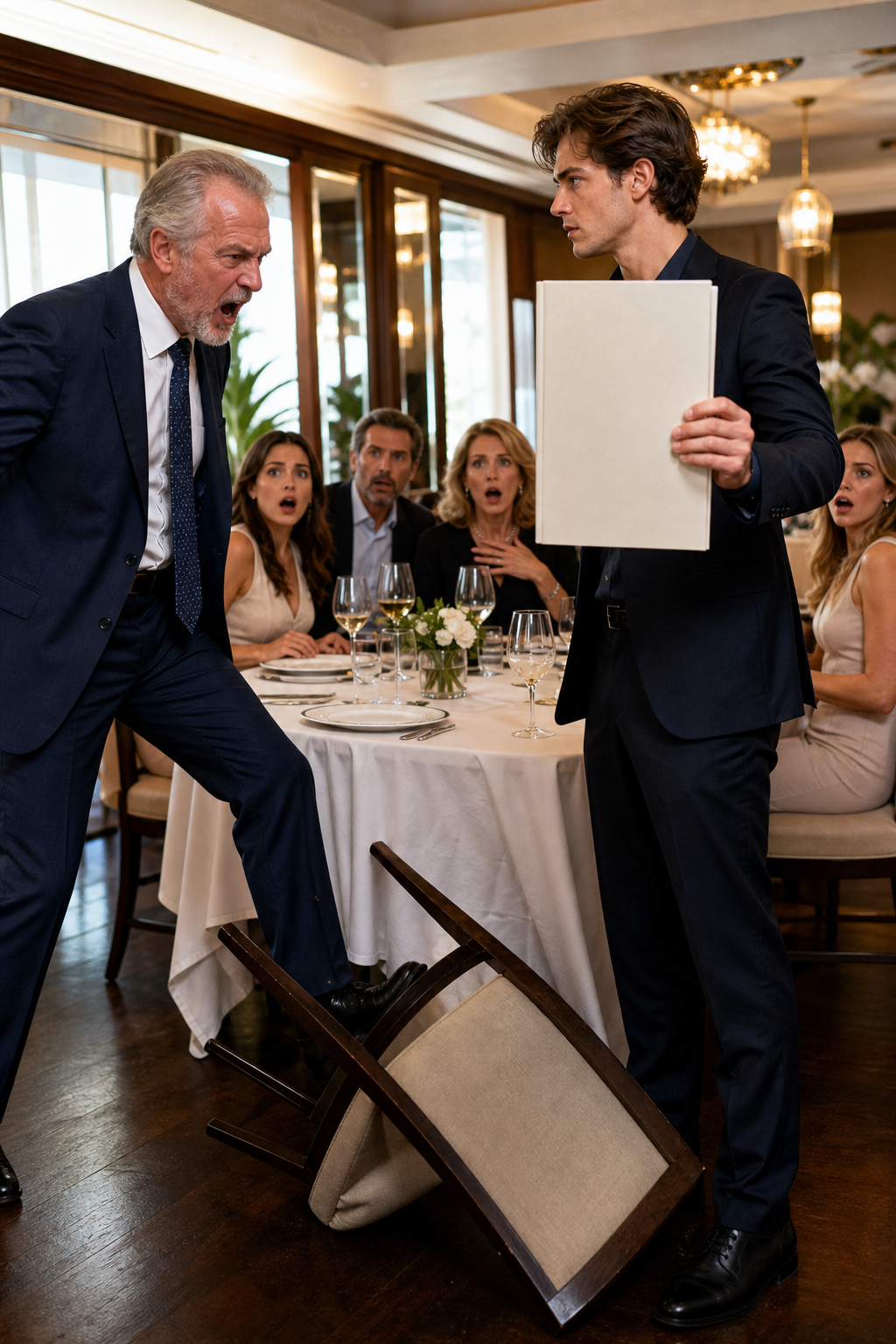
My father stood.
"This has gone far enough."
The judge looked over her glasses.
"Sit down, Mr. Cross."
He did not sit.
That was the problem with men who spend a lifetime being obeyed. They mistake every room for one they purchased.
Juliet's attorney opened a small evidence box and removed Caleb's daycare badge.
It was blue plastic, bent at one corner, with a faded sticker of a dinosaur on the back.
I recognized it immediately.
I had clipped it to his backpack the first week of school because Juliet said he was nervous and needed something familiar.
"Your Honor," she said, "the attempted pickup authorization was not an isolated request. Someone had already obtained the child's old badge number and used it to call the school office twice in the week before Mrs. Cross left the residence."
The judge's face changed.
Not much.
Enough.
"Who made the calls?"
Juliet's attorney looked at Simone.
Simone began to cry before anyone said her name.
My father finally sat.
All the air went out of him at once.
"Ms. Vale gave the school a family code she could only have received from inside Crosswell Holdings," Juliet's attorney continued. "That code came from an encrypted file attached to Mr. Cross's executive assistant account."
My assistant, Lydia, was sitting two rows behind me.
She covered her mouth.
I turned, and for one terrible second, I saw the whole machine.
My father's office.
My calendar.
My phone left unattended beside Simone.
My son's school code.
My wife's fear, mocked by me as drama because admitting she was right would have required me to look at the people I trusted.
Juliet did not look victorious.
She looked like a woman forced to prove danger while everyone examined whether she had been polite about surviving it.
Caleb stirred against her shoulder.
The sound was tiny.
The room heard it anyway.
"This court is expanding the protective order," the judge said. "No contact by Ms. Vale. No unsupervised contact by Mr. Adrian Cross until further review. No contact by Mr. Griffin Cross with the minor child."
My father gripped the table.
"You cannot bar me from my grandson."
The judge's voice turned flat.
"Watch me."
My father resigned from the board forty-eight hours later.
Not honorably.
Cornered.
The investigation widened.
Simone cooperated after the prosecutors found the school email.
Marcus told me I was lucky not to be facing charges myself.
I did not feel lucky.
I felt late.
The board did not call it a scandal at first.
They called it a governance review.
Then a compliance matter.
Then an internal restructuring.
Rich institutions have entire dictionaries for bleeding quietly.
But Juliet's package had not gone only to the board.
It had gone to regulators.
It had gone to the bank.
It had gone to the private investigator she hired with money from an account I never knew she had, because she had stopped asking my permission to protect our son.
By the end of the month, Crosswell's shares had dipped, three senior officers were on leave, and my father's portrait had been taken down from the lobby "for cleaning."
It never went back up.
My father called me once.
"Fix this," he said.
I laughed because I thought he was joking.
He was not.
"Dad," I said, "I can't even fix my own visitation schedule."
He hung up.
That was the closest we came to honesty for a long time.
The SOLD Sign Was Not The Punishment
Three months after the morning I broke into my former house, I met Juliet in a supervised visitation room with yellow walls and plastic chairs.
Caleb was building a tower with blocks.
He knocked it down every time it reached his chin, then looked at me as if destruction were a joke we shared.
Maybe it was.
Juliet watched from across the room.
She looked tired.
Not weak.
Never weak.
Just tired in a way I had helped make permanent.
"I thought the sign was punishment," I said quietly.
She did not look away from Caleb.
"It was a boundary."
"I deserved it."
"That is not the point."
I waited.
Waiting was new work for me.
She finally turned her head.
"The point is that I stopped explaining locked doors to the man who kept leaving them open for other people."
There was nothing elegant to say to that.
So I said the only thing that fit.
"I'm sorry."
"I know."
"That is all?"
"For now."
Caleb toddled over and pressed a red block into my hand.
"Dada build."
My throat closed.
I built the tower.
Badly.
He fixed it with the authority of a two-year-old who had inherited his mother's standards.
The supervised visits continued through spring.
Every Tuesday, I arrived fifteen minutes early with a backpack Juliet had approved in writing.
Diapers.
Snacks.
One clean shirt.
No gifts unless discussed.
No promises I could not keep.
At first, I hated the rules.
Then I realized rules were the only reason Juliet could breathe in the same building as me.
So I followed them.
When Caleb cried because he wanted his mother, I did not tell him not to.
When he reached for me, I did not treat it like proof that Juliet was wrong.
When the supervisor wrote notes, I did not perform fatherhood for the clipboard.
I learned how small love becomes when it has to rebuild trust from evidence.
It is not speeches.
It is showing up with the right snack.
It is leaving when the hour ends.
It is not asking a child to heal your shame.
A year later, I drove past the old house by accident.
The SOLD sign was gone.
A young couple had planted lavender along the walk.
There was a tricycle on the porch that did not belong to my son.
I slowed at the corner, then kept driving.
Juliet had not destroyed my life.
She had removed herself and our child from the part of it I had been destroying.
That was the bill I had mistaken for revenge.
It was not payable in money.
It was payable in school pickups kept, counseling appointments attended, court orders obeyed, birthdays shown up for sober and on time.
It was payable in becoming smaller than the ego that had once filled every room.
On Caleb's third birthday, Juliet let me carry the cake from the kitchen to the backyard.
I did not own the house.
I did not own the day.
I did not even own the right to assume I would be invited again.
But Caleb clapped when he saw me, and Juliet smiled for half a second before she remembered not to give too much away.
That half second was more than I had earned.
So I carried the cake carefully.
I noticed the step down from the patio.
I noticed the candle leaning in the frosting.
I noticed my son watching to see if I would drop what mattered.
And this time, I did not.
After the candles, Juliet handed me a small envelope.
For one wild second, I thought it was forgiveness.
It was not.
Inside was the final custody order.
Weekends beginning in September.
School pickup every other Wednesday.
Holiday rotation to be reviewed in six months.
At the bottom, Juliet had written one sentence in blue ink.
Caleb needs consistency more than he needs apologies.
I folded the paper carefully.
"I understand."
She looked at me for a long time.
"Do you?"
The old Adrian would have answered quickly.
The old Adrian would have turned that question into a speech.
I watched Caleb smear frosting across his own cheek and laugh at the mess.
"I'm learning," I said.
Juliet nodded once.
Not approval.
Not pardon.
But not nothing.
Later that night, I drove back to my apartment alone.
No mansion.
No sold sign.
No father calling from a boardroom.
Just a small place above a pharmacy, a court calendar on the refrigerator, and a red block Caleb had accidentally left in my coat pocket.
I set it on the kitchen counter.
It was light.
Plastic.
Ordinary.
Still, I stood there for a long time, staring at it like a man finally old enough to understand that the smallest things are the ones you can lose forever.