My Sister Embarrassed Me In Front Of Everyone At Dinner, Pushed Me Down, And Let The Whole Table Laugh While I Sat There Hurting. But None Of Them Realized That Moment Was The End Of My Silence - By Morning, My Phone Had 73 Missed Calls.
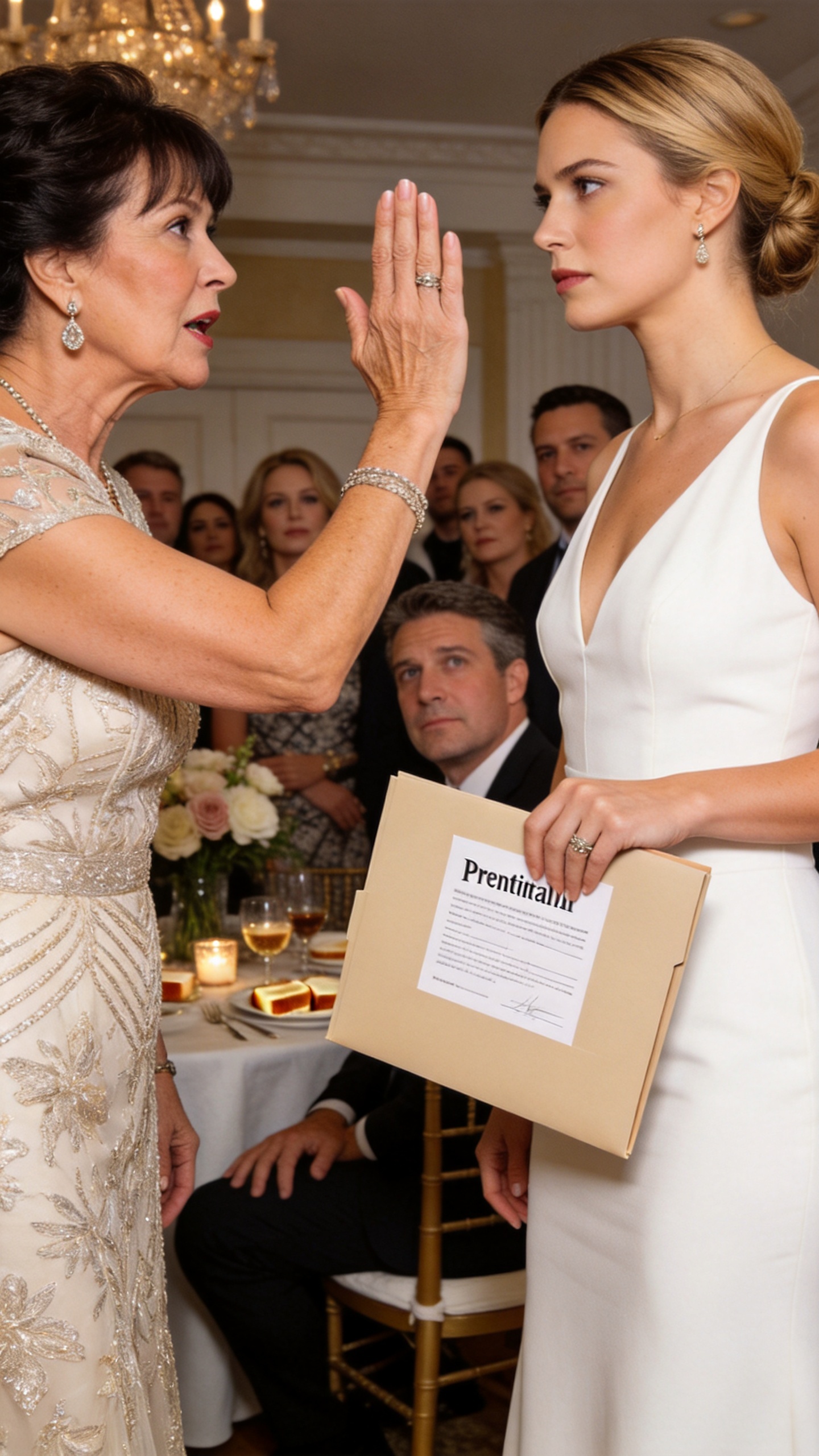
For the first time in my life, she looked back at me like I was the person with power. "Let her up," I said. Mom stood quickly. "Claire, don't do this here." "She came here." "She's emotional." "She's thirty-eight." "Please." That word almost reached me.
Almost. Then I remembered Madison's heel beside my hand while I lay on the dining room floor. A few minutes later, Madison stormed into my office wearing oversized sunglasses and yesterday's silk dress under a camel coat. Her perfect bun was gone.
Her hair fell messily around her face, and panic had stripped the polish from her features. She pulled off the sunglasses and pointed at me. "You vindictive bitch." Priya stiffened near the door. "It's fine," I said. "Close the door, please." The door shut.
Madison turned to our mother. "You were supposed to fix this." Mom said nothing. That scared Madison more than anything I could have done. "What did you tell her?" Madison snapped. "The truth would be a good start," I said. She turned on me.
"You think you can destroy everyone because your feelings got hurt?" "My elbow is bruised," I replied. "Not my feelings." She laughed, but it broke halfway through. "You've been waiting for this. You always hated that people loved me more." There it was.
No apology. No denial. Just entitlement. I folded my hands on my desk. "Madison, you tried to move $180,000 from a foundation account using forged authorization." Her face went pale. Mom whispered, "Maddie." Madison ignored her. "It was going back." "When?" "When Blake's deal closed." "There is no deal." Her mouth opened, then shut.
"There is debt," I said. "There are lenders. There are lawsuits. There are lies." Her eyes flickered. That was when I realized Blake had not told her everything. Madison knew enough to steal, but not enough to understand the size of the disaster.
For half a second, I almost pitied her. Then she said, "You don't even need the money." And the pity disappeared. "That sentence," I said, "is exactly why we are here." Madison's face twisted. "You always acted better than everyone because you built some boring company and wear cheap black pants like you're above us." "They were expensive black pants," I said.
"And you shoved them onto the floor." Mom closed her eyes. Madison slammed both hands on my desk. "You will cancel the eviction. You will restore access to the accounts. You will tell everyone this was a misunderstanding." "No." "You don't get to say no." "I just did." "You owe us!" I stood.
Madison stopped. "I owe you nothing," I said.
"But I will give you one choice. Sign a written admission that what you said about me at the luncheon was false. Repay the foundation's legal expenses within ninety days. You and Blake resign from every committee funded by me. You stay away from my office, my home, and my staff. In exchange, I do not file the fraud report today." Madison stared at me as if I had spoken another language.
Then she laughed, thin and ugly. "You won't do it. You're bluffing." I picked up my phone. Mom reached toward me. "Claire-" Madison lifted her chin. "Do it." So I did. I called my attorney, Mara Voss, on speaker. Mara answered quickly.
"Claire?" "File the package with the bank's fraud division," I said. "Send the civil complaint draft to Madison Harrington's counsel. Notify the foundation board that Madison is permanently barred from involvement." Madison's mouth fell open.
Mara asked, "Do you want to proceed with the police report today as well?" I looked at my sister. All the confidence drained from her face. "Not today," I said. "Hold that for now." "I'll document that instruction," Mara replied. "Confirmation will follow by email." I ended the call.
Madison whispered, "You can't." "I can." "My life will be ruined." "No," I said. "Your life will be audited." She stepped back as if the word itself had struck her. Mom sank into the chair again. For several seconds, no one spoke.
Then Madison started crying. Years ago, that sound would have pulled everyone toward her. Madison crying was a family emergency. People rushed in. People adjusted. People surrendered. But now I watched the tears slide down her face and felt only distance.
The Missed Calls Started Before Morning
"You think this makes you strong?" she asked. "No," I said. "It makes me finished." She wiped her face, smearing mascara. "The kids will hate you." "Maybe," I said. "Or maybe one day they'll ask why their mother tried to steal from their aunt." "Don't you dare speak to them." "I won't. I don't use children as shields." Mom lowered her head.
That was when Madison realized she had lost the room. Not because our mother had chosen me. Evelyn Mercer rarely chose anyone except herself. But she had measured the danger and realized Madison was no longer the safest person to protect.
Madison grabbed her sunglasses. "You'll regret this," she said. I believed she would try to make that true. "Security will walk you out," I said. She stared at me with hatred. Then she left. My mother stayed. Outside, the rain faded into mist.
Morning light turned the windows silver. Across the river, office workers moved behind glass like small shadows. When Mom finally looked at me, she seemed older. "I failed you," she said. I did not comfort her. That was new. "Yes," I answered.
Her eyes filled again. "I don't know how to fix it." "You can start by not asking me to pay the price for everyone else." She nodded once. I could tell she hated the answer. Thirty days later, my parents moved out. Not peacefully.
Dad left furious voicemails about betrayal, family legacy, and how I had forgotten where I came from. Mom sent photos of half-packed boxes until I blocked her for a week. Madison posted vague quotes online about jealousy and spiritual warfare, then deleted them after Mara sent a warning letter.
The public correction arrived on day forty-two. It was stiff and ugly, every sentence clearly dragged out of Madison by force. She admitted that her statements about me had been false. She wrote that I had never received financial support from the family.
She acknowledged that I had provided significant financial assistance to several relatives, including her. I read it once. Then I forwarded it to Mara. Six months later, Blake filed for bankruptcy. Madison sold her jewelry, then her car, then the lake house she had always called "ours," though I had paid for it through a trust I later dissolved.
She moved into a rented townhouse in Naperville and told people she was choosing a simpler life. My parents moved into a condo in Oak Park. It was smaller, but clean, safe, and within their actual budget. For the first time in twenty years, Dad took a part-time consulting job.
Mom joined a gardening club where no one knew enough about her old life to admire it. I stopped attending Sunday dinners. Eventually, there were no Sunday dinners left. One year after the night Madison pushed me, I returned to the house alone.
It had been empty for two months while contractors repaired what my family had called normal wear and tear. There were wine stains hidden beneath rugs, cracks in the marble counter, holes behind framed portraits, and a basement filled with boxes labeled with my name even though nothing inside belonged to me.
I walked through the dining room last. The table was gone. I had sold it. In its place was open floor, sunlight, and silence. For a while, I stood exactly where I had fallen. I expected victory. Instead, I felt light. There is a difference.
Victory needs witnesses. Lightness only needs absence. My phone buzzed. An unknown number. I nearly deleted the message unread, but curiosity stopped me. She wrote that she was not asking for money. She said she had heard I sold the house.
She admitted she used to think I kept it just to hold power over everyone. Then she said maybe I had kept it because I believed they might become better people inside it. She wrote that she was still angry. But she also wrote that she knew she had lied about me.
She knew she had taken things. She knew she had pushed me because she believed I would never push back. There was no real apology. But there was truth. From Madison, that was rare. I did not reply. Some doors do not need to be slammed.
They simply remain closed until the person outside stops knocking. Six months later, I sold the house to a young couple with twin boys and a golden retriever that slid across the polished floor during the showing. The wife cried in the kitchen because she could already imagine Christmas there.
Her husband apologized for her tears. I told him not to. A house should belong to people who love it without turning it into a throne. At closing, I signed the final papers and felt no grief. That night, I took myself to dinner at a small restaurant near the river.
I sat at a corner table, ordered steak, and ate slowly. No one told me where to sit. No one watched my plate. No one laughed when I reached for my glass. Halfway through dessert, my phone rang. I let it ring twice before answering.
"Hello." A pause. "Claire," she said carefully. "I heard the closing went through." "It did." "I'm glad." I waited. "I'm not calling to ask for anything," she said. "That's new." A faint, sad laugh came through the phone. "I suppose I earned that." I said nothing.
"I've been seeing a counselor," she continued. "Your father too, though he pretends it's only for his blood pressure." "That's good." "I told her about the dinner." My hand tightened around the spoon. "All of it?" I asked. Another pause.
"Yes," she said. "All of it." Outside, the river caught the city lights in broken gold lines. Mom's voice became smaller. "She asked me why I didn't stand up when you fell." I closed my eyes. "And what did you say?" "I said I didn't want to make things worse." "That was always your answer." "I know." Her breath shook.
"Then she asked me who things got worse for." For the first time that night, my throat tightened. Mom whispered, "I'm sorry, Claire." The apology did not repair the past. But it arrived without asking me to pay for it. That mattered.
"Thank you," I said. She cried quietly on the other end. I did not rescue her from the silence. I let her sit inside it, because sometimes silence is where truth finally has room to stand. When the call ended, my dessert had melted at the edges.
I ate it anyway. A week later, I bought a new dining table for my apartment. Small. Round. Walnut. Four chairs. No head seat. Priya came over first with flowers and cheap champagne. Jonah arrived next with Thai food. Mara came late, still in her court heels, complaining that my building's parking garage must have been designed by a sadist.
We crowded around the table, laughing over noodles, contracts, and office gossip. At one point, Priya dropped a dumpling on the floor. Everyone froze for half a second. Then she gasped dramatically. "Well, I guess I'll eat on the floor." The room went silent.
Then I laughed. Not politely. Not carefully. Really laughed. The others joined in, relieved and warm and human. Priya reached over and squeezed my hand. I looked around my small table at people who did not need my money to respect me, people who did not confuse kindness with debt, people who did not mistake silence for permission.
For years, my family had taught me that love meant staying seated no matter how many times someone pushed you down. They were wrong. Love is not the table. Love is the person who reaches for you when you fall. And if no one reaches?
You stand. You brush yourself off. You make one tap. Then you build a room where no one will ever tell you to eat from the floor again.