My Mother-In-Law Shaved My Daughter Bald For "Humility," But In Court My Husband Was Asked One Question And Finally Showed The Judge Who He Protected
The answer was simple enough: protection that travels only one direction eventually becomes another form of captivity.
The most important answer was not delivered as a comeback. It arrived in the way Olivia stopped explaining. She did not fill every silence.
She did not rescue every uncomfortable face. She let people sit with the shape of the truth without padding the edges. That restraint felt unfamiliar at first.
Then it felt like strength. Then, slowly, it felt like a habit she could keep.
The old room lost authority after that. Not all at once, and not in a way outsiders would immediately notice.
But the next time someone from that circle used the old tone, Olivia heard how thin it was.
The tone had worked only when she still believed it could decide who she was.
Once that belief broke, the room became a room again, not a court, not a throne, not a place where she had to plead for an accurate name.
Olivia chose a future with fewer witnesses and more truth. That sounded lonely to people who measured love by attendance, group messages, holiday tables, or photographs.
It did not feel lonely to her. It felt clean. She had spent too many years surrounded by people who needed her present but preferred her quiet.
Fewer people could be a loss. Fewer people could also be space.
The last call proved the distance was necessary.
It came dressed as concern, but it circled back to the same demand: make this easier for the people who made it hard.
Olivia listened long enough to confirm what she already knew. The old arrangement was not sorry it had hurt her. It was sorry it no longer worked.
She ended the call before the voice on the other end could turn her patience into permission again.
The story no longer needed their permission. That was the relief beneath all the practical changes. Olivia could tell it plainly or not tell it at all.
She could keep records without explaining them. She could forgive slowly, or not yet, or never in the form other people preferred.
What mattered was that the truth had moved out of the room where Carol and Nate kept editing it.
Peace arrived as a series of small refusals. No to one more private meeting. No to one more softened phrase.
No to one more favor that required her silence. Each refusal looked minor from the outside, but together they rebuilt the border around her life.
For the first time in a long time, Olivia could tell the difference between being difficult and being done.
The final version belonged to her because she stopped letting other people choose the moral of what happened.
They wanted a lesson about misunderstanding, forgiveness, stress, or unfortunate timing.
Olivia chose a more honest one: when harm needs your silence to stay respectable, the silence is part of the harm.
Once she knew that, she could leave the old version behind without asking whether everyone approved.
Mia Needed More Than A Verdict
Even after the hearing, Mia still touched her head before entering rooms. Olivia learned not to rush that habit away.
Children do not heal on adult schedules, and a court order cannot teach a body overnight that the danger has passed.
So Olivia started with small freedoms: choosing hats, choosing who could brush near her scalp, choosing when photographs were allowed.
Nate called once to ask whether Olivia was making him look like a bad father.
Olivia looked at Mia coloring at the kitchen table and realized he was still asking the wrong question.
A good father would have asked what fear looked like at bedtime.
Olivia learned to measure progress differently after that.
Not by whether Mia looked normal to relatives, but by whether she reached for the hairbrush herself, whether she could hear a buzzing sound
without covering her ears, whether she could say no and expect the adult in the room to stop.
Those were the victories Carol would never understand because they were built from consent, not obedience.
The longer Olivia sat with the case file, the more she understood how many warnings had been disguised as personality.
Carol was not "old-school" when she mocked Mia's curls. Nate was not "keeping balance" when he asked Olivia to choose softer words.
The family had used those phrases like curtains. Behind them was a child learning that adults could touch her body and then argue about vocabulary.
Olivia refused to let the curtain go back up.
At the next therapy appointment, Mia drew herself with short brown fuzz around her head and a red cape over her shoulders.
Olivia did not ask why the cape was there. Mia told her anyway. "So nobody can grab me from behind. " Olivia smiled until they reached the car.
Then she sat in the driver's seat and cried quietly, not because her daughter was weak, but because even her bravery still had to dress for danger.
The verdict helped.
It did not heal Mia by itself.
Healing looked smaller.
A hat chosen without panic.
A hairbrush placed on the counter and left there.
Mia saying no and watching an adult stop.
Carol would never understand those victories.
They were built from consent, not obedience.
One night, Mia drew herself with short brown fuzz and a red cape.
"So nobody can grab me from behind," she said.
Olivia smiled until they reached the car.
Then she cried in the driver's seat.
Not because Mia was weak.
Because even her bravery still knew where danger stood.
The Courtroom Heard Mia Before Mia Spoke
Mia did not testify first.
Her drawings did.
One showed a girl with no hair and very large ears.
One showed a bathroom door.
One showed a grandmother holding something that looked like a silver insect.
The judge studied them longer than Carol liked.
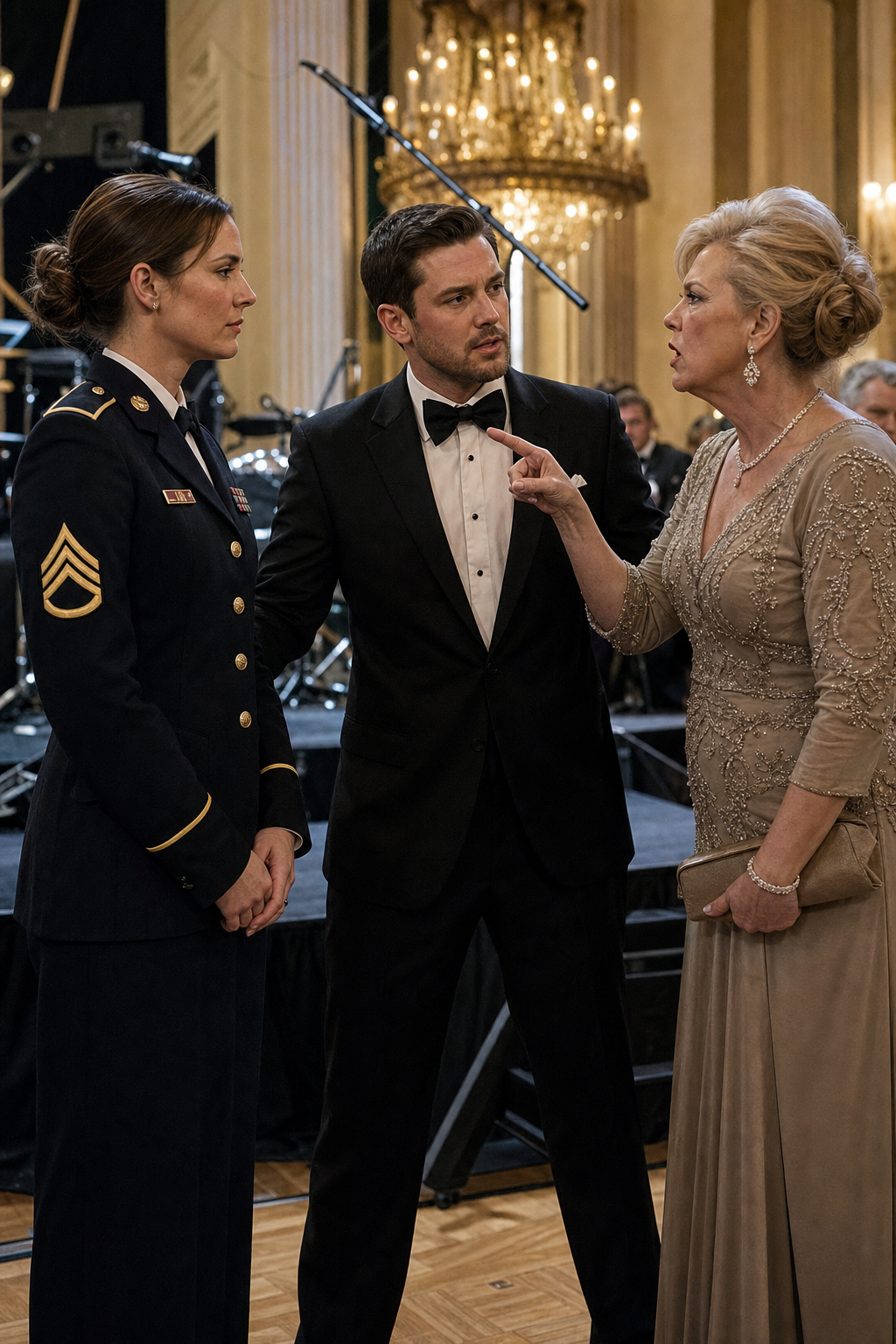
Carol kept whispering to Nate.
Nate kept nodding without looking at Olivia.
That was the habit in its purest form.
Carol filled the room.
Nate made space for her.
Everyone else was expected to squeeze.
The guardian ad litem read from Mia's interview.
Mia had asked whether bad girls got their hair taken.
Olivia felt that sentence leave the page and enter her ribs.
Nate finally looked up.
Too late.
Carol dabbed at one eye.
No tear fell.
The judge saw that too.
Then came the question.
If this happens again, who will you protect first?
Nate looked at his mother because his body had learned the answer before his mouth found one.
That was the whole case.
Not in legal language.
Not in exhibits.
In one glance.
Olivia did not need to say look at him.
Everyone already had.
Carol Wanted The Hair To Grow Back Before Anyone Named It
Carol's lawyer tried the soft route first.
Hair grows back.
Grandmothers make mistakes.
Families should not be torn apart over one bad afternoon.
Olivia listened without moving.
Then the guardian read Mia's school note from the next day.
Mia had worn a hood indoors.
She had asked the teacher if proud girls went to bad places.
She had cried when another child dropped a pencil because the sound reminded her of the clippers hitting the sink.
The courtroom changed there.
Not loudly.
Loud would have helped Carol.
This was worse.
People became still.
The kind of still that means they are no longer waiting for the polite version.
Nate rubbed both hands over his face.
Olivia did not comfort him.
She had spent too many years comforting the adult who arrived late to the truth.
Mia was not in the courtroom that day.
That was the only mercy Olivia felt certain about.
Her daughter did not need to watch grown people debate whether her fear counted.
Nate Mistook Regret For Repair
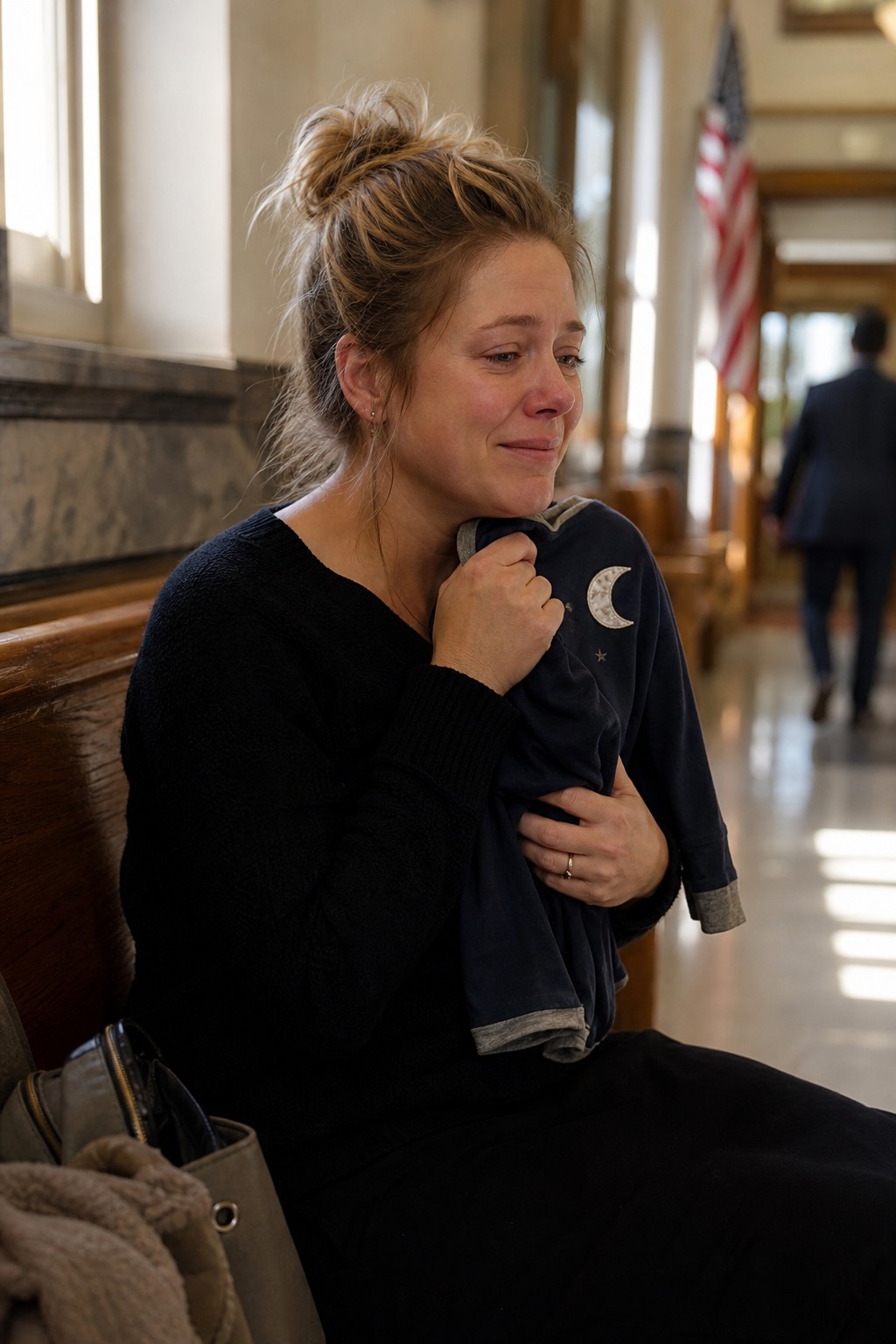
After the order, Nate waited by the courthouse elevators.
He looked wrecked.
Olivia believed that part.
"I froze," he said.
She adjusted Mia's pink hat in her purse.
"No," Olivia said. "You chose the person you were most afraid to upset."
Nate stared at the floor.
The elevator doors opened.
For once, Olivia did not fill the silence for him.
He had lived too long inside women explaining his own choices gently.
This one could stay sharp.
Mia Chose The First Barrette Herself
Three months later, Mia chose a tiny yellow barrette.
There was barely enough hair to hold it.
She wore it to school anyway.
Olivia took no photo until Mia asked.
That mattered.
The picture was not proof for court.
It was not proof for relatives.
It was just Mia, deciding her own head belonged to her again.
Olivia Let The Silence Stay Sharp
Olivia did not soften it later.
Mia deserved that much.