I'm 80 and Never Married After My First Love Vanished in Vietnam; Last Week, a Stranger Who Looked Just Like Him Handed Me a Blue Box
A Stranger at the Cafe
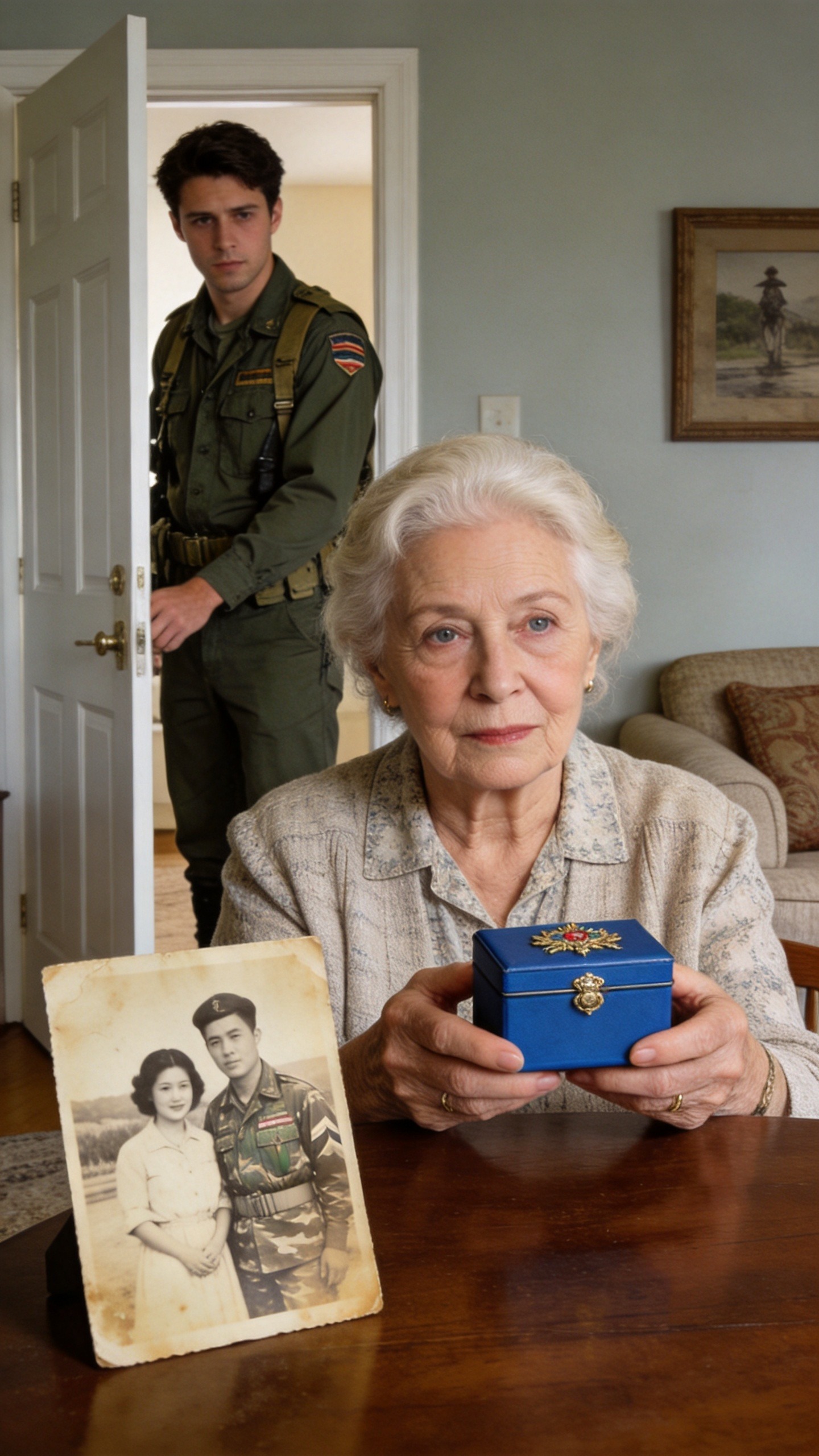
A stranger placed a blue box on the cafe table between my red carnations and the coffee I had not touched. His hand shook as badly as mine.
"I promised someone this would reach you," he said. "No matter how long it took."
For one breath, I forgot I was eighty. The man across from me had Caleb Rowe's blue eyes, his crooked half smile, and the small dimple I had once kissed beneath an old willow tree.
"Who are you?" I asked.
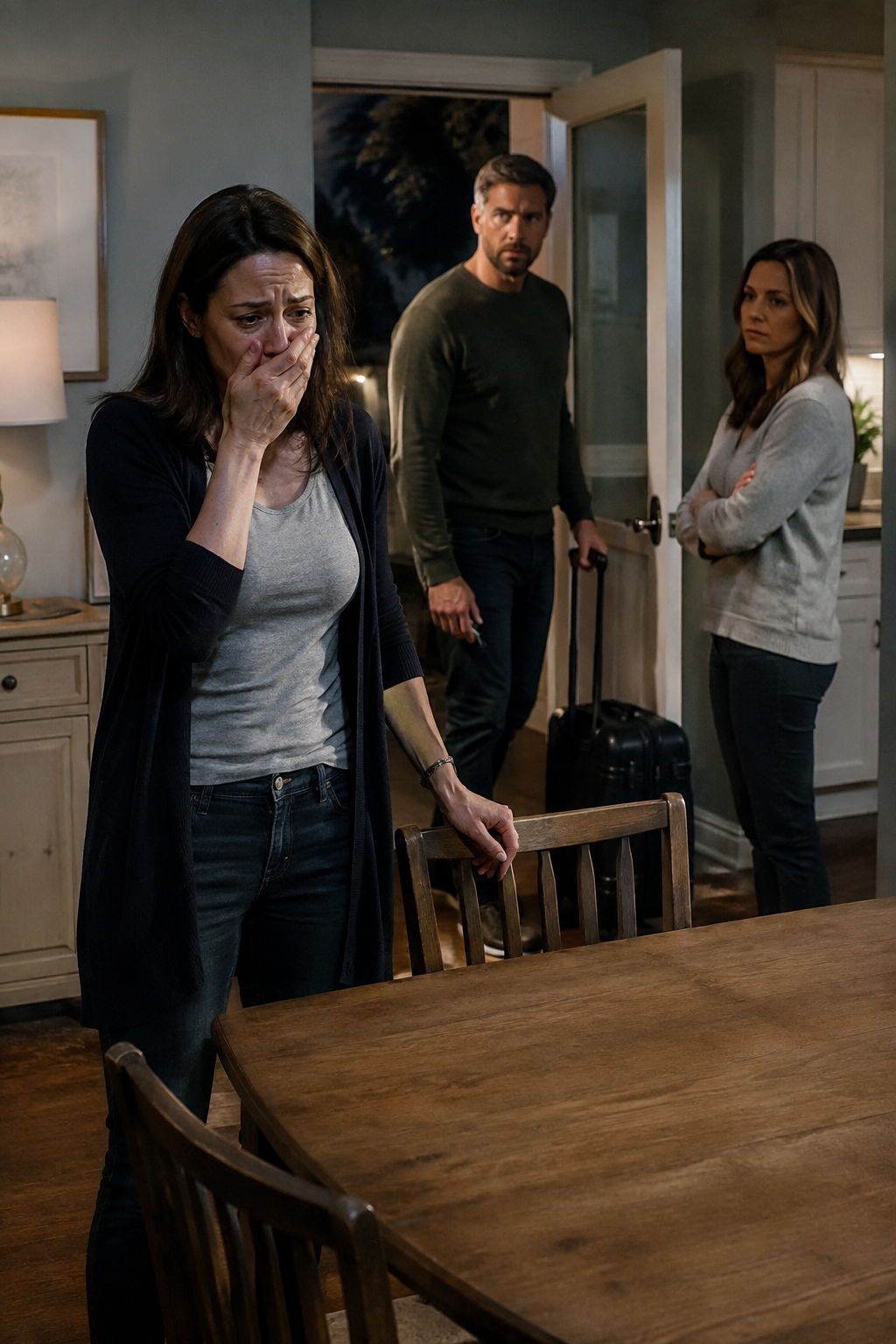
Before he could answer, my niece Tessa hurried through the cafe door. Her face told me she knew more than she had admitted.
"Aunt Mara, I only knew a man had found something that might belong to you," she said. "I wanted proof before I gave you hope."
"I have carried my own hope for sixty-two years," I told her. "You do not get to decide when I am ready to hold it."
Tessa lowered her eyes. "You are right. I am sorry."
The stranger nodded toward the box. "Please open it, ma'am."
I looked at the blue lid and saw the dust of decades on its corners. It was not a polished keepsake bought for drama. It had scratches near the clasp, a water stain along one side, and a strip of old tape where someone had tried to keep it shut.
My carnations trembled against the saucer. For years, people had told me memory could soften a wound. They were wrong. Sometimes memory only learned to sit quietly until one small object called it by name.
The Promise Inside the Box
The lid creaked softly. Inside lay a silver ring, a folded paper, and a faded photograph of Caleb and me under the willow behind our high school.
I was eighteen in the picture, wearing the yellow dress Caleb said made me look like walking sunshine. He stood behind me with both arms around my waist.
On the back, in the handwriting I had known better than my own, were seven words: "Mara, I will come home to you."
My chair scraped the floor as my strength left me. A little girl at the next table slid a napkin toward me without saying a word.
The stranger waited until I could breathe again. "My name is Julian," he said. "Caleb Rowe was my father."
The cafe noise went thin and far away. I looked at him again and saw not a ghost, but a son.
"No," I whispered. "Caleb died in Vietnam."
"He was declared missing," Julian said carefully. "Later they presumed him dead. But he survived."
For sixty-two years, I had mourned a man who had been living beneath the same sky.
Tessa reached for my shoulder, then stopped. She knew I hated being steadied before I had fallen. "How long have you known?" I asked her.
"Three days," she said. "I checked his records. I called the care home. I wanted to make sure this was not someone playing with your heart."
"My heart has survived worse than being played with," I said, but I squeezed her hand before she could pull it away.
The Years I Had Buried
Caleb and I met in our senior year. He was the boy who carried my books without asking and laughed when I pretended not to like it.
We spent whole afternoons beneath the willow, making plans as if the world had promised to leave us alone.
Then the draft notice came. On his last night home, we stayed under that tree until dawn. My hands trembled in his.
"No matter how long it takes," he told me, "I will come home to you."
A year later, his mother came to my porch in tears. Caleb was missing in action. Months after that, the official letter said he was presumed dead.
I never married. People called it devotion when they were kind and stubbornness when they were not.
I built a quiet life anyway. I read to children in hospital rooms, helped lonely neighbors, and kept Thursdays for anyone who needed gentleness more than conversation.
Every year on Caleb's birthday, I carried red carnations to the willow and left them there before walking home alone.
Why He Never Came Back
"Where has he been?" I asked Julian.
He glanced at Tessa, then unfolded the papers from the box. "Dad suffered a head injury during the war. It damaged his memory. Later, dementia made the gaps worse."
"He forgot me?"
"He forgot most of the life he had before the injury," Julian said.
The words hurt, but not as much as the truth behind them. Caleb had not broken his promise because he stopped loving me. He had lost the path back to it.
Julian had found the box locked in his father's drawer after moving him into full-time care. During one clear moment, Caleb had pressed it to his chest.
"He said, Sunny must have the box," Julian told me.
Only Caleb had ever called me Sunny.
I closed the lid around the ring and photograph. "Take me to him."
Julian's jaw tightened as if he had expected that answer and feared it anyway. "He is not the man in that photograph," he said.
"Neither am I the girl in it."
"There may be nothing for you there except pain."
I touched the ring through the box. "Then pain can finally tell me the truth to my face."
The Man Behind the Door
During the drive, I asked whether Caleb had ever spoken of me. Julian kept both hands tight on the wheel.
"He remembers feelings better than facts," he said. "Sometimes he talked about a girl in yellow whose hands shook."
"That was me," I said.
Then I asked the question I feared most. "Did he marry?"
"Yes," Julian answered.
The word landed heavily, but anger never came. I pictured a wounded young soldier trying to build a life from pieces he could still find.
Julian said his mother had helped Caleb recover. She knew there had been someone before the war, though not my name. She had died five years earlier.
At the care home, a nurse warned me not to push him. "He may not recognize you," she said. "If he becomes distressed, we will stop."
Behind the door waited an eighty-year-old man, not the eighteen-year-old I had kept safe inside my memory.
The hallway smelled of lemon cleaner and warm oatmeal. Somewhere a television laughed too loudly. I remember those ordinary details because my mind grabbed at them, desperate to stay in a world where people still ate breakfast and nurses pushed carts and doors opened for reasons that made sense.
Outside Caleb's room, Julian stopped. "If you need to leave, just say so."
I shook my head. I had spent a lifetime with a closed door in my chest. I had not come all this way to turn away from the real one.
No Spark of Recognition
Caleb sat by the window in a wheelchair. His hair was white, his shoulders narrow, but his eyes were still the same blue.
Julian bent beside him. "Dad, someone came to see you."
Caleb looked at me with polite confusion. Hope folded inside my chest.
"My name is Mara," I said.
"Mara," he repeated, as if testing a word from a language he had almost forgotten.