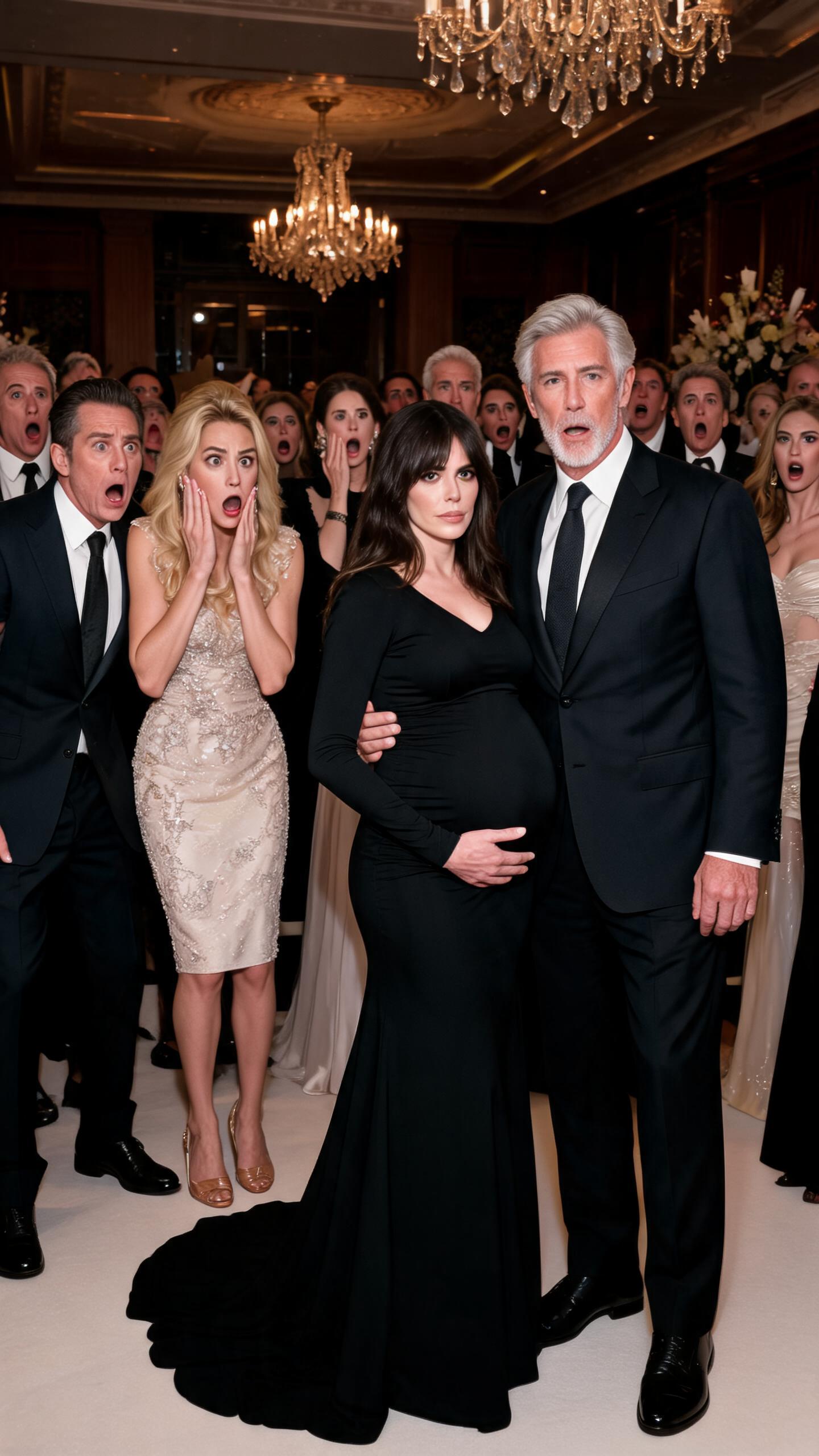
She Snipped My Little Girl's Dress In Front Of The Whole Ballroom And Said, "Children Like Her Don't Wear Satin." Then The Diamond Locket Around My Daughter's Neck Opened And Exposed The Baby My Family Had Buried For Years
The succession amendment.
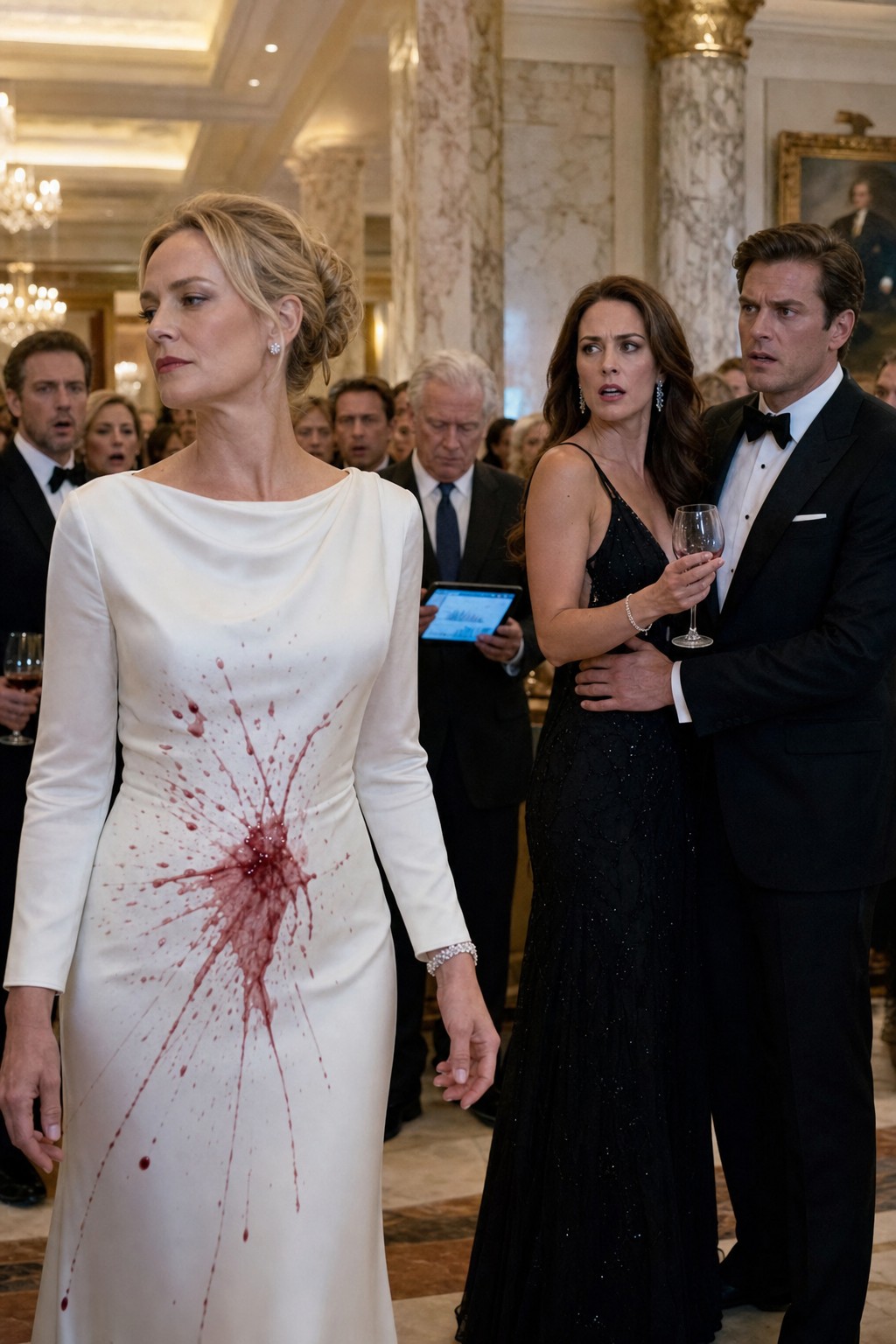
The papers I had found in my mother's safe deposit box three days earlier, after the retired housekeeper finally contacted me through an attorney. Celeste was pushing Arthur to transfer control of the Beaumont Foundation and three hotel trusts to her nephew before the next medical review of his memory.
She needed me dead in every legal sense.
She needed Mara nonexistent.
Because my mother's trust named my eldest child as the secondary heir if I was alive, and primary heir if I was not.
Mara did not know what that meant.
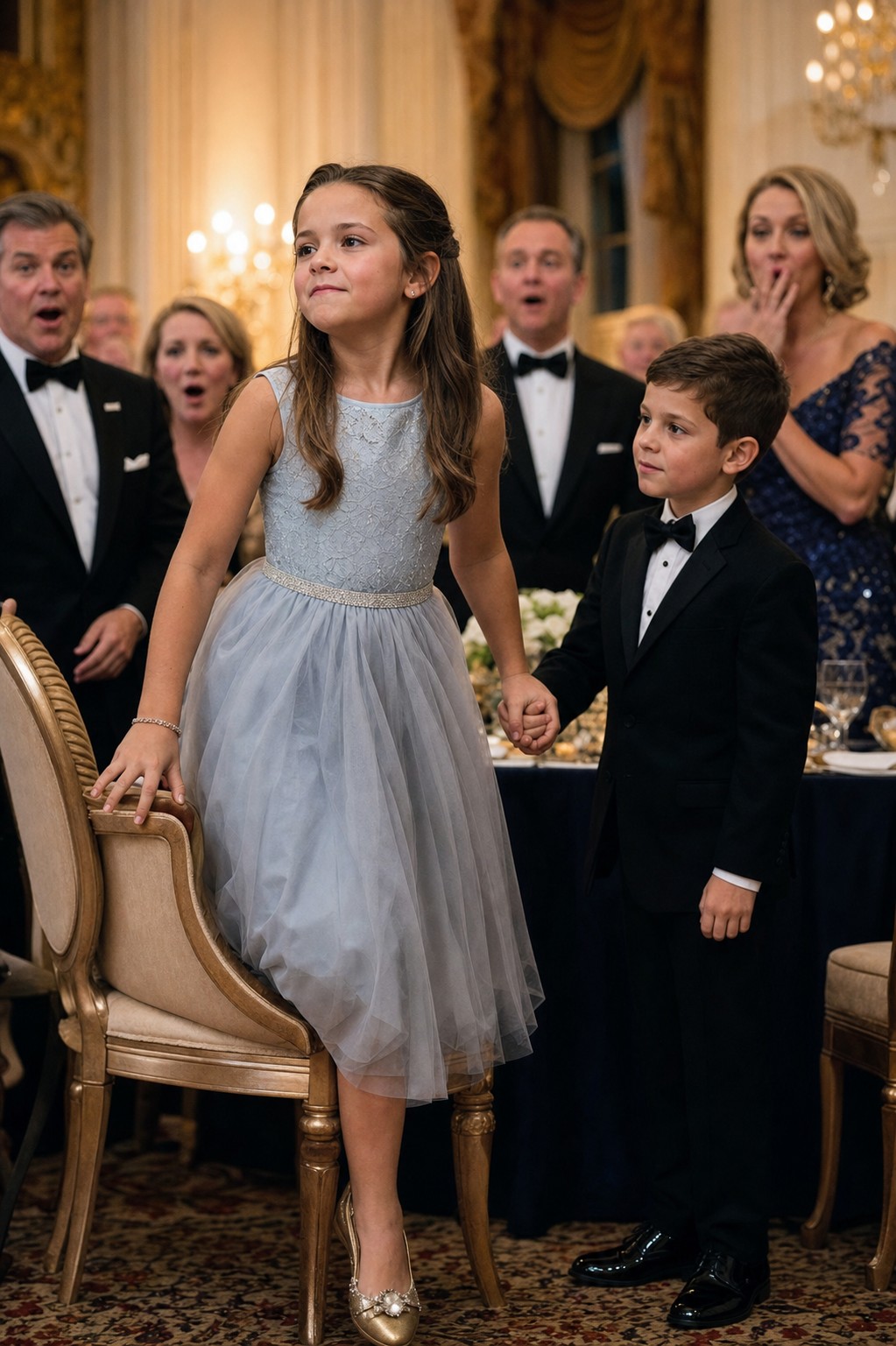
She only knew her dress was torn.
"You cut a child's clothing in front of this entire room," I said to Celeste. "You can stop pretending this is about concern."
Her eyes flashed.
"That child walked in here wearing stolen diamonds."
Mara recoiled.
Arthur saw it.
For the first time that night, he looked at my daughter not as evidence, not as a miracle, not as a scandal, but as a little girl who had been humiliated by adults.
He removed his tuxedo jacket and wrapped it around her shoulders.
"No granddaughter of mine," he said, voice breaking, "will be left standing uncovered while this family remembers how to tell the truth."
The room went still in a different way.
Not silence.
Recognition.
Some guests lowered their phones.
Some lowered their eyes.
One elderly woman near the front began to cry into a napkin.
Celeste looked toward the side doors.
Two security guards stepped in front of them.
My father raised his hand.
"No one leaves."
The Woman Who Buried Us Forgot About The People She Paid
Celeste recovered faster than most guilty people do because guilt had never slowed her down.
"You have no authority to detain anyone," she said.
"In my house?" Arthur asked.
"In a public event with donors, trustees, police, press, and three senators?"
"Then let them listen."
She smiled then.
That old smile.
The one she used on my father when she wanted him to feel foolish for doubting her.
"Fine. Let them listen to a runaway daughter who invented persecution after embarrassing this family."
I reached into the small satin purse Mara had insisted matched my dress.
Celeste saw the envelope before I opened it.
Her smile disappeared.
"What is that?"
"The reason I came tonight instead of going to the police first."
Arthur looked at me.
"Juliet."
"You deserved to hear it in the room where she planned to replace us."
I unfolded the first page.
It was not a will.
Not a DNA report.
Not a lawyer's tidy letter.
Celeste knew how to explain those away.
It was a payroll sheet from the year of the fire, signed by Celeste's former estate manager, Thomas Acker, listing cash payments to three men assigned to "night transport" and "clinic retention."
The second page was a recorded statement from Acker, notarized three weeks before his death.
The third was a photograph from a traffic camera outside the Beaumont service gate at 2:17 a.m. on the night everyone said I died.
In the back seat of Celeste's town car, my pregnant body was slumped against the window.
Several people gasped before I finished showing it.
Celeste whispered, "That is fabricated."
"No," I said. "It is old. There is a difference."
Arthur took the photograph from my hand.
He looked at it for a long time.
Then something in him folded.
Not his posture.
His certainty.
He had been a hard father. Proud. Absent. Too willing to let stronger voices make decisions when grief tired him out. But he had loved me before Celeste turned that love into suspicion.
Now he saw the car.
He saw me.
He saw the date stamped in the corner.
He saw what his silence had cost.
"Call Detective Raines," he told security.
Celeste snapped, "Arthur, think very carefully."
"I have spent eight years thinking badly," he said. "Tonight I will begin thinking clearly."
The trustees along the front tables began whispering among themselves.
That frightened Celeste more than police.
Power leaving her one conversation at a time.
"If you do this," she said, "the foundation collapses. The hospital wing loses funding. The scholarship vote fails. The press will tear your name apart."
"My name?" Arthur asked.
He looked down at Mara, small beneath his tuxedo jacket, one hand still gripping the torn satin.
"My name is standing in front of me wearing a dress you cut."
Celeste's mouth opened.
Nothing came out.
For the first time in my life, I watched her search for a weapon and find only witnesses.
Then Mara spoke.
Her voice was tiny.
"Why did you hate my mama?"
Celeste flinched as if the child had struck her.
All those years, all those papers, all that money, all those threats, and the question that cracked her came from the person she had tried hardest to erase.
"Because she was going to take everything," Celeste said.
Arthur's face went white.
She heard herself too late.
The sentence hung over the ballroom, plain and monstrous.
Not confused.
Not grieving.
Not protecting the family.
Taking everything.
"From you?" I asked.
Celeste looked at me with naked hatred.
"From all of us."
Police arrived seven minutes later through the east corridor. Not in a dramatic rush. No shouted entrance. Just four officers and a detective in a gray coat who looked at the torn dress, the locket, the photograph, the sealed statement, and Celeste's face.
"Mrs. Beaumont," he said, "we need you to come with us."
She tried to reach for Arthur.
He stepped back.
That single movement finished what the evidence began.
The House Opened Its Doors Too Late, But It Opened
The newspapers called it the Beaumont miracle for a week.
Then they called it the Beaumont scandal.
Then, as more documents surfaced, they called it an investigation.
I hated every name.
Mara did not need headlines.
She needed the strap of her dress mended.
She needed to sleep without checking the window.
She needed to learn that family could mean something other than danger arriving in expensive shoes.
Arthur tried too hard at first.
He sent tutors, doctors, toys, riding lessons, a room full of pale blue furniture that made Mara stare at him as if he had misunderstood every ordinary child in America.
Then, one afternoon, she brought the torn blue dress to his study and asked if the house had anyone who could fix it.
He called the best seamstress in the city.
Mara shook her head.
"Can you?"
My father, who had never sewn a button in his life, sat beside her with a travel sewing kit and learned to make uneven stitches while she told him about the apartment where we kept basil on the windowsill.
I watched from the doorway and felt something worse than anger.
Grief.
For the years Celeste stole.
For the father who failed me and still loved me.
For the child who had to be hurt in public before anyone believed the private truth.
Celeste's case dragged through hearings, sealed motions, and old witnesses who finally remembered what fear had trained them to forget. Her nephew vanished from the trust vote. The foundation board withdrew the succession amendment. My mother's original trust was restored after a judge reviewed the locket clause and the safety letters she had hidden across three banks.
One letter was addressed to me.
My Juliet,
If this necklace returns before I do, trust your child. Children carry truth more cleanly than adults carry power.
I read it once.
Then again.
Then I folded it and placed it in Mara's memory box beside the blue dress strap.
Months later, the ballroom reopened for a smaller foundation dinner.
No press.
No chandeliers blazing like a trial.
Just the children's hospital families, trustees under new rules, and a little girl in a repaired blue dress who walked in holding her grandfather's hand.
Mara wore the locket again.
Not to prove anything.
Because it was hers.
Near the doorway, a woman I did not know bent down and said, "You look beautiful."
Mara glanced at me first.
Not scared.
Just checking.
I nodded.
She smiled, shy and bright.
"Thank you."
Arthur heard it and looked away quickly, pretending to study the program because he did not want anyone to see him cry.
I let him have that dignity.
We were not healed.
Not completely.
Maybe families like ours never are.
But when the music began, my daughter stepped onto the same marble floor where she had once stood trembling in torn satin.
This time, no one cut her down.
And this time, if anyone tried, the whole room already knew whose child she was.