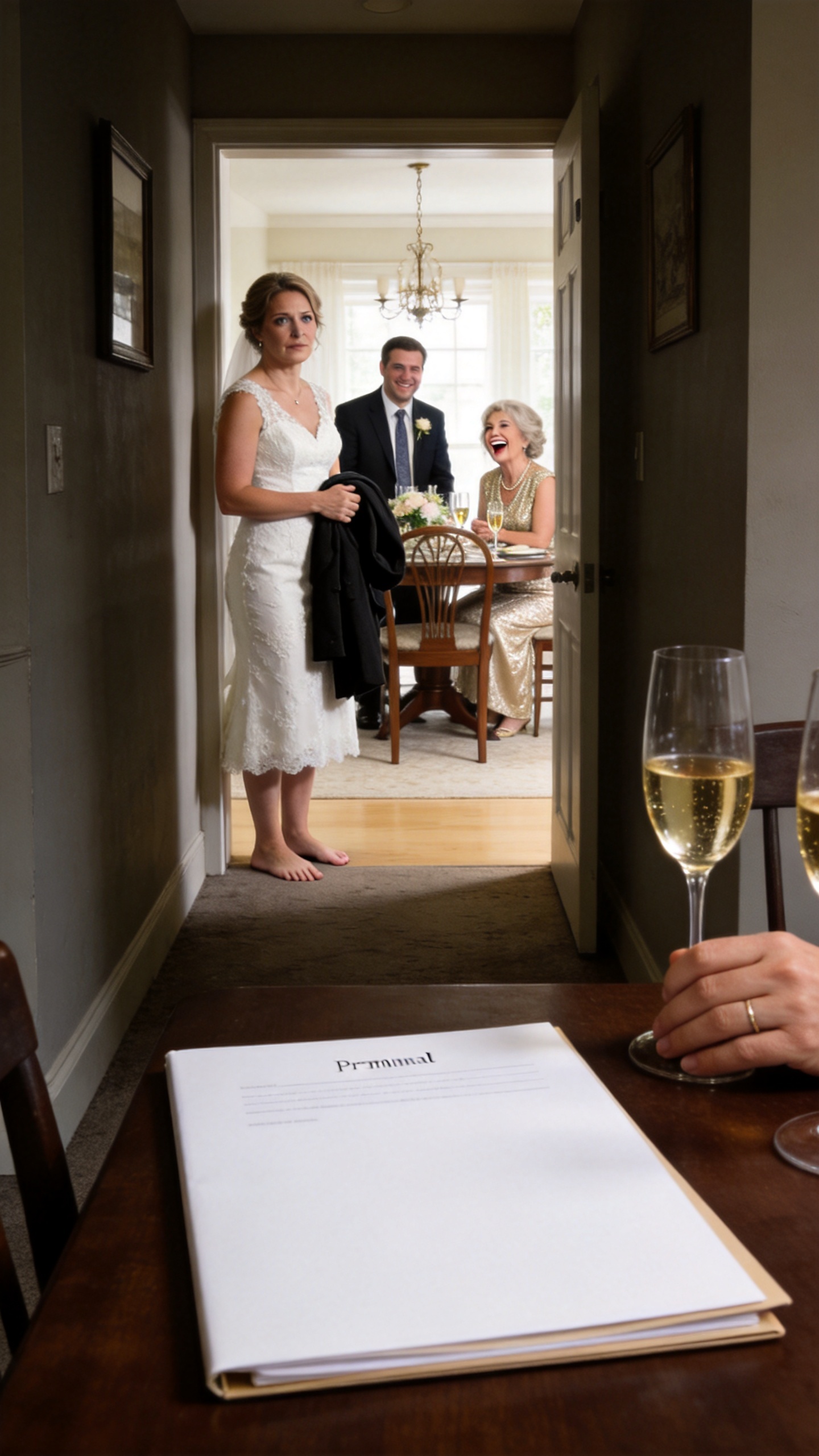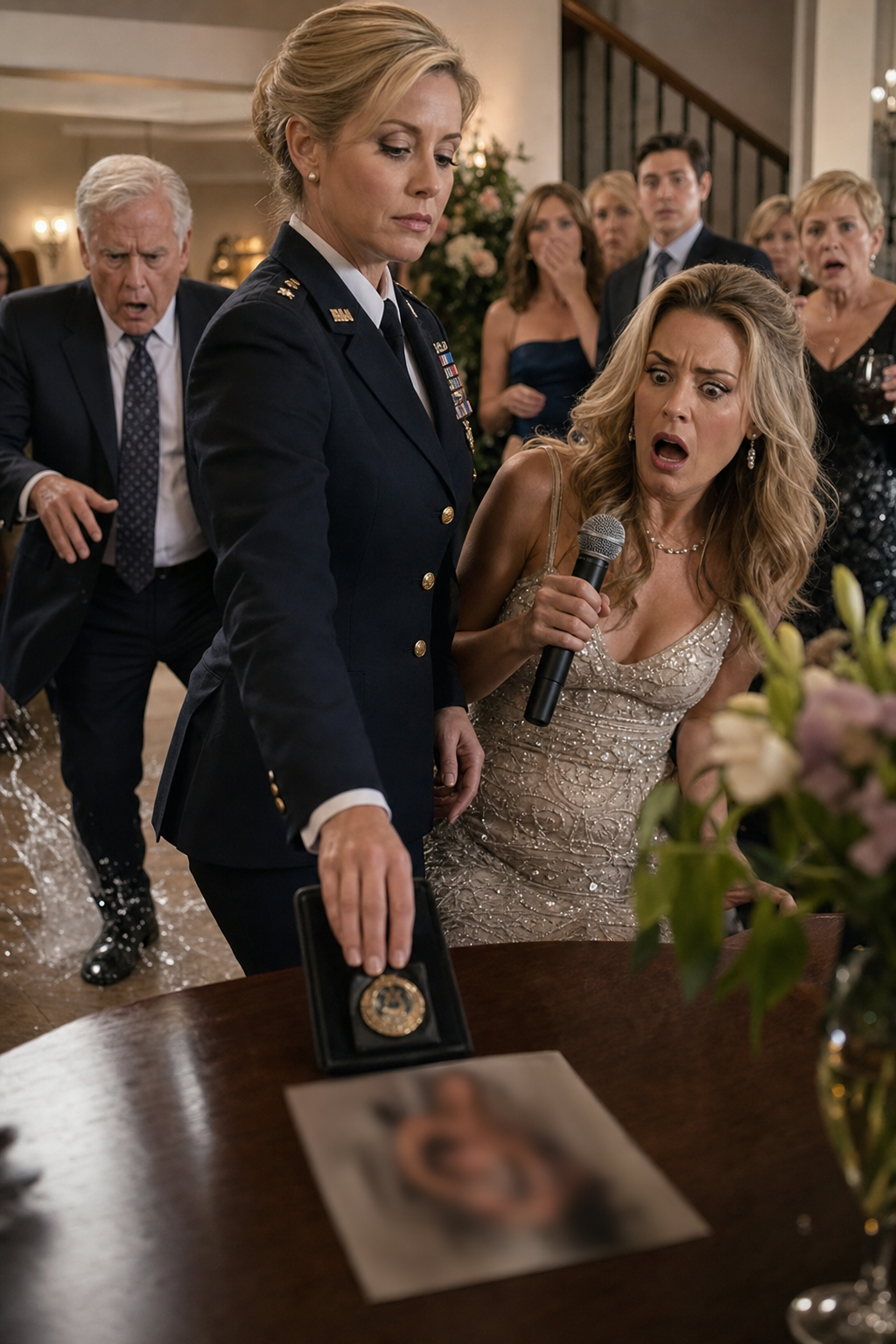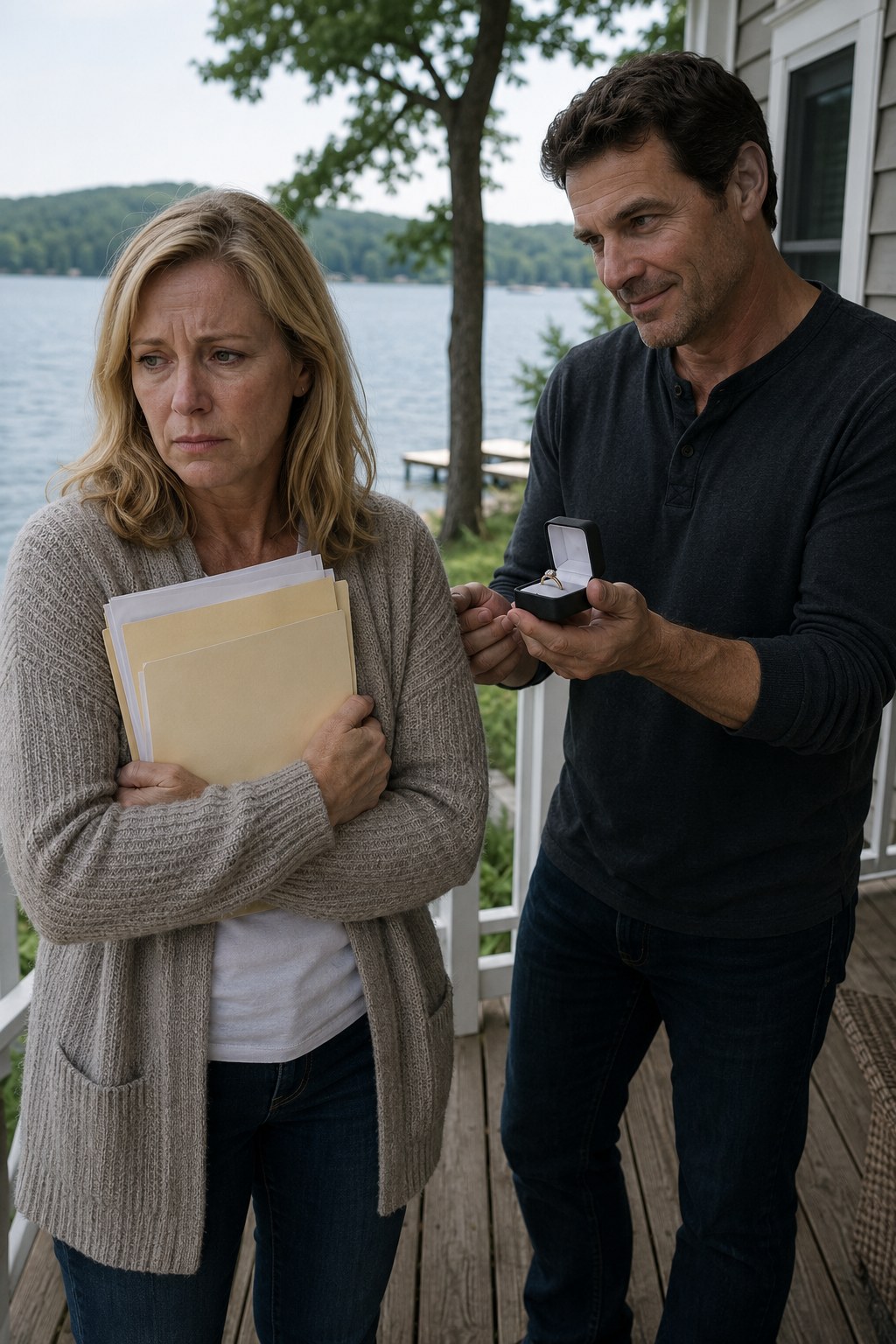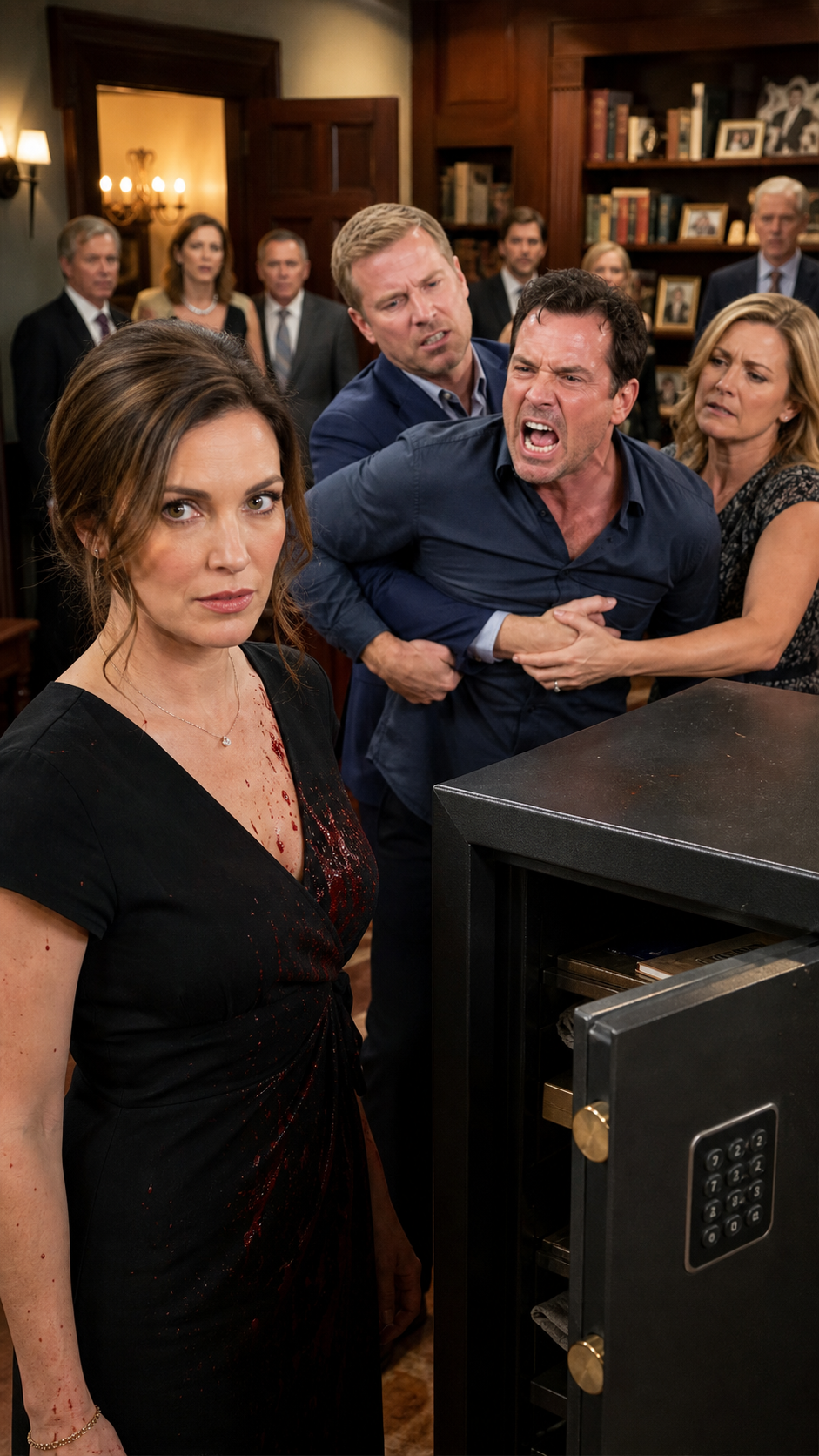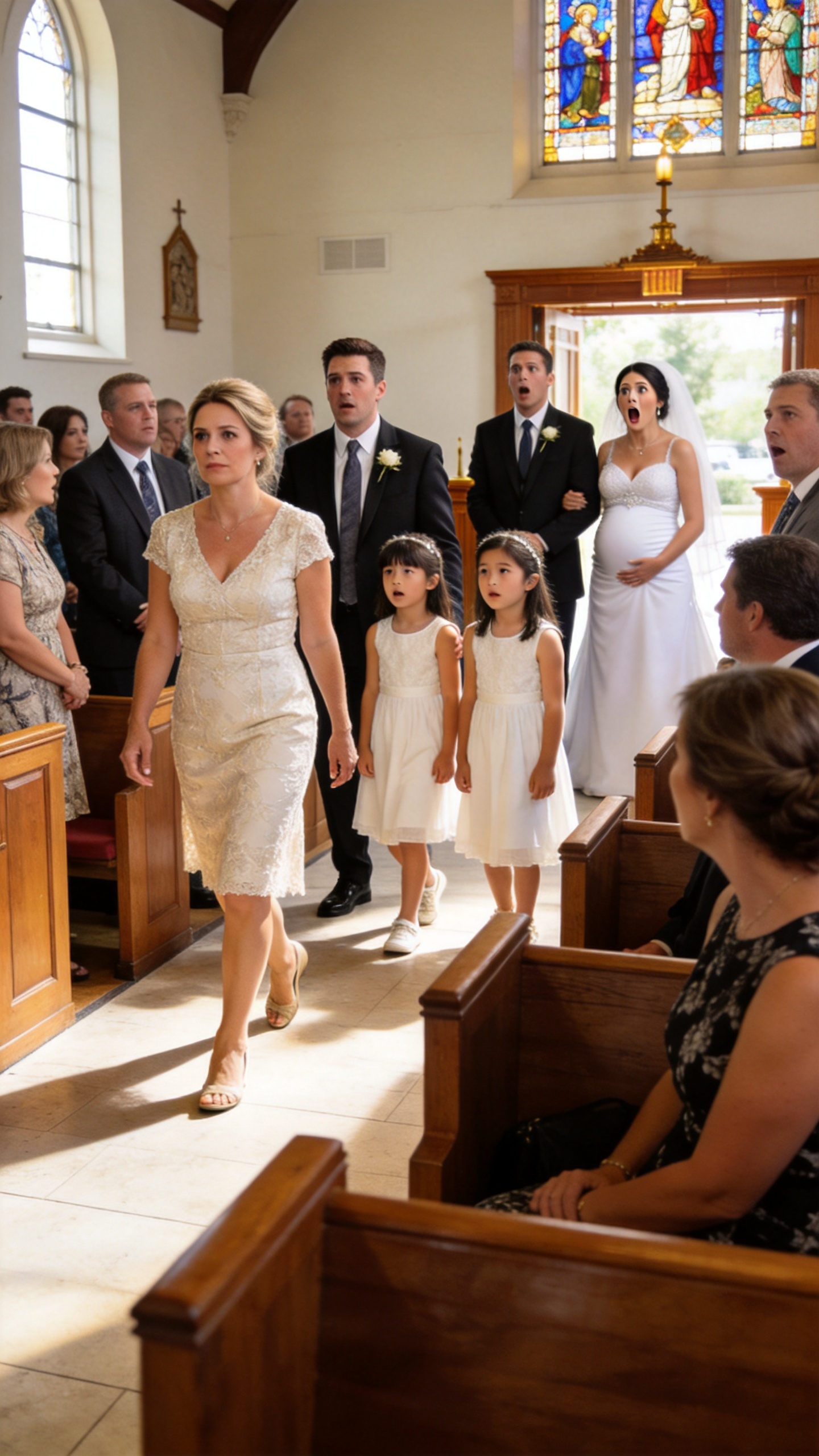
I Married A Man 30 Years Older For His Fortune, And His Daughter Said I Would Get Nothing. After His Funeral, His Lawyer Handed Me A Box And Said, "He Made Sure You Got Exactly What You Deserved"
She did not look at me once.
After the burial, she walked past me at the graveside.
"The lawyer will explain," she said. "Don't embarrass yourself by expecting sentiment."
That afternoon, I wore the same black dress to the reading of the will.
It was the only black dress I owned.
Vivian arrived with her husband, two cousins, and the expression of a woman attending a performance she had already rehearsed.
The lawyer, Mr. Beckett, placed several folders on the table.
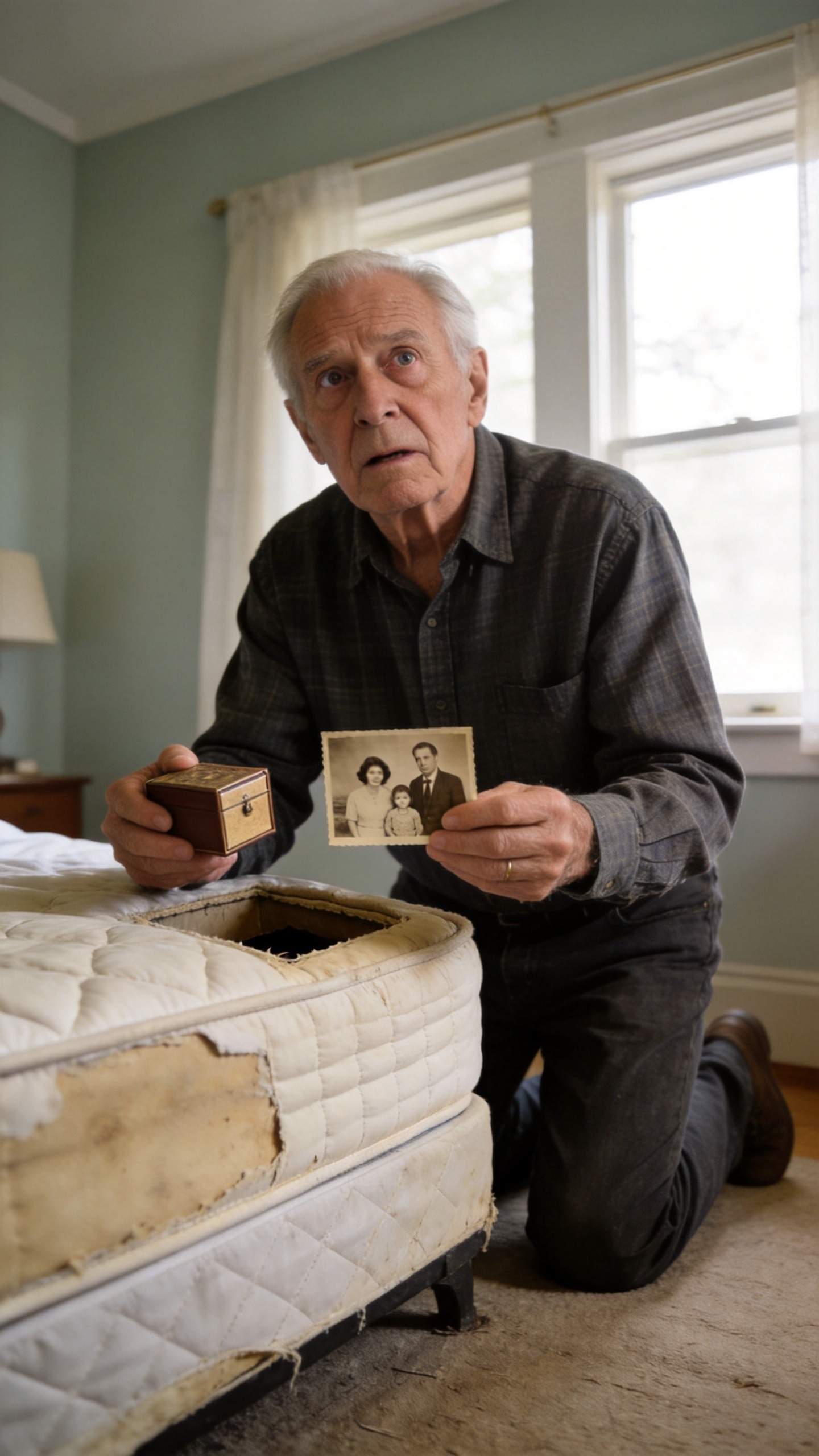
Then he set a wooden box in front of me.
Dark walnut.
Small enough to hold in both hands.
The brass key on the blue ribbon burned inside my purse.
Vivian laughed under her breath.
"How theatrical."
Mr. Beckett looked at me.
"Mrs. Whitmore, your husband asked that you open this before the will is read."
My fingers shook so hard I nearly dropped the key.
Vivian leaned back.
"This should be good."
The lock clicked.
Inside the box was not jewelry.
Not cash.
Not some cruel token to prove I had been temporary.
There was a stack of letters tied with blue thread.
A photograph of Arthur and me sitting at the kitchen table, both laughing at something I could not remember.
And a folded document with my name at the top.
Nora Whitaker Whitmore.
Foundation Director.
The Box Was Not A Gift But A Witness
Mr. Beckett read Arthur's letter first.
Not all of it.
Just the part Arthur had marked in his own slanted handwriting.
My daughter believes love is proven by blood and ownership. Nora proved it by staying when there was nothing left to gain.
Vivian went pale.
Her husband touched her elbow.
She shook him off.
Mr. Beckett continued.
Arthur had changed his estate plan eleven months before the diagnosis.
Not after.
Before anyone could claim illness made him sentimental.
The house would not go to me.
Vivian smiled too soon.
The house would be placed in a family preservation trust, with Vivian allowed to live in the east wing for one year while personal property was cataloged.
The west wing, gardens, and carriage house would become the first home of the Whitmore Open Door Foundation, a residential program for working women leaving medical debt, domestic instability, or housing insecurity.
I would direct it.
With a salary.
With independent board protection.
With a ten-year operating fund Vivian could not touch.
My old apartment building had been purchased quietly through the same trust.
Every tenant's overdue balance would be cleared.
The building would be renovated without displacement.
And I would receive something else.
Not the grand inheritance Vivian had accused me of chasing.
A life estate in the small lake cottage where Arthur had spent summers as a boy.
"Because," Mr. Beckett read, "Nora once told me she had never owned silence that felt peaceful. I want her to have a place where no one can make her feel temporary."
I covered my mouth.
Vivian stood so fast her chair struck the wall.
"This is manipulation."
Mr. Beckett removed another folder.
"Your father anticipated that objection."
Of course he had.
Arthur had spent his final weeks weak, not foolish.
There were video statements.
Physician letters confirming capacity.
Earlier drafts.
Notes in his own hand.
A record of Vivian's attempts to restrict my hospital visits.
And one letter addressed directly to his daughter.
Mr. Beckett did not read that one aloud.
He handed it to her.
For the first time since I met her, Vivian had no audience to perform for.
Only paper.
Only her father's words.
She opened it with shaking hands.
I never knew what the whole letter said.
I only saw the sentence that made her sit down.
Nora did not take your place, Vivian. She revealed what you had allowed your place to become.
The room did not explode.
Real humiliation is often quiet.
It sounds like a chair settling.
A breath caught too late.
A woman realizing the victory she expected had been weighed years before she arrived.
Vivian looked at me then.
Not with kindness.
Not yet.
But without certainty.
That was the first crack.
He Made Sure I Inherited More Than Money
The newspapers wrote about the foundation because rich men's wills become public entertainment when they surprise the rich.
Some headlines called me a waitress widow.
Some called me lucky.
One called me the fortune bride who won.
I stopped reading after that.
Winning was not the word for waking alone in a house that still smelled faintly of Arthur's shaving soap.
Winning was not folding his cardigan and realizing no one would wear it again.
But work helped.
The foundation opened six months later.
Not perfectly.
Nothing real opens perfectly.
The roof needed repair.
The board argued over budgets.
The first resident cried because the bedroom door had a lock only she controlled.
I cried with her after I left the room.
At the apartment building, tenants who had avoided me for years because everyone avoids everyone when poverty is embarrassing began knocking on my door with casseroles, flowers, and stories of Arthur visiting without photographers.
He had remembered where I came from.
Not as shame.
As instruction.
Vivian fought the trust for eight months.
She lost every motion.
Then, one rainy morning, she came to the foundation with a box of her mother's gardening books.
"These belong in the library," she said.
I waited for the insult hidden behind the sentence.
None came.
Her face looked older without certainty holding it tight.
"He loved that garden," she added.
"I know."
She turned to leave, then stopped.
"Did you love him?"
The question would have enraged me once.
That day, it only made me tired.
"Yes."
Vivian nodded once.
Not apology.
Not friendship.
Something smaller.
Something that might become human if left alone long enough.
Years later, I still keep Arthur's wooden box on the desk in the cottage.
Inside are the blue ribbon key, the photograph from the kitchen, and the first letter he wrote me after the charity dinner.
Nora, he had written, I hope you sat down today.
That was the thing about Arthur.
He did not save me the way people thought.
He noticed I had been standing too long.
Then he built a place where other women could sit before their legs gave out.
Vivian had been right about one thing.
I did marry a man thirty years older who had a fortune.
But fortune is a strange word.
It can mean money.
It can mean luck.
It can mean the one person who sees you clearly before you know how to stop apologizing for being seen.
After the funeral, when Mr. Beckett said Arthur had made sure I got exactly what I deserved, I thought I was about to be punished for every desperate reason I had said yes.
Instead, Arthur gave me the truth back without dressing it up.
I had wanted shelter.
I had found love.
And in the end, I inherited a door.
Not just for me.
For every woman who had been told gratitude meant silence.