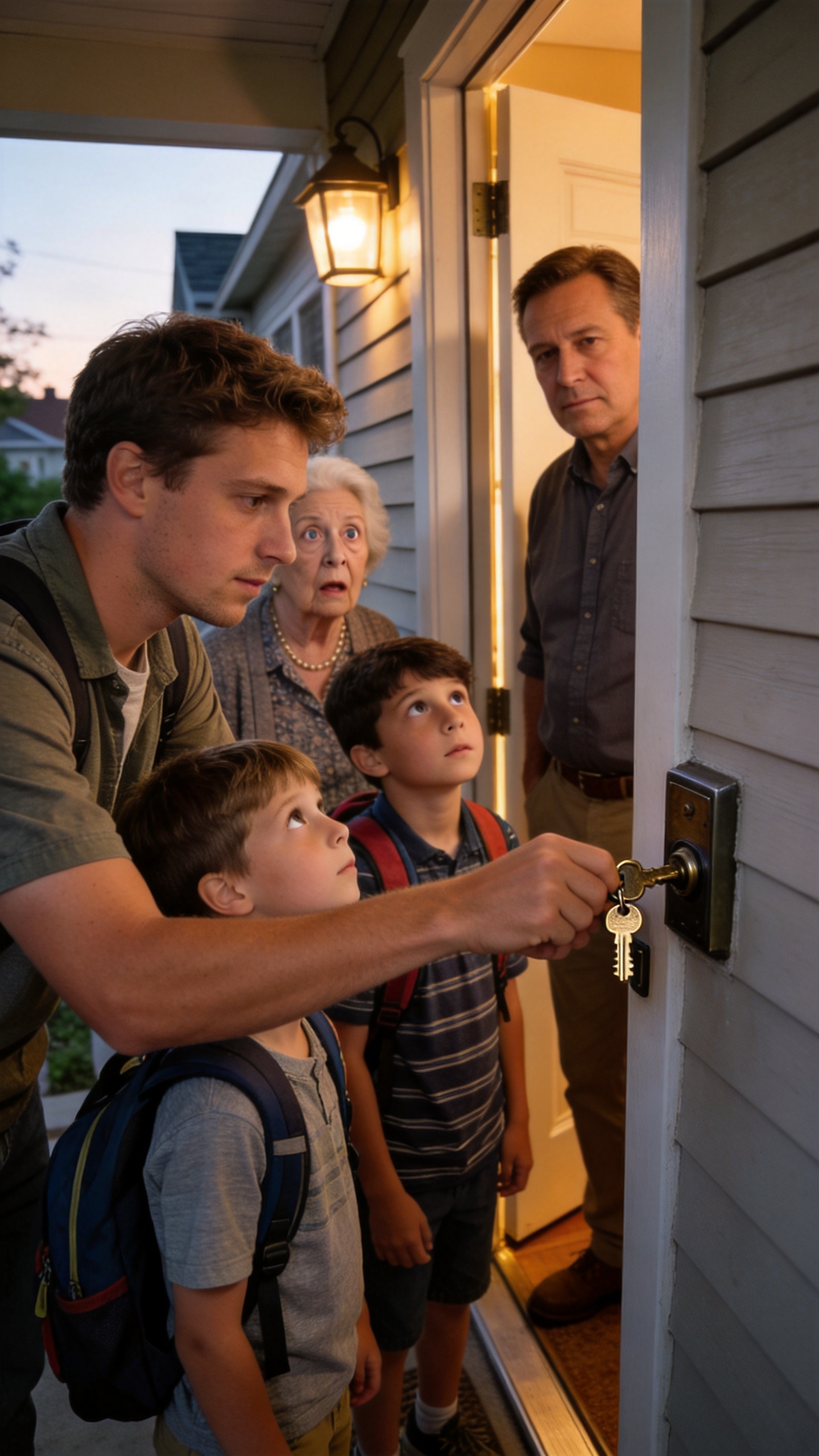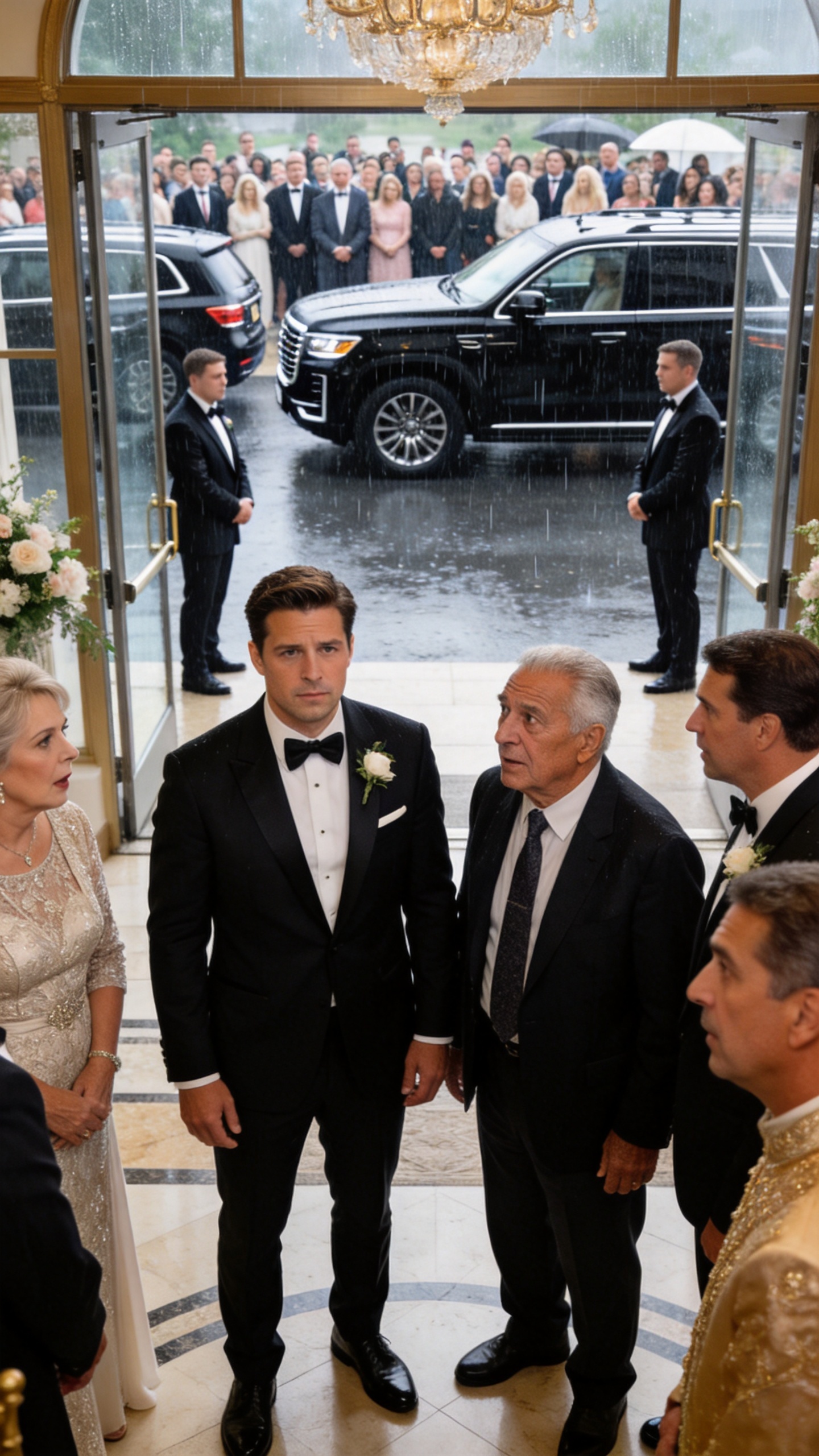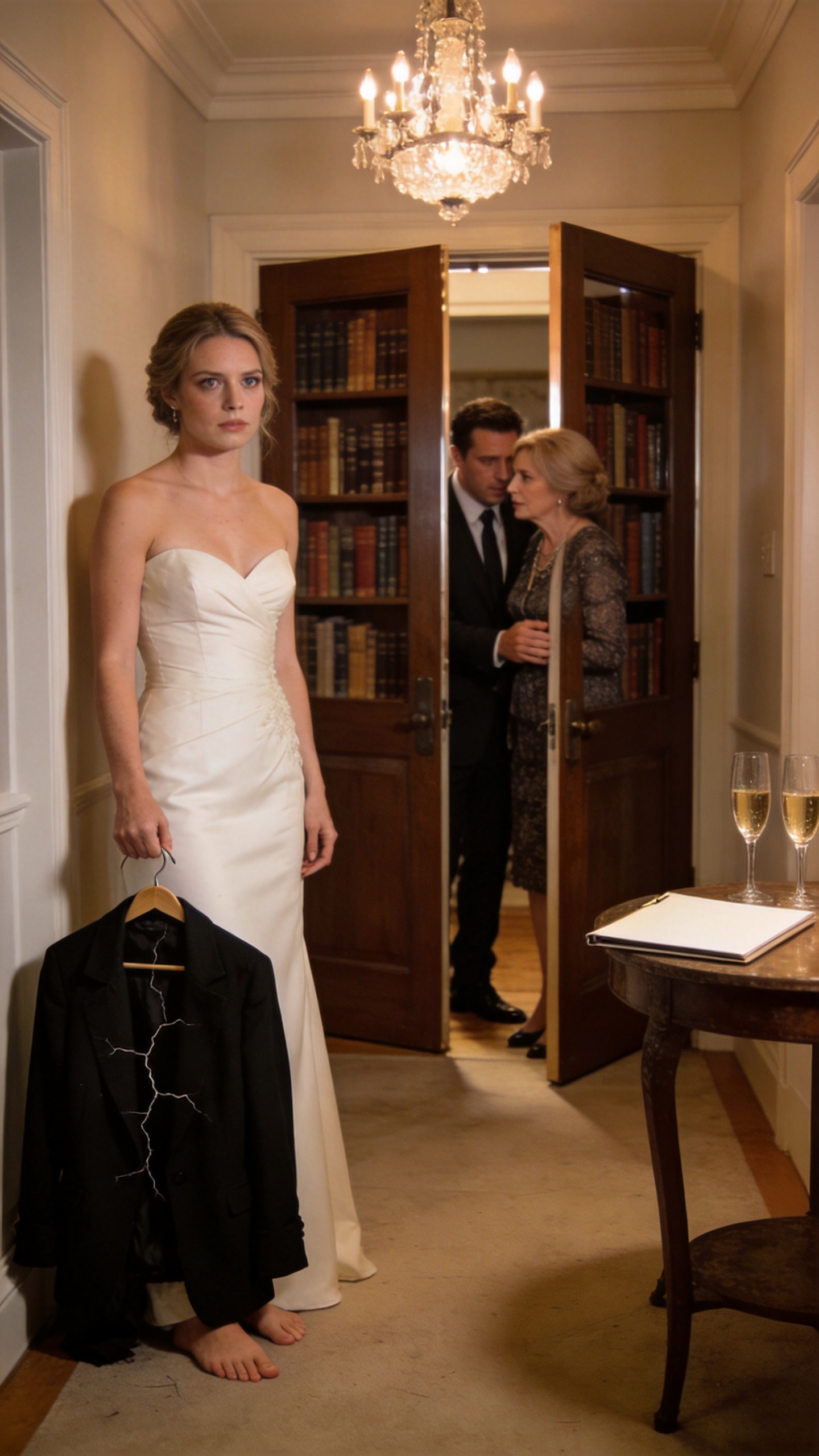
On My Way To My Son's House, I Stopped For Gas When A Stranger Warned Me, "Don't Go. You'll Regret It." Twenty Minutes Later, I Saw Police Cars Outside His Home And My Daughter-In-Law Covered In Blood
The word finances landed strangely in that hospital hallway.
Too clean for blood.
Too ordinary for attempted murder.
But that was how the truth had hidden itself.
Invoices.
Passwords.
Bank transfers.
Marriage.
Claire looked at me as if I had betrayed her.
"Tessa loved him."
I thought of the recording.
I thought of my son bleeding while his wife worried about her plan.
"No," I said quietly. "She loved what he gave her."
That was the first time I said it aloud.
The Warning At The Gas Station Had Not Been Random
Eric woke thirty-six hours later.
He looked gray.
Too thin.
Too young and too old at the same time.
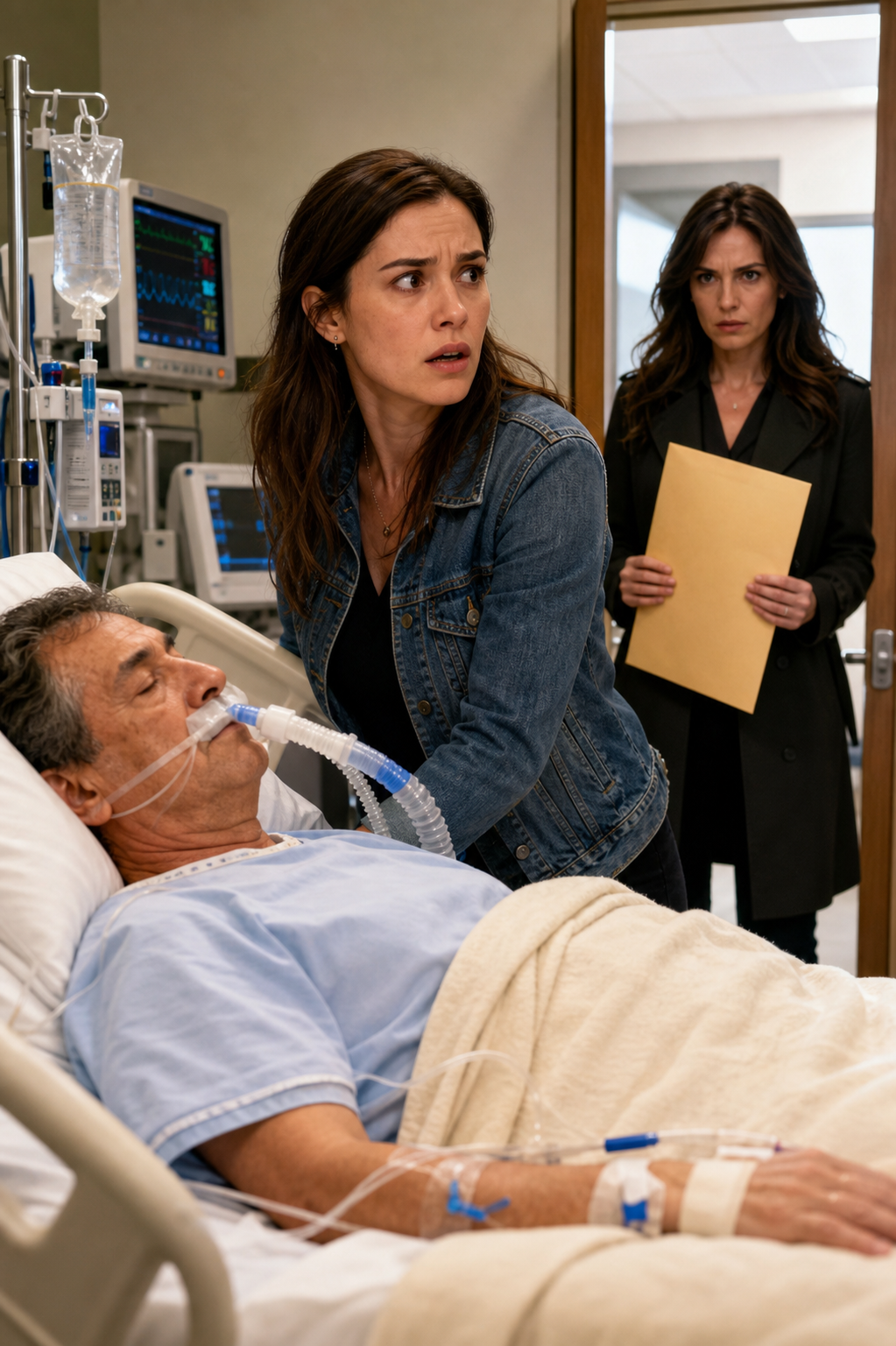
There were tubes, monitors, tape, bruises, and a bandage that made me afraid to look directly at his body.
But his eyes opened.
"Mom?"
I took his hand with both of mine.
"I'm here."
His gaze moved around the room.
"Tessa?"
The question hurt.
Not because he wanted her safe.
Because betrayal does not erase memory.
Someone can destroy you and still leave behind the ghost of the person you thought you married.
"She's in custody," I said.
His eyes closed.
One tear slid toward his temple.
"I was so stupid."
"No."
My voice came sharper than I meant.
"You were trusting. That is not the same thing."
His fingers tightened weakly around mine.
"The recorder?"
"The detectives have it."
"The files?"
"Them too."
He breathed out.
"Good."
Over the next week, pieces of the truth came together.
Tessa had isolated him slowly.
First from friends.
Then from me.
She joked that I called too much.
She said his old employees were jealous.
She convinced him he was bad with money and then took over the books.
By the time Eric realized his company was bleeding cash, she had already built a second life inside the first one.
False vendors.
Fake renovation invoices.
Loans taken against equipment.
Cash transfers to Calvin.
A plan to make Eric look unstable if he confronted her.
The police found a draft statement on Tessa's laptop.
It described Eric as depressed, volatile, and increasingly aggressive.
It mentioned his long work hours.
It mentioned my "interference."
It even included a line about how Tessa had feared for her safety but did not want to ruin her husband's reputation.
The file had been created three weeks before the attack.
Three weeks.
She had been rehearsing grief before my son knew he was in danger.
Detective Singh showed me only part of it, but that was enough.
I went into the hospital bathroom, locked the stall, and pressed both hands over my mouth so Eric would not hear me break.
When I came out, a nurse named Paula was waiting by the sinks with a paper cup of water.
"You do not have to be strong every minute," she said.
I almost laughed.
Mothers do not know what to do with sentences like that.
We are trained to become walls.
But even walls crack when the house is burning.
"Why didn't you tell me?" I asked him once, not angrily, just broken.
Eric stared at the ceiling.
"Because every time I almost did, I heard her voice in my head telling me I was making drama."
I looked away.
That was how control worked.
It trained a person to doubt their own alarm bells.
Detective Reyes visited on the fifth day.
I waited until Eric slept before I followed him into the hallway.
"How did you know I was at that gas station?"
He looked uncomfortable.
"Eric told us you were coming. He said if the conversation went badly, you were the only person he trusted to help him leave the house."
That nearly broke me again.
"Then why warn me like that? Why not say you were police?"
Reyes folded his arms.
"We had eyes near the house. Calvin was moving faster than expected. If you called Eric in a panic, Tessa might have heard. If you arrived in the middle of it, you might have become leverage."
"So you scared me instead."
"Yes."
At least he did not dress it up.
"I am sorry," he said. "I made the call I thought gave your son the best chance."
I hated him for five seconds.
Then I remembered the blood on Tessa's hands.
And I hated the world for giving people choices like that.
The Courtroom Heard What My Son Had Been Too Ashamed To Say
The case took ten months to reach trial.
By then, Eric could walk without a cane most days.
He had sold the house.
He had moved into a smaller place with better locks, big windows, and no memories in the walls.
His company survived, but barely.
He renamed it Lawson Build Group and hired an accountant who looked like she could frighten a bank into honesty.
Before the trial, there were hearings.
There were continuances.
There were reporters who learned my son's name and neighbors who suddenly remembered details they had ignored when they thought it was only a troubled marriage.
One woman from two houses down told police she had heard Tessa screaming at Eric the week before the attack.
Not scared screaming.
Commanding screaming.
An employee admitted he had signed blank delivery forms because Calvin said Eric approved them.
A bank clerk remembered Tessa withdrawing cash in amounts just small enough to avoid extra questions.
Every new fact made me angry in a different way.
Not because people had missed everything.
Because I had missed so much too.
I replayed birthdays, dinners, awkward pauses, phone calls Eric ended too quickly.
I remembered Tessa resting her hand over his wrist whenever he started to disagree.
I remembered her laughing when I asked if he was sleeping enough.
"He worries because he likes feeling important," she had said.
And I had smiled politely.
That politeness haunted me.
Tessa came to court in navy blue.
Her hair was pinned back.
Her face was pale.
She looked like the kind of woman strangers would want to believe.
That had always been one of her weapons.
Calvin looked smaller in a suit.
His attorney tried to make him sound confused and manipulated.
Tessa's attorney tried to make her sound trapped and terrified.
Then the prosecutor played Eric's recording.
The courtroom changed.
You could feel it.
People stopped shifting.
Pens stopped moving.
Even the judge's face hardened when Tessa's voice said, "You should have stayed stupid."
Eric testified on a Wednesday morning.
I sat behind him with my hands folded so tightly my nails left marks in my palms.
The prosecutor asked him to identify the voices.
"That is me," Eric said.
"And the female voice?"
He swallowed.
"My wife, Tessa Price Lawson."
"Your former wife?"
Eric paused.
For one second, grief crossed his face.
Then he nodded.
"My former wife."
That was when I knew he would survive more than the knife.
He would survive the lie.
Calvin testified after accepting a deal.
He told the jury Tessa had planned to frame Eric as violent and unstable if the theft came out. He said she believed a crying wife with blood on her sleeves would be easier for police to believe than a husband who had just accused her of stealing.
He was almost right.
Almost.
But Eric had pressed record.
And a stranger at a gas station had delayed me long enough to keep me from walking into the middle of the trap.
The jury deliberated for less than five hours.
Guilty on fraud.
Guilty on conspiracy.
Guilty on attempted murder.
Tessa finally cried when the verdict came.
Not with regret.
With fury.
Her mother sobbed behind her.
Her father stared at the floor.
I expected to feel satisfaction.
Instead, I felt tired.
Justice is necessary, but it does not put blood back inside a body.
It does not give a man back the months he spent learning how to stand straight without pain.
It does not erase the nights when Eric woke up sweating because, in his dreams, Tessa was still whispering above him.
But it does something.
It names the truth in a room full of people.
After months of careful language, that mattered.
At sentencing, Eric did not speak aloud.
He wrote a statement and asked the prosecutor to read it.
It said:
"I used to think love meant giving someone another chance to tell the truth. I know now that love without truth becomes a place where lies grow teeth. I survived because I stopped being quiet. I hope no one mistakes silence for peace the way I did."
Tessa received twenty-six years.
Calvin received fifteen.
The financial case continued after sentencing.
Insurance investigators followed the false invoices.
The state froze two accounts in Calvin's name.
Eric recovered only part of what had been stolen, but the number mattered less than the record.
For once, everything Tessa had tried to hide was written plainly where no charm could soften it.
Fraud.
Theft.
Conspiracy.
Violence.
Not marital stress.
Not a misunderstanding.
Not a private problem.
Crimes.
Afterward, Eric and I drove home without turning on the radio.
Rain tapped the windshield.
At a red light, he looked out the window and said, "I should have told you sooner."
"Yes," I said.
He looked at me, surprised by the honesty.
I reached across and squeezed his hand.
"But you told the truth when it mattered. That was enough to save your life."
One year after the attack, we drove past the gas station on Route 19.
The pumps had been repainted.
The delivery truck was gone.
A teenager stood outside buying a soda, unaware that for me, that ordinary place would never be ordinary again.
Eric watched it through the passenger window.
"What would you have done if Reyes had told you everything?"
I thought about it.
"I would have called you."
"And maybe Tessa would have heard."
"Maybe."
"Maybe it would have been worse."
"Maybe."
That was the hardest part.
Life never lets us see the road we did not take.
It only leaves us with the one we survived.
The light changed.
Eric reached for my hand again.
This time, his grip was stronger.
After that day, Sunday dinners became our ritual.
At first, Eric came because I insisted.
He sat at my kitchen table with dark circles under his eyes and pushed soup around the bowl.
Then, slowly, he began to eat.
He began to talk.
Not always about the attack.
Sometimes about drywall estimates.
Sometimes about baseball.
Sometimes about how angry he was that he still missed the woman he thought Tessa had been.
I learned not to correct that grief.
Love leaves ghosts behind, even when the person who wore the face was a lie.
One night, months after the trial, Eric stood at my sink washing dishes.
"I used to think being a good husband meant enduring," he said.
I dried a plate and waited.
"Now I think being good includes telling the truth before silence turns into permission."
I looked at my son, scarred but upright, and felt something loosen in me.
He was not the boy I had tried to protect from every hard thing.
He was a man who had gone through a hard thing and come back carrying his own name.
We drove on.