"Happy Anniversary, My Love," My Husband Said As He Slid A Blue Box Across The Table. The Necklace Sparkled, But The Receipt In His Jacket Opened The Life He Had Been Hiding
On the first anniversary after the divorce, I took myself to dinner.
Not the old restaurant.
A smaller place with paper menus, good soup, and a waitress who asked whether I was celebrating anything.
I almost said no.
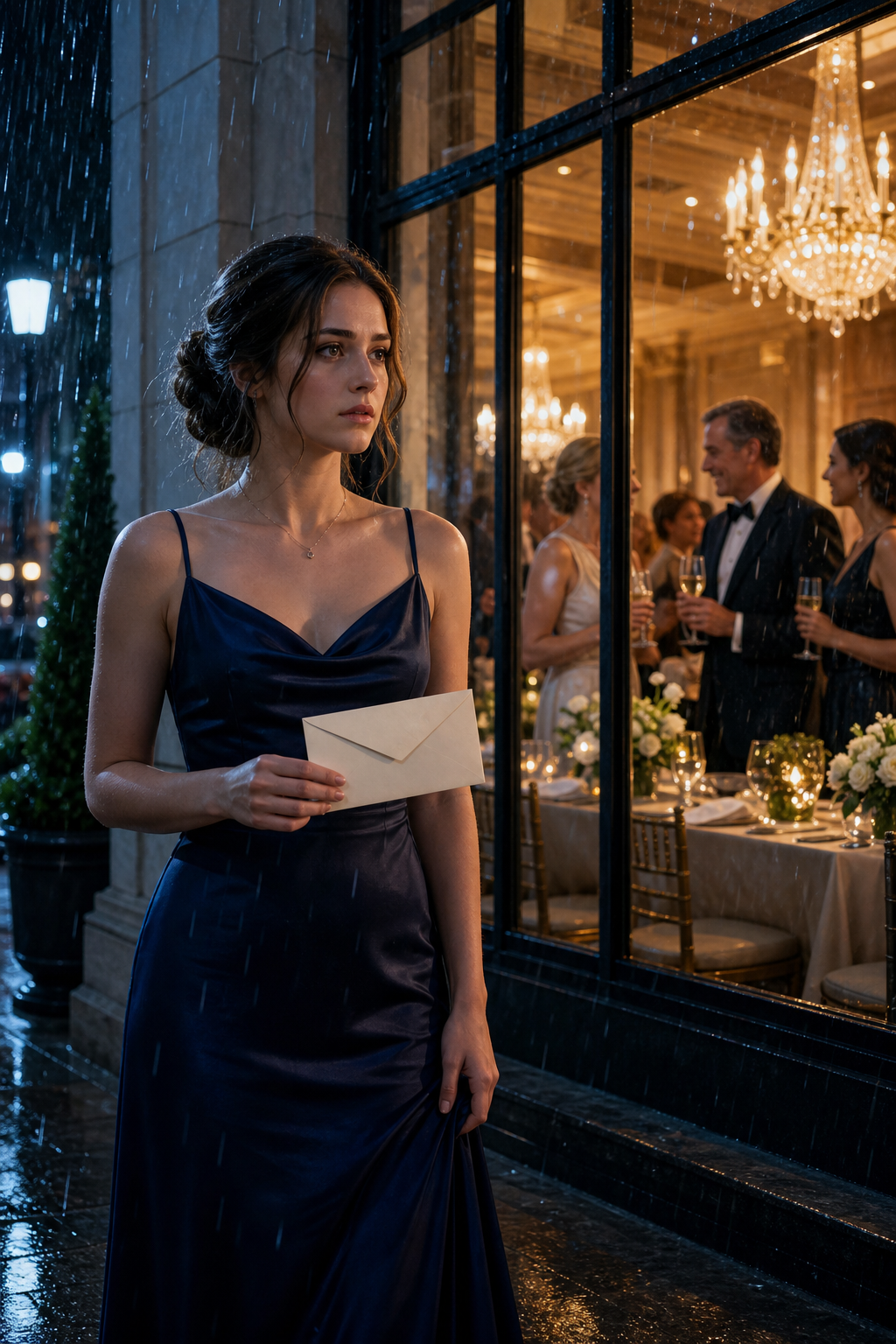
Then I thought of the blue box, the receipt, the bare place on my throat, and the woman I had become when I finally trusted the evidence in front of me.
"Yes," I said. "I listened to myself."
Julian thought the necklace would keep me staring at diamonds instead of documents.
He forgot that women who spend years polishing a man's public life learn exactly where the cracks are.
By morning, I was no longer wearing his gift.
I was holding the truth.
The Records Showed A Pattern Older Than The Affair
Dana did not let me stop at the receipt.
"Affairs make people emotional," she said. "Patterns make cases."
So we built the pattern.
It began two years earlier, with a donor dinner I had been too sick to attend.
Julian said he represented us both.
That night, Mara was seated at his left.
The following week, her consulting firm received its first foundation payment.
Small.
Clean.
Almost boring.
The kind of amount people approve because asking questions would seem petty.
Three months later, the amount doubled.
Six months later, Lark Interior Advisory appeared as a vendor.
There was no interior project.
No design proposal.
No furniture order.
Only invoices that used language Julian loved: alignment, discretion, donor experience, executive continuity.
He had hidden theft inside vocabulary.
The more Dana pulled, the more the marriage reorganized itself in my memory.
The nights he came home late smelling of hotel soap and called it a donor dinner.
The weekends he said the board needed him and left his wedding ring on the bathroom counter because it "pinched during travel."
The way he made me feel unsophisticated whenever I asked for statements.
"You are brilliant with people," he would say. "Let me handle the machinery."
I had accepted the compliment and missed the insult.
He did not want me away from the machinery because I could not understand it.
He wanted me away because I would understand it too well.
Dana's forensic accountant found the surgery packet next.
It had been scanned at 11:42 p.m. on the night I came home from the hospital.
The signature looked like mine because technically it was mine.
But consent is not a signature dragged out of a medicated woman while her vision swims.
The authorization expanded Julian's access to foundation transfers under an emergency continuity clause.
He had called it routine.
The clause became the door.
Mara's apartment became the hallway.
The pediatric rider became the room at the end.
I spent one whole afternoon reading the ledger without crying.
That frightened me.
Then I realized I had cried in advance for years.
Every time I apologized for asking questions.
Every time I accepted being called serious.
Every time I watched Julian charm a room with work I had done at two in the morning.
The tears had already been paid.
Now came the accounting.
The Other Woman Was Not My Enemy The Way He Wanted Her To Be
For a few hours, I wanted to hate Mara more than anything.
That would have been simple.
A beautiful woman.
A hidden apartment.
A bracelet in her size.
A child on an insurance rider.
Julian would have preferred that story because it made the wreckage emotional and feminine.
Two women fighting over a man.
Two women too hurt to read the bank records.
Two women useful to him even in collapse.
Dana warned me about that trap.
"Do not let him reduce this to jealousy," she said. "Jealousy is smoke. Follow the money."
So I did.
The money showed that Mara had benefited.
It also showed that Julian had structured the benefits.
He approved the invoices.
He signed the riders.
He routed donor money through language designed to sound philanthropic and harmless.
When Mara's attorney finally contacted Dana, the tone was less arrogant than I expected.
Mara had not known about the surgery authorization.
She had not known the foundation funds came from restricted donor accounts.
She had known enough to be guilty of some things and ignorant of others.
That distinction mattered, even when I did not want it to.
It kept me from building my freedom out of blind hatred.
At the board meeting, Julian tried to use her as a distraction.
"This is a personal failure," he said. "I accept responsibility for hurting my wife."
Responsibility, in his mouth, meant asking everyone to stop looking after the first layer.
I did not let him.
"The affair is not the item under review," I said. "The transfers are."
The chairwoman's eyes moved from me to the ledger.
That was the moment Julian truly began to lose.
Not when the receipt fell.
Not when I took off the necklace.
When the room stopped watching my pain and started reading his numbers.
My Mother Gave Me A Different Kind Of Inheritance
After Julian was suspended, my mother came to the penthouse with a piano.
It was absurd.
Large.
Glossy.
Delivered by three men who looked as confused as I felt.
"You cannot solve every wound with audits," she said, stepping around packing boxes and legal files.
I almost laughed.
My mother had never trusted Julian, but she had trusted me to find out in my own time.
That restraint had been one of her hardest gifts.
She ran one hand over the piano's black surface.
"You spent years managing other people's risks. Now decide what you want to create."
At first, the piano felt like an object from another life.
Then I sat down one night after a deposition and pressed one key.
The sound filled the penthouse differently than Julian's voice ever had.
It did not persuade.
It did not explain.
It simply existed.
For months, my life became lawyers, auditors, donor calls, press statements, and quiet decisions about what kind of woman I wanted to be when no one was scripting me as wife.
I learned that recovery is not always soft.
Sometimes it looks like calendar invites and sworn statements.
Sometimes it looks like refusing a settlement clause that would let a powerful man keep his myth.
Sometimes it looks like letting a necklace sit in an evidence bag instead of around your throat.
<!-- expanded-more-20260618 -->
The Public Version Of My Marriage Had Been Built On My Labor
The audit forced me to review years of calendars, speeches, donor packets, crisis notes, and gala programs.
It was like walking through a museum of my own erasure.
There was Julian on stage accepting praise for the hospital wing after I had spent six months negotiating the donor conditions.
There was Julian in a magazine profile describing his instinct for risk after I had rewritten the acquisition memo that saved him from an embarrassing vote.
There was Julian smiling beside the governor while wearing the cuff links I bought him, speaking lines I had drafted at two in the morning while he slept.
I had not minded then.
That was the humiliating part.
I told myself partnership did not require credit.
I told myself influence mattered more than applause.
I told myself a secure woman did not need her name on every page.
All of that can be true in a marriage where respect exists.
In mine, it became cover.
Julian learned that I would do the work and let him hold the microphone.
Then he learned that I would accept being called serious, difficult, or cold if I asked why the microphone never came back.
By the time Mara entered the picture, he had already practiced making me invisible.
She did not create that habit.
She benefited from it.
At deposition, Dana asked Julian who drafted the foundation's donor protection policy.
He said, "My office."
Dana placed the original document in front of him.
My initials were on every page.
My comments filled the margins.
My email had delivered the final version to him with the note: Please do not soften section four. It protects us.
He had softened section four before sending it to the board.
That softened section was where the Lark invoices slipped through.
I remember looking at him across the conference table and realizing how many betrayals had been disguised as edits.
Not all theft looks like money leaving an account.
Sometimes it looks like a woman being revised out of her own intelligence.
The Pediatric Bill Changed The Shape Of My Anger
For days, I could not stop thinking about Theo.
I did not know his face.
I did not know whether he had Julian's eyes or Mara's smile.
I only knew his name because my husband's lie had put it into a financial record.
That felt obscene.
Children deserve to enter stories through love, not audit trails.
One night, I asked Dana whether the boy would be dragged into the case.
She looked at me carefully.
"Only if Julian forces that issue."
"Then we do everything possible not to."
She nodded, and I saw something like respect cross her face.
It would have been easy to let rage flatten everyone connected to him.
Some people expected that from me.
They wanted the wronged wife to become spectacular.
To throw wine.
To expose baby photos.
To turn a child into proof that I had been humiliated.
I refused.
Not because I was noble.
Because Julian had already used enough people as props.
I would not become another adult arranging a child's life around reputation.
That decision helped me separate justice from performance.
Justice was freezing accounts.
Justice was correcting the foundation record.
Justice was removing Julian's access.
Performance was anything done only to make the room gasp.
I had lived too long inside Julian's performances.
I wanted truth, not theater.
The Day I Left The Penthouse, I Took Almost Nothing
People assumed I would fight for the penthouse.
It had the view, the art, the custom closets, the terrace where donors drank champagne and called us inspiring.
But after the board suspension, the apartment felt like a stage set after the actors left.
Beautiful.
Hollow.
Full of places where I had swallowed questions.
I packed books, my father's watch, three coats, legal files, and the mug I used every morning before Julian woke up.
I left the anniversary necklace where it belonged, in evidence.
My mother stood in the bedroom doorway while I folded sweaters.
"Are you sure?" she asked.
I knew what she meant.
Not about the sweaters.
About leaving the visible proof that I had been wealthy, chosen, envied.
I looked around the room and saw how little of myself had survived inside all that beauty.
"I am sure."
The elevator ride down felt longer than twelve years.
When the doors opened, I expected grief to knock the air out of me.
Instead, I felt space.
Not happiness.
Space.
Sometimes freedom begins as room enough to hear your own breath.
The Necklace Never Looked The Same Again
Months later, Dana asked whether I wanted the necklace returned after evidence processing.
I said no.
There are objects that cannot be cleaned because the stain is not on the surface.
That blue box had been designed to make me feel chosen while Julian was choosing everyone but me.
I did not need to sell it.
I did not need to wear it.
I only needed to remember what it taught me: when a gift feels like silence, inspect the receipt.