
Bad Bunny Said He Would Bring His Culture to the Super Bowl—And That Promise Became the Whole Story
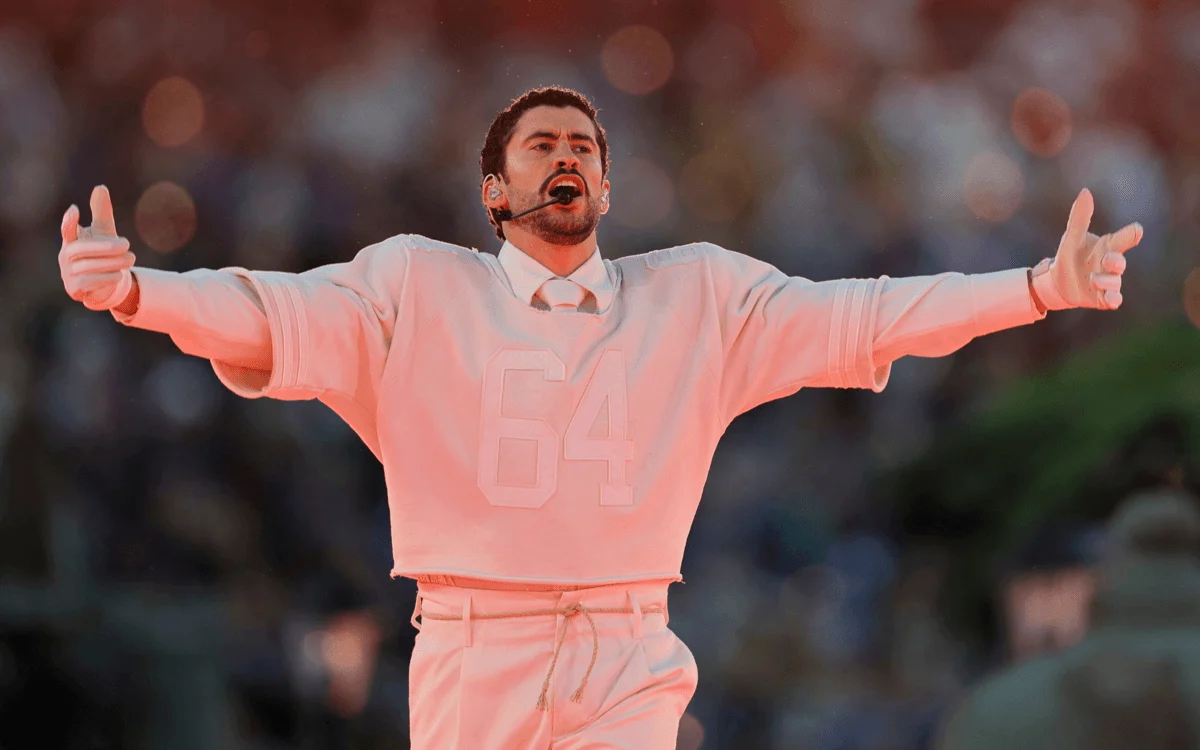
Super Bowl halftime shows are designed to be huge, precise, and instantly legible to the broadest possible audience. That is exactly why Bad Bunny’s recent appearance felt so significant.
Before the performance, he spoke about bringing “his culture” to the stage. After the performance, it was clear that this was not an empty promotional line. It was the governing principle of the entire show.
Rather than smoothing out his identity for America’s biggest sports spectacle, he used the spectacle to expand his identity in front of one of the largest audiences imaginable.
That choice matters because halftime performances often operate on compromise. Artists are expected to deliver something universal, high-energy, and visually overwhelming without becoming too culturally specific for mainstream comfort.
Bad Bunny went in the other direction. He leaned into language, symbolism, musical texture, and visual codes that felt rooted in where he comes from and in the audience that made him global in the first place. Instead of translating himself into safer terms, he asked the stage to adjust to him.
This is what made the reaction so strong. Fans did not simply praise the show as entertaining. Many described it as affirming. For Latino viewers in particular, the performance carried a feeling deeper than representation in a generic sense. It felt like centrality.
There is a major difference between appearing on a giant stage and defining what that stage will express. Bad Bunny did the latter, and that is why the conversation quickly moved beyond choreography or set design into the territory of cultural significance.
The performance also highlighted one of the biggest shifts in contemporary celebrity culture: specificity now reads as power.
Audiences are less interested in stars who flatten themselves to seem acceptable to everyone. They are drawn to artists who arrive with a distinct world and invite others into it. Bad Bunny understands that instinct better than most. His fame has never depended on becoming neutral.