My Sister Screamed, "Get Her Out Of This Club," Not Knowing I Owned It, Then My Mother Revealed The Secret She Thought Would Destroy Me Forever
"And you have always confused cruelty with strength."
That sentence landed.
I saw it in her face.
So she reached for the one weapon she had saved longest.
Her voice softened.
"You think this proves Malcolm chose you?"
Arthur's expression hardened.
"Vivian."
She ignored him.
Her eyes stayed on mine.
"You think owning a club means you finally belong?"
The room waited.
Bridget whispered, "Mother, stop."
Vivian smiled.
It was the smile she wore before delivering a wound she had polished for years.
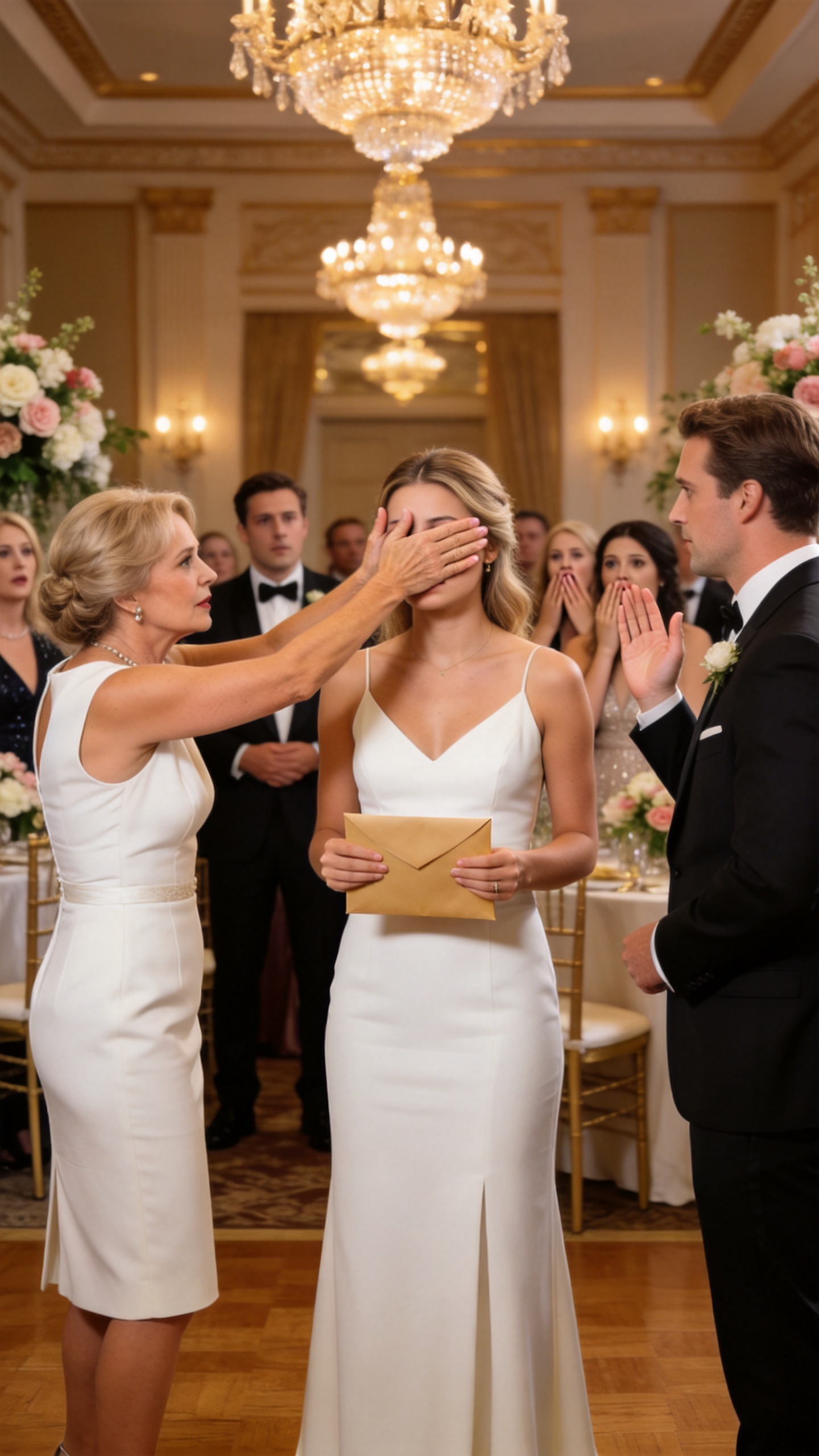
"Malcolm was not your father."
The room disappeared.
Not physically.
The chandeliers still glowed.
The candles still flickered.
People still breathed around me.
But sound drained away.
My mother continued.
"You were three when I married him. Your biological father was already gone. Malcolm adopted you because he was decent. Courtney was his blood."
She corrected herself sharply.
"Bridget was his blood."
Bridget flinched.
Even she understood the ugliness of the sentence.
Vivian stepped closer.
"All those mornings you followed him around construction sites. All those years you thought he saw something special in you. You were simply the child he was kind enough not to abandon."
My hands went cold.
Memories rose without permission.
My father lifting me into his truck before dawn.
My father teaching me how to read blueprints.
My father sitting beside my hospital bed when I broke my wrist at twelve.
My father calling after my first acquisition and saying, "You saw what others missed."
That had been enough to carry me for years.
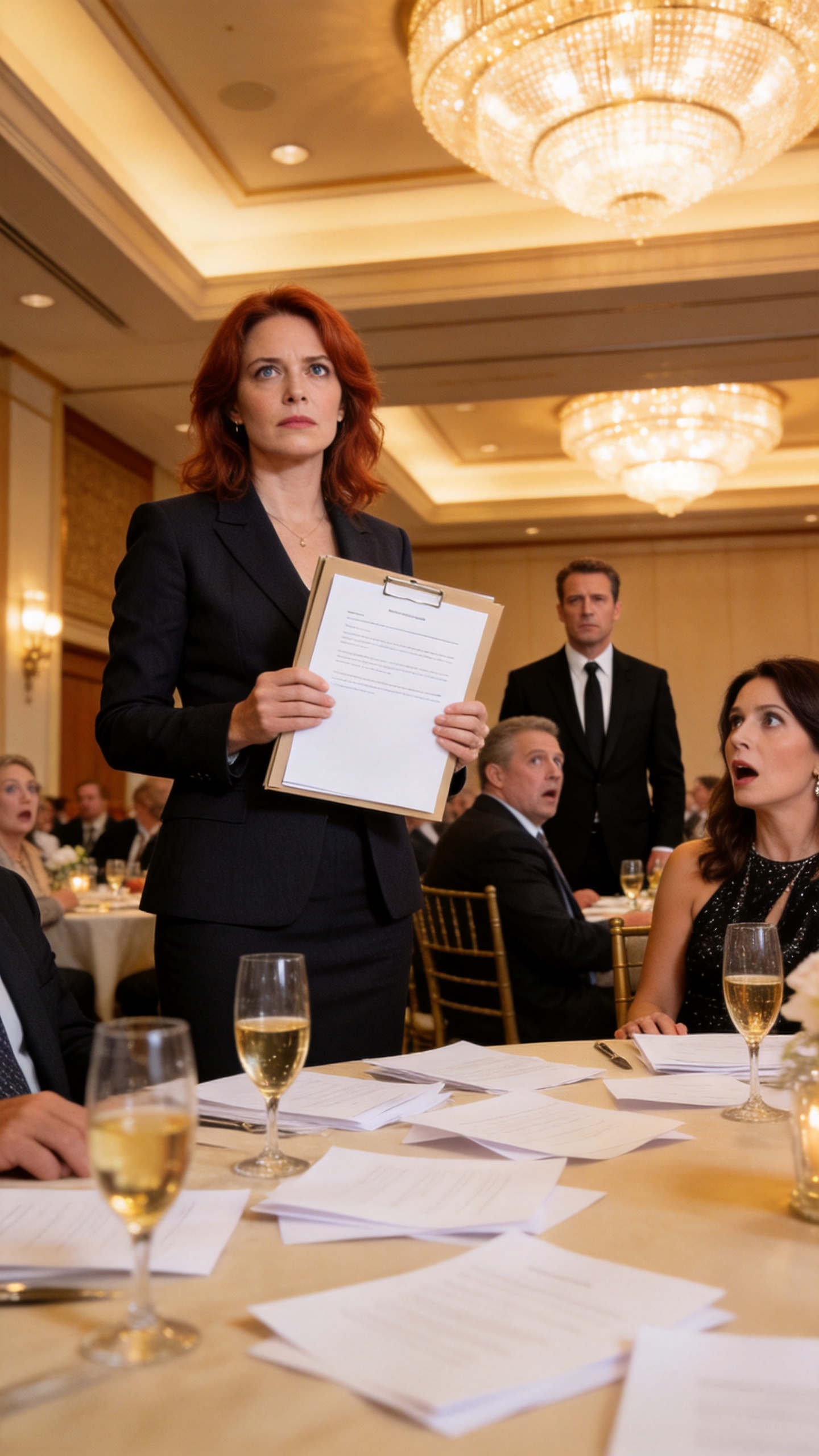
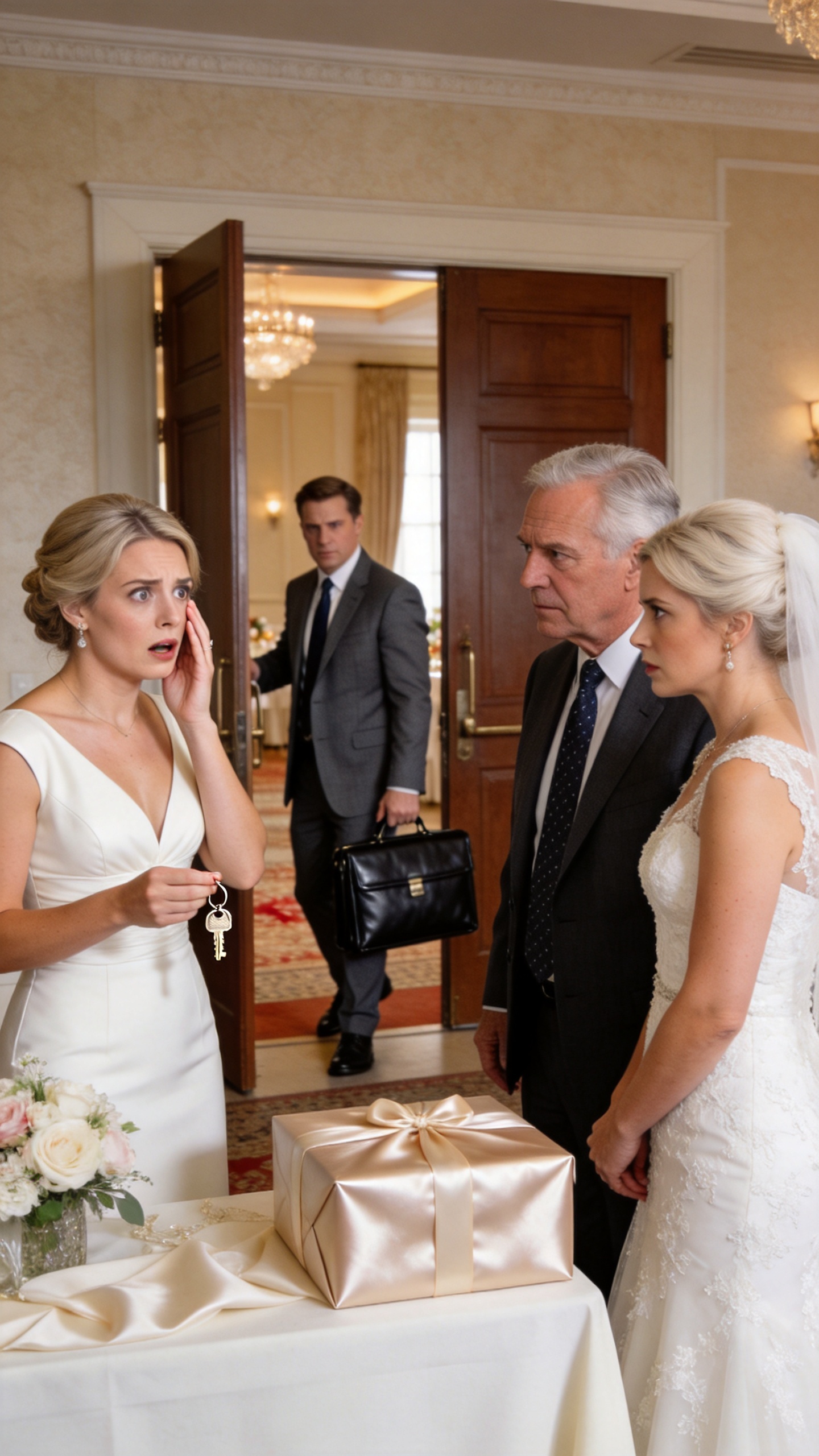
Arthur reached into his briefcase.
"Malcolm anticipated this."
My mother froze.
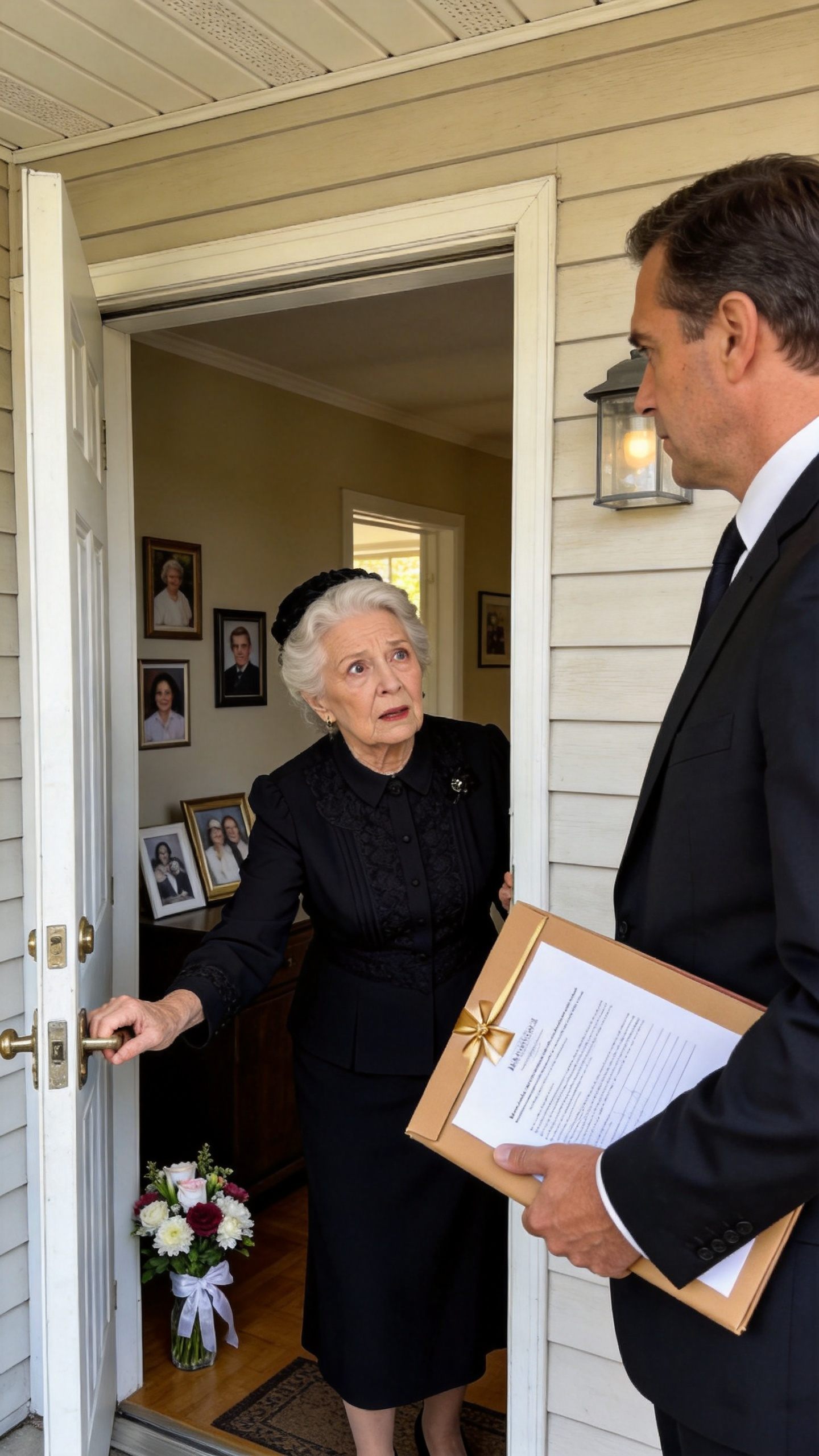
Arthur removed a sealed envelope.
My name was written across the front in my father's handwriting.
Eleanor.
Nothing else.
"He instructed me to deliver this if the trust was activated or if Vivian ever used your adoption against you."
I opened the envelope with shaking fingers.
For a moment the words blurred.
Then his handwriting came into focus.
Eleanor,
If you are reading this, then a truth has been used as a weapon.
You may have learned that I adopted you when you were three.
You may have been told this makes you less mine.
It does not.
Blood is an accident.
Fatherhood is a decision.
I made that decision the first morning you climbed into my truck wearing yellow rain boots and asked why buildings did not fall down.
You were my daughter before the papers were signed.
You were my daughter every day after.
I chose you to protect Hawthorne Ridge because you understand what too many people forget.
Ownership is not permission to destroy.
It is responsibility.
If you ever doubt where you belong, remember this.
You did not inherit my blood.
You inherited my trust.
And trust is the only inheritance worth leaving.
Dad.
Tears slid down my face before I could stop them.
For four years, grief had lived inside me like a locked room.
Now my father's voice filled the dining room.
Not loud.
Never loud.
But unmistakable.
The Inheritance Was Bigger Than The Club
Arthur placed one final document on the table.
Vivian whispered, "No."
He did not look at her.
"Malcolm amended his estate plan shortly before his death. Majority voting interest in Mercer Development was placed in a dormant trust. Voting rights remained temporarily with Vivian so long as the company operated within defined ethical restrictions."
Bridget gripped the back of a chair.
Arthur continued.
"Those restrictions prohibited self-dealing, fraudulent transfers, identity misuse, and undisclosed profit from protected properties."
My mother touched her pearl necklace.
"The moment those restrictions were violated and verified by the court," Arthur said, "voting control transferred to the successor trustee."
I understood before he finished.
So did Vivian.
Arthur turned toward me.
"As of twelve days ago, Eleanor controls seventy-one percent of the voting interest in Mercer Development."
The room erupted in whispers.
Bridget sat down.
My mother looked suddenly older.
"That cannot be true," she said.
"It is already done."
For several seconds, I could not speak.
I had known about Hawthorne Ridge.
I had known the court had confirmed the preservation trust.
I had not known my father had tied the company's control to the same ethical line my mother crossed.
Vivian found her voice.
"You think you can run it?"
"Not alone."
At the far end of the dining room, a woman stood.
Marisol Reyes, former chief operations officer of Mercer Development, walked toward us. She had resigned three months after I left, refusing to approve falsified vendor numbers.
Behind her, two former department directors rose.
Then a senior property manager.
Then a construction analyst my mother had once called disloyal.
I had invited them quietly.
Not for revenge.
For restoration.
Marisol stopped beside me.
"I have agreed to return as interim CEO," she said, "subject to an independent audit and full restructuring."
Vivian stared at me.
"You planned this."
"Yes."
The word felt clean.
Not cruel.
True.
Bridget looked up, mascara smudged beneath one eye.
"What happens to me?"
I could have humiliated her.
I could have listed every commission she redirected, every dinner she mocked me, every time she repeated our mother's lies because cruelty made her feel safe.
But my father's letter remained open in my hand.
Ownership is not permission to destroy.
It is responsibility.
"You cooperate with the investigation," I said. "You return every dollar you received improperly. You resign from the company."
She swallowed.
"And then?"
"Then you decide who you are without Mother telling you."
Vivian's mouth twisted.
"You are weak."
"No," I said. "I was weak when I kept returning to people who needed me small. I was weak when I confused silence with peace. I am not weak anymore."
Graham stepped forward.
"Mrs. Mercer Vale, security will escort you from the property."
My mother stared at him.
Then at me.
"You would throw your own mother out?"
There it was.
The final performance.
The attempt to make cruelty look like victimhood.
I thought of every room I had left quietly.
Every drive home with tears blurring the road.
Every apology I gave for wounds I had not caused.
Then I looked at her.
"No," I said. "You threw yourself out."
Security approached.
Vivian adjusted her pearls, lifted her chin, and walked toward the doors with the stiff dignity of a queen leaving a kingdom that had finally stopped pretending.
No one applauded.
I was grateful for that.
I did not want applause.
I wanted the truth to stand on its own.
The emergency board meeting began at nine fifteen.
The preservation plan passed unanimously.
Hawthorne Ridge's debt would be restructured.
The clubhouse roof would be repaired before winter.
The kitchen staff would receive overdue raises.
The old eastern fairway would remain untouched.
Part of the wooded land would become a weekend walking trail open to local residents.
The club would remain elegant.
But it would stop confusing exclusion with value.
Three weeks later, Vivian was formally charged with fraud, identity misuse, and conspiracy.
Bellamy Development withdrew its proposal.
The audit recovered accounts.
Bridget resigned from every board position she held.
I did not forgive her immediately.
Some wounds should not be rushed into tidy endings because other people prefer comfort.
Six months later, she asked to meet me for coffee.
She arrived without designer sunglasses.
Without armor.
For the first time, she did not talk about our mother.
She talked about herself.
She admitted cruelty had made her feel safe.
She admitted competing with me had been easier than asking why our mother needed us to compete.
Then she handed me a photograph.
Two little girls stood beside Malcolm Mercer at a muddy construction site.
Bridget wore a pink raincoat and looked annoyed.
I wore yellow boots and held a measuring tape upside down.
Our father stood between us with one hand on each of our shoulders.
On the back, in his handwriting, were six words.
My daughters.
My reason to build carefully.
I cried in the coffee shop.
So did Bridget.
We did not become close that day.
Real healing is rarely that simple.
But we began telling the truth.
That was enough.
A year after the night at Hawthorne Ridge, the club held its autumn dinner beneath the same chandeliers.
Before dinner, Graham showed me a brass plaque beside the entrance.
It carried a sentence from my father's letter.
Ownership is not permission to destroy.
It is responsibility.
I traced the edge with my fingertips.
For most of my life, I believed belonging was something other people granted.
Invitations.
Surnames.
Board seats.
Approval from people who enjoyed withholding it.
I was wrong.
Belonging was not the chair Bridget tried to take from me.
It was not the company Vivian tried to control.
It was not even the country club I secretly owned.
Belonging was the decision to stop abandoning myself.
Behind me, the dining room doors opened.
Graham smiled.
"Ms. Mercer, the members are waiting."
I looked through the doorway.
Marisol stood near the fireplace speaking with employees.
Bridget waited near the bar, holding the framed photo of two girls in raincoats.
The pianist began to play.
And for the first time in my life, I entered the room without wondering whether anyone wanted me there.
Because the most important inheritance my father left me was not the club.
It was not the company.
It was not the trust.
It was the certainty that I had always been his daughter.
Not by accident.
By choice.