My Husband Said, "Without Me, You Are Nothing, And This Apartment Is My Kingdom." I Packed Quietly And Left Him To Discover Who Had Been Holding Up The Walls
"Where is the box of cables from under the television console?" he demanded, his voice rising with the theatrical authority he reserved for moments when he wanted the walls themselves to agree with him.
I remained on the leather sofa, finishing the final revisions on a client presentation for my interior design firm, my fingers moving across the keyboard with a calmness that felt almost foreign to me. Years earlier, his tone would have sent me to my feet immediately, apologizing before I even understood the accusation, promising I would find whatever object he had misplaced, broken, or forgotten he owned.
That evening, however, I felt only a clean and unfamiliar emptiness, as though something inside me had finally unclenched.
"I threw it away, Preston," I said without looking up. "Those cables belonged to devices we stopped using years ago, and most of them were already damaged. They were taking up space."
He repeated the words slowly, as if I had confessed to selling the apartment rather than removing a box of useless wires.
"You threw it away?" he asked, lowering his voice into the quiet threat he used in boardrooms when he wanted people to remember who controlled the budget. "Who gave you permission to decide what stays and what goes in this apartment? I do not recall your name being on the deed, Audrey. Or have you started imagining that paying a few utility bills makes you the lady of the house?"
I closed my laptop with deliberate care, letting the soft click of the screen become the first boundary I had set in that room without asking permission.
When I looked at him, I no longer saw the man I had once believed was protecting me from uncertainty. I saw a man clinging to square footage, inherited furniture, and his grandfather's address as though ownership of walls could make him worthy of reverence.
"It was trash, Preston," I said, every word measured. "I asked you three times in six months to go through that box, and every time you said you would do it later. This morning, later finally ended."
Part II: The Fortress That Never Became A Home
Preston moved first toward the coffee table, then away from it, his agitation gathering in his shoulders before he kicked the leg of the glass table hard enough to make the bowls and books rattle. He did not break anything, because men like Preston often know exactly how close to destruction they can come while still pretending they have done nothing at all.
"Later happens when I decide it happens," he shouted, his face flushed with the effort of maintaining dominance. "In this apartment, I make the rules. You live here because I allow it. These are my walls, my windows, my floors, and my family's name on every legal document attached to this place. Your job is to stop creating problems and remember your position."
He began pacing across the room, touching the edge of the mantel, the framed architectural sketches, and the imported stone around the fireplace, as if confirming his ownership through contact. The apartment had been inherited from his grandfather, a well-connected Chicago figure whose name still opened doors Preston had never personally earned, and to Preston it had never been a home. It was a trophy case, a fortress, and the one argument he believed he could always win.
Every disagreement in our marriage eventually returned to that same address.
"You are behaving like a man losing his grip over a box of broken cables," I said as I rose from the sofa.
"I am behaving like the owner," he snapped, pointing toward the floor. "You are a guest who forgot who brought her out of that tiny rental on the edge of the city. You should be grateful to breathe Gold Coast air instead of treating my property like a storage unit you can reorganize whenever your little design instincts get restless."
He went to the bar cart and adjusted a bottle of scotch by a fraction of an inch, performing control because genuine authority had already slipped beyond his reach.
"Do you know what disgusts me most?" he continued. "Ingratitude. I gave you a better life, and you behave as though you earned it. You have no rights here, Audrey, except the right to be quiet and make the room look nicer."
There it was, spoken plainly at last.
For five years, I had not been his wife in any meaningful sense. I had been another carefully chosen object inside his curated apartment, a living ornament expected to soften the room, flatter the owner, and remain exactly where he placed me.
"Are you finished?" I asked. "Or is there more to this performance about being king of a storage closet?"
His eyes sharpened with rage.
The Silence After I Left Was Not Empty For Me
"I am finished," he said, pointing toward the front door. "Either you learn your place, or you pack your things and leave tonight. I am tired of your fake independence, your little company, and the way you act as if you could survive without everything I provide."
He exhaled as though the matter had been settled. He expected tears, apologies, and the familiar choreography of my surrender. He expected me to prepare dinner, lower my voice, and become manageable again.
But the script had changed before he even entered the room.
Part III: The Exit He Never Saw Coming
I looked at him for several seconds, allowing him to feel the weight of a silence he could not interpret.
"You are truly finished now?" I asked.
His expression shifted slightly, because my calmness had begun to unsettle him.
"Yes," he muttered. "And tomorrow I expect new cables on that shelf."
I walked past him without responding, moving toward the main bedroom with the steady pace of someone following a plan already completed. He followed, still talking, still trying to reestablish the rhythm in which he commanded and I explained.
"Are you ignoring me now?" he said from behind me. "I said I was not done with-"
He stopped at the doorway.
On the king-sized bed were four large suitcases, all packed, zipped, and positioned in a neat row. Beside them sat two equipment bags containing my laptop, drawing tablet, backup drives, and the tools I used to run the design business he had always called cute whenever he wanted to diminish it without sounding cruel.
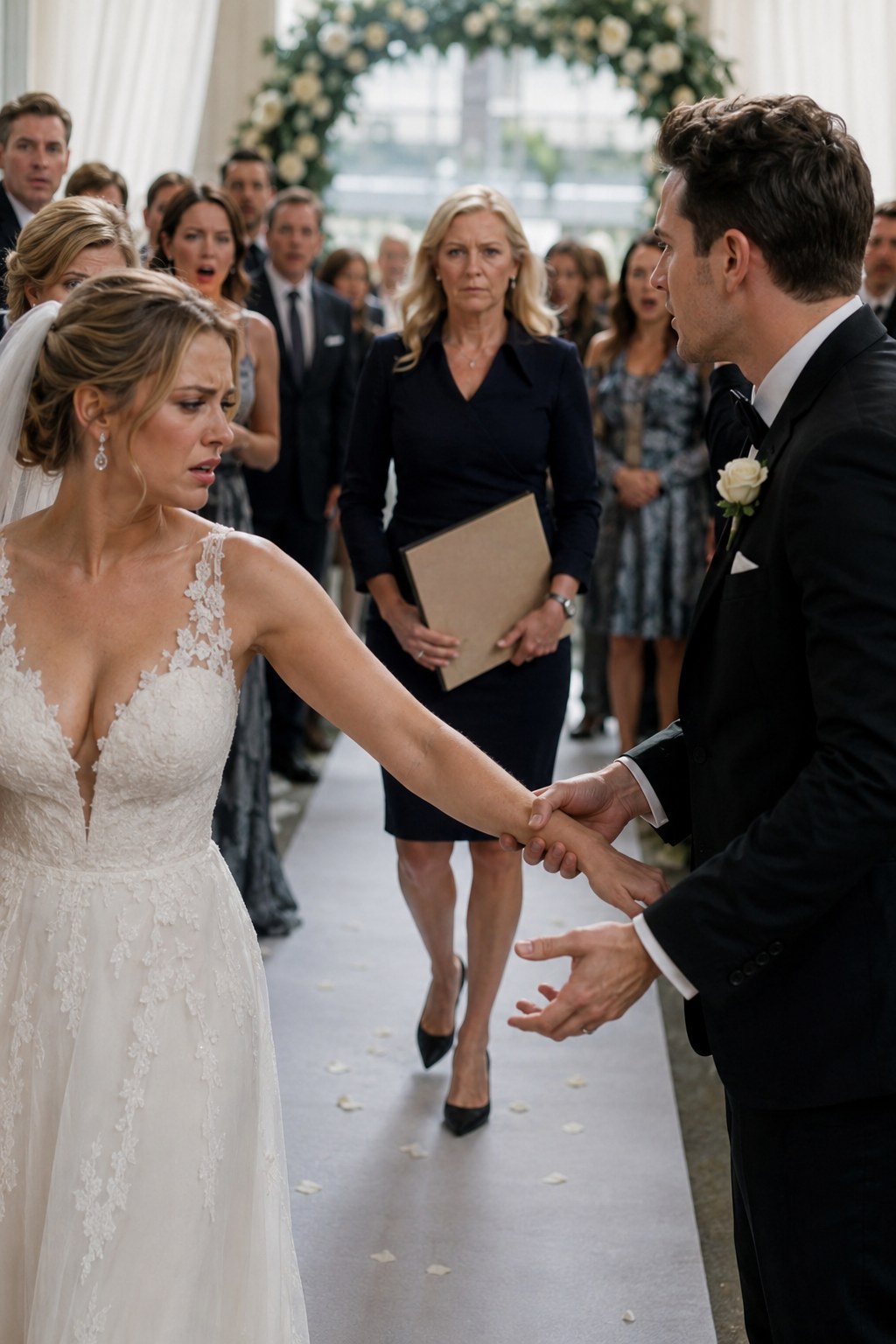
"What is this?" Preston asked, laughing once, though the sound was too brittle to convince either of us. "Are you taking a vacation, or are you running home to your mother so she can tell you how brave you are?"
I lifted my trench coat from the chair and slipped it over my arm.
"I am not going to my mother's house," I said. "I am moving out."
The final zipper closed with a dry, decisive sound that filled the room better than shouting could have.
Preston crossed his arms, clinging to contempt because it was the only expression still available to him.
"Do you honestly think I am going to beg you to stay?" he asked. "You think I cannot live without your drama? Please. By tomorrow evening, you will be standing downstairs asking the doorman to let you back in."
I looked at him with the strange clarity that comes when love has finally stopped protecting someone from the truth.
"I am not thinking about you, Preston," I said. "I am waiting for the movers."
His smile faltered.
"Movers?"
"A small freight service," I replied. "They will be here in twenty minutes."
He gave a desperate laugh.
"Fine. Go. But when you end up in some cheap motel outside the city, do not call me."
I paused at the bedroom door and reached into my coat pocket, letting the apartment keys jingle once against my fingers.
"I will never call you," I said. "I leased a studio in Wicker Park two months ago. The keys are already in my bag, and I have been moving things out little by little every time you traveled or told me to leave during one of your speeches. You were so busy being master of this apartment that you did not notice half my closet was already empty."
The color shifted in his face. The marble, the inherited view, the custom lighting, and every polished inch of his fortress suddenly stopped protecting him. For the first time, he was not the owner standing above me.
He was simply the man being left behind.
Part IV: The First Night Of My Own Air
The movers arrived at ten, quiet and efficient, their presence transforming my departure from a threat into a fact. The driver glanced briefly at Preston, who stood in the hall with a drink in his hand and disbelief spread across his face, then began carrying my suitcases toward the elevator without comment.
Preston followed us to the corridor, his voice lowering now that certainty had failed him.
"Audrey, you cannot actually do this," he said. "We can talk. You are upset, and you are making this too final."
The elevator doors opened.
I stepped inside beside my belongings, and for the first time in years, I did not feel the urge to soften the moment for him.
"It became final long before tonight," I said. "Tonight is only the part where you noticed."
The doors closed before he could answer, and the steel silence cut off his voice completely. As the elevator descended, I felt an enormous pressure lift from my chest, not all at once, but slowly, as if each floor carried away another version of me that had learned to survive by becoming smaller.
Outside the building, the wind from Lake Michigan struck my face with October sharpness. It was cold enough to make my eyes water, yet it felt cleaner than any air I had breathed inside that apartment. There was no expensive room fragrance, no polished silence, no constant sense that I was a temporary guest whose presence could be revoked.
My new apartment in Wicker Park was much smaller, just a studio with old wood floors, tall windows, and a street below that stayed noisy even after midnight. The walls needed painting, the radiator clicked unpredictably, and the kitchen had barely enough counter space for a cutting board.
Still, when I set my suitcases down inside the door, I felt like a queen returning to a kingdom no one else had the power to take from her.
I laid a simple mattress on the floor, opened my laptop, and wrote Preston one final message.
Everything I left behind may be considered rent for the five years I spent being told I did not belong. Do not look for me. My attorney will contact you tomorrow regarding the divorce.
Then I closed the computer and lay down fully clothed, listening to the distant train, passing cars, and the unfamiliar hum of a neighborhood that expected nothing from me.
For the first time in five years, I slept without rehearsing how to keep someone else calm.
Part V: The Audit Of A Life
The weeks that followed were not peaceful, because leaving a controlling man rarely ends with the closing of a door. Preston sent furious messages, then pleading ones, then messages that sounded as though they had been drafted by a lawyer and revised by a wounded ego. He called my mother and suggested I was unstable. He contacted clients connected to my design firm and implied that my judgment had become unreliable.
A Home Is Where You Can Breathe
He had misunderstood one essential thing.
A woman who has already walked out of a million-dollar apartment with only what she could carry is difficult to frighten with threats about reputation.
I hired Vivian Price, a divorce attorney known for patience, precision, and an almost terrifying refusal to be intimidated by wealthy men in expensive suits. During our first meeting in her Loop office, she reviewed my documents, then looked up at me over her glasses.
"You understand that under Illinois law, you may be entitled to a financial claim connected to the marriage, even if the apartment itself was inherited," she said. "You do not have to leave with nothing just to make a point."
I folded my hands in my lap.
"I do not want anything connected to Preston," I replied. "I want clean air, clean records, and clean distance. I want him to understand that his money cannot purchase my presence."
Vivian studied me for a moment, then nodded.
"Then we will build the cleanest exit possible."
Mediation took place on a rainy October afternoon in a conference room that smelled of coffee, wet coats, and expensive frustration. Preston arrived in a Tom Ford suit, looking older than he had the night I left, as though solitude had begun subtracting from him in visible ways.
He produced photographs of my studio apartment, taken by an investigator who had apparently found my modest life important enough to document.
"You chose this?" he asked, sliding one image across the table. "You would rather live in this little room than admit you overreacted?"
I looked at the photograph, then back at him.
"In that room, I can throw away trash when I choose," I said. "In that room, I am not a guest. I own every speck of dust beneath my feet. You have an apartment worth millions, Preston, but you are the loneliest man I know because you cannot tell the difference between loving someone and possessing them."
His expression hardened, then fell quiet.
For once, no speech followed.
He signed the agreement without looking at me again.
Part VI: Building Rooms Where Women Could Breathe
A year later, my design firm, Audrey Lane Studio, won the largest contract of my career: the interior planning for a Chicago support center created for women rebuilding after relationships marked by coercive control, financial intimidation, and emotional confinement. When I first walked through the unfinished lobby, the walls were primed in pale blue, a color chosen not because it was fashionable, but because it made the space feel like morning.
I stood there longer than necessary, tracing the future in my mind. There would be soft seating near the windows, private consultation rooms with warm lighting, quiet corners for children, and a communal kitchen where women could drink coffee without feeling watched. I wanted every room to say what no one had said to me clearly enough when I needed it most: you are allowed to exist without permission.
During that project, I met Adrian Brooks, the lead architect, a thoughtful man with rolled-up sleeves, ink smudges on his fingers, and a habit of asking questions before offering opinions. He did not own a penthouse, did not speak in declarations, and never once treated my success as something charming that needed translation.
In our first planning meeting, he listened as I explained why the reception desk should not look like a checkpoint and why the childcare area needed visibility without exposure.
"You design like you remember what fear feels like in a room," he said quietly after everyone else had left.
I looked at the blueprints between us.
"I do," I admitted. "And I do not want anyone walking through these doors to feel trapped by the furniture."
He nodded, not with pity, but with understanding.
That distinction mattered.
Over the next months, the center became more than a commission. It became proof that what I had survived could be converted into shelter for someone else. My studio grew steadily, not explosively, but with the kind of stability that felt earned. Clients began seeking me out for spaces that carried emotional intelligence rather than merely expensive finishes.
My Wicker Park studio changed too. I painted the walls, hung linen curtains, added shelves for books and samples, and turned one corner into a tiny office where the morning light touched my desk before anything else.
It was not grand.
It was mine.
Part VII: The Plate That Finally Broke The Past
Adrian and I became friends before anything else, which was perhaps why trust entered slowly enough to remain real. He never rushed me toward declarations, never treated my history like a puzzle he could solve, and never used gentleness as a performance designed to earn admiration.
One Saturday evening, almost two years after I left Preston, we were cooking together in my apartment, which by then had become warm, layered, and unmistakably mine. There were framed sketches above the table, fresh basil near the window, and a rug I had bought because I liked it, not because anyone else approved.
I reached for a ceramic plate, misjudged the edge of the counter, and watched it slip from my hand. It hit the floor and shattered loudly enough that my whole body reacted before my mind could intervene. My shoulders rose, my breath caught, and for a brief second, I was back in the old living room, waiting to be accused of disrespecting something that mattered less than my peace.
Adrian noticed.
He did not rush toward me, and he did not make the moment heavy with concern. He simply looked at the broken plate, then at me, and smiled gently.
"It is only a plate, Audrey," he said. "I will clean it up. You sit down before you step on anything sharp."
The simplicity of that response undid something in me that years of logic had not reached. There was no punishment hiding behind the broken ceramic, no speech about carelessness, no reminder of who owned the kitchen.
There was only a plate.
There was only kindness.
I sat by the window while he swept the pieces into a dustpan, and I felt the last old knot inside my chest begin to loosen. Healing, I realized, did not always arrive as a dramatic revelation. Sometimes it sounded like someone saying that an object was not more important than the person who dropped it.
Later that night, I stood at the window, looking down at the lights of Chicago moving through the rain. The city no longer felt like a place where I needed someone else's address to belong. It had become a map of streets I had crossed alone, rooms I had claimed, and work I had built without asking any man to certify its value.
Preston once believed his apartment made him powerful and my presence inside it made me fortunate. He never understood that a home is not created by deeds, inherited names, or views over the river. A home is created by the ability to breathe freely inside it.
I am Audrey Lane.
I am no one's guest anymore.
I am the owner of my work, my rooms, my mistakes, my victories, and every beautiful, imperfect piece of the life I chose when I finally walked away.