That Morning, My Daughter-in-Law Dropped Her Mud-Smeared Heels at My Feet and Ordered Me to Clean Them
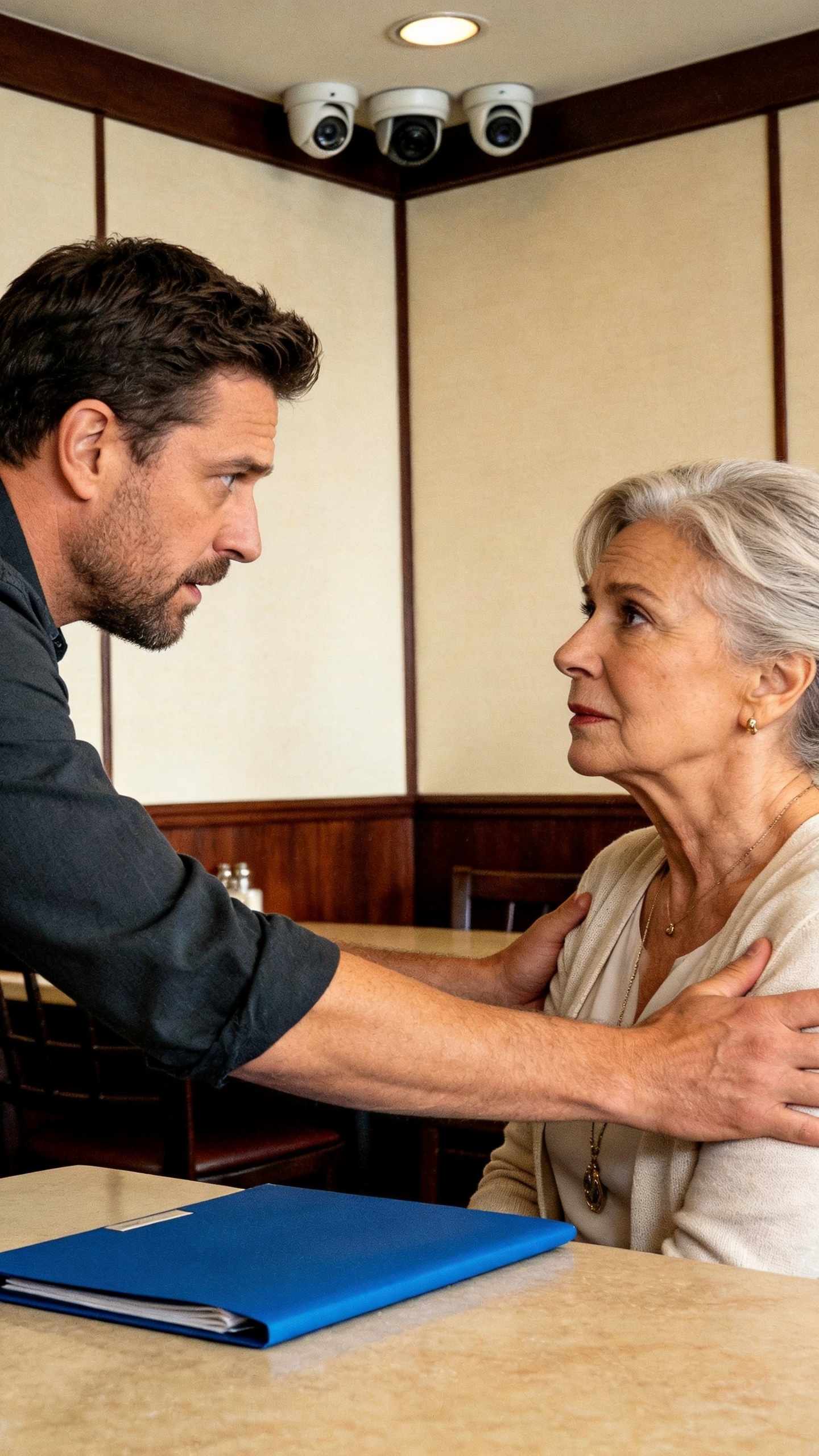
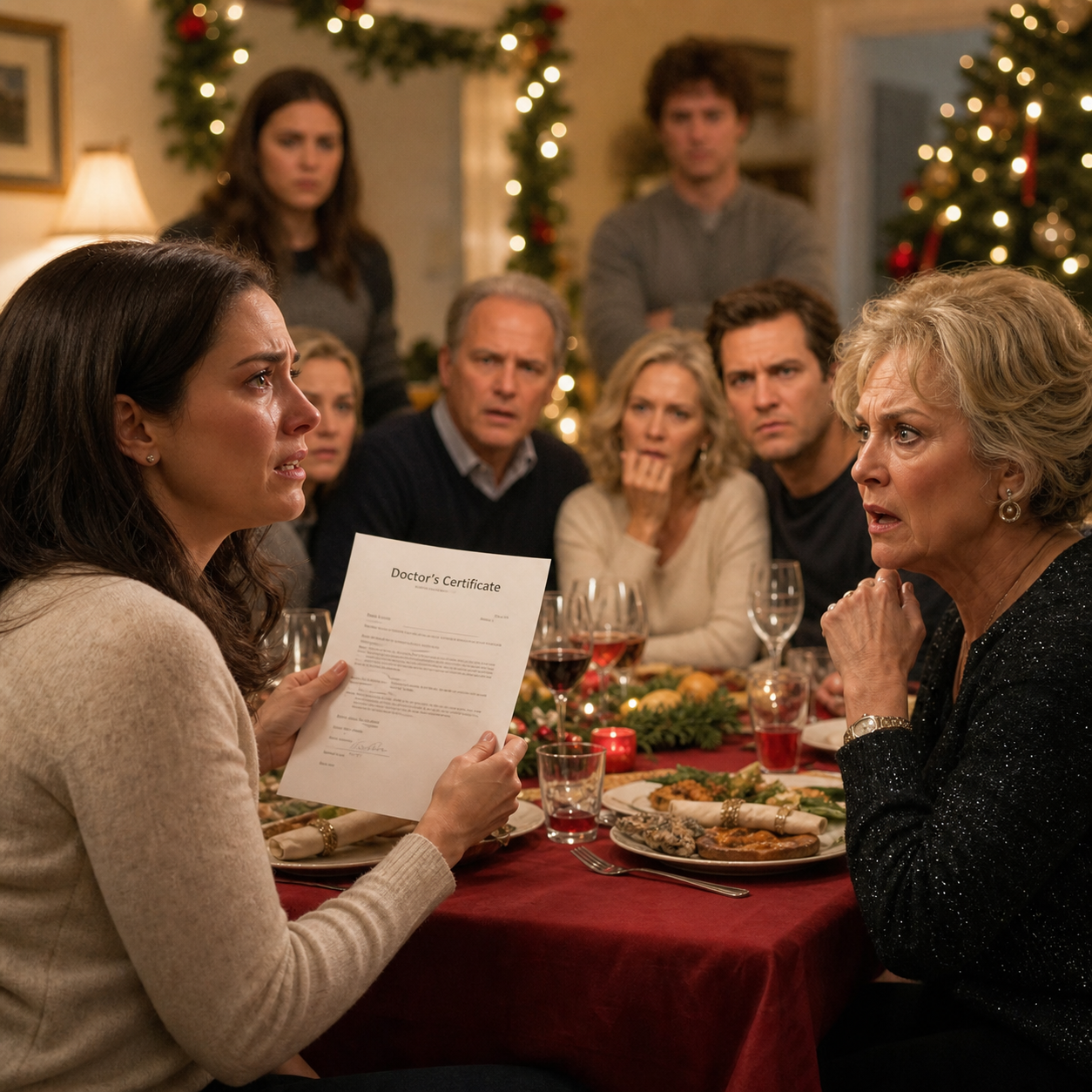
The leasing company took the car. Thomas called to say Daniel came outside before the truck left. "Was there a problem?" I asked. "No physical issue. He argued. The driver showed him the contract authorization and continued," Thomas replied. "And Claire?" "She had her phone out at first." "At first?" "Then she put it away." I could see it all in my mind. Daniel on the sidewalk in an undershirt, waving his arms at the truck. Claire in her robe, raising her phone to record, then putting it down when she realized it wouldn't help her online image. "Her Range Rover is still there?" I asked. "Yes, sir. It's registered in her name. No one touched it." Thomas paused. "Mr. Bennett, may I say something?" "Of course." "I'm sorry it came to this." I looked out the hotel window. "So am I." At noon, Daniel called. His name popped up on my screen for the first time since I left. I let it ring. Then I played the voicemail. "Dad, the bank made a mistake. The trust cards are frozen, and someone took the BMW. Call me immediately." No apology. No ask about where I was staying. No mention of the shoes, his threat, or the suitcase. Just an order. Twenty minutes later, a second message came. "This is getting serious. Claire has business expenses, and the house notice is clearly an error. You need to tell Wallace to reverse it." That evening, the third message arrived. "We're worried about you. Your decisions don't make sense." There it was. Concern only showed up when they lost control. The next morning, Daniel went to First Commonwealth Bank. Michael found out because Richard Pruitt, the branch manager who'd handled our accounts for almost ten years, knew any odd request about trust authority had to be documented. Daniel demanded the suspended accounts be reopened. Richard showed him how the accounts were set up. Primary trustee and sole authorized signatory: Arthur James Bennett. Secondary user with revocable spending privileges: Daniel Bennett. Daniel argued I was seventy - two and might not understand my decisions' consequences. Richard explained the bank couldn't change my authority without a valid court order. Then Daniel asked how to get one. When Michael told me the conversation, I stood by the hotel window, my hand on the glass. My son asked how to take control of my trust. He asked about the procedure. "Don't soften it for me." Michael let out a tired breath. "He asked how to challenge your capacity." Below, the city shone under a hard blue sky. A cyclist waited at a light. Two students crossed the street with coffee. A maintenance worker polished brass outside a townhouse. Normal people doing normal work, not thinking someone else's work was theirs. "What happens now?" I asked. "He may talk to an attorney." I expected that. "You also knew he'd use the capacity argument." Seven months ago, I had a full cognitive evaluation at Massachusetts General Hospital. Four hours of memory tasks, reasoning tests, processing assessments, and interviews with Dr. Patricia Sterling, a neurologist with no financial link to me or the trust. I didn't take the evaluation because I doubted my mind. I did it because I noticed how Daniel looked at me when I disagreed with him. Patient. Concerned. As if age was proof. Dr. Sterling's forty - one - page report said my cognitive function was strong, my judgment was good, and my decision - making was independent. I built the shield before Daniel reached for the weapon. Two days later, he filed a petition for guardianship and conservatorship. The filing said I'd shown crazy financial behavior by suspending accounts and leaving home. It called the trust review confusion and my hotel stay disorientation. Attached was a one - page letter from a doctor named Howard Crane, saying I showed signs of early cognitive decline. I'd never met Howard Crane. Michael called while I was eating oatmeal in the hotel dining room. "The letter has no examination date, no clinical record number, and no authorization from you. It won't stand up to review," he said. My spoon rested on the bowl. "He submitted it anyway." "Does Daniel know it's false?" "We don't know what he believes. The attorney who filed it should have checked the source." I put my palms on the tablecloth. My son had done more than question my health. He'd given a document to a judge to try to take legal control of my mind, property, and choices. The pain was different from the kitchen. The shoes insulted my dignity. This went for my personhood. "File Dr. Sterling's full evaluation," I said. "It's ready." "Every page. And ask to verify the Crane letter." "I already wrote it." I looked out at the traffic on Beacon Street. "Michael? Don't let anyone call this a family misunderstanding." "I won't." The petition was dismissed the following week. The judge read Dr. Sterling's evaluation, saw there was no real medical link between Howard Crane and me, and rejected Daniel's claim. The false letter was sent for professional review. I thought I'd feel relieved. Instead, I was exhausted, like a man who'd won a battle no father should ever fight. That night, Daniel entered Suite 3C. Suite 3C was an unmarked office in one of my smaller buildings in the South End. No company name on the door. Public records said the tenant was Bennett Research and Holdings, a boring name to avoid attention. Daniel found the address after hiring a private investigator. The investigator was supposed to prove I was confused and being manipulated. Instead, his report said I left the Liberty each morning to meet with bankers, attorneys, property managers, and senior executives. "Subject does not seem to need welfare help. Subject is doing executive - level business," the report said. Daniel paid for another week of surveillance. Then he started following the addresses. Suite 3C held the private side of my professional life. Bookshelves had books on property law, tax journals, engineering references, and notebooks from four decades. A mahogany desk was in the middle. Margaret's brass anniversary clock sat on one corner. A hand - drawn map showed the South End parcels owned by Bennett Heritage LLC. At the center was the Bennett Heritage Complex: eight stories, forty - two apartments, three commercial tenants, and worth over forty million dollars. Daniel had visited the complex once and asked the manager how I was connected to it. Raymond Okafor, following my instructions, told him I was a maintenance consultant on old renovations. Daniel relaxed. "That makes sense. He was a mechanic." He didn't check the public registry. He didn't ask why the building had our family name.
A Son's Betrayal Unveiled
The idea of a smaller, less - threatening me made Daniel comfortable. After business hours, when he entered Suite 3C, a security camera caught every move. He pored over the books. Opened the drawers one by one. Flipped Margaret's clock over. Then he found my journal and the folded property map. He took photos of the map from different angles. Copied notes with parcel numbers, zoning approvals, and estimated values. He left without taking anything physical. The next morning, Michael called. "We have forty - three minutes of clear footage," he said. I sat on the edge of the hotel bed. "Does he know about the camera?" I asked. "No." "Has he contacted anyone?" "Not yet." I pictured Daniel at my desk under the lamp Margaret picked. I imagined him taking photos of my work, not to understand but to use as leverage. "Wait," I said. Michael was quiet. "You want to see what he'll do with the info," he guessed. "I need to know." "Arthur, we already know he entered a private office." "I need to know if he'll stop after seeing my name on everything." The words were harder to say than I thought. Some part of me still hoped the boy in the photo would wake up in him. Maybe he'd study the map, realize what I built, and be proud. Maybe he'd call. Maybe he'd finally ask, "Dad, how did you do this?" Instead, he contacted Frank Della. Della called himself a commercial acquisition consultant, working from a shared office near the Seaport. He'd accept incomplete explanations for a big commission. Daniel met him at a coffee shop, carrying printed photos of my map. Thomas sat two tables away. He didn't secretly record; Massachusetts law required consent. But Della later gave a sworn statement and kept the documents Daniel showed him. Daniel claimed legal authority because of the guardianship petition. The petition was already dismissed, but he showed the filing and hid the dismissal. He circled a parcel in red and wrote forty - two million dollars next to it. He thought it was undeveloped land he could contract before I found out. Della checked the county records. The address on his screen was the Bennett Heritage Complex. Sole title holder: Bennett Heritage LLC. Managing member: Arthur James Bennett. According to Della, Daniel jumped up so fast his chair scraped the floor. "You're wrong," he said. Della searched again, but the result was the same. My son walked away without touching his coffee. When Michael finished telling me, I was in his Back Bay office as afternoon sunlight spread on the carpet. "What he attempted isn't just a family matter," Michael said. "He used a dismissed filing for property he doesn't own. He entered Suite 3C without permission." Michael folded his hands. "What do you want to do?" I stared at the folder between us. Inside were photos of Daniel at my desk, the broker's statement, the dismissed petition, and the false medical letter. The facts were lining up precisely. "I wanted him to pass the test," I said. Michael didn't respond. "I left the journal for him to find. I thought if he saw my name on the map, he'd understand." "He understood the value. Not the work. He saw forty - two million dollars, not thirty years." Michael's face softened. "You didn't make these choices for him." "I opened too many doors." "That's not the same as pushing him through this one." I turned to the window. Two workers in hard hats were looking at a blueprint on a truck hood, holding it down against the wind. "I raised him." "You did." "I paid every bill before he knew about it. I made struggle invisible." Michael nodded. "That might've taught him the wrong lesson. But he still chose what to do with it." I closed the folder. "File the civil claims. Preserve the evidence. Refer the false documents for review." "What about the office entry?" "Include it." Michael picked up his pen. "Everything?" Three days later, the forensic review of the trust was done. Michael put a thick ledger in front of me. It showed five years of mortgage, utilities, groceries, vehicle, household services, and business costs for Daniel and Claire. The total was $612,480. I read the number twice. The trust paid for the Beacon Hill house, the car, Claire's internet, photography equipment, a content - management platform, conferences, deliveries, repairs, and groceries. Daniel routed some of Claire's business costs through a secondary account without my approval. No single expense was shocking, but together, they were their whole life, funded by a trust they took for granted. "Six hundred twelve thousand dollars," I said. Michael was silent. "He told a judge I couldn't manage my money while his family lived on mine. He called the Heritage Complex my maintenance work. And they never asked where it all came from." My voice broke. I covered my mouth. Tears gathered but didn't fall right away. Michael didn't look away. Some grief needs privacy, and some needs a witness. After a moment, I sat up straight. "Put the ledger in the evidence package. It's already certified." I closed the folder and put it on top of the others. Forty - three minutes of security footage, a dismissed petition, a false medical letter, a broker's statement, and five years of expenditures. The case Daniel tried to build on me was based on lies. The case against him was based on facts. Then the video went online. A security camera near the Beacon Hill house caught me leaving. The angle showed the steps and part of the doorway. The sound was a bit off but clear. Daniel's voice carried across the street. "Either apologize to my wife or get out of my house." Then the door opened. I walked out with a suitcase. The video was forty - seven seconds long. In two days, it got over sixty thousand views. Strangers didn't know my name, the trust, or the years behind that suitcase. They only saw an old man leaving while his son stood in the doorway. Claire said the clip lacked context, but it didn't help. Sponsors reviewed her content. Some ended their deals, and others paused their campaigns. The warm home she showed was hard to defend next to that video.
A New Beginning After Redemption
What came next was the green - light to start moving forward. In the two years that followed, Daniel transformed in ways no public apology could have shown. He volunteered at the foundation twice a week. At first, he did it because I asked. But later, he'd show up unannounced. He helped people write resumes. He taught basic digital marketing to parents getting back into the workforce. He never brought up the Heritage Complex to the residents unless they asked who owned it. When they did, he'd say, "The foundation does." He stopped using my name to get ahead. One afternoon, I found him in a training room. He was helping a 19 - year - old named Marcus prepare for his first job interview. Marcus wore borrowed dress shoes with scuffed toes. Daniel knelt next to him, holding the old cotton cloth. "Here," he said. "Small circles. Don't use too much polish." He looked up and saw me in the doorway. We didn't say a word. The cloth moved over the shoe. It was a small act. No one saw it. No one clapped. It didn't need an audience. That summer, the Margaret Bennett Foundation gave out its first scholarships. Two students stood on a small platform in the Heritage Complex courtyard. Their families sat in folding chairs under the string lights. Daniel sat next to me in the second row. Claire came alone and stayed near the back. Her hair was shorter, and she wore a simple blue dress. After the ceremony, she approached me. "I owe you an apology that's not for show," she said. I waited. "I treated you like you were less important because of your age. I treated your home like a set and your kindness like a utility. I'm sorry." "I believe you." "That doesn't mean you forgive me." She nodded. "I understand." She gave me a small envelope. Inside was a check for the first payment on the business expenses Daniel had run through the trust. "It'll take a long time," she said. "I'll keep sending them." "All right." She looked at Daniel, who was talking to one of the scholarship winners. "We weren't good for each other. We were great at making each other think we were more successful than we were. That can feel like love for a while. It did." She left before dinner. Daniel watched her go but didn't follow. Some relationships don't heal by going back. They heal by ending with honesty. I was 74 when the foundation started a second housing program. My hands started shaking a bit in the mornings. Dr. Sterling said it was normal for my age and told me my mind was still sharp. I moved into a small condo overlooking the Charles River. It had two bedrooms, big windows, and a kitchen smaller than the pantry at Beacon Hill. I loved it. The cast - iron skillet hung by the stove. Margaret's photo was still by the lamp. On Sunday mornings, Daniel came for breakfast. The first time, I cracked eggs into the skillet while he made toast. He burned two slices. "Your mother would say you got that from me," I told him. "She'd be right." When breakfast was ready, Daniel carried the plates to the table. Then he saw my walking shoes by the door. There was a stripe of dried mud on one sole from the rain the day before. He picked them up. "What are you doing?" "Cleaning them." "You don't have to." He sat by the window with a brush and the old cotton cloth. The morning light shone on his face. For a moment, he was 7 again. Not because time turned back. Time doesn't give back what it takes. But people can find parts of themselves they left behind. I watched my son polish my shoes without being asked. There was no submission. No humiliation. Just care. That's what Claire and Daniel didn't get in the kitchen years ago. Dignity doesn't come from avoiding every simple task. It comes from choosing who to serve, why to serve them, and if love is in that choice. When Daniel finished, he put the shoes neatly by the door. "Too much polish," I said. He smiled. "You always pick on the help." "You're learning." We ate eggs and burnt toast as the Charles River flowed gray and quiet outside the window. I lost the Beacon Hill house. But I didn't lose what Margaret and I built there. The foundation carried her name. The scholarships carried her generosity. And my son, changed by consequences we'd never forget, carried the cloth. I used to think justice meant making Daniel feel all the weight of what he'd done. In a way, it did. Consequences were needed. Boundaries were needed. The truth had to be told and protected. But justice wasn't the declined credit card or the returned BMW. It wasn't the dismissed petition, the property records, or the ledger with $612,480. Those were just facts. Justice came later. It came when Daniel sat with a scared young man and quietly polished his borrowed shoes. It came when Claire apologized without an audience. It came when the Beacon Hill house became scholarships instead of a backdrop. It came when I stopped hiding my pain to protect the people who caused it. For most of my life, I thought love meant providing so much that no one saw the cost. That wasn't the best kind of love. Love tells the truth. Love closes an account when it turns into entitlement. Love leaves a house it owns if staying means losing dignity. Love lets consequences happen. And sometimes, when there's grace and the person is willing, love leaves a door open - not to the old life, but to a new one that has to be entered with honesty. After breakfast, Daniel looked at Margaret's photo. "Do you think she'd forgive me?" "Your mother? She'd make you explain every detail first." He laughed. "Then?" "Then she'd tell you to wash the dishes." "That sounds like her." "It does." He took our plates to the sink. I sat by the window and listened to the water running in the kitchen. The room smelled of coffee, eggs, and slightly burnt toast. It wasn't anything for Claire's old audience. No flowers were arranged. No music played. No one recorded the moment. It was just a father and son having breakfast in a small apartment after almost losing each other for years. It was real. At 74, I finally knew that real was more than enough.