A Barefoot Boy Pointed At My Daughter And Said, "She Can See You." Then My Wife Ran Across The Park Like He Had Just Exposed Her
The boy did not look old enough to frighten a grown man.
He was maybe nine.
Bare feet dusty.
One sleeve torn.
A blue Popsicle stain at the corner of his mouth.
But when he stopped in front of the bench and pointed at my little girl, my whole body went still.
"She can see you," he said.
Not maybe.
Not I think.
Can.
My daughter Emma sat beside me with her dark glasses on and her white cane folded across her lap. She was seven. For eleven months I had watched her learn the shape of our house by touch, count steps from the sofa to the kitchen, and turn her face toward my voice like I was the only light left in the world.
So I leaned forward.
"What did you say?"
The boy pointed again.
This time he did not point at Emma.
He pointed at my wife, Vanessa, who had just appeared at the edge of the walking path.
And Vanessa was not walking toward us.
She was running.
He Was Too Calm To Be Making It Up
People lie loudly when they want attention.
This child did not.
He stood there with his small shoulders square and his eyes fixed on Emma as if he had already decided the adults in front of him were the ones who needed catching up.
"She looked at the red bird," he said.
Emma's hand tightened around my wrist.
I felt it.
Vanessa reached us breathless, her ponytail half-loose, her face shining with a panic I had never seen during any doctor appointment.
"Mark," she said, "do not listen to him. He bothers people here. He says things."
The boy did not step back.
"She looked at the bird," he repeated. "And she looked at the lady when she dropped her cup."
My mouth went dry.
For almost a year, Vanessa had controlled every part of Emma's care. She scheduled the specialists. She kept the medication chart. She told me which tests were painful, which doctors were cruel, which relatives were making things worse by asking too many questions.
I had believed her because believing your wife is supposed to be part of loving your family.
But standing in that park, I suddenly remembered every strange thing I had pushed aside.
Emma always worse after Vanessa gave her the evening drops.
Emma sleepy on appointment days.
Vanessa angry whenever I asked to take our daughter to a second specialist without her.
"Daddy," Emma whispered.
Her voice was so small I almost missed it.
Vanessa heard it too.
"Emma, honey, do not talk right now."
That sentence did more damage than the boy's accusation.
Because my wife did not sound worried.
She sounded like someone giving an order to a witness.
My Daughter Turned Toward The Thing She Was Not Supposed To See
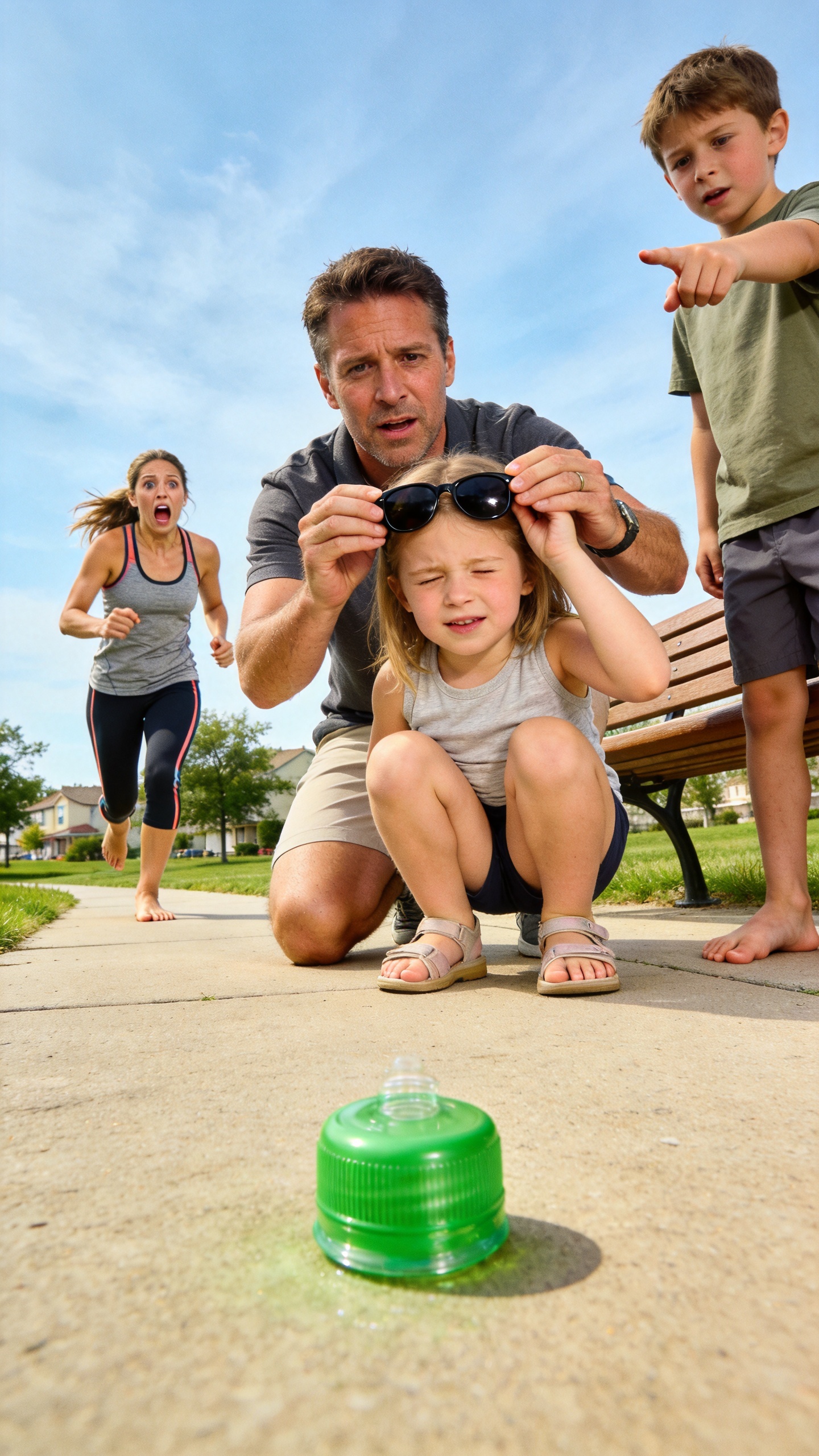
The boy reached into his pocket and pulled out a bright green bottle cap.
"Watch," he said.
Vanessa snapped, "Stop it."
He tossed it lightly onto the path, not at Emma, just a few feet away from the bench.
The cap bounced once.
Emma's head moved.
Not toward the sound.
Toward the color.
It was tiny.
It was nothing anyone else in that park would have noticed.
To me it felt like the earth shifting under my shoes.
I crouched in front of my daughter.
"Emma," I said, barely breathing, "can you see that?"
Her lips trembled.
Vanessa stepped between us.
"She is confused."
I stood up slowly.
"Move."
She tried to laugh. It came out thin.
"You are going to believe some dirty child over your wife?"
The boy flinched at dirty.
Emma did too.
That was when I saw the first real clue in my own house. Not in a file. Not in a hospital room. In the way my daughter reacted to her mother's voice before any hand touched her.
Fear has habits.
Children learn them fast.
I took Emma's glasses off.
She blinked hard in the afternoon light.
Then she looked straight at me.
Not near me.
Not around me.
At me.
Tears slipped down her cheeks.
"I can see yellow," she whispered. "Sometimes. When Mommy forgets."
The park did not go silent.
People were still walking dogs.