My Family Bought The Blue-Shuttered House I Had Saved For To Humiliate Me, But They Didn't Know I Already Owned The Stone Manor Next Door, And Their Victory Toast Became Their Public Downfall
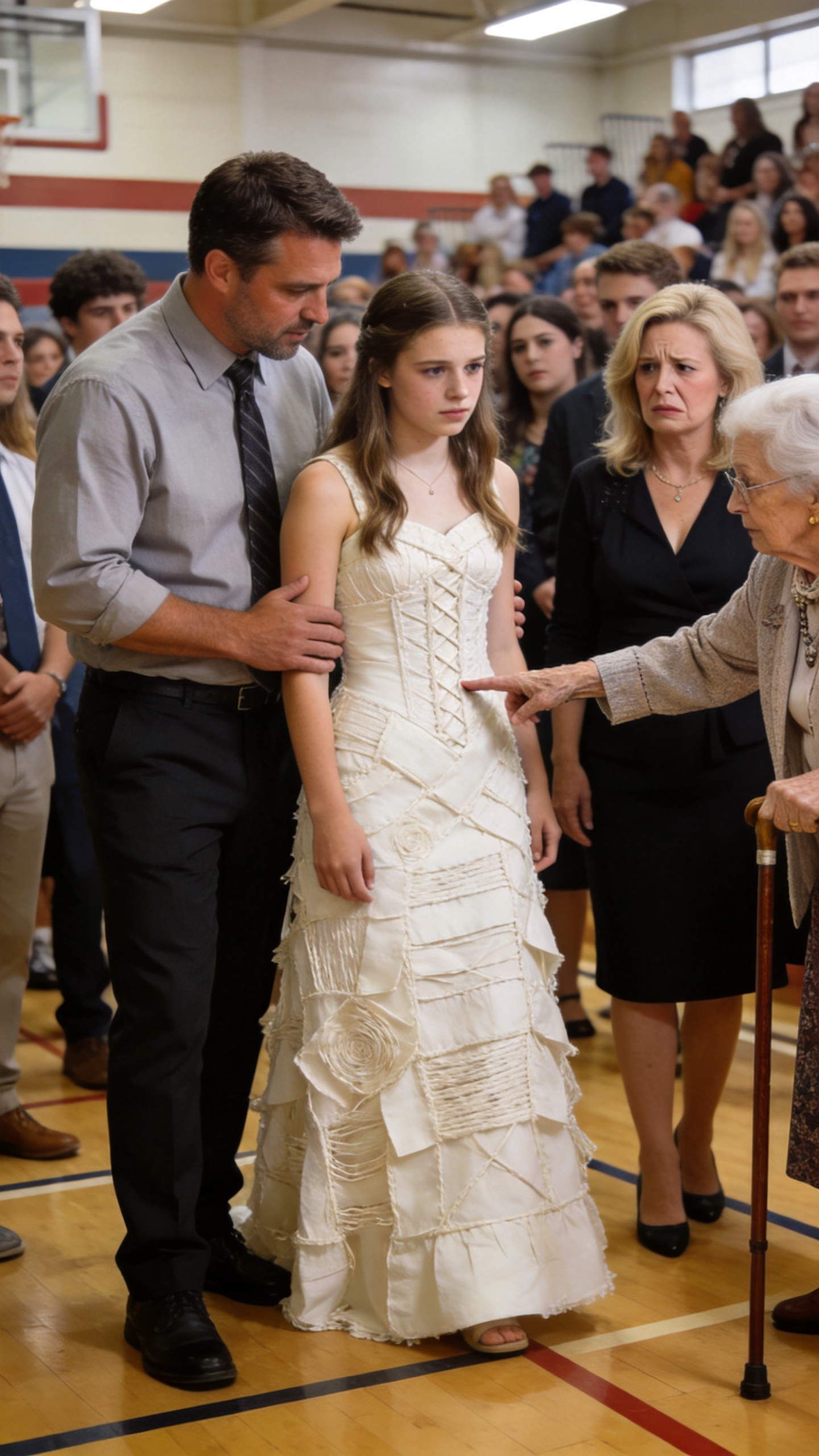
My father was standing on the porch of my dream house with a brass key ring looped around his finger.
He spun it once.
Slowly.
Like a man showing a dog a treat before deciding whether it had behaved well enough to deserve it.
Behind him, my mother lifted a champagne flute toward me from the front steps. My older sister stood beside her in a cream coat that probably cost more than my rent. Two cousins, three neighbors, and my sister's husband hovered near the garden gate, all wearing the tight little smiles people wear when they know they have been invited to witness a wound.
The house behind them was Briar Lane House.
Blue shutters.
White porch columns.
A stained-glass window over the staircase that caught the afternoon light and broke it into little squares of green and gold.
When I was nine, I used to ride my bike past that house after school and slow down at the corner just long enough to imagine my own books in the sunroom. When I was sixteen, I wrote its address in the back of my chemistry notebook and promised myself that someday I would live somewhere beautiful without anyone having to approve of me first. When I was thirty-seven, after twelve years of night shifts, contract work, skipped vacations, and one tiny apartment with radiators that banged like angry pipes, the FOR SALE sign finally appeared.
I cried in my car the day I saw it.
My sister saw me.
That was how my family found out.
"Meredith," my father called from the porch. "You made it."
My name is Meredith Vale. I was thirty-seven years old the day my family bought the house I had been saving for and turned the closing into a neighborhood performance.
My father, Graham Vale, came down the steps with that banker smile he had used my whole life whenever he wanted cruelty to sound practical.
"Surprise," he said. "We closed this morning."
My mother, Elaine, put one hand over her heart as if she were overcome with tenderness.
"Don't just stand there, sweetheart," she said. "Come look at what a real family home feels like."
A real family home.
That was the first cut.
The second came from my sister.
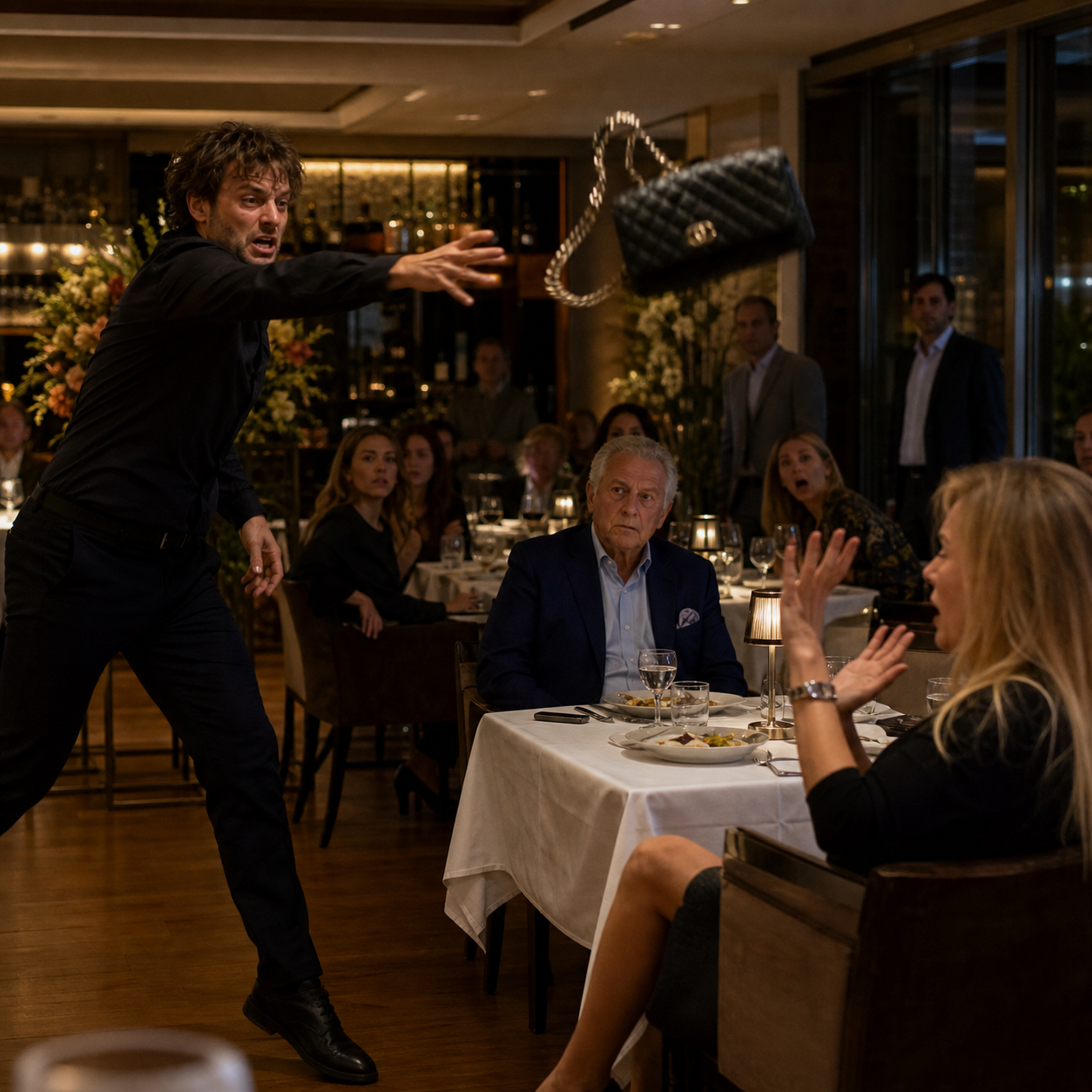
Natalie tilted her head, letting her blonde hair slide over one shoulder. "We all agreed it was too much house for one woman living alone."
Someone near the gate laughed.
Not loudly.
Just enough.
Enough for my father to glance around and know the audience had received its cue.
I looked at the porch swing, the iron mailbox, the old magnolia beside the driveway. Every detail was exactly as I remembered and completely different now because my family was standing inside the dream like they had broken in and changed the locks.
"You knew I was going to make an offer," I said.
Natalie widened her eyes. "Were you? Daddy said the realtor never received anything serious."
My mother clicked her tongue. "Meredith, interest is not the same as readiness."
There it was.
The song under every holiday dinner.
The unmarried daughter was not ready.
The daughter with the small apartment was not ready.
The daughter who built her career quietly was not ready, because nobody had bothered to ask what she had built.
My father held up the keys.
"This may sting now," he said, "but maybe it will teach you something."
The porch went still.
Even Natalie blinked.
My aunt Judith, who had been standing near the hydrangeas with her coat buttoned wrong because she was nervous, whispered my name.
But my father was not finished.
"Wanting something," he said, "doesn't mean you deserve it."
I looked at the keys in his hand.
At the champagne.
At the little crowd waiting for me to cry.
For most of my life, I had given my family exactly what they needed to keep their version of me alive. I defended myself too quickly. I explained too much. I let my voice shake, and then they used the shaking as proof that I was unstable, dramatic, difficult, ungrateful.
That afternoon, in front of Briar Lane House, I did none of those things.
I walked up the steps.
My mother's smile sharpened. "Careful. The floors were just polished."
I brushed my fingers over the carved doorframe.
"You'll want to have the east gutter checked," I said. "Water gathers behind that downspout after heavy rain."
My father frowned. "How would you know that?"
"I pay attention."
Natalie gave a short laugh. "To houses you can't afford?"
I turned and looked at her.
Not angrily.
Not sadly.
Just long enough for her laugh to die by itself.
Inside, the house smelled of lemon oil and old plaster. My mother guided me from room to room as if she were showing a servant where not to step. She pointed out the breakfast room where Natalie planned to host book club, though Natalie had not finished a book since her second child was born. My father talked about his "decisive cash position" and how sellers respected serious people. Natalie's husband, Paul, mentioned that they might convert the back parlor into a wine room.
Every sentence was designed to remind me that they were in, and I was out.
In the sunroom, my mother finally touched my arm.
"I hope you understand," she said softly, loud enough for everyone to hear. "This is better for the family."
"The family," I repeated.
She squeezed once. Her diamond bracelet was cold against my wrist.
"You would have rattled around in here by yourself," she said. "Natalie has children. Traditions need children."
My sister's smile bloomed.
I looked through the sunroom windows at the overgrown hedge separating Briar Lane House from the old stone estate next door.
Most people in town called it Ashford Hall.
My family had always called it the haunted place.
It sat behind iron gates and a wall of winter-bare sycamores, three stories of gray stone, copper gutters, arched windows, and terraces half-swallowed by ivy. It had been empty for years after the last owner died. Children dared one another to touch the gate at Halloween. Neighbors complained about the vines. Realtors used it as a backdrop when they wanted smaller homes to look friendly by comparison.
My father had once said the place was a monument to bad judgment.
That was before I bought it.
Quietly.
Eight months earlier.
With a preservation loan, two private investors from my hospital network, and the savings my family thought I had been wasting on rent.
I looked back at my mother.
"You're right," I said. "Traditions need a home."
Natalie folded her arms. "What is that supposed to mean?"
"Nothing today."
My father stepped into the sunroom doorway. "Meredith, if you are trying to make this awkward, you're only proving my point."
"I'm not trying to make anything."
"Then congratulate your sister."
The room waited.
That was what they wanted most. Not the house. Not really.
They wanted the shape of my obedience.
So I turned to Natalie and said, "Congratulations."
Her smile returned too quickly.
"Thank you," she said. "That means a lot."
"I should go," I added. "My movers need final confirmation."
My father stared. "Movers?"
"Yes."
My mother's face tightened. "You found another apartment?"
"Something like that."
Natalie laughed again, but there was a question under it now.
"Where are you moving?"
I glanced once through the sunroom glass, past the hedge, toward the iron gates of Ashford Hall.
Then I looked back at my family.
"Close," I said. "Very close."
For the first time that afternoon, the keys stopped spinning in my father's hand.
They Had Bought A House, Not The Ground Beneath The Story
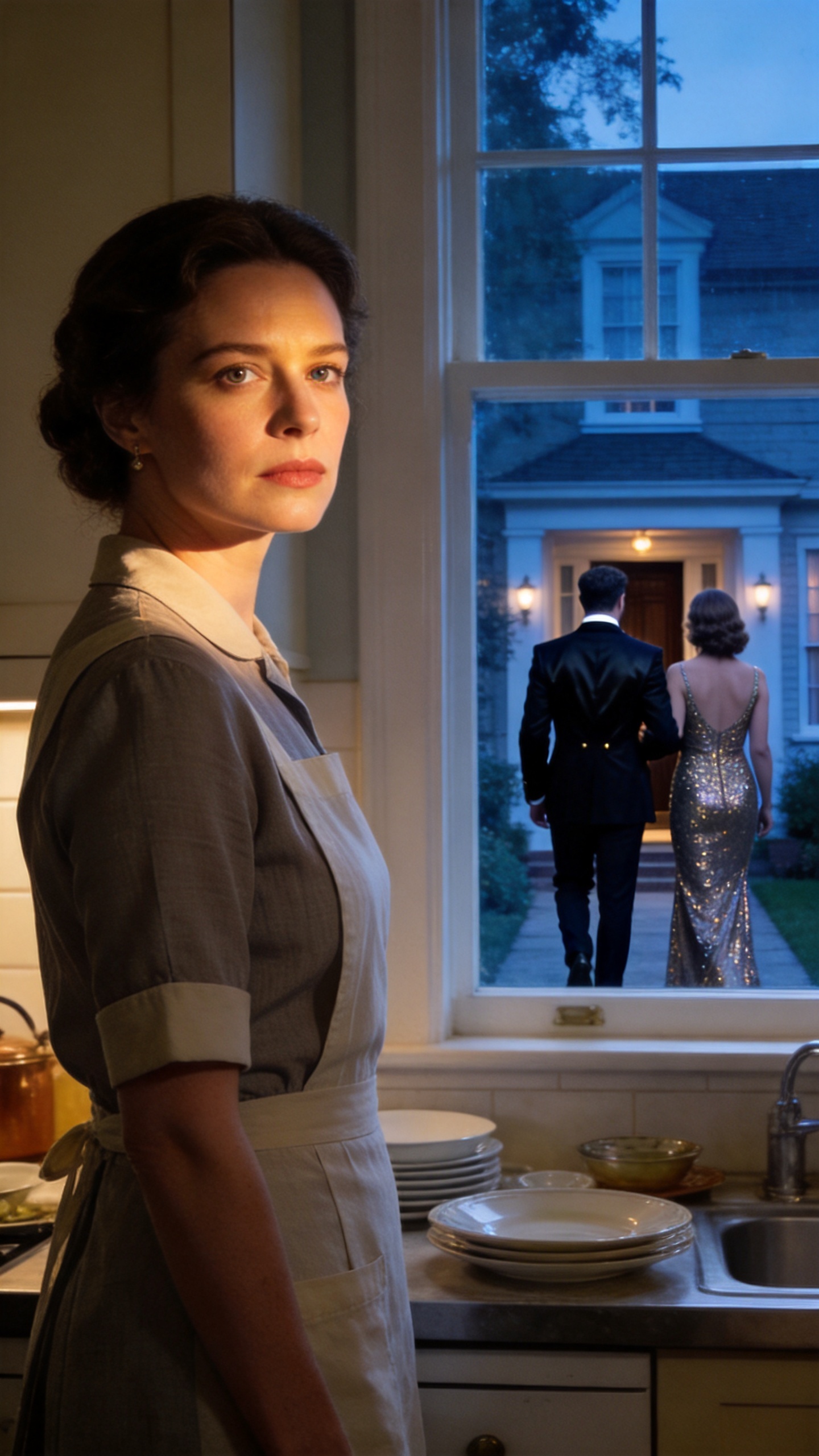
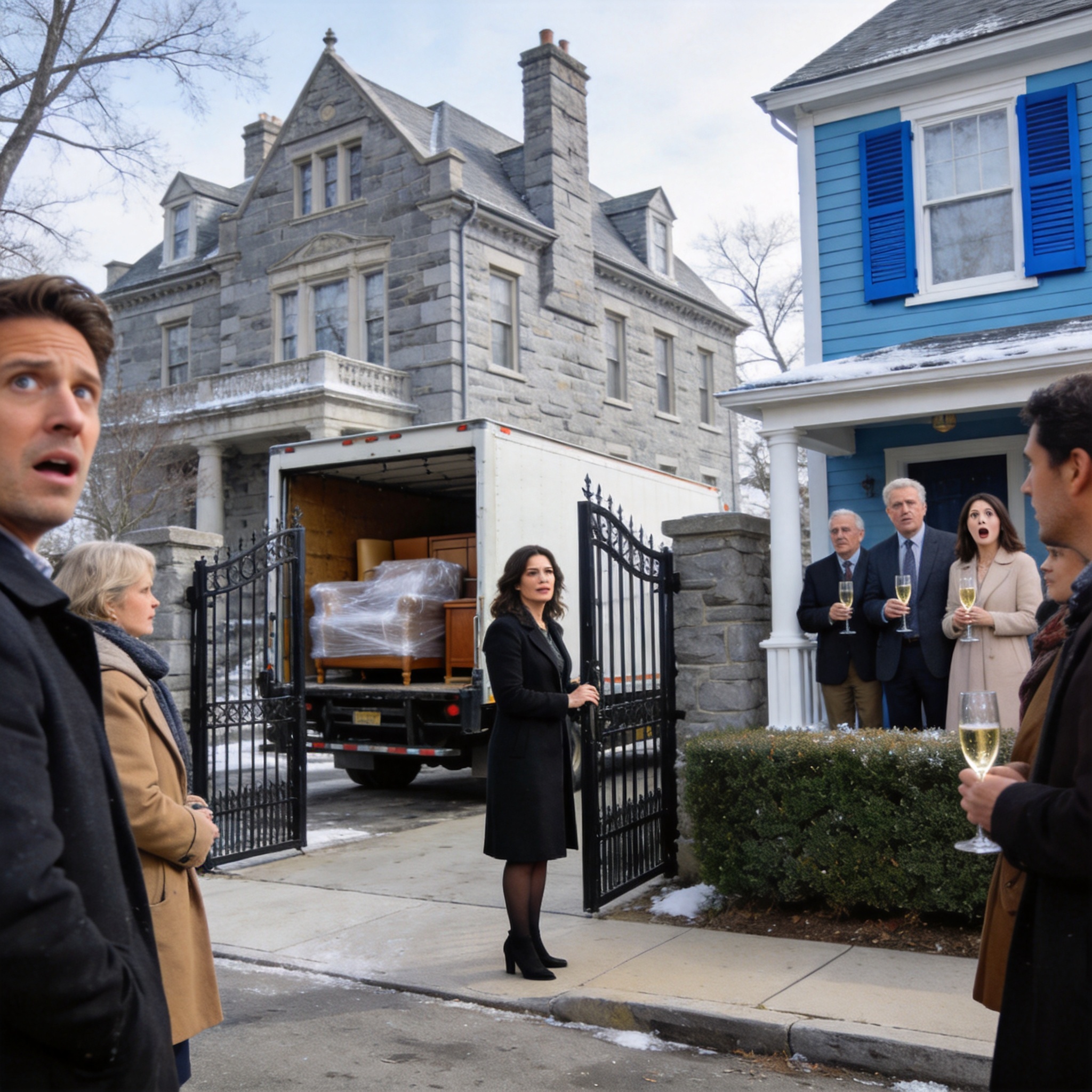
Two weeks later, the first moving truck arrived at Ashford Hall at 6:48 on a Saturday morning.
I remember the time because I was standing barefoot in the marble entry, holding a mug of coffee while the gate motor groaned open for the first time since the restoration crew installed it.
The house did not look haunted anymore.
It looked awake.
The stone had been cleaned without stripping its age. The copper gutters gleamed softly under a pale Virginia sky. The front fountain, which had been dry since before I graduated college, whispered over its basin again. Beyond the drive, the sycamores opened just enough for the whole street to see the mansion that had been hiding in plain sight.
Briar Lane House, with its sweet shutters and perfect porch, suddenly looked like a child's drawing beside a courthouse.
I did not need it to look smaller.
But I will not pretend I failed to notice.
The second truck arrived at 7:03.
The third arrived ten minutes later.
By the time the fourth backed through the gates, Natalie had stepped onto the porch next door in silk pajamas, one hand pressed to her mouth, her phone already raised.
My father arrived in his black Lexus at a speed that made the tires spit gravel.
He got out without closing the door.
"Meredith!" he shouted across the hedge.
I was speaking to a mover carrying a wrapped grandfather clock.
"Library, left side," I said. "Not the front parlor. The floors are still curing."
The mover nodded and disappeared inside.
My father reached the iron gate just as Paul came out of Briar Lane House, tying the belt of his robe. My mother followed, her face bare of makeup and therefore more honest than I had seen it in years.
"What is this?" my father demanded.
"A moving day," I said.
Natalie came down her porch steps slowly. "You can't be serious."
"About moving?" I asked. "Very."
My mother looked past me at the house, at the opened doors, at the workers carrying crates marked KITCHEN, ARCHIVE, SOUTH GALLERY, MUSIC ROOM.
"Are you leasing it?" she asked.
There it was.
Even while the truth stood three stories tall behind me, she reached for a version small enough to fit me.
"No."
My father gripped the gate. "Who owns this property?"
"I do."
The words landed strangely.
Not loud.
Not dramatic.
Just final.
Natalie laughed once. "That's impossible."
"It closed in October."
My mother's eyes snapped to mine. "October?"
"Yes."
"But you were still in that apartment."
"I liked that apartment."
Natalie stared at the next truck as two men unloaded framed mirrors and a rolled Persian carpet. "You let us think you were struggling."
I looked at her for a moment.
"No," I said. "You needed to think that. I let you."
My father found his voice first.
"Where did the money come from?"
That question told me everything about him. Not How did you keep this secret? Not Why didn't you tell us? Not Are you happy?
Where did the money come from?
Because in my father's world, a daughter could have feelings, but not capital. She could have ambition, but not leverage. She could work herself raw and still remain, in his mind, someone waiting to be evaluated.
"From my work," I said.
"Your work at the hospital foundation?"
"Among other things."
My mother blinked. "You plan galas."
"I used to plan galas. Then I managed donor portfolios. Then I built the capital campaign that funded the children's oncology wing. Then I started consulting for preservation-backed medical housing projects."
Natalie's face shifted. She had heard those words before. I had said them at Thanksgiving, at birthdays, in the kitchen while someone asked me to refill the ice bucket. My family had treated my career like background music. Pleasant if quiet. Annoying if loud.
"Ashford Hall is part home," I said, "part restoration project, and part future visiting scholar residence. The carriage house will host families traveling for pediatric treatments once the permits are complete."
Paul lowered his phone.
My father looked as if I had spoken another language specifically to insult him.
"You should have told us," my mother whispered.
I almost laughed.
Not because it was funny.
Because the sentence was so familiar in its unfairness.
Tell us, so we can measure it.
Tell us, so we can doubt it early enough to stop you.
Tell us, so we can stand beside the ribbon after someone else paid for the scissors.
"I told you plenty," I said. "You didn't listen unless the information made me smaller."
My father leaned closer to the gate.
"This is reckless."
"Maybe."
"A single woman has no business taking on a property like this."
The head contractor, a broad-shouldered woman named Denise Morton, came down the front steps with a clipboard under one arm.
"Ms. Vale?" she called. "The Steinway just arrived. Music room or ballroom?"
Natalie's mouth opened.
My father looked at me.
I looked back.
"Music room for now," I said. "The ballroom chandeliers won't be finished until Wednesday."
Denise made a note. "Got it."
The word ballroom did something to my mother.
I saw it in her face.
The quick calculation.
The family holidays she had already moved into Briar Lane House in her imagination. The photographs on the staircase. The Christmas card under the blue shutters. The little throne she had built herself as the mother of the daughter who deserved the house.
And now, across the hedge, there was a ballroom.
Natalie recovered first.
"So what?" she said. "You bought a bigger house to compete with us?"
"No."
"Then why?"
I looked at Ashford Hall.
At the open doors.
At the workers carrying in my boxes, my chairs, my life.
"Because I wanted it," I said. "And I did the work."
My father barked a laugh.
"Listen to yourself. You sound bitter."
"I probably am."
That surprised him.
People like my father expect denial. They can use denial. They can poke it until it bleeds.
Truth gives them less to hold.
"But bitterness didn't buy this house," I said. "Discipline did."
His face reddened.
Behind him, a sedan rolled slowly past, then stopped. Mrs. Alden from three doors down lowered her window.
"Meredith?" she called. "Is that you?"
"Good morning, Mrs. Alden."
She looked at Ashford Hall, then at my family clustered at the gate in robes and pajamas.
Her eyes widened with the kind of delight polite people try very hard to hide.
"My goodness," she said. "It looks beautiful."
"Thank you."
"Your grandmother would have loved seeing this old place saved."
That one sentence quieted the gate.
My grandmother had been the only person in my family who ever stopped in front of Ashford Hall with me. She used to call it a house with a spine. She died when I was twenty-four, leaving me a cedar box of letters, a pearl ring, and one instruction: Build something they cannot vote on.
My father hated that line.
Mostly because he suspected it was about him.
Mrs. Alden smiled. "Do let me know when you have visitors. The historical society will be thrilled."
"I will."
She drove on.
Natalie watched her go.
Something in my sister's expression changed. For the first time, I saw the true shape of what she had expected from Briar Lane House. Not the rooms. Not the porch. Not even the history.
She had expected social position.
She had expected people like Mrs. Alden to admire her from the street.
And now admiration had crossed the hedge.
My father released the gate.
"This isn't over," he said.
"No," I answered. "Moving takes all day."
He stared at me for another second, then turned back toward Briar Lane House.
My mother followed.
Paul lingered, looking up at the stone facade with an expression close to awe.
Natalie caught him and snapped, "Come inside."
He did.
By noon, half the neighborhood had found a reason to walk past.
By evening, my phone had forty-six messages.
Most were from people I had not spoken to in years.
A cousin wrote: Did you really buy Ashford?
My mother wrote: You blindsided us.
Natalie wrote: I hope you're proud of humiliating your own family.
My father wrote only one sentence.
We need to discuss your finances before this gets worse.
I read it from the middle of my unfinished library while sawdust hung in the air and sunset pooled in the high windows.
Then I set the phone face down.
Outside, Briar Lane House glowed warmly beyond the hedge.
The dream I had once carried like a private prayer.
The dream my family had bought to punish me.
And beside it, Ashford Hall stood with every window lit.
Not as a punishment.
As an answer.
The Neighborhood Learned Who Had Been Pretending
Maple Ridge noticed before my family recovered.
That was the part they had not calculated.
My parents understood money. They understood titles on deeds, placement at dinners, which family names appeared on hospital plaques and which ones appeared only on invoices. Natalie understood appearances even better. She could spend a Sunday arranging flowers in the front hall and make people believe she had grown them, cut them, and inherited the vase from someone important.
But none of them understood a neighborhood's memory.
Briar Lane House had been beloved because it was gentle. Ashford Hall had been ignored because it was too large, too expensive, too complicated, too much. Once the gates opened and the restoration began in earnest, people did not treat it like an intrusion.
They treated it like a long illness finally breaking.
The local paper called within three weeks.
I nearly said no.
Then Denise, my contractor, stood in the south gallery with plaster dust in her hair and said, "You need the town to understand what we're doing before your father tells them for you."
She was right.
The article ran the following Sunday.
Historic Ashford Hall To Become Home And Healing Residence.
The photograph showed me on the terrace in jeans, work boots, and a white shirt, with the cleaned stone rising behind me. The reporter wrote about the house's 1891 construction, the preserved woodwork, the planned family suites for parents traveling with sick children, and the winter fundraising dinner scheduled for Christmas Eve.
She also wrote about my career.
Not the version my family used.
Not Meredith plans parties.
The real one.
Development strategist. Capital campaign director. Preservation finance consultant. Founder of Vale House Initiative, a small nonprofit that paired historic-property restoration with temporary medical lodging.
The article did not mention Briar Lane House.
That was what enraged my father.
He called at 8:12 that morning.
I let it ring.
He called again at 8:14.
Then at 8:16.
At 8:19, my mother called.
At 8:21, Natalie sent a text: You made us look ridiculous.
I was standing in the pantry, trying to decide where to store flour in a house whose kitchen had three sinks and no sensible drawer for measuring spoons.
I called my aunt Judith instead.
She answered on the first ring.
"I read it," she said.
"And?"
Her voice softened. "Your grandmother would have taped it to the refrigerator."
For some reason, that was what made me sit down on the pantry step.
Not the house.
Not the article.
Not my father's fury.
My grandmother's imaginary refrigerator.
Aunt Judith waited while I swallowed hard.
"They knew, didn't they?" she asked.
"Knew what?"
"That you wanted Briar Lane House. Graham didn't buy it because he suddenly cared about blue shutters."
I closed my eyes.
There are hurts you can survive privately for years, but the moment someone else names them, they become fresh.
"Yes," I said. "They knew."
She exhaled.
"Your mother told me it was an investment."
"Of course she did."
"And Natalie said you were being unrealistic."
"Of course she did."
Aunt Judith was quiet for a moment.
"Meredith, why didn't you tell me about Ashford?"
That question did not sting.
Not from her.
"Because I needed one thing that existed before the family had an opinion about it."
"Fair," she said.
Then, after a pause, "Do you need help with Christmas Eve?"
I looked up at the pantry shelves.
At the boxes stacked in the hall.
At the dust, the noise, the impossible amount of work left.
"Yes," I said.
"Good. I was hoping you'd say that."
My parents reached me that afternoon.
They did not come through the gate.
They stood outside it, dressed for church, while a mason repaired the low wall near the drive.
"Open it," my father said into the call box.
"I'm with the electrician."
"Then come out."
I almost told him no.
Instead, I put on a jacket and walked down the drive, because part of growing up is learning that you can face people without inviting them inside.
My mother looked smaller outside the gates.
That startled me.
In restaurants, country clubs, and relatives' kitchens, Elaine Vale knew how to arrange herself into authority. But the ironwork between us unsettled her. She kept glancing at the initials worked into the gate.
A.H.
Ashford Hall.
Not Vale.
Not Graham.
Not Natalie.
Mine.
"You should have warned us about the article," my mother said.
"Why?"
"Because people are asking questions."
"About what?"
My father made an impatient sound. "About why we bought next door when you were already restoring this place."
"What are you telling them?"
"That we didn't know."
"That's true."
My mother's lips tightened. "It makes us look foolish."
I looked past them at Briar Lane House. The porch furniture had arrived, expensive and too large for the space. A landscaper was planting boxwoods along the walkway. Natalie had hung a wreath that looked like it had been ordered from a catalog called Effortless Heritage.
"You bought a house to teach me humility," I said. "Foolish was always a risk."
My father's eyes went flat.
"You have become arrogant."
"No," I said. "I became harder to edit."
My mother flinched as if I had raised my voice.
I had not.
That was another thing my family hated. Calm had once belonged to them. Now I had learned to use it without permission.
"Meredith," she said, softening her tone, "we are not your enemies."
"Then stop competing with me."
Natalie appeared on the Briar Lane porch at that exact moment.
She saw us at the gate and came across the lawn without a coat.
"Are you seriously playing victim?" she demanded.
The mason looked up.
My sister noticed him and lowered her voice, but not enough.
"You humiliated us on purpose."
"I moved into my house."
"You could have chosen anywhere."
"So could you."
Her face flushed.
My father pointed at me. "You will not speak to your sister that way."
I almost smiled then, but I stopped myself.
Not every old reflex deserves air.
"Dad," I said, "you are standing outside my property telling me what I will not do."
He looked at the gate again, as if he had forgotten where he was.
Natalie folded her arms.
"You think this makes you better than us."
"No."
"Then why are you doing it?"
"Because I was tired of shrinking so you could feel chosen."
My sister's mouth tightened.
For a moment, I saw the child in her. The one who had learned early that being father's favorite was not love, exactly, but it was safer than being the example.
Then she disappeared behind the woman who had stood on my dream porch with champagne in her hand.
"Enjoy your museum," she said.
"I plan to."
She turned and walked back toward Briar Lane House.
My father followed without another word.
My mother stayed.
Her hand lifted toward the gate, then dropped.
"You used to tell me everything," she said.
That was not true.
But it was the kind of lie mothers tell when they miss the version of their child who had no locked rooms.
"No," I said. "I used to hope you would hear me."
Her eyes glistened.
For one dangerous second, I wanted to comfort her.
Then I remembered the porch.
The keys.
Wanting something doesn't mean you deserve it.
I let the silence do what my explanations never had.
My mother turned away.
By Thanksgiving, my family had decided on a new strategy.
They stopped mocking Ashford Hall and began suggesting I had gone into dangerous debt. Natalie told cousins I was "overextended." My mother told neighbors that large houses could be lonely for women without families. My father told Uncle James that restoration projects often collapsed once the owner realized charm did not pay invoices.
They did not know my invoices were paid.
They did not know the hospital board had already approved the first three-year lodging contract.
They did not know the state preservation office had signed off on the tax credit package.
Most importantly, they did not know about Briar Lane House's inspection report.
I had seen it before they bought.
Not because I spied.
Because I had commissioned it.
Before I made any offer, before my sister saw me crying in the car, before my father decided my dream would make a useful weapon, I had paid for a full review. The house was beautiful. It was also damp behind the east wall, soft under the sunroom floor, and subject to a preservation covenant that limited structural changes. The repairs were not impossible, but they were expensive, urgent, and deeply unglamorous.
That was why I had stepped back.
Not because I stopped loving it.
Because wanting a house is not the same as understanding what it asks of you.
My family bought the dream and skipped the warning.
For weeks, I watched contractors come and go from Briar Lane House. Then I watched fewer of them come. Then I watched a county notice appear on the side door after Natalie tried to start interior renovations without final approval from the historic review board.
My father removed it before noon.
The neighborhood had already seen it.
Still, I said nothing.
Some consequences do not need your fingerprints.
They only need time.
Christmas Eve Became Their Last Stage
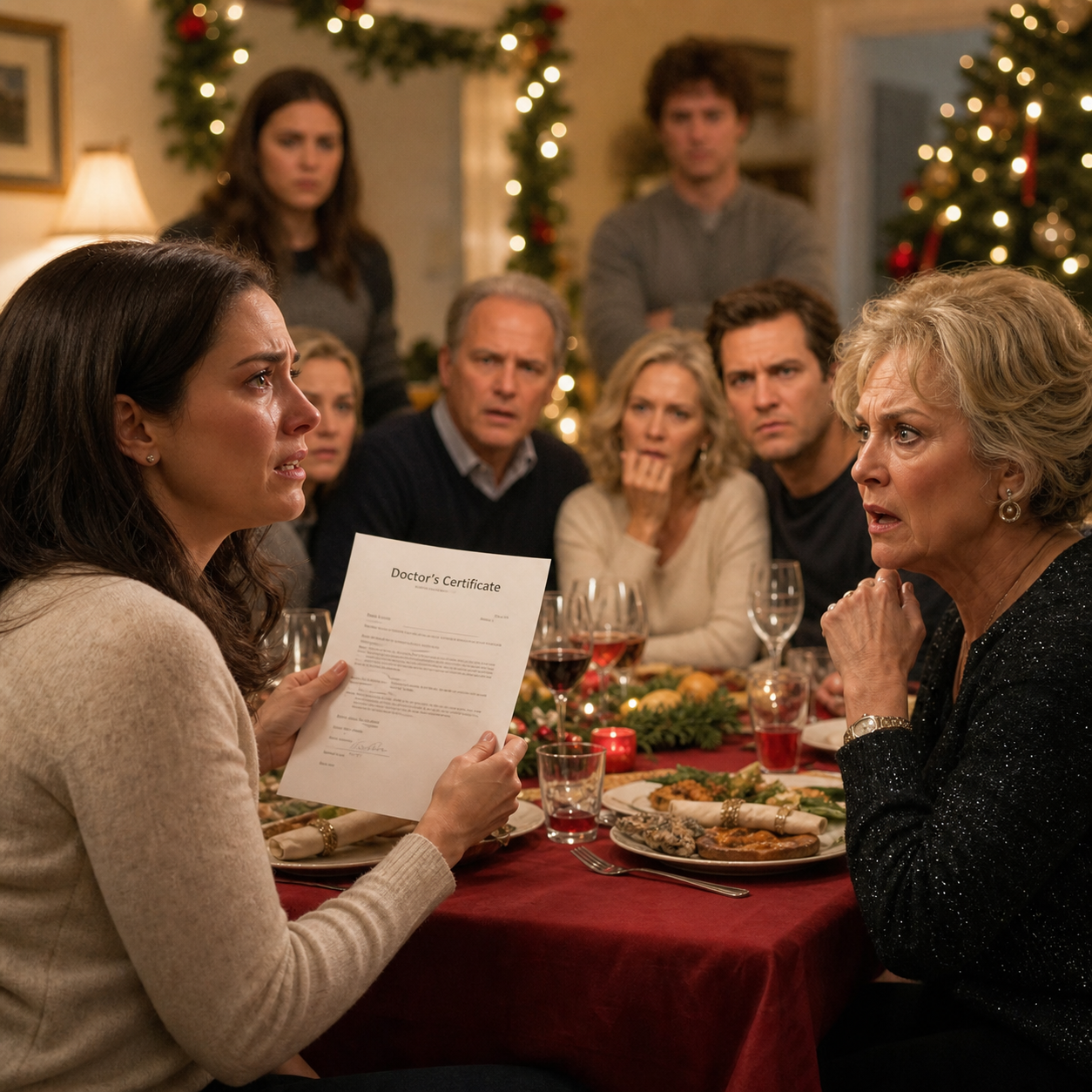
Christmas was my mother's kingdom.
Every family has one holiday where the old power map becomes visible. In ours, it was Christmas Eve. Elaine Vale could forgive late thank-you notes, missed birthdays, and entire years of emotional neglect, but she treated holiday seating like a constitutional matter.
For thirty-seven years, Christmas Eve had happened wherever my mother said it happened.
That year, I sent invitations in early November.
Christmas Eve at Ashford Hall.
Six o'clock.
Dinner in the restored dining room.