He Ripped My Rank Patch Off In Front Of The Unit, Not Knowing The "Problem Sergeant" He Shamed Was There To Investigate Him
He liked that.
I could see it.
"Today," he said, "we show what accountability looks like."
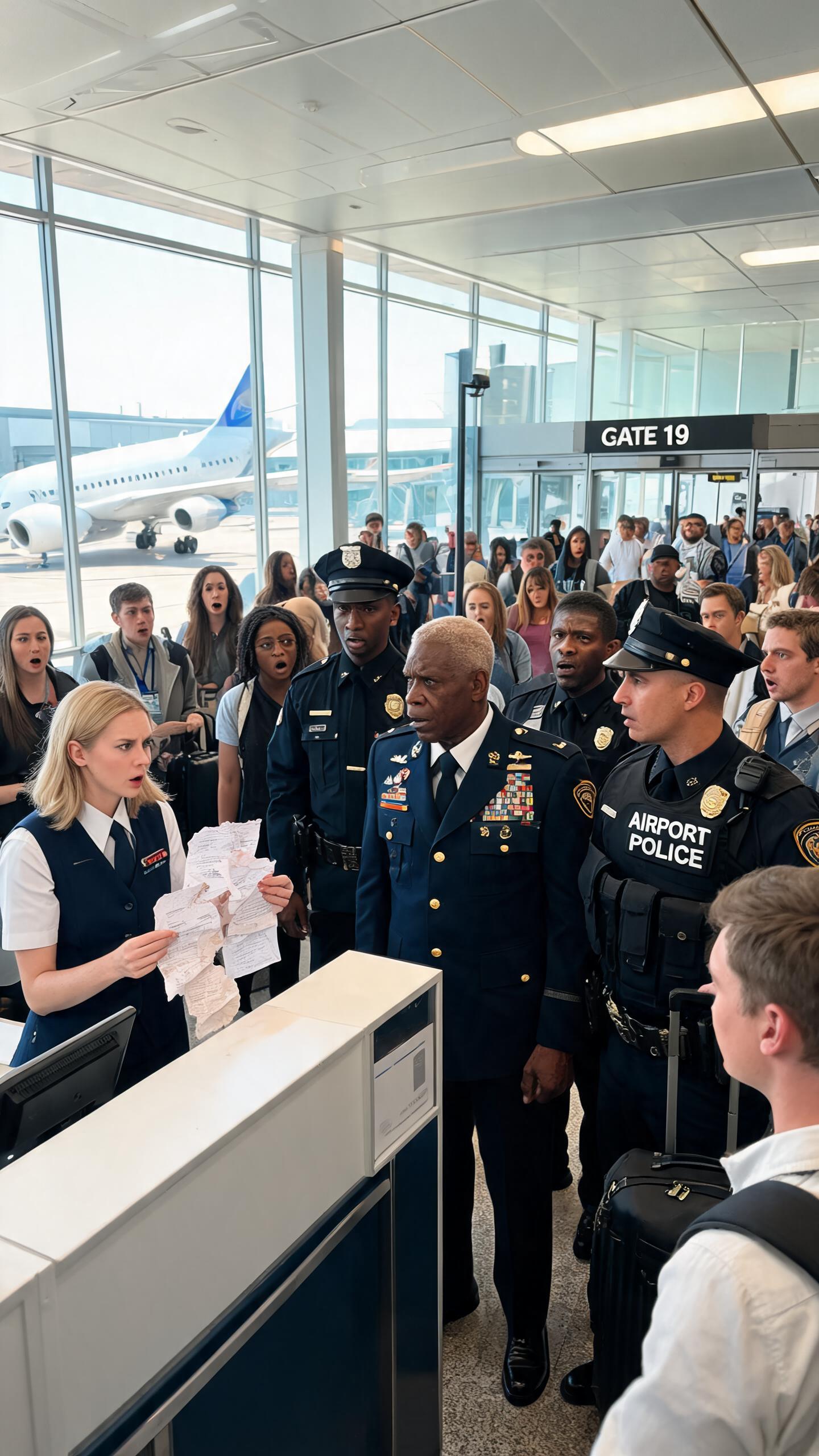
The first military police vehicle rolled up before he finished the sentence.
Then CID.
Then brigade legal.
Then a colonel from procurement oversight who did not look amused by anything happening under that Carolina sun.
Sutter turned slowly.
He saw the cars.
He saw Warrant Officer Bell.
He saw Claire step out of the last vehicle with a legal escort and the black drive sealed in an evidence bag.
Only then did he look back at me.
I took off the name tape that said Mercer.
Bell handed me my jacket.
When I put it on, the oak leaf on my shoulder caught the light.
The company saw it before Sutter found words.
Major.
CID.
Not problem sergeant.
Not scapegoat.
Not his.
"Captain Blake Sutter," I said, "you are under investigation for theft of military property, falsification of records, abuse of command authority, obstruction, and witness intimidation."
His mouth opened.
Nothing useful came out.
Hayes stood two rows back, pale but upright.
For the first time in three weeks, he did not look at the ground.
The Patch Came Back With Dirt Still In The Stitching
Sutter tried to say he was set up.
That I had entrapped him.
That Claire was unstable.
That Hayes was bitter.
That the ledgers were misunderstood.
Men like that do not run out of lies.
They run out of rooms willing to hold them.
The investigation widened fast. The missing equipment was only the front door. Behind it were kickbacks, falsified repairs, contractor favors, medical retaliation, and a whole little kingdom built by men who thought paperwork could bury people.
It could not bury all of them.
Not this time.
Hayes was protected.
Claire testified.
Soldiers who had been quiet began to talk.
Old complaints reappeared from inboxes where they had been left to die.
Three weeks later, Alpha Company had a new commander.
No speeches fixed it.
No ceremony made the air clean overnight.
But people stood differently.
That matters.
On my last morning, Hayes found me near the motor pool.
He held out a clear plastic bag.
Inside was my rank patch.
Someone had cleaned it.
Not perfectly.
Red dirt still clung to the stitching.
"Supply fixed the edge," he said. "Figured you should have it."
I took it carefully.
The patch was scarred.
So was the unit.
So was Claire.
So was Hayes.
So was I, though not in the way Sutter wanted.
Before leaving post, I put that patch in my glove box.
Not as a symbol of what he took.
As a record of what he revealed.
Captain Blake Sutter thought he was ripping my authority off in front of everyone.
What he really did was give every soldier watching a clear view of the rot under his own boots.
What made the case wider was not one safe or one drive.
It was the pattern behind them.
Every stolen item had a paper shadow.
Every paper shadow had a signature routed through someone too junior to question it.
Every junior soldier had been taught that asking for clarification was the same as disrespect.
That was Sutter's real system.
Not theft alone.
Fear arranged as administration.
Bell and I spent the next forty-eight hours connecting names to dates, dates to shipments, shipments to contractor payments, and payments to favors that had been passed around like private jokes. The more we found, the less Sutter looked like a rogue commander and the more he looked like a symptom that had learned to salute.
Claire's drive held photos of invoices she had hidden for months. Hayes remembered the blue tarp. Another corporal remembered being ordered to rewrite a maintenance log after midnight. A medic produced the injury note that had disappeared from the official file of a soldier Sutter called clumsy.
None of it was glamorous.
It was slow.
Ugly.
Specific.
That is how real accountability usually arrives.
Not as thunder.
As paperwork that finally refuses to stay buried.
A week after the arrest, I interviewed the first soldier Sutter had tried to ruin.
Corporal Avery Walker came in with his left arm still stiff from an injury the official report called horseplay. He sat across from me and apologized before saying anything useful.
That told me how deep the damage went.
He apologized for needing time.
For not reporting sooner.
For letting Sutter write him into a story he did not choose.
I slid the water bottle toward him and said, "Start where the report stopped telling the truth."
He did.
Then Ruiz did.
Then Patel.
Then two supply clerks who had signed forms they did not understand because refusing a captain felt impossible at twenty-one.
By the end of that week, my ripped patch was no longer the most visible insult in the case.
It was only the one Sutter made the mistake of performing in front of everyone while a recorder was running.
The official report later listed everything in clean categories.
Theft.
Fraud.
Retaliation.
Abuse of authority.
Clean words can make dirty things look manageable.
They do not show Hayes waking up every hour because he expected a boot at his door. They do not show Claire hiding the black drive in a cereal box because Sutter never opened anything that looked domestic. They do not show a medic standing in my temporary office with both hands shaking because he had signed a false note and hated himself for it.
That was the real aftermath.
People learning the difference between surviving a bad leader and recovering from one.
Sutter had not only stolen property.
He had stolen people's trust in their own memory. Every time someone said, "Maybe I misunderstood," he gained another inch of ground.
The investigation gave that ground back slowly.
Statement by statement.
Name by name.
One corrected record at a time.
Before I left, the new commander asked if I wanted the patch replaced.
A clean one.
Same rank.
No dirt.
No torn edge.
I said no.
Clean replacements have their place, but this one had done a different job. It had lain in the dust while soldiers watched a commander confuse cruelty with command presence. It had sat in my pocket while Hayes risked speaking. It had rested in an evidence locker while Claire decided fear was not loyalty.
That patch had become part of the case file in a way no new one could.
So I kept it damaged.
Some proof should not be polished until it forgets what it proved.
Months later, I heard Hayes had reenlisted.
Not because the Army had suddenly become simple.
Because someone had finally shown him that a uniform could still mean more than the worst man who had worn one near him. That mattered to me more than Sutter's sentence length, more than the headlines, more than the clean language of the final report.
A bad commander can make good soldiers wonder whether service itself has betrayed them.
The work after exposure is helping them separate the institution from the abuser who used it as cover.
That stayed with me.